In the summer of 2026, the intersection of high-concept cinema and digital discourse has produced a collision that feels as ancient as it does modern. Christopher Nolan’s latest blockbuster, a sprawling, visceral adaptation of Homer’s The Odyssey, has become the unexpected epicenter of a heated cultural firestorm. While audiences have flocked to theaters to witness Nolan’s interpretation of the Bronze Age epic, a vocal segment of the online conservative sphere—spearheaded by billionaire tech mogul Elon Musk—has mobilized to denounce the film as a “desecration” of Western heritage.
At the heart of this controversy lies a fundamental disagreement: Is a myth a static monument to be preserved in amber, or a living, breathing narrative that must evolve to reflect the anxieties of the era in which it is retold?
The Anatomy of a Casting Controversy
The friction began months before the film’s July premiere. As casting announcements trickled out, the online right—a demographic that has historically gravitated toward “protecting” traditional depictions of Western literary icons—zeroed in on what they termed “DEI (Diversity, Equity, and Inclusion) elements.”

The primary point of contention, at least for the vocal minority, was the casting of Lupita Nyong’o as Helen of Troy. Social media platforms, particularly those on the right-leaning fringes of Reddit and X (formerly Twitter), erupted in a chorus of “My Culture Is Not Your Costume.” Critics argued that the casting was an aesthetic and historical violation, frequently juxtaposing Nyong’o’s casting with the claim that Sydney Sweeney would have been the “historically accurate” choice.
As observers have noted, this rhetoric serves as a familiar dog whistle within the broader culture wars. The demand for “accuracy” in this context is rarely about archaeological precision; it is a defensive reaction against the shifting demographics of modern blockbuster cinema.
Chronology of the Digital Standoff
The tension reached a fever pitch in mid-July 2026, following the global premiere of the film in New York City.

- Pre-Release (Spring 2026): Early leaks and trailers of Nolan’s The Odyssey trigger a wave of vitriol on social media. Influencers and commentators begin labeling the project "woke revisionism."
- July 14, 2026: The official premiere takes place. Critics largely praise the film’s ambition, though the "anti-woke" contingent doubles down on their boycott efforts.
- July 22, 2026: Elon Musk intervenes directly. Sharing a three-minute, AI-generated clip meant to demonstrate a "pure" version of the myth, Musk issues a formal challenge: "Before this year ends, Grok Imagine will make a full-length movie of The Odyssey that is historically accurate and true to the art of Homer."
- Late July 2026: The AI footage sparks a secondary debate. While Musk’s followers herald the clip as a technological triumph, critics lampoon the uncanny, "greasy" aesthetic and the historical irony of using 21st-century neural networks to claim "traditional" superiority.
The AI Gambit: A Technocratic Rejection of Art
Musk’s promise to utilize his “Grok Imagine” platform to produce a rival Odyssey is perhaps the most fascinating development in this saga. By leaning into generative AI, the tech entrepreneur is attempting to reclaim the narrative of the "Hero’s Journey" through a medium that is, by definition, an assembly of patterns from the existing digital corpus.
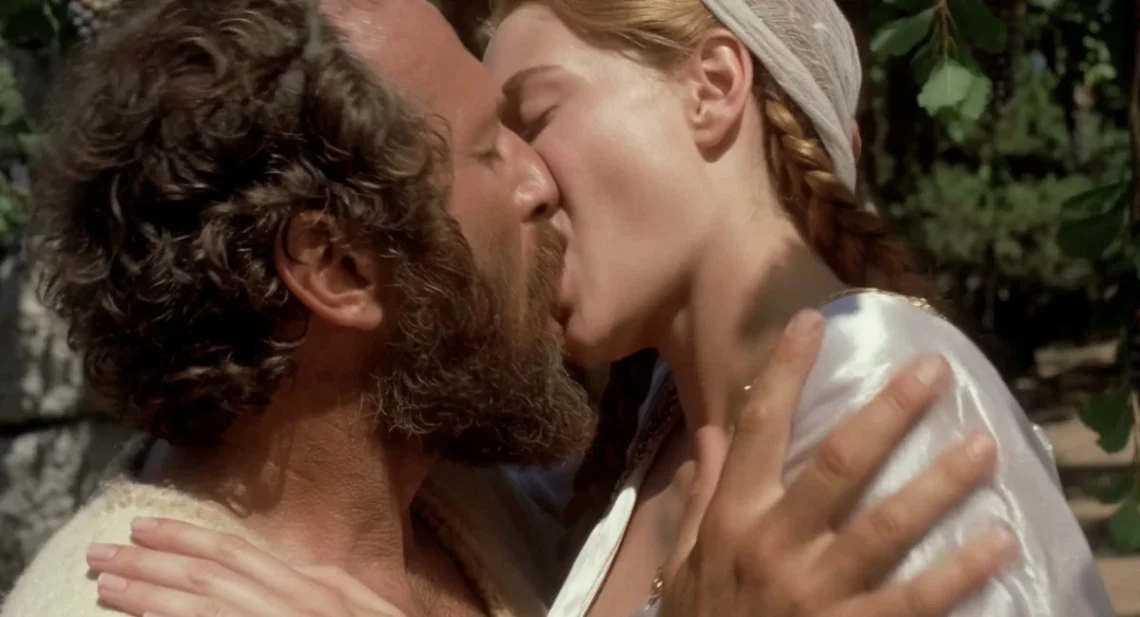
The AI-generated footage, which features a sanitized, pseudo-Classical aesthetic, has been met with widespread mockery from critics and art historians. The figures in the clip possess a glossy, technicolor sheen reminiscent of 1950s sword-and-sandal epics, rather than the gritty, sun-baked reality of the Bronze Age. Furthermore, the dialogue—delivered with the stiff, stage-British accents Hollywood has used for decades to denote "high culture"—clashes sharply with the AI’s attempt at “accuracy.”
Perhaps most ironically, the script ends with the protagonist uttering the word "OK," a colloquialism that originated in the 19th century, highlighting the futility of the AI’s attempt to reconstruct a truly ancient linguistic experience. The attempt to use the cutting edge of silicon-valley technology to enforce a rigid, traditionalist view of antiquity reveals a profound disconnect: the proponents of this "accuracy" are not seeking the reality of Homer’s world; they are seeking the aesthetic of a mid-20th-century cultural memory.

Nolan’s Subversion: A Mirror for Modernity
While the noise on social media focuses on the cast, the actual content of Christopher Nolan’s The Odyssey suggests that the director was prepared for this exact backlash. Nolan, a filmmaker whose career has been defined by his ability to pivot from comic-book morality to the existential weight of the nuclear age, has crafted a film that functions as a critique of the very myths that define the modern "strongman" archetype.
In Nolan’s version, Matt Damon’s Odysseus is not the triumphant, virtuous hero of a classical classroom text. Instead, he is a man whose actions have broken the social contract. As the film progresses, the audience realizes that the legends told in Ithaca about the hero are fundamentally at odds with the man who actually returns. The narrative arc forces the viewer to confront the possibility that the "heroic" version of history has been used to justify the very collapse of the civilization the hero claims to protect.
This is consistent with Nolan’s trajectory. From the post-9/11 moral ambiguity of The Dark Knight to the cautionary tale of Oppenheimer, Nolan has consistently explored the burden of the creator and the danger of the symbols we build. In The Odyssey, he suggests that if we worship the hero without acknowledging his crimes, we are complicit in the slow-motion dissolution of our own society.

Implications: The Death of the "Culture War" Monopoly
The irony of the current moment is that the protest against the film has, in many ways, failed to dent its success. Rather than suppressing the film, the controversy has triggered a renewed interest in Greek mythology. Classics departments are seeing a surge in enrollment inquiries, and museums report increased traffic to their Greek antiquities galleries.
For years, the "culture war" surrounding blockbuster films—from the 2015 Star Wars backlash to the 2016 Ghostbusters controversy—was a reliable engine for the growth of the online right. In those earlier instances, the strategy was to paint "diverse" casting as a corporate, anti-traditionalist assault. However, as audiences continue to engage with the actual work—and as Nolan’s film proves that a "modernized" myth can still be a profound, intellectually rigorous experience—the effectiveness of the outrage machine appears to be waning.
When the public finds a film to be genuinely compelling, the attempt to frame it as a "desecration" begins to look like a desperate, rearguard action. The gate that once allowed the trolls to dictate the cultural conversation is swinging back, and the impact is being felt by those standing behind it.

Conclusion: A Way Forward
We are currently a culture adrift, searching for anchors in a sea of algorithmic noise and political polarization. Elon Musk’s desire to automate the production of myth speaks to a deep, arguably misguided, desire for simplicity and control. Christopher Nolan’s desire to challenge the myth speaks to the necessity of introspection.
The lesson of the 2026 Odyssey furor is not about who should play Helen of Troy or which aesthetic is more "accurate." It is about the fundamental function of art. If myths are to survive, they must remain flexible enough to contain our current fears and anxieties. They must be allowed to break, reform, and reflect the truth of our reality, rather than the comfort of our biases.
As the debate continues, one thing remains clear: whether through the lens of a blockbuster director or the output of a silicon-valley algorithm, we are all still searching for our way home. The only question is whether we are willing to accept the version of the hero—and the world—that we find when we arrive.