By Pedro Abramovay and Julia Sakr-Tierney
Published: September 21, 2026
Location: New York
Introduction: The Erosion of Hegemony Through Force
Far from bolstering United States dominance on the global stage, Donald Trump’s embrace of coercive militarism has systematically eroded it. In an era defined by hyper-connected information networks and complex geopolitical multipolarity, the traditional application of raw, unchecked military force no longer yields predictable strategic outcomes.
When the historic distinction between war and peace dissolves into a fragile ceasefire that is neither truly peaceful nor conclusively bellicose—and when months of relentless bombardment fail to deliver anything resembling a definitive strategic victory—state-sponsored violence ceases to look like an instrument of national strength. Instead, it is increasingly exposed for what it is: pointless, systemic destruction that diminishes the moral and political standing of the superpower wielding it.
From the moment it was first announced, the precarious ceasefire brokered between the United States, Israel, and Iran has been defined by a fundamentally contradictory form of confrontation. It represents a state of affairs best described as peace standing on the precipice of war, and war hovering permanently on the brink of resolution.
This analysis examines the structural failures of contemporary American foreign policy, mapping the chronology of escalation, evaluating the supporting data of economic and military exhaustion, reviewing official global responses, and projecting the long-term geopolitical implications of a failing doctrine of deterrence.
Main Facts: Anatomy of an Incomplete Truce
The current geopolitical crisis in the Middle East has entered a dangerous and unstable phase. At the core of the crisis is an undeclared, multi-front military campaign that has continually tested the limits of international law, regional stability, and domestic political endurance in Washington, Tel Aviv, and Tehran.
- The Protagonists: The United States, operating alongside regional ally Israel, engaged in an intensive, months-long campaign of targeted airstrikes, cyber-warfare, and naval positioning against Iranian military infrastructure, proxy networks, and nuclear development sites.
- The Nature of the Ceasefire: Unlike traditional armistices that demarcate clear victor-and-vanquished boundaries, the current cessation of hostilities was hammered out under immense diplomatic duress. It lacks enforcement mechanisms, fails to address the root causes of regional proliferation, and remains vulnerable to collapse at a moment’s notice.
- The Strategic Failure: Despite overwhelming technological and conventional military superiority, the coalition’s months of bombardment failed to achieve their maximalist objectives. Iran’s subterranean nuclear facilities remained largely resilient, its regional proxy architecture adapted to decentralized command structures, and the Iranian state refused to capitulate to maximum pressure tactics.
- The Domestic Repercussions: In the United States, the open-ended commitment of military resources without a clear exit strategy has exacerbated political polarization, strained defense supply chains, and reignited debates over the viability of unilateral interventionism.
Chronology of Escalation: From Maximum Pressure to Fragile Truce
To understand the fragility of the current moment, one must trace the rapid acceleration of events that transformed simmering regional tensions into an open military confrontation and, ultimately, into an unsustainable truce.
Phase One: The Pre-Conflict Baseline (Late 2025)
The re-emergence of aggressive American unilateralism under the banner of "peace through strength" immediately signaled a departure from diplomatic engagement. The administration revived maximum economic sanctions, complemented by covert operations designed to sabotage critical infrastructure within Iran. Tehran responded through asymmetric means, increasing uranium enrichment levels and accelerating support for aligned militias across the Levant and the Gulf.
Phase Two: The Opening Salvos and Direct Escalation (Early 2026)
Following a disputed incident in the Strait of Hormuz involving coalition naval assets and Iranian fast-attack craft, the threshold of proxy conflict was breached. The United States and Israel launched coordinated, large-scale air campaigns targeting command-and-control nodes, air defense systems, and missile manufacturing facilities across Iranian territory. Tehran retaliated with unprecedented waves of ballistic and cruise missile strikes targeting regional assets and infrastructure, challenging the efficacy of advanced air-defense umbrellas.
Phase Three: The Quagmire of Continuous Bombardment (Spring to Summer 2026)
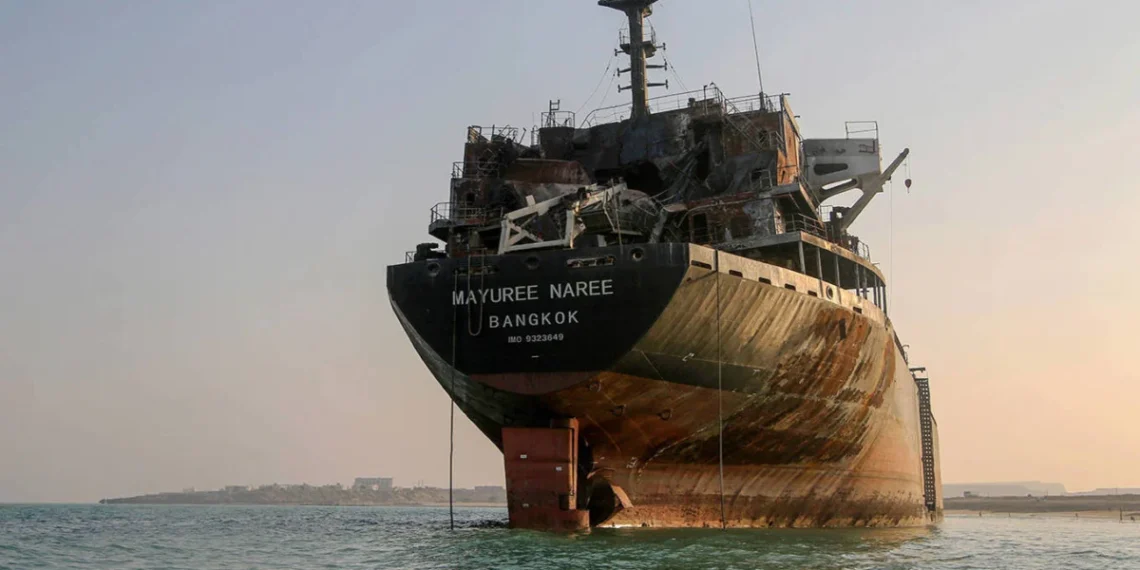
For months, the skies above the Middle East echoed with the sounds of continuous bombardment. Strategic analysts in Washington projected swift capitulation, anticipating that overwhelming force would force Tehran back to the negotiating table on Western terms. However, resilience replaced surrender. Iranian forces absorbed the blows, dispersing assets and shifting operations deeper underground. The conflict settled into a grinding war of attrition where mounting civilian casualties and staggering economic costs yielded diminishing strategic returns for the West.
Phase Four: The Fragile Ceasefire (September 2026)
Recognizing the unsustainable nature of the conflict—and facing intense pressure from international markets, European allies, and domestic constituencies—a heavily negotiated, highly unstable ceasefire was declared. Billed by Washington as a diplomatic triumph, ground realities immediately revealed the agreement to be a temporary pause in hostilities rather than a sustainable resolution. Ceasefire violations, rhetoric concerning red lines, and mutual distrust have kept the region on high alert.
Supporting Data: The Costs of Coercive Militarism
A rigorous examination of the data surrounding the recent conflict reveals the profound disconnect between military expenditure and strategic utility.
- Financial Drain: The months of intensive bombardment and the continuous deployment of carrier strike groups, stealth aircraft, and advanced missile defense interceptors cost the United States Treasury upwards of tens of billions of dollars. Each interceptor missile used to neutralize incoming asymmetric threats frequently cost millions of dollars, creating an economically unsustainable attrition equation against cheaper, mass-produced Iranian drone and missile systems.
- Economic Shocks: Global energy markets experienced severe volatility throughout the escalation phase. Disruptions in regional shipping lanes and threats to critical petroleum infrastructure caused crude oil prices to spike by over 30% at their peak, fueling inflationary pressures across Western economies already grappling with post-pandemic adjustments.
- Military Readiness: Pentagon logistical reports indicate that sustained high-tempo operations significantly depleted domestic stockpiles of precision-guided munitions and critical interceptors. Restoring these inventories to baseline readiness levels is projected to take years, exposing vulnerabilities in US preparedness for contingencies in other critical theaters, such as the Indo-Pacific.
- Human Cost: While precise casualty figures remain heavily contested by respective state ministries, independent human rights monitors and humanitarian organizations estimate that hundreds of military personnel and civilians lost their lives during the height of the bombardment, with thousands more displaced across the region.
Official Responses and Global Reactions
The international community’s reaction to the ceasefire and the broader policy of coercive militarism highlights deep divisions over the future of global security governance.
Washington: Defiance and Spin
Within the US capital, the narrative surrounding the ceasefire remains fiercely contested. Administration officials have defended the military campaign as a necessary demonstration of resolve, claiming that the strikes successfully degraded adversary capabilities and re-established deterrence. However, behind closed doors, Pentagon officials and intelligence analysts have expressed deep skepticism. Bipartisan critics in Congress have raised alarms over the lack of congressional authorization for extended military engagements and questioned whether the administration possesses a coherent endgame.
Tehran: Resilient Defiance
Iranian leadership has framed the ceasefire not as a concession, but as a strategic defense against Western aggression. Official state communications emphasize that the Islamic Republic successfully weathered the full weight of American and Israeli military might without sacrificing its core sovereignty or strategic autonomy. By projecting an image of resilience, Tehran has sought to rally domestic support and solidify its alliances within the "Axis of Resistance."
Tel Aviv: Strategic Anxiety
In Israel, the reaction is characterized by profound caution and underlying strategic anxiety. While the government initially welcomed the degradation of adversary military assets, security analysts point out that the fundamental threat environment has not fundamentally improved. The ceasefire leaves Iran’s nuclear threshold status unresolved, prompting intense domestic debates regarding the long-term efficacy of relying solely on military solutions rather than comprehensive diplomatic frameworks.
The Global South and European Allies: Calls for Restraint
Major European capitals, while publicly supporting de-escalation, have expressed private dismay over the unilateralism that drove the crisis. European diplomats have warned that abandoning multilateral frameworks, such as the Joint Comprehensive Plan of Action (JCPOA), has systematically dismantled the architecture designed to prevent regional proliferation. Meanwhile, nations across the Global South have increasingly criticized Western double standards, arguing that the fixation on coercive militarism destabilizes global supply chains and diverts critical resources away from pressing international challenges like climate change and economic development.
Implications: The Future of Global Hegemony
The trajectory of the United States, Israel, and Iran conflict offers a sobering case study in the limits of imperial overreach. As we look toward the remainder of the decade, several profound geopolitical implications emerge from this crisis:
1. The Myth of Omnipotence
The era of unchallenged American military omnipotence is drawing to a close. When a superpower expends vast amounts of treasure and technological might over months of bombardment without achieving decisive political outcomes, adversaries take notice. Far from deterring revisionist powers, coercive militarism often incentivizes them to accelerate asymmetric adaptations, secure alternative supply chains, and deepen strategic partnerships with competing global superpowers like China and Russia.
2. The Bankruptcy of Zero-Sum Diplomacy
The reliance on maximum pressure and uncompromising ultimatums has demonstrated its bankruptcy as a diplomatic strategy. True stability cannot be imposed at the barrel of a cruise missile. Without inclusive, regional security architectures that address the legitimate security concerns and sovereignty of all actors involved, ceasefires will remain nothing more than temporary intermissions between acts of war.
3. Domestic Political Fallout
The dissonance between military spending and tangible domestic well-being is driving a re-evaluation of foreign policy priorities among Western electorates. As citizens shoulder the economic burdens of inflation, supply chain vulnerabilities, and the opportunity costs of endless defense spending, the political sustainability of interventionist foreign policies is rapidly deteriorating.
4. The Pivot to Multipolarity
Ultimately, the failure of coercive militarism in the Middle East accelerates the broader transition toward a multipolar world order. Regional middle powers are increasingly taking their security into their own hands, forging independent diplomatic channels, and refusing to act as subordinate instruments of Western geopolitical strategies.
Conclusion
The ceasefire between the United States, Israel, and Iran is not a monument to peace; it is a monument to the exhaustion of force. As Pedro Abramovay and Julia Sakr-Tierney observed, when the line between war and peace dissolves into an ambiguous void, force ceases to be an asset of strength and becomes a testament to political failure.
If Washington and its allies fail to learn the lessons of this latest escalation—re-embracing robust diplomacy, respecting the limits of unilateral coercion, and recognizing that security cannot be bombed into existence—the current fragile truce will inevitably collapse into a conflict far more destructive than the one that preceded it.