Introduction: The Evolution of the Third Pedal
For decades, the holy grail of driving purity has been the traditional three-pedal manual transmission. The physical connection between the driver’s right hand, left foot, and the mechanical gearbox defined the visceral experience of piloting a sports car. However, relentless advancements in efficiency, emissions standards, and raw performance have driven the traditional manual to the brink of extinction. Dual-clutch transmissions (DCTs) and torque-converter automatics have simply become too fast, too efficient, and too dominant for automakers to justify developing dedicated manual gearboxes for low-volume sports cars.
Yet, the enthusiasts who crave tactile engagement remain vocal. Automakers are caught in a difficult balancing act: they must deliver modern, highly efficient automatic powertrains while satisfying a core demographic that refuses to let go of the past.
Enter the software-driven "simulated manual." Pioneered by elite performance brands and continually refined through clever engineering, this technology uses advanced electronics, shift-by-wire controls, and actuator-driven resistance to mimic the physical sensation of driving a stick shift. The latest player to enter this fascinating arena is Porsche. A newly uncovered patent filing from the German sports car maker reveals a sophisticated, multi-mode transmission system that could successfully bridge the chasm between uncompromising track performance and old-school analog driving joy.
Main Facts: Decoding Patent DE102025109563A1
Recently unearthed by CarBuzz at the European Patent Office under filing number DE102025109563A1, Porsche’s latest intellectual property expands significantly on a previous shift-by-wire gear selector patent filed earlier this year. While the earlier filing focused primarily on the aesthetic and functional design of the shifter itself—allowing it to toggle between traditional automatic and manual behaviors—this new document details a complete, end-to-end simulated manual transmission ecosystem built around a dual-clutch transmission (DCT) architecture and a physical third pedal.
According to the patent documentation, the system is engineered to operate across three distinct, selectable configurations:
- Fully Automatic Mode: Designed for daily commuting or effortless cruising, this mode requires zero driver input beyond selecting Drive, Reverse, or Neutral, and modulating the accelerator and brake pedals. The vehicle’s computer seamlessly manages all gear changes based on speed, load, and efficiency parameters.
- Sequential Manual Mode: Catering to spirited driving, this configuration unlocks sequential shifting via steering wheel-mounted paddle shifters or the central shift lever. This mirrors the behavior of conventional sports cars equipped with high-performance DCTs.
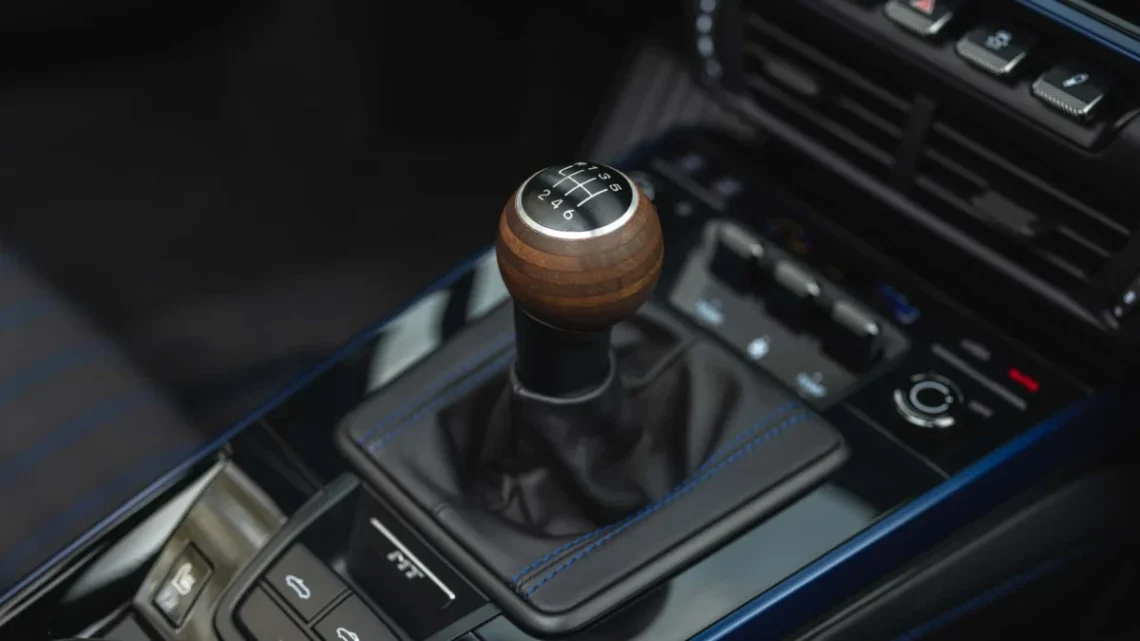
- Simulated H-Pattern Manual Mode: This is the crown jewel of the patent. When engaged, the monostable gear selector transforms into a multi-stable device, mimicking the physical gates and throw patterns of an authentic manual gearbox. Accompanied by a fully functional third clutch pedal equipped with programmable resistance actuators, the car tricks the driver’s senses into believing they are operating a traditional mechanical transmission, complete with simulated clutch bite points and shifting resistance.
Crucially, Porsche has explicitly stated that this versatile architecture is fully compatible with both traditional internal combustion engine (ICE) layouts and modern hybrid powertrains, ensuring its viability as emissions regulations continue to tighten globally.
Chronology: The Road to the Shift-by-Wire Revolution
To understand how Porsche arrived at this technological crossroad, it helps to look at the timeline of how automotive controls have evolved over the past two decades:
- The Early 2000s (The Rise of Automated Manuals): Automated manual transmissions (AMTs) and early dual-clutch units like Volkswagen’s DSG began appearing in mainstream and performance cars. While fast, they relied entirely on computer logic, alienating drivers who wanted direct mechanical control.
- The 2010s (The Death of the Stick): Stricter global emissions testing (such as the WLTP cycle) and consumer preferences shifted the market overwhelmingly toward automatics. Iconic models across the industry dropped their manual options entirely, citing slower acceleration times and lower fuel economy figures compared to modern automatics.
- The Shift-by-Wire Era (Late 2010s–Present): Physical mechanical linkages connecting shifters to transmissions rapidly disappeared, replaced by electronic signals (shift-by-wire). This decoupled the physical lever from the gearbox, opening the door for software-defined tactile feedback.
- Early 2025 (Porsche’s Initial Filing): Porsche files an initial patent for a flexible shift-by-wire lever capable of toggling between standard automatic functionality and a manual-style sequential layout.
- Mid-2025 (The Comprehensive Transmission Patent): The publication of patent DE102025109563A1 reveals Porsche’s expanded vision: integrating a physical third pedal, programmable actuators, and an H-pattern simulation framework directly into a dual-clutch transmission layout.
Supporting Data: How the Industry is Tackling the "Fake Manual" Dilemma
Porsche is far from the only high-end manufacturer exploring software-driven solutions to keep the spirit of the manual transmission alive. Across the automotive landscape, visionary brands are utilizing code and actuators to recreate analog thrills.
Koenigsegg’s Light Speed Transmission (LST)
Koenigsegg approached the transmission puzzle with its proprietary Light Speed Transmission and Engage Shift System. Instead of a traditional heavy flywheel and clutch setup, the LST uses a multi-clutch arrangement without a traditional flywheel, allowing the car to act as a hyper-fast nine-speed automatic or a simulated six-speed manual within the exact same mechanical footprint.
Ferrari’s 12Cilindri Manuale Approach
Ferrari has also leaned into software-based trickery to appease purists. The Italian marque’s advanced systems allow drivers to manually select ratios through the lower gates of an eight-speed dual-clutch transmission. Notably, Ferrari’s programming doesn’t just mimic a manual—it replicates its punishments. If a driver executes a sloppy shift or drops the clutch improperly, the system is designed to introduce mechanical-sounding jolts, shuddering, and even simulated stalls.

Hyundai’s EV Manual Patents
Even the mass market is getting in on the act. Hyundai has filed patents for a simulated manual transmission specifically designed for electric vehicles. By pairing synthetic engine noise, power delivery drops, and tactile pedal feedback with electric motors, Hyundai aims to deliver the emotional highs of a gas-powered sports car in an emissions-free EV package.
| Automaker | Technology Name | Core Mechanism | Key Feature |
|---|---|---|---|
| Porsche | Shift-by-Wire Multi-Mode Setup | Dual-Clutch Transmission + Actuated 3rd Pedal | Three distinct modes: Automatic, Sequential, and H-Pattern Simulated Manual. |
| Koenigsegg | Light Speed Transmission (LST) | Multi-Clutch Gearbox w/ Engage Shift System | Seamlessly switches between ultra-fast multi-speed automatic and manual gate operation. |
| Ferrari | Dual-Clutch Manual Simulation | Modified 8-Speed DCT Software | Punishes bad driving habits with simulated jolts, bucks, and stalls. |
| Hyundai | EV Virtual Shift System | Software-Integrated Torque Management | Simulates gear changes, clutch bites, and power drops in electric vehicles. |
Official Responses and Industry Perspectives
While Porsche has not yet confirmed which future production vehicle will debut patent DE102025109563A1, company engineers and executives have frequently spoken about the delicate balance between modern efficiency and driving engagement.
Automotive industry analysts point out that as governments push relentlessly toward electrification and carbon-neutral fleets, automakers must find clever ways to maintain brand identity. For Porsche—a brand built entirely on the philosophy of driving dynamics—losing the emotional connection of the driver’s car is an existential threat.
Enthusiast communities have responded to these software-driven patents with a mixture of cautious optimism and skepticism. While purists often argue that nothing can truly replace the tactile crunch of mechanical synchronizers and physical gearsets, many concede that if traditional manuals are legally and economically untenable in the near future, a sophisticated, highly responsive simulated system is vastly superior to a sterile, paddle-only automatic.
Implications: What This Means for the Future of Driving
The introduction of Porsche’s comprehensive simulated manual transmission patent carries profound implications for the sports car market, engineering practices, and car culture at large.
1. Preserving Emotional Engagement in an Electric and Hybrid World
As internal combustion engines give way to hybrid systems and pure battery-electric architectures, the primary differentiator between cars is increasingly becoming software rather than hardware. By utilizing programmable actuators on both the shifter and the clutch pedal, manufacturers can inject personality and soul into powertrains that might otherwise feel clinical or overly homogenized.
2. Engineering Efficiency Without Compromise
One of the primary reasons automakers phased out manual transmissions is that modern dual-clutch and torque-converter automatics achieve significantly better fuel economy and lower carbon emissions. By utilizing a physical DCT as the underlying hardware while applying software layers for driver engagement, Porsche achieves the best of both worlds: EPA-friendly efficiency and track-ready automatic shift speeds combined with weekend-warrior manual interaction.
3. Redefining Driver Training and Skill
If systems like Ferrari’s and Porsche’s become commonplace—complete with simulated stalls, clutch slip penalties, and accurate bite-point resistance—they could serve as a valuable bridge for younger generations who never learned to drive a stick shift. Drivers could experience the steep learning curve of a manual car in a controlled, adjustable environment without the risk of destroying expensive physical clutch packs.
Conclusion
Porsche’s patent for a simulated manual transmission system represents a fascinating evolution in automotive engineering. By acknowledging that the mechanical manual transmission’s days are numbered due to regulatory pressures, yet recognizing that the emotional connection of the third pedal remains vital to its customer base, Porsche is preparing for a future where software dictates emotion.
Whether these patents will translate directly onto the assembly line for the next-generation 911 or future hybrid sports cars remains to be seen. However, one thing is certain: the passion for driving isn’t dying—it’s simply being re-engineered.