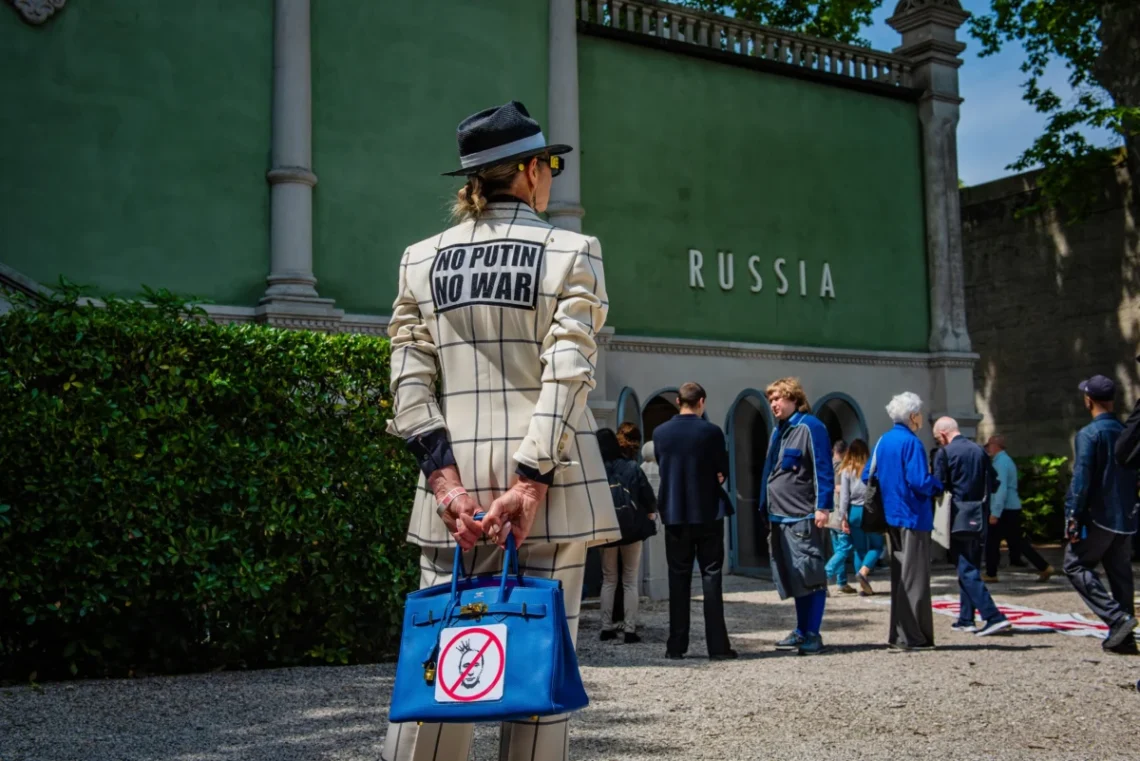
The Venice Biennale, the world’s oldest and most prestigious international art exhibition, finds itself at the epicenter of a geopolitical firestorm. Following a protracted standoff between Brussels and the Italian organizers of the event, the European Commission has officially executed its threat to rescind approximately $2.3 million in funding allocated to the Biennale. The move serves as a direct consequence of the Biennale’s decision to allow Russia to maintain a pavilion, a move the European Union characterizes as a violation of the democratic values that underpin European institutional support.
This decision marks a significant escalation in the ongoing "culture war" that has accompanied the broader geopolitical conflict in Ukraine. While the Biennale maintains that its mission is to act as an autonomous platform for artistic expression, the European Union has made it clear that financial patronage is not a neutral act, but a tacit endorsement of the values represented by the participants.
Chronology of a Contentious Return
The tensions began in March, when the Venice Biennale organization—governed by the Fondazione La Biennale di Venezia—announced that Russia would return to the event. This announcement effectively ended a four-year hiatus that had begun in February 2022, just days after the Russian invasion of Ukraine. At that time, the pavilion had been shuttered in a rare display of international artistic solidarity against state-sponsored aggression.
The return of the Russian pavilion was met with immediate, fierce backlash from the international community, European officials, and human rights activists. Despite the intensity of the opposition, the Biennale organizers stood by their decision, citing a commitment to intellectual freedom. In a formal statement released in the spring, the organization emphasized that they "reject any form of censorship in culture and art," framing their refusal to exclude the Russian delegation as a defense of the Biennale’s role as an open, global forum.
This stance, however, drew swift condemnation from within Italy. Minister of Culture Alessandro Giuli eventually declared his intention to boycott the event entirely, signaling that the Biennale’s decision had created a rift not just with the European Union, but with the host nation’s own government.
The situation reached a boiling point in early May during the Biennale’s preview week. The Russia Pavilion, featuring an exhibition titled "The Tree is Rooted in the Sky," became a lightning rod for dissent. On May 6, the situation moved beyond rhetoric when members of the feminist punk protest group Pussy Riot stormed the pavilion, transforming the exhibition space into a site of active political protest.
The Financial Nexus: Why the EU Withdrew Support
The European Commission’s decision to withdraw the $2.3 million grant is grounded in a strict interpretation of European institutional ethics. According to Thomas Regnier, spokesperson for the European Commission, the logic is simple: "European taxpayers’ money should be used to support cultural events that safeguard democratic values, foster open dialogue, diversity, and freedom of expression."
Regnier underscored that these fundamental tenets, which the EU considers the bedrock of its union, "are not respected in today’s Russia."
The Commission had issued a stern warning prior to the event, explicitly cautioning organizers that member institutions were expected to act in alignment with European Union sanctions. Specifically, the Commission warned against "giving a platform to individuals who have actively supported or justified the Kremlin’s aggression against Ukraine." This warning was not merely advisory; it carried the weight of the aforementioned multiyear grant, which the Commission threatened to revoke should the pavilion proceed.
The controversy was further amplified by the background of the pavilion’s curator. The exhibition "The Tree is Rooted in the Sky" was commissioned by Anastasia Karneeva, the daughter of Nikolay Volobuyev. Volobuyev serves as the deputy chief executive of Rostec, the massive Russian state-owned defense conglomerate. The connection between a high-ranking official in the Russian military-industrial complex and the cultural exhibition in Venice provided the European Commission with a tangible nexus between the Biennale and the Russian state’s war effort, further justifying the withdrawal of funds.
The Kremlin’s Narrative and the "Culture War"
In response to the withdrawal of funds, the Kremlin utilized its state-controlled media apparatus to frame the move as an act of intolerance. Dmitry Peskov, the spokesperson for the Russian government, dismissed the EU’s action as a desperate attempt to "cancel our culture."
This rhetoric is a recurring theme in Russian state discourse, which often posits that Western sanctions—whether economic, diplomatic, or cultural—are proof of an irrational hatred for Russian heritage. By framing the withdrawal of funding as an attack on "Russian culture" rather than a consequence of the Kremlin’s support for the war in Ukraine, Moscow seeks to mobilize domestic sentiment and position itself as the victim of a Western ideological purge.
The Biennale’s organizers, meanwhile, have adopted a posture of financial indifference. In a formal response to the funding cut, the organization stated that the loss would have "no significant impact on the budget, the financial statements, or the scheduled and ongoing activities of the Venice Biennale, all of which remain confirmed." This suggests that the organization possesses sufficient diversified funding streams to weather the loss of the European grant, or that the symbolic weight of the Biennale’s reputation is enough to secure its future regardless of EU intervention.
Implications for Global Art Institutions
The Venice Biennale incident raises profound questions about the role of art institutions in an era of global polarization. Can an art festival, by definition a "global" entity, remain neutral when its host or its participants are engaged in state-level conflict?
The Burden of Neutrality
The Biennale’s insistence on "rejecting censorship" highlights a classic liberal dilemma. By refusing to discriminate between participants based on the political actions of their governments, the Biennale maintains its status as an open platform. However, this neutrality can be interpreted as complicity by those living under the direct effects of the war in Ukraine. The European Union’s intervention suggests that, in the current geopolitical climate, the era of "art for art’s sake" is being rapidly replaced by a model of "art for values’ sake."
Precedent for Future Exhibitions
The withdrawal of $2.3 million sets a significant precedent. It signals to other international cultural bodies—from the Kassel Documenta to the various international film festivals—that European funding is conditional. Institutions that ignore the political alignment of their participants may find themselves facing similar financial sanctions. This effectively forces cultural administrators to become arbiters of international relations, a role for which many are ill-equipped.
The Erosion of Cultural Diplomacy
For decades, cultural events like the Biennale were seen as conduits for "soft power," where nations could build bridges through artistic exchange even when formal diplomatic channels were strained. The current situation suggests that such bridges are becoming increasingly fragile. When the line between a nation’s artists and its state apparatus is blurred—intentionally or otherwise—the potential for cultural diplomacy to function as a neutral ground disappears.
Conclusion
The Venice Biennale’s decision to proceed with the Russian pavilion has resulted in a costly, though perhaps manageable, financial blow. Yet, the long-term impact on the credibility of the institution may be far more significant than the loss of $2.3 million. By alienating the European Commission and facing domestic backlash from the Italian government, the Biennale has found itself at the center of a debate that transcends aesthetics.
As the dust settles, the event stands as a grim reminder that in the shadow of the war in Ukraine, even the most revered institutions of the art world cannot escape the gravity of global politics. The European Union has drawn a line in the sand, asserting that taxpayer-funded support for international dialogue comes with a requirement for moral alignment. Whether other global institutions will follow suit remains to be seen, but the era of the "apolitical" international art exhibition is, for the time being, effectively over.
The standoff between Brussels and the Venice Biennale is not merely about a budget line; it is a fundamental clash over whether cultural institutions should be spaces of unfettered expression or instruments of geopolitical accountability. In the view of the European Commission, the latter has become a necessity, and the withdrawal of these funds is the price the Biennale must pay for its refusal to conform.