Main Facts: A New Milestone for Youth Infrastructure in Portugal
The architectural landscape of Portugal has welcomed a striking new addition with the completion of the Mata do Paraíso Scout Park (Parque Escutista da Mata do Paraíso), masterminded by the visionary team at Plano Humano Arquitectos. Captured through the lens of renowned architectural photographer João Morgado, the project represents a thoughtful intersection of civic investment, youth development, and landscape-sensitive design.
Commissioned by the Municipality of Vila Franca de Xira, the development of the Scout Park was strategically conceived to address a long-standing deficit: the acute lack of dedicated, modern infrastructure to support scouting activities within the municipality. Scouting movements—which emphasize outdoor education, community service, leadership, and environmental stewardship—have long suffered from a shortage of formal, well-equipped facilities capable of accommodating large gatherings, training sessions, and weekend camps without placing undue strain on natural ecosystems.
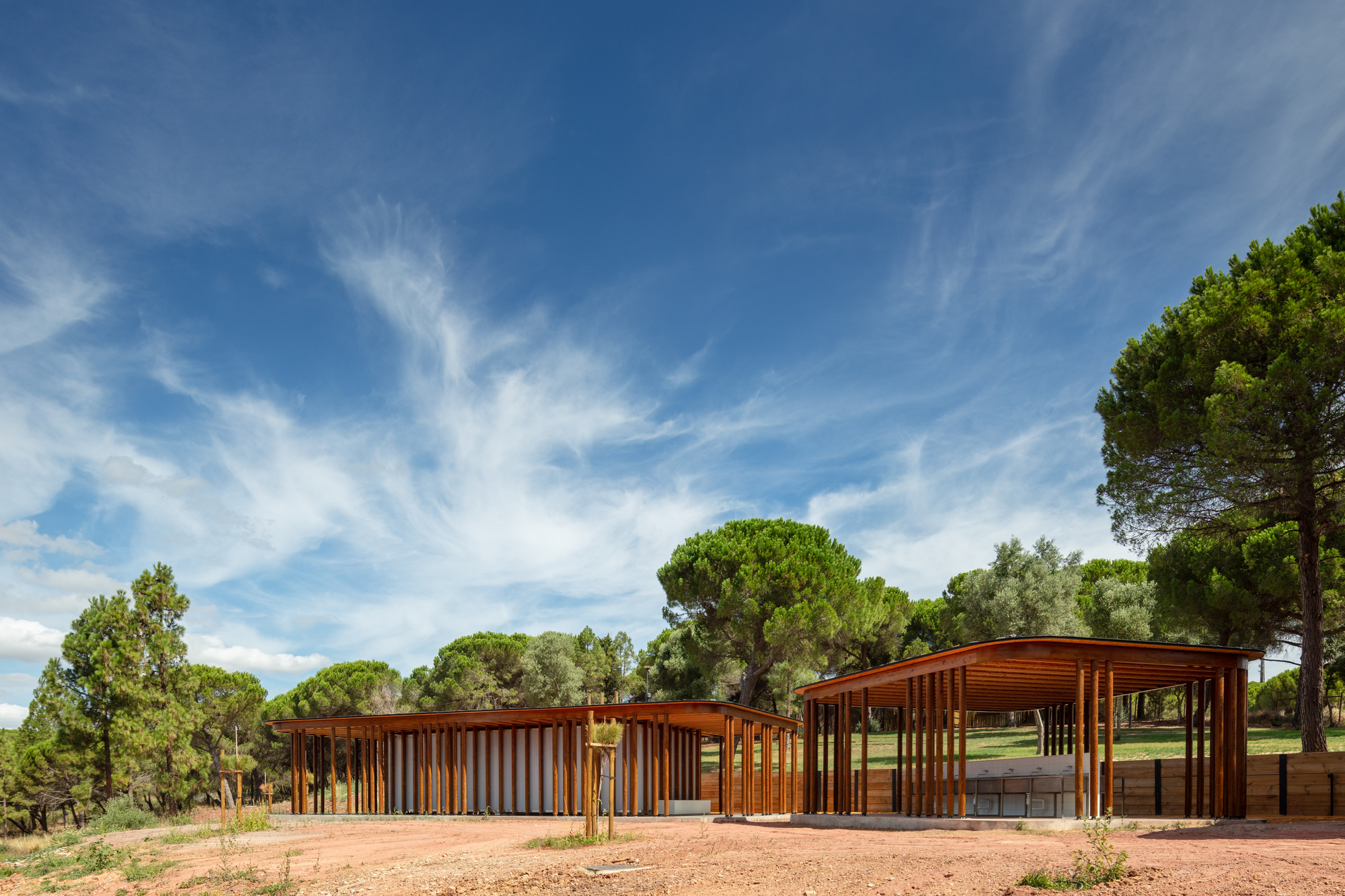
Co-financed by Portugal’s Recovery and Resilience Plan (PRR)—a major national funding instrument tied to European Union post-pandemic recovery initiatives—the Mata do Paraíso project stands as a model for how public funds can be channeled into sustainable, community-oriented architecture. Spanning across a verdant landscape, the park merges functional utility with profound respect for its natural surroundings, establishing a blueprint for future youth-centric infrastructure across the Iberian Peninsula.
Chronology: From Concept to Completion
The realization of the Mata do Paraíso Scout Park did not happen overnight; it is the culmination of years of careful planning, municipal advocacy, public funding acquisition, and meticulous architectural execution.
- The Impetus (Pre-2022): For years, local scout groups in Vila Franca de Xira operated out of makeshift locations or heavily restricted public lands, struggling with a lack of sanitation, storage, and sheltered gathering spaces. Local municipal leaders identified the Mata do Paraíso area as a high-potential site that could be revitalized into a dedicated regional hub.
- Securing the Vision (2022–2023): With the formulation of Portugal’s Recovery and Resilience Plan (PRR), municipal authorities recognized a critical funding window. The municipality partnered with Plano Humano Arquitectos to draft a comprehensive master plan that could satisfy strict environmental regulations while providing state-of-the-art facilities for youth groups.
- Design and Permitting Phase: Plano Humano Arquitectos engaged in an intensive design process, prioritizing low-impact construction methods, sustainable timber systems, and integration with the existing topography and flora of the Mata do Paraíso forest.
- Construction and Realization (2023–2026): Ground was broken following rigorous environmental assessments. Over the span of several years, the park took shape, balancing structural durability with lightweight, organic forms designed to weather gracefully within the forest canopy.
- Public Unveiling and Inauguration (September 2026): Officially published and presented to the architectural community and the public in September 2026, the completed park instantly garnered critical acclaim for its sensitive approach to community architecture.
Supporting Data: Project Metrics and Technical Framework
To fully appreciate the scope of the Mata do Paraíso Scout Park, one must examine the quantitative and structural data underpinning Plano Humano Arquitectos’ design:
- Project Name: Mata do Paraíso Scout Park (Parque Escutista da Mata do Paraíso)
- Architectural Firm: Plano Humano Arquitectos
- Curator: Susanna Moreira
- Client / Promoter: Municipality of Vila Franca de Xira (Câmara Municipal de Vila Franca de Xira)
- Funding Mechanism: Co-financed by the Recovery and Resilience Plan (PRR)
- Location: Vila Franca de Xira, Portugal
- Primary Photography: João Morgado
- Publication Date: September 15, 2026
- Material Palette: Heavy reliance on sustainably sourced timber, local stone, and low-carbon structural elements designed to blend seamlessly into the woodland backdrop.
- Core Program: Multi-purpose gathering halls, sanitary facilities, outdoor camping nodes, storage depots for scouting equipment, and shaded instructional pavilions.
Official Responses and Stakeholder Perspectives
The rollout of the Mata do Paraíso Scout Park has elicited widespread praise from municipal authorities, architectural critics, and leaders within the Portuguese scouting community.
The Municipal Vision
Representatives from the Municipality of Vila Franca de Xira emphasized that the park is more than just a collection of buildings; it is a long-term investment in the social fabric of the region. In official statements accompanying the project’s launch, municipal leaders noted that youth organizations play an irreplaceable role in shaping disciplined, community-minded citizens. By providing a permanent, professional home for these groups, the city has demonstrated its commitment to fostering the next generation of leaders. Furthermore, leveraging PRR funds allowed the municipality to execute a high-standard public project without diverting local tax revenues from other essential municipal services.
Architectural Philosophy from Plano Humano Arquitectos
Plano Humano Arquitectos approached the commission with a philosophy deeply rooted in phenomenology and environmental harmony. The firm noted that designing for scouts requires an intimate understanding of the movement’s ethos—namely, living in harmony with nature, resourcefulness, and collective responsibility.
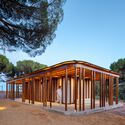
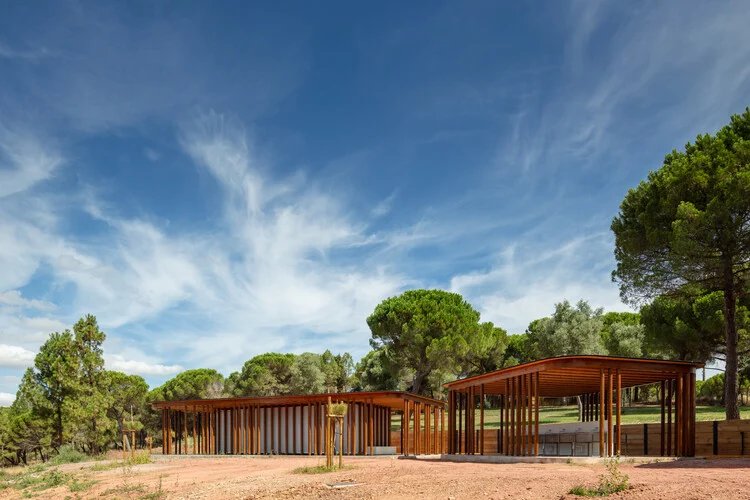
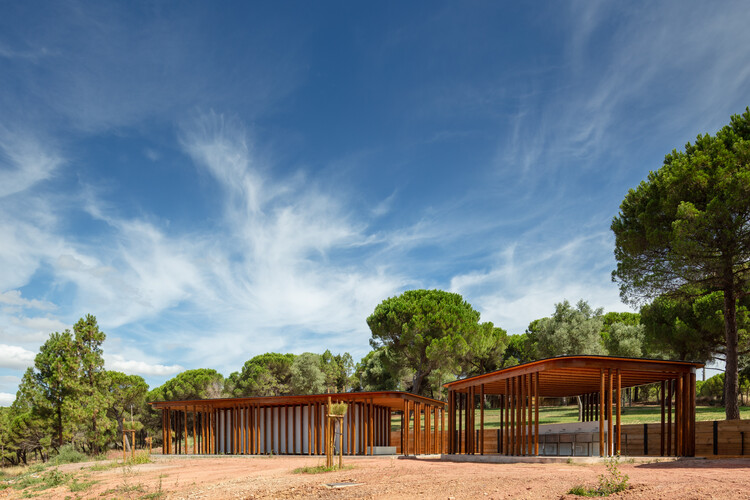
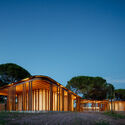
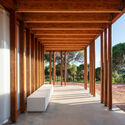
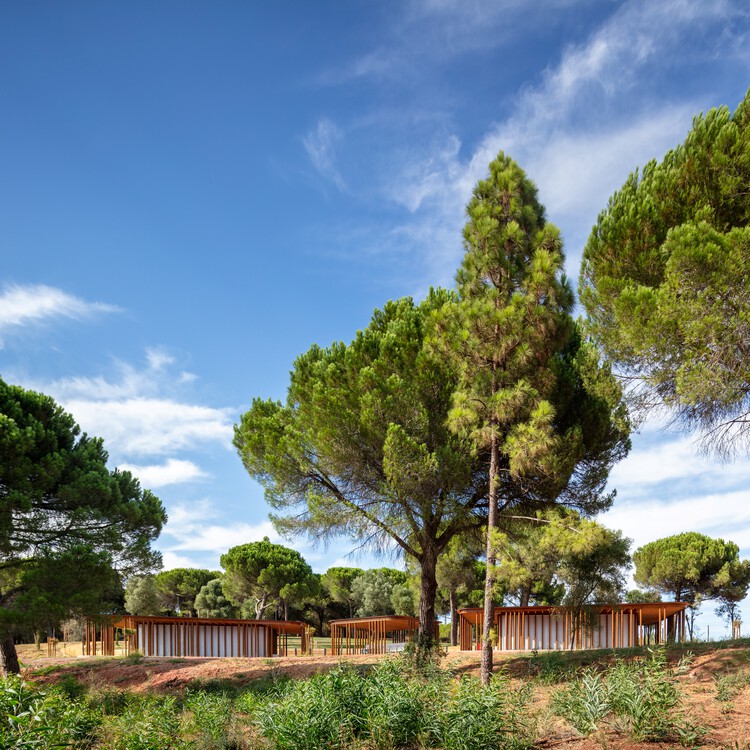
Instead of imposing a heavy, monumental urban structure onto the forest, the architects chose a dispersed typology. The buildings and pavilions are scaled down, fragmented, and carefully threaded between existing trees to avoid mass deforestation. The materiality reflects this ethos: warm woods and tactile surfaces invite physical interaction, teaching young visitors the value of natural, renewable construction materials. Curated framing of the surrounding landscape from within the pavilions constantly reminds occupants of their immersion in the natural world.
The Scouting Community’s Reaction
Local scout leaders have expressed immense relief and excitement over the completion of the park. For decades, regional jamborees and weekend training camps required extensive logistical gymnastics, often involving temporary tents and rented facilities. The establishment of Mata do Paraíso provides a secure, permanent base equipped to handle everything from inclement weather sheltering to complex wilderness survival training. Representatives from regional scouting federations have already signaled their intent to utilize the park for national-level training programs and inter-group rendezvous.
Implications: A New Benchmark for Public and Youth Architecture
The completion of the Mata do Paraíso Scout Park carries significant implications for architectural practice, municipal governance, and youth infrastructure planning across Portugal and the broader European Union.
1. A Paradigm Shift in Public Procurement
Too often, civic infrastructure projects commissioned via public tenders suffer from utilitarian monotony, prioritizing strict economic efficiency over spatial quality and environmental sensitivity. The success of Mata do Paraíso proves that public works—even those bound by strict government funding guidelines like the PRR—can achieve high architectural distinction when municipalities partner with visionary design practices. It sets a benchmark for how public funds can be utilized to create spaces that elevate human experience rather than merely solving functional deficits.
2. Sustainable Forest Integration
As climate change accelerates the need for ecological preservation, architecture must move beyond passive sustainability to active environmental stewardship. Plano Humano Arquitectos’ strategy of low-impact intervention offers a replicable model for developing recreational infrastructure in sensitive natural zones. By prioritizing elevated foundations, modular timber construction, and minimal site disturbance, the project preserves the ecological integrity of the Mata do Paraíso forest while rendering it accessible to hundreds of youths.
3. Revitalizing the Youth Movement Experience
In an era dominated by digital screens and indoor sedentary habits, the physical environment plays a critical role in drawing youth back into outdoor education. By offering clean, beautifully designed, and inspiring spaces for scouting activities, the park validates the importance of youth movements in contemporary society. It communicates a powerful message to young people: that their activities, development, and well-being are valued by their community enough to warrant world-class architectural design.
Conclusion
The Mata do Paraíso Scout Park stands as a testament to the power of thoughtful public commissioning and empathetic architectural design. Through the collaborative efforts of the Municipality of Vila Franca de Xira, Plano Humano Arquitectos, and European recovery funding, a neglected infrastructural need has been transformed into a luminous architectural asset. As youth groups begin to inhabit its timber pavilions and traverse its wooded trails, Mata do Paraíso will undoubtedly serve as an enduring sanctuary for adventure, education, and community growth for decades to come.