Main Facts: The Rebirth of a Motoring Icon
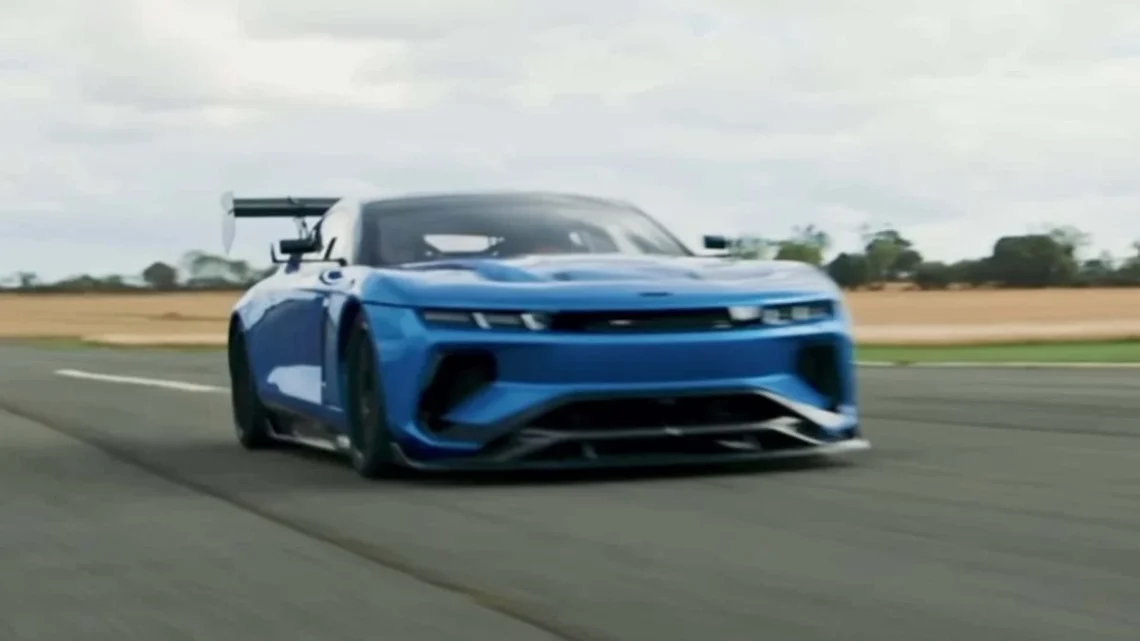
The storied name of Jensen is making a thunderous return to the global automotive stage. At the center of this revival is the 2026 Jensen Interceptor GTX, a modern track-only prototype that blends classic British grand tourer styling with unapologetic American muscle. Currently developed as a dedicated circuit machine, the Interceptor GTX is built around a heavily reworked, supercharged 6.8-liter V8 engine sourced originally from General Motors, churning out a staggering 973 horsepower in its standard state of tune.
For purists and driving enthusiasts, the specifications read like a wish-list: raw, unadulterated power channeled through a traditional manual gearbox to the rear wheels. While the Interceptor GTX is currently restricted to the tarmac of racing circuits, the British manufacturer has made no secret of its ultimate ambition. Jensen plans to translate the DNA of this track beast into road-legal production variants—specifically a grand touring GT and a more aggressive sporting GTR variant.
Although a firm launch date and pricing structure for the eventual road cars remain under wraps, the emergence of the Interceptor GTX prototype signals a major revival for a legendary marque that has been dormant for decades.
Chronology: How Jensen Got Here
The path to the 2026 Interceptor GTX has been a long and winding journey defined by nostalgic aspirations, strategic engineering partnerships, and meticulous prototype development.
- The Golden Era (1966–1976): The original Jensen Interceptor cemented its place in automotive folklore with its distinctive wrap-around rear glass window and muscular Chrysler V8 engines. It was a true cross-continental GT car, combining British coachbuilding flair with effortless American displacement.
- Decades of Dormancy: Following Jensen’s unfortunate financial struggles and eventual closure in the late 20th century, various attempts to revive the brand flickered and faded, leaving enthusiasts to cherish surviving classic examples.
- The Re-emergence Announcement: Rumors and formal announcements began surfacing regarding the return of the forgotten British brand, with promises of an ultra-high-performance luxury sports car designed to challenge modern heavyweights like Aston Martin.
- Naming the Beast: Jensen officially confirmed the identity of its new performance car, reviving the legendary "Interceptor" moniker paired with the track-focused "GTX" designation.
- The Track-Only Reveal: Breaking cover initially as a dedicated track machine, the Jensen Interceptor GTX made waves by prioritizing raw circuit performance and driver engagement over immediate homologation constraints.
- The Current Phase: Jensen is actively testing and developing the prototype vehicle, showcasing its visceral exhaust note and validating its heavy-duty mechanical components with an eye toward future public-road variants.
Supporting Data: Engineering the British-American Behemoth
Underneath the aggressive composite bodywork of the Interceptor GTX lies an impressive marriage of American grunt and specialized tuning expertise. The technical specifications highlight a vehicle engineered for pure performance:
Powertrain & Performance Specifications
- Engine Origin: General Motors block, chosen for its robust architecture.
- Tuning Partner: Late Model Engine (LME) based in Houston, Texas.
- Displacement: Supercharged 6.8-liter V8.
- Cylinder Heads: Custom CNC-machined performance heads.
- Internal Components: Upgraded rotating assembly paired with lightweight titanium valves.
- Engine Management: Advanced Motec engine management system.
- Power Output: Approximately 973 horsepower in standard track specification, with capability reaching up to 1,200 horsepower via an aggressive engine tune.
- Transmission: High-capacity manual gearbox.
Future Road-Car Lineup Architecture
- Jensen Interceptor GTX (Track Special): The current development mule and pure circuit iteration.
- Jensen GT (Grand Tourer): Planned road-going variant focused on long-distance high-speed cruising and luxury appointments.
- Jensen GTR (Sporting Variant): A sharper, more track-focused public-road derivative inheriting direct aerodynamic and suspension traits from the GTX prototype.
Official Responses and Industry Insights
Jensen’s leadership and engineering teams have emphasized that the decision to launch the Interceptor GTX as a track-only vehicle was a deliberate step to ensure durability, mechanical integrity, and authentic driving dynamics before catering to the strict regulatory demands of road-car production.
According to representatives close to the project, the partnership with Late Model Engine in Texas was crucial. While GM provides the foundational engine block, virtually every peripheral component, cooling system, and internal tolerance has been overhauled to handle upwards of 1,000 horsepower reliably under sustained track conditions. The adoption of a Motec engine management system ensures precise calibration, allowing drivers to harness the engine’s fury smoothly through a manual transmission—a rarity in the modern era of hyper-horsepower supercars dominated by dual-clutch automatics.
Automotive analysts and industry observers have noted that while bringing a low-volume British sports car from a track prototype to a compliant road vehicle is fraught with financial and regulatory hurdles, Jensen’s methodical strategy is commendable. By proving the platform’s mechanical limits on the track first, the company is building foundational credibility.
Implications: What the Interceptor GTX Means for the Future of Performance Cars
The arrival of the Jensen Interceptor GTX carries significant implications for the automotive landscape, particularly for enthusiasts lamenting the gradual disappearance of analog driving experiences.
1. The Preservation of the Manual Gearbox
In an automotive ecosystem increasingly dominated by electric powertrains and lightning-fast dual-clutch transmissions, the presence of a nearly 1,000-horsepower V8 paired with a manual shifter is nothing short of a rebellion. It signals to purists that raw mechanical engagement still holds value for boutique manufacturers.
2. A Blueprint for Boutique Revivals
Jensen’s approach—starting with a high-budget, uncompromising track car before filtering technology down to road-going Grand Touring (GT) and sporting (GTR) models—serves as a potential masterclass for other dormant historic brands attempting a modern comeback. It mitigates immediate safety and emissions homologation costs while building brand equity and engineering data on the race track.
3. The Re-Ignition of British-American Collaboration
By blending traditional British coachbuilding ethos with Texas-forged American V8 muscle, Jensen is tapping into a formula that historically defined some of the world’s most charismatic grand tourers. The success of the Interceptor GTX proves that brute American displacement, when refined with precision motorsport engineering, can still create world-class performance art.
When the road-legal variants finally materialize, they will undoubtedly carry a steep price tag reflecting their hand-built nature and elite performance metrics. However, if they manage to retain even a fraction of the thunderous roar and unbridled mechanical spirit demonstrated by the current Interceptor GTX prototype, Jensen’s triumphant return will have been well worth the wait.