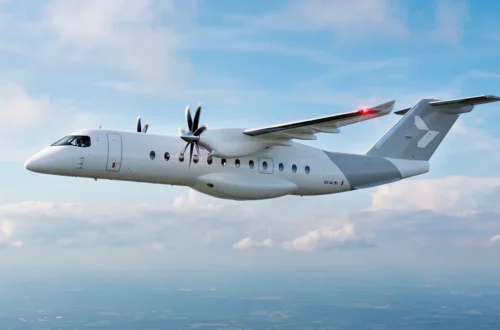
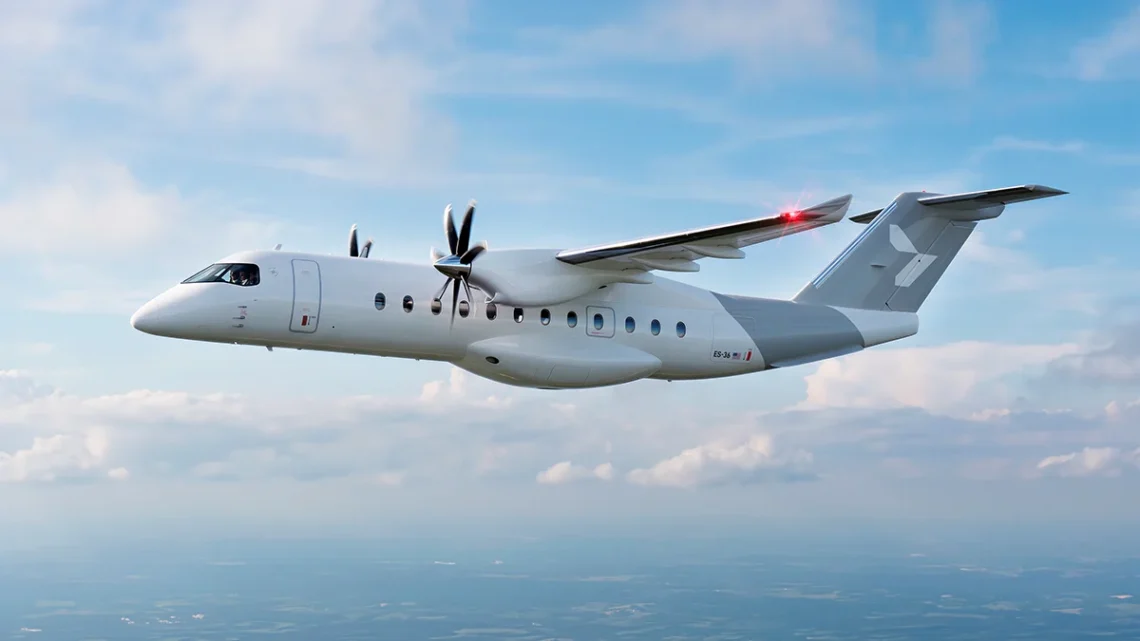
As the global aviation industry grapples with the pressing mandate to decarbonize, a new contender has emerged from California with ambitions to reshape the economics and environmental impact of regional air travel. Heart Aerospace, an innovative aircraft manufacturer known for its pioneering work in sustainable propulsion, has officially pulled the curtain back on its latest creation: the ES-36.
A 36-seat hybrid-electric regional airliner engineered specifically to connect smaller community airports with significantly reduced emissions, the ES-36 represents a major milestone in commercial aviation. Building directly upon the foundational architecture of the company’s earlier ES-30 model—which debuted in 2022—and the lessons learned from the X1 flight demonstrator tested earlier this year, the ES-36 is optimized not just for ecological stewardship, but for commercial viability.
Featuring increased passenger capacity, a greater payload, and a simplified dual-propulsion system, the aircraft has already captured the attention of major operators, signaling a decisive shift toward the operational reality of electric-powered flight.
Main Facts: Inside the ES-36 Design and Architecture
At first glance, the ES-36 maintains a familiar silhouette for regional travelers, but beneath its aerodynamically optimized skin lies a radical reimagining of short-haul propulsion. The aircraft is designed to accommodate 36 passengers—six more than its predecessor, the ES-30—while expanding its payload capacity by an impressive 1,415 pounds.
Crucially, Heart Aerospace’s engineering team achieved these performance gains without increasing the aircraft’s maximum takeoff weight or requiring a larger battery capacity than the previous design. This engineering feat was made possible by an aerodynamically refined airframe that maximizes interior cabin space while minimizing drag, thereby boosting overall revenue potential for airlines.
One of the most notable design updates from the ES-30 is the transition from a four-engine configuration to a streamlined dual-nacelle setup. By reducing the number of propulsion components from four to two, Heart Aerospace has directly addressed one of the chief financial hurdles of aircraft operation: maintenance costs. Fewer moving parts mean fewer points of failure, reduced routine servicing times, and lower overall overhead for fleet operators.

Power and Performance Metrics
The ES-36’s hybrid powertrain is driven by two robust 1.65 MW electric motors, each powering a dedicated propeller. Energy is supplied by a sophisticated onboard battery system that provides an all-electric range of up to 125 miles. For shorter regional hops, this allows the aircraft to operate with zero direct emissions and significantly reduced noise pollution—a vital benefit for community airports situated close to residential neighborhoods.
However, recognizing the current limitations of pure battery technology for longer regional routes, Heart Aerospace integrated a high-efficiency turbogenerator into the powertrain. Powered by a gas turbine, the turbogenerator can generate electricity in flight to actively supplement the batteries and drive the electric motors when necessary. This hybrid capability extends the aircraft’s maximum range to 745 miles, enabling operators to deploy the ES-36 on longer, multi-city itineraries without compromising flexibility.
Chronology: From Concept to Production Reality
The unveiling of the ES-36 is not an isolated event; it is the culmination of a rigorous, multi-year developmental timeline that reflects the rapid pace of innovation within the electric aviation sector.
- 2022: Heart Aerospace first captures global headlines with the introduction of the ES-30, establishing its vision for a thirty-passenger regional electric airliner and attracting early interest from major commercial airlines and leasing companies.
- Early 2026: The company achieves a critical developmental milestone by successfully flying its X1 demonstrator aircraft. This testing phase serves as a vital proving ground for the company’s proprietary electric propulsion technologies, thermal management systems, and flight control software.
- Late 2026: Heart Aerospace officially unveils the ES-36 production design, incorporating direct engineering feedback and aerodynamic insights gathered during the intensive flight-testing of the X1 demonstrator.
- Present Day: Construction of the very first pre-production ES-36 aircraft is officially underway at Heart Aerospace’s specialized pilot manufacturing plant located in Los Angeles, California.
- Second Half of 2028: The company anticipates the maiden test flight of the first pre-production ES-36 prototype, marking the commencement of comprehensive flight-envelope expansion and certification testing.
- 2031: Following rigorous airworthiness evaluations by aviation regulators, the ES-36 is projected to officially enter commercial service with launch customers.
Supporting Data: Operational Economics and Fleet Integration
For decades, the economics of regional aviation have been strained by rising fuel costs, aging aircraft fleets, and expensive maintenance cycles. The regional turboprop market, in particular, has seen limited innovation, leaving airlines to rely on older, noisier, and more carbon-intensive planes to service smaller communities.
The ES-36 seeks to disrupt this status market through a combination of reduced operating expenditures (OpEx) and enhanced revenue opportunities.
| Metric | Specification / Capability |
|---|---|
| Seating Capacity | 36 Passengers |
| All-Electric Range | 125 Miles (Zero Direct Emissions) |
| Hybrid Range | 745 Miles (With Turbogenerator Assistance) |
| Payload Capacity | Increased by 1,415 lbs over previous models |
| Propulsion Units | Dual 1.65 MW electric motors with streamlined nacelles |
| Projected Entry into Service | 2031 |
By optimizing the aerodynamic airframe to house six additional passengers while retaining the same takeoff weight, operators can generate significantly higher revenue per flight hour. Simultaneously, the reduction from four propellers to two drastically cuts the labor and parts expenses associated with heavy maintenance checks.

Furthermore, the ability to fly short routes entirely on battery power shields airlines from the volatility of jet fuel prices on those legs, providing predictable operational budgeting. For community airports that have experienced a decline in commercial service due to the high cost of operating traditional regional jets, the ES-36 offers a cost-effective, sustainable lifeline to larger hub airports.
Official Responses: Industry Validation and Strategic Partnerships
The true test of any new commercial aircraft design lies in the willingness of airlines and charter operators to invest capital before the first prototype leaves the ground. In this regard, the ES-36 has already secured a powerful endorsement.
JSX, the renowned U.S.-based public charter operator celebrated for its crowd-free, semi-private travel model, has signed a binding agreement to purchase 50 units of the ES-36, accompanied by purchase rights for an additional 50 aircraft. The partnership underscores JSX’s commitment to sustainable aviation without sacrificing the premium passenger experience that has built its brand loyalty.
"The hybrid-electric ES-36 will enable more nonstop routes from more convenient airports while further elevating the award-winning, no-middle-seat onboard experience that JSX customers love," said JSX CEO Alex Wilcox in a statement following the aircraft’s unveiling.
From the engineering perspective, the transition from drawing board to physical assembly has validated years of rigorous research and development.
"The ES-36 design is a direct result of what Heart Aerospace learned designing, building, testing, and flying our X1 demonstrator aircraft," noted Ben Stabler, Chief Technology Officer at Heart, during the official launch. "Those learnings have helped us make the production aircraft more capable in the air and more productive for operators."

Implications: The Future of Regional and Community Aviation
The introduction of the ES-36 carries profound implications not only for Heart Aerospace, but for the entire paradigm of regional transportation.
Revitalizing Community Airports
For decades, the hub-and-spoke model of commercial aviation has concentrated traffic into major metropolitan airports, often rendering service to smaller, community-based airstrips economically unviable for major carriers. Because the ES-36 can operate efficiently on short-haul routes with lower passenger volumes—and can do so quietly and cleanly—it paves the way for a renaissance in point-to-point regional travel. Passengers may soon find themselves able to bypass congested mega-hubs, flying directly from local community airports to their destinations.
Paving the Way for Sustainable Commercial Flight
While long-haul international aviation will likely require sustainable aviation fuels (SAFs) and hydrogen propulsion for decades to come due to weight and energy density constraints, the regional sector is uniquely positioned to adopt electrification rapidly. By demonstrating that a 36-seat commercial airliner can utilize battery power for standard short-haul legs while retaining hybrid backup for longer missions, Heart Aerospace is establishing a scalable blueprint for the rest of the industry.
The Road Ahead to 2031
Despite the enthusiasm surrounding the ES-36, significant challenges remain. The timeline leading up to the targeted 2031 entry into service will require navigating complex certification pathways with aviation authorities such as the Federal Aviation Administration (FAA) and the European Union Aviation Safety Agency (EASA). Proving the safety, redundancy, and reliability of high-output megawatt-class electric motors and heavy battery packs in commercial service will set new precedents for regulatory bodies worldwide.
Nevertheless, with the pre-production build underway in Los Angeles, committed airline partners like JSX, and a clear economic value proposition, Heart Aerospace has positioned itself at the vanguard of the green aviation movement. As the industry watches the development of the ES-36 unfold toward its maiden flight in 2028, the dream of quiet, clean, and economically viable electric air travel is rapidly transitioning from a futuristic vision into an impending reality.