OXFORD — Recent weeks have reshaped the political landscapes of two vastly different nations, thrusting them directly into the epicenter of the twenty-first century’s most high-stakes economic competition. In Brazil, incumbent President Luiz Inácio Lula da Silva successfully fended off a fierce challenge from far-right contender Flávio Bolsonaro in a polarized election that gripped South America. Meanwhile, halfway across the globe in the Balkans, a monumental political earthquake occurred as a student-led opposition movement unseated long-serving Serbian leader Aleksandar Vučić, ending his 14-year grip on power.
While the dramatic ballots have dominated international front pages, the true test for these newly empowered or re-affirmed administrations is only just beginning. Stripped of the campaign rhetoric, both Brazil and Serbia now find themselves swept headlong into the hyper-competitive global scramble for critical minerals and rare earth metals.
As the United States, China, and the European Union aggressively vie to secure supply chains for the green energy transition, resource-rich nations are discovering that geopolitical leverage is a double-edged sword. Governments in these territories must delicately balance external investment pressures from superpower blocs against urgent, domestic demands for equitable wealth distribution, environmental protection, and national sovereignty. Furthermore, international mining conglomerates operating within their borders face an unforgiving reality: if public opinion sours, host governments will not hesitate to sacrifice foreign corporate interests to appease domestic voters.
Main Facts
The global transition toward renewable energy, electric vehicles (EVs), and advanced defense technologies has triggered an insatiable demand for critical minerals—specifically lithium, rare earth elements, nickel, copper, and cobalt. This demand has turned resource-rich emerging economies into primary arenas of geopolitical contestation.
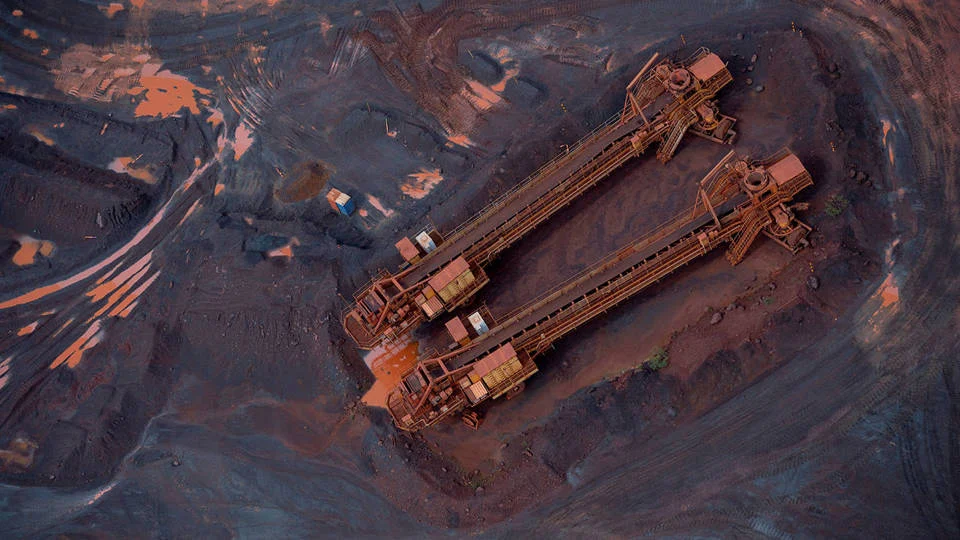
- The Brazilian Context: Brazil boasts vast reserves of critical minerals essential for decarbonization, including substantial deposits of nickel, copper, graphite, and rare earths. President Lula’s administration faces the monumental task of monetizing these assets to fund national development while adhering to environmental commitments and protecting indigenous lands. The return of Lula signals a preference for state-guided industrial policies, contrasting sharply with the deregulatory impulses favored by his right-wing opponents.
- The Serbian Context: Serbia holds one of Europe’s most strategic deposits of lithium in the Jadar Valley. The ousting of Aleksandar Vučić by a coalition of student-led and civic opposition groups creates a fluid political environment regarding resource extraction. The incoming leadership must navigate contentious debates over whether to permit large-scale mining projects—such as the stalled Rio Tinto Jadar project—which pit European Union green ambitions against fierce local environmental opposition.
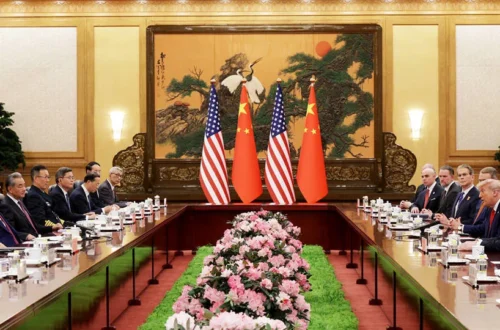
- The Superpower Dynamic: The United States and China are locked in a zero-sum game to control critical mineral supply chains. While China dominates refining and processing capacities globally, the US and its allies are rushing to diversify sources through friend-shoring and direct investments. Both Washington and Beijing expect maximum financial and strategic returns on their investments, often pressuring host governments to streamline regulations at the expense of local interests.
Chronology: The Road to the 2026 Political and Resource Crossroads
The convergence of domestic political upheavals and the critical mineral scramble did not happen overnight. A review of key milestones highlights how these pressures mounted:
- Early 2020s: Global demand for lithium and rare earths surges exponentially as EV adoption rates accelerate across the US, Europe, and China. Supply chain vulnerabilities exposed by the COVID-19 pandemic prompt major economies to categorize critical minerals as matters of national security.
- 2022–2024 (The Jadar Protests in Serbia): Environmental backlash reaches a fever pitch in Serbia. Massive street protests, organized by grassroots and student coalitions, force the Serbian government to temporarily halt Rio Tinto’s multi-billion-dollar lithium mining project, signaling that public tolerance for environmental degradation has hit its limit.
- Late 2024–2025: Brazil updates its national critical minerals strategy, seeking to position itself not merely as an exporter of raw unprocessed ore, but as an integrated hub for green industrialization. Concurrently, US and Chinese trade delegations make frequent diplomatic overtures to Brasília, offering financing packages tied to strategic supply agreements.
- Mid-2026: Political tensions peak in Serbia as economic stagnation, inflation, and public fatigue over Vučić’s centralized rule converge. Student-led civic groups coalesce into a formidable electoral force.
- October 2026:
- Brazil: In a high-stakes presidential showdown, Luiz Inácio Lula da Silva defeats Flávio Bolsonaro, securing another mandate to steer Latin America’s largest economy.
- Serbia: Weeks of intense mobilization culminate in a historic ballot that unseats Aleksandar Vučić after 14 years in power, introducing a transitional, reform-minded administration.
- Present Day (Late October 2026): Both Lula and Serbia’s new leadership assume power under intense external pressure from foreign powers demanding secure access to critical minerals, even as domestic constituencies demand rigorous environmental safeguards and transparent economic benefits.
Supporting Data & Economic Realities
The economic stakes driving the global scramble for minerals are staggering, underscoring why resource-rich nations find themselves under such intense international scrutiny.
- Market Projections: According to the International Energy Agency (IEA), the market for energy transition minerals has doubled over the past five years, surpassing $320 billion globally. Demand for lithium is projected to grow by over 40-fold by 2040 under net-zero scenarios.
- Geographic Concentration: China currently controls roughly 60% of global rare earth mining and over 80% of processing capacity. This dominance has forced Western economies to invest heavily in alternative suppliers across Latin America, Africa, and Southeast Europe.
- The Brazil Advantage: Brazil accounts for a significant share of global niobium production and possesses major reserves of graphite and nickel. However, attracting foreign direct investment (FDI) while maintaining stringent environmental regulations remains a delicate balancing act for Brasília.
- The Serbian Dilemma: The Jadar Valley deposit in Serbia contains an estimated 10% of Europe’s total lithium reserves. For the European Union, securing this domestic supply is viewed as existential for the continent’s EV manufacturing sector. Yet, public polling indicates that over 65% of the Serbian public remains deeply skeptical of foreign mining operations due to potential groundwater contamination and ecological risks.
Official Responses and Diplomatic Posturing
As the dust settles on the elections in Brasília and Belgrade, governments, international financial institutions, and corporate stakeholders have scrambled to define their positions.
Brasília’s Stance: Sovereignty and Industrial Policy
Speaking shortly after his electoral victory, President Lula emphasized that Brazil’s natural wealth must serve the Brazilian people first. "We are open to partnerships with the world, but we will not return to being a mere quarry for foreign industrial powers," Lula stated. Brazilian trade officials have signaled that future mining concessions will require mandatory domestic processing components, ensuring that technological capacity and high-paying jobs remain within the country.
Belgrade’s Balancing Act
The newly empowered Serbian administration faces a stark reality test. While opposition leaders campaigned heavily on anti-corruption and environmental protection platforms—effectively riding a wave of anti-mining sentiment—they also recognize Serbia’s economic dependence on European integration. Brussels has already issued diplomatic reminders that Serbia’s path to EU membership relies heavily on its willingness to cooperate on regional energy and supply chain security frameworks.
Washington and Beijing’s Competing Offers
- The United States: Through the Partnership for Global Infrastructure and Investment (PGII) and the Minerals Security Partnership (MSP), Washington has positioned itself as a transparent, values-driven partner. US officials stress environmental, social, and governance (ESG) standards, offering developmental capital designed to counter opaque lending practices.
- China: Operating through state-owned enterprises and Belt and Road Initiative (BRI) financing, Beijing continues to offer rapid deployment of capital, heavy infrastructure investments, and minimal political conditionality. For cash-strapped developing nations, Chinese financing remains an attractive, frictionless alternative, despite growing local pushback.
Implications: The High Stakes of Social License to Operate
The political transitions in Brazil and Serbia offer a vital lesson for the global critical minerals industry: geopolitics is local.
For decades, multinational mining firms could negotiate exclusively with central governments, securing extraction rights with minimal regard for local populations. Today, that playbook is obsolete. In both democratic and transitional societies, a lack of "social license to operate"—the ongoing approval and acceptance of a project by local communities—can instantly derail multi-billion-dollar investments.
1. The Peril of Being Thrown Under the Bus
As highlighted by recent political shifts, when public dissatisfaction reaches a boiling point, host governments are quick to sever ties with foreign mining operations to protect their own political survival. If extraction projects are perceived as exploitative, environmentally destructive, or economically hollow for locals, politicians will not hesitate to revoke licenses, freeze assets, or cancel concessions. Mining executives must therefore treat community trust not as a public relations afterthought, but as a core risk-management metric.
2. The Weaponization of Environmentalism
Environmental, Social, and Governance (ESG) standards are no longer optional checklists for compliance; they are the primary battleground of modern resource politics. In Serbia, environmental activism served as the catalyst for broader democratic mobilization. In Brazil, Amazonian conservation and indigenous land rights remain inextricably linked to the international legitimacy of any mining venture. Superpowers that attempt to bypass these local concerns in their rush for raw materials will ultimately find their investments undermined by domestic political instability.
3. A New Paradigm for Resource-Rich Nations
For Brazil, Serbia, and other resource-endowed nations, the current global scramble represents a historic window of opportunity—provided they can maintain internal stability. By leveraging the competition between Washington and Beijing, these countries can demand better terms, technology transfers, and environmental safeguards. However, mismanaging this leverage risks plunging fragile democracies back into cycles of resource curse, corruption, and social unrest.
As the geopolitical chessboard shifts, the ultimate arbiters of the green transition will not be corporate boardrooms in New York, Beijing, or Brussels. They will be the voters in towns like Jadar and states across Brazil, who hold the ultimate power to grant—or violently revoke—the permission to mine the future.