Main Facts: The Boom, The Wait, and The Customization Revolution
The private aviation sector has experienced an unprecedented surge over the past two years, marked by historic sales figures and insatiable global demand. However, this remarkable market rally has catalyzed a significant bottleneck: sprawling production backlogs that now stretch deep into the decade. For prospective buyers looking toward the absolute cutting edge of manufacturing—such as the highly anticipated Falcon 10X—delivery windows are currently hovering around 2030. Simultaneously, soaring demand has drastically inflated the baseline pricing of brand-new aircraft, with factory-fresh models easily reaching $75 million before a single bespoke customization measure is even discussed.
This convergence of prolonged waiting periods and soaring manufacturing costs has forged a booming, highly sophisticated market for pre-owned private aircraft. Rather than enduring a half-decade wait for a factory delivery, savvy buyers are acquiring top-tier used airframes and subjecting them to comprehensive modernization programs. For a fraction of the cost of a brand-new jet, owners can completely overhaul a pre-owned cabin, upgrade its avionics, and install state-of-the-art connectivity systems—all while taking delivery in mere months instead of years.
Industry experts emphasize that this is not merely a compromise; it is an optimized strategy. By purchasing proven platforms like the Gulfstream G650 or Bombardier Global series and injecting modern technology, design, and mechanical care into them, owners are effectively creating bespoke aircraft that rival, and in some cases exceed, the capabilities of contemporary factory releases.
Chronology: How the Private Jet Market Reached This Tipping Point
To understand the current appetite for pre-owned jet refurbishments, it is essential to examine the market’s trajectory over the past several years:
- The Post-Pandemic Travel Surge (2021–2022): Following global lockdowns, a massive influx of new entrants flooded the private aviation market seeking safety, flexibility, and controlled environments. This created a historic spike in both new and pre-owned aircraft transactions, quickly depleting existing inventories.
- Supply Chain Disruption and Production Bottlenecks (2022–2023): As raw material shortages, labor constraints, and component delays rippled through global manufacturing, aerospace giants struggled to keep pace. Production lines became severely backlogged, pushing delivery timelines further and further into the future.
- The Price Escalation Phase (2023–2024): With new-jet availability constrained, the laws of supply and demand drove factory prices to historic highs. Base models routinely crossed the $50 million and $75 million thresholds, pricing out or frustrating even high-net-worth buyers who refused to park capital for years waiting for a delivery slot.
- The Refurbishment Golden Age (2024–Present): Realizing that pre-owned airframes offered superior immediate availability, buyers pivoted en masse toward used models. Aviation design firms and heavy maintenance facilities began seeing record volumes of complete "nose-to-tail" interior and avionics overhauls, transforming older airframes into ultra-modern productivity suites.
Supporting Data: Platforms, Pricing, and Performance Metrics
The mathematics of pre-owned jet acquisition and refurbishment present a compelling financial and operational argument for modern flyers.
Popular Pre-Owned Starting Points
The market for pre-owned heavy and ultra-long-range jets is robust, anchored by aircraft that boast exceptional engineering, proven reliability, and impressive fuel efficiency. Preferred models frequently include:
- Gulfstream: G550 and G650
- Bombardier: Global 6000, 6500, and 7500
- Dassault Falcon: 7X and 8X
Financial Breakdown
- Acquisition Cost: These established, high-performing aircraft typically command pre-owned market prices ranging between $20 million and $50 million, depending on total airframe hours, age, and maintenance status.
- Core Upgrades: According to Sarah Mespelt Larrañaga, principal at Sarah Larrañaga Aviation Design, a comprehensive modernization package averages approximately $5 million.
- The Scope of Upgrades: For this investment, owners receive a total transformation encompassing both aesthetics and performance. Upgrades regularly feature:
- Advanced avionics and next-generation cockpit equipment
- Sophisticated cabin-management systems (CMS)
- State-of-the-art sound insulation and entertainment setups
- Mood-enhancing architectural lighting
- High-speed global connectivity via satellite systems like Starlink
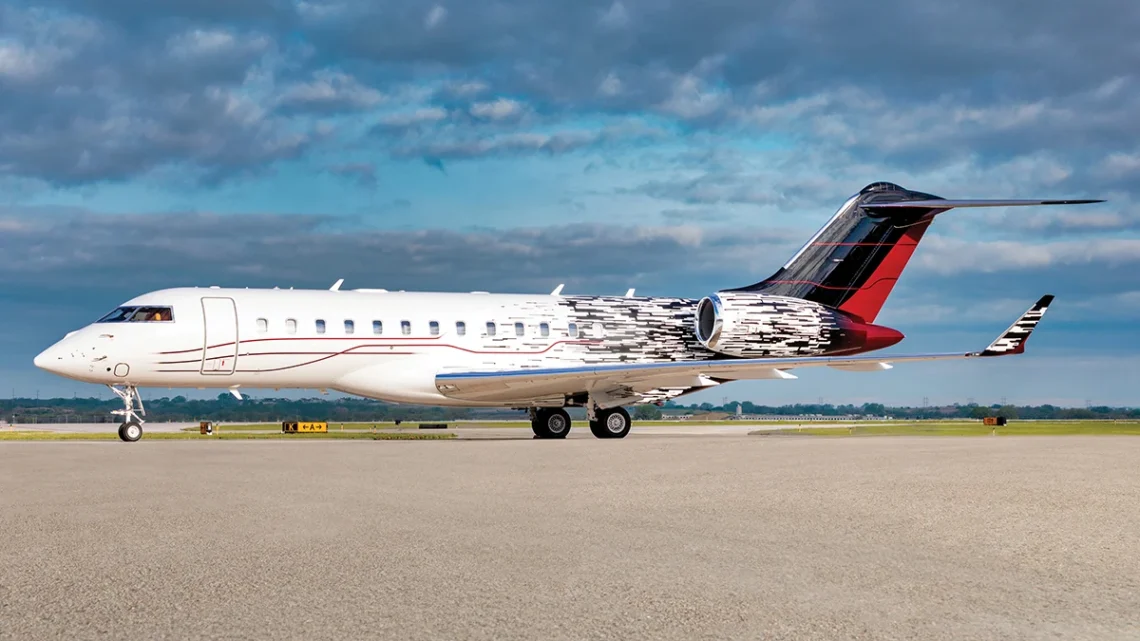
- Bespoke luxury amenities, including custom cocktail bars, artisanal lounges, and even onboard DJ booths
Official Responses: Insights from Industry Leaders
The shift toward pre-owned custom modifications has transformed the business models of top-tier design houses, completion centers, and aircraft acquisition brokerages. Industry leaders highlight both the operational advantages and the strategic pitfalls to navigate.

Sarah Mespelt Larrañaga, Principal, Sarah Larrañaga Aviation Design
Operating out of Los Angeles, Larrañaga has witnessed the paradigm shift firsthand.
"There has definitely been an uptick in used aircraft being purchased to be refurbished," Larrañaga observes. "There’s so much available technology that we can actually take a used aircraft and almost make it stronger than when it first came out."
She emphasizes that the goal is to elevate the flying experience to match the demands of modern enterprise. Highlighting a recent client interaction where a corporate team utilized a freshly remodeled jet to conduct a seamless, uninterrupted eight-hour workday, Larrañaga notes: "We’re helping people do business at a higher level, literally and figuratively."
James Carroll, Duncan Aviation Sales and Acquisition Team
For heavy maintenance and outfitting, coordination is everything. James Carroll of Duncan Aviation points out that merging aesthetic upgrades with mandatory structural servicing is a masterclass in efficiency.
"There can be efficiencies in coordinating upgrades with scheduled maintenance," Carroll explains. "If an aircraft is already going to be down for significant service, combining that visit with paint, interior, avionics, or other modifications can reduce the number of separate downtime events and return a substantially updated aircraft to service more efficiently."
Furthermore, Carroll stresses the importance of foresight before pulling the trigger on a purchase. "The key is starting with the right airplane," he advises, advocating for rigorous pre-purchase evaluations.
Rolland Vincent, Independent Industry Analyst
While the sky is essentially the limit when it comes to personalization, veteran aviation analyst Rolland Vincent offers a cautionary note regarding long-term asset value.

"Highly customized changes will almost certainly diminish the size of the available resale market for an aircraft and the price it will command," Vincent warns.
While an owner might revel in ultra-specific artistic choices or unconventional layouts, future buyers may not share the same tastes, making balance a critical factor during the design phase.
Implications: What This Trend Means for the Future of Private Aviation
The pivot toward pre-owned jet refurbishment is reshaping the broader ecosystem of business aviation in several profound ways.
1. Complementing, Not Cannibalizing, New-Jet Sales
Despite the surge in used-plane makeovers, industry data confirms that this trend is not replacing original equipment manufacturer (OEM) sales. Instead, it offers a parallel pathway for buyers who cannot afford to wait half a decade for a production slot. As James Carroll notes, ultra-high-net-worth individuals and corporate flight departments simply recognize that they have "more than one path to achieving their mission." OEMs continue to secure future orders while completion centers capture the immediate demand of impatient buyers.
2. Redefining Asset Lifespan and Sustainability
The ability to strip an aircraft down to its skeleton and rebuild it with the latest noise-canceling materials, aerodynamic exterior paints, and gigabit-speed satellite internet fundamentally changes the lifecycle of private jets. Airframes that might have previously faced retirement or sluggish resale values are given a vibrant second act. This sustainability-adjacent mindset reduces the pressure on raw manufacturing supply chains and maximizes the utility of existing engineering marvels.
3. The Democratization of Custom Luxury
With pre-owned airframes acting as blank canvases, buyers are no longer bound by standard factory catalog options. Design houses are pushing the boundaries of what is possible inside a pressurized tube, turning cabins into flying penthouses. As long as production backlogs persist and manufacturing costs remain elevated, the art of the private jet transformation will remain one of the most dynamic, practical, and luxurious sectors in global aviation.