CAMBRIDGE — Is the world’s second-largest economy experiencing an unprecedented high-tech renaissance, or is it succumbing to a protracted, structural stagnation? This paradox sits at the heart of contemporary global economics.
China’s economic landscape is profoundly unbalanced. A battered real-estate sector, anemic domestic consumption, and stark regional disparities coexist uneasily alongside a hyper-dynamic technology sector and an indomitable export engine. Yet, historical precedent and current trajectories suggest a sobering reality: provided that political stability is maintained, China could well continue to dominate as a global economic powerhouse even as hundreds of millions of its citizens remain trapped in poverty.
To understand modern China is to grapple with this dual nature. On one hand, its export industries—spanning electric vehicles (EVs), photovoltaic solar panels, and virtually the entire spectrum of manufactured goods—are the envy of the world. Its artificial intelligence and tech industries trail only the United States, leaving Europe and the rest of the developing world far behind.
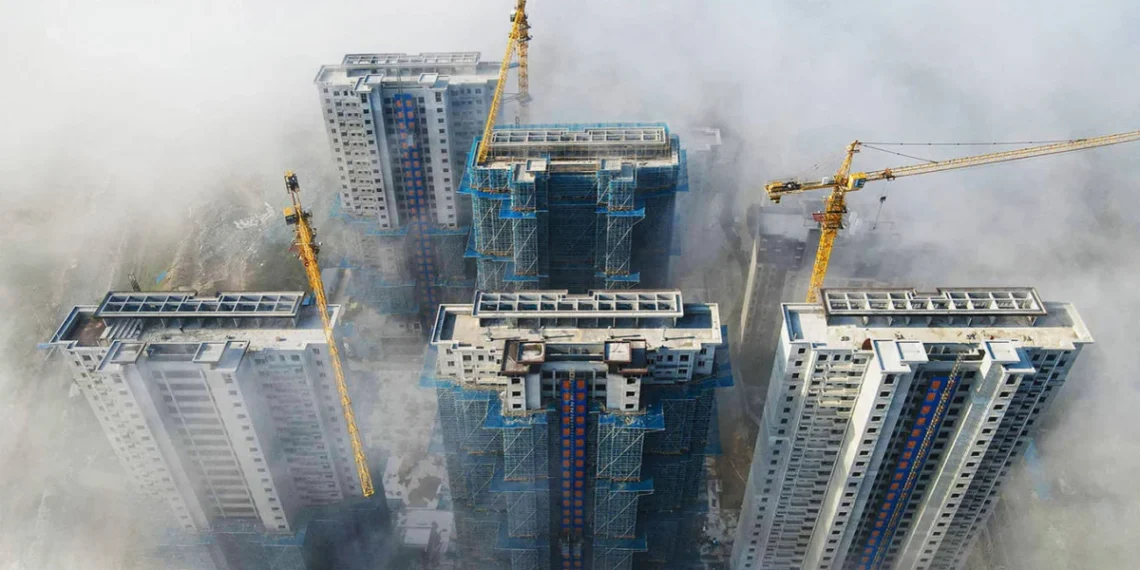
On the other hand, the nation is enduring the grueling aftermath of a full-blown, Japan-style real-estate crisis. This contradiction begs a fundamental question: Can China be booming and stagnating at the exact same time?
Main Facts
The current Chinese economic matrix is defined by a series of sharp dichotomies that challenge traditional macroeconomic models.
At the core of the dynamic engine are advanced manufacturing and green technology. Chinese firms have achieved dominant global market shares in the transition to renewable energy. From lithium-ion batteries and wind turbines to affordable, high-specification electric vehicles, Chinese industrial policy—backed by state-directed credit and formidable engineering capabilities—has successfully outcompeted legacy industrial powers in North America and Europe. In artificial intelligence, quantum computing, and telecommunications, Chinese enterprises continue to scale global frontiers despite aggressive foreign technology restrictions and export controls.
Conversely, the domestic foundations of the economy remain fragile. The implosion of the property market has dragged down consumer confidence, local government finance, and household wealth. Real estate and its sprawling supply chains historically accounted for roughly 30% of China’s GDP. The prolonged downturn has not merely represented a market correction; it has triggered a profound wealth effect reversal among the Chinese middle class, whose savings were predominantly locked up in residential property.
Consequently, domestic consumption remains weak. Despite repeated fiscal interventions and monetary easing by the People’s Bank of China (PBOC), everyday consumers are deleveraging, prioritizing savings over spending in the face of structural uncertainties regarding employment, healthcare, and pensions.
Compounding these challenges are severe regional disparities. While gleaming Tier-1 metropolises like Shenzhen, Shanghai, and Beijing boast living standards and technological ecosystems that rival or exceed Western capitals, vast swaths of China’s interior and rural provinces lag significantly behind. Hundreds of millions of citizens live on modest incomes, forming a dual-circulating society where ultra-modern export hubs operate alongside an under-monetized rural periphery.
Chronology: The Road to the Dual-Track Economy
To grasp how China arrived at this crossroads, one must trace the historical and policy milestones that shaped its modern economic trajectory.
- Late 1970s – 2000s: The Export-Led Miracle. Under the banner of "Reform and Opening-Up," China leveraged its vast labor arbitrage, special economic zones, and integration into the World Trade Organization (WTO) to become the "world’s factory."
- 2008–2010s: The Debt-Fueled Supercycle. In response to the Global Financial Crisis, Beijing launched a massive four-trillion-yuan stimulus package. This catalyzed an unprecedented construction and real-estate boom. While it insulated China from immediate Western stagnation, it sowed the seeds of massive corporate and local government debt, heavily tying future growth to property development.
- 2020–2021: The "Three Red Lines" and Regulatory Crackdown. Seeking to curb systemic financial risks, Beijing introduced the "three red lines" policy to deleverage property developers. Simultaneously, sweeping regulatory crackdowns targeted major tech, education, and finance firms. While intended to rein in monopolistic practices and financial exposure, these dual moves precipitated a liquidity crunch in the property sector.
- 2021–2023: The Property Unraveling. High-profile debt defaults by major real-estate giants—epitomized by the troubles at Country Garden and Evergrande—ushered in a multi-year property slump. Home sales plummeted, unfinished housing projects multiplied, and local governments faced acute budgetary crises due to dried-up land sales.
- 2024–2026: The Green Surge vs. Domestic Slump. As traditional growth drivers stalled, Beijing doubled down on manufacturing upgrades, channeling capital into the "New Three" growth engines: EVs, lithium batteries, and photovoltaic products. This triggered intense global trade friction—leading to US and EU tariffs—while domestic consumption remained persistently sluggish, locking the economy into its current bifurcated state.
Supporting Data and Metrics
Economic indicators underscore the stark duality of the Chinese economy:
- Real Estate Correction: China has entered the sixth year of its real estate slump. Property investment and new construction starts have seen sustained double-digit contractions compared to their pre-crisis peaks, heavily impacting steel, cement, and glass industries.
- Global Manufacturing and Export Dominance: China accounts for over 30% of global manufacturing output. In the EV sector, Chinese manufacturers now capture over 60% of global sales, while producing more than 80% of the world’s solar panels and critical components.
- The Consumption Gap: Household consumption accounts for roughly 38–40% of China’s GDP—significantly lower than the global average of around 60%, and drastically lower than the United States’ roughly 70%. This structural underconsumption forces excess industrial capacity to find outlets abroad, fueling global trade imbalances.
- Income Disparities: While China eradicated extreme poverty by its official domestic metrics, premier economists note that hundreds of millions of citizens still earn less than 2,000 yuan (approximately $280) per month, highlighting the vast gulf between the tech-enabled elite and the broader populace.
- Debt Burdens: Total non-financial debt (corporate, household, and government) has climbed steadily, estimated at over 300% of GDP, with local government financing vehicles (LGFVs) remaining a persistent source of fiscal vulnerability.
Official Responses and Policy Dilemmas
Beijing’s policymakers face a delicate balancing act. The traditional playbook of debt-financed infrastructure and property stimulus is no longer viable without exacerbating structural financial risks. Consequently, the Chinese Communist Party has shifted its strategic focus toward "New Quality Productive Forces"—a policy framework prioritizing advanced manufacturing, automation, green energy, and self-reliance in foundational technologies like semiconductors.
To address local government debt, the central government has authorized debt-swap programs and issued special sovereign bonds to alleviate municipal fiscal stress. However, officials have deliberately resisted launching massive consumer-facing stimulus packages akin to Western COVID-19 relief checks, citing concerns over "welfareism" and a preference for supply-side industrial upgrading.
Monetary policy remains loose, with the PBOC executing targeted reserve requirement ratio (RRR) cuts and interest rate reductions to support liquidity. Yet, credit demand from private enterprises and households remains muted, rendering monetary transmission mechanisms less effective.
On the geopolitical front, Beijing has responded to Western protectionism by diversifying trade partnerships. Through the Belt and Road Initiative (BRI) and expanded trade ties with the Global South—spanning Southeast Asia, Latin America, Africa, and the Middle East—China is successfully insulating its export engine from Western trade barriers, even as trade tensions with Washington and Brussels escalate.
Global and Domestic Implications
The implications of China’s bifurcated economic reality extend far beyond its borders, shaping global markets, geopolitics, and long-term development paradigms.
1. For Global Markets and Trade
China’s excess industrial capacity, driven by state-supported manufacturing in green tech and EVs, is flooding global markets with competitively priced goods. While this accelerates the global green transition by making renewable infrastructure affordable, it presents severe deflationary pressures and existential threats to manufacturing sectors in Europe, the US, and emerging economies like Brazil and India. Expect a prolonged era of trade friction, characterized by rising tariffs, anti-dumping investigations, and fragmented supply chains.
2. For the Global Economy
China remains the primary marginal driver of global economic growth, accounting for roughly one-third of world growth. However, a structural slowdown in domestic demand means that the "China commodity supercycle"—which historically fueled resource exporters in Australia, Latin America, and Africa through relentless construction booms—is fundamentally changing. Future demand will be dictated by high-tech mineral inputs (such as lithium, cobalt, and rare earths) rather than bulk commodities like iron ore and cement.
3. For Domestic Stability and the Social Contract
The central thesis of modern Chinese political economy is that economic performance underpins political legitimacy. The coexistence of a booming tech-export sector with widespread low-income populations and a deflated property market tests this social contract. However, historical models—including Japan’s post-bubble stagnation and various state-capitalist models—demonstrate that an economy can maintain immense geopolitical power, advanced military capabilities, and technological supremacy even with a sluggish domestic consumer base and high inequality.
Provided that political stability is rigorously maintained through internal security apparatuses and targeted welfare cushions, China is poised to remain a formidable global superpower. It will not necessarily collapse under the weight of its real estate crisis, nor will it return to the hyper-growth rates of the 2000s. Instead, it is pioneering a new, deeply uneven economic model: a high-tech powerhouse sailing through structural storms, proving that a nation can be simultaneously stagnant and booming.