Date: October 28, 2026
Author: Stephen S. Roach
Section: Politics & World Affairs
Main Facts
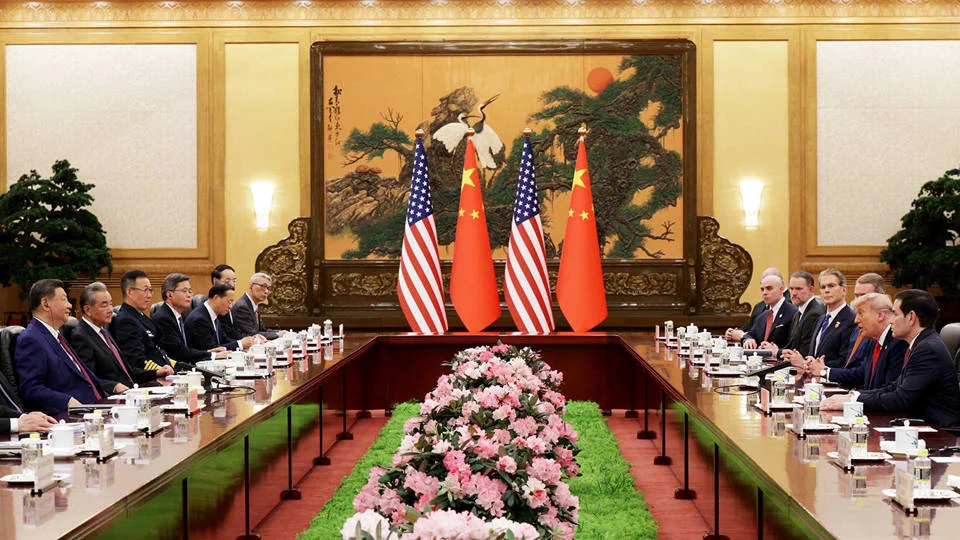
Delegates gathered at the prestigious Bund Summit in Shanghai departed with a cautious sense of optimism, largely agreeing that the bilateral relationship between the United States and China may finally be entering a less contentious chapter. While the immediate policy friction of the past decade remains fresh in the minds of global strategists, the overarching discourse in Shanghai centered on the profound implications of a post-Trump global order.
The most encouraging development at the summit was not a formal trade agreement or a joint communiqué, but rather the return of candid, transparent exchanges between international and Chinese stakeholders. For years, diplomatic channels had frozen into hardened ideological postures. However, discussions along the Huangpu River suggested a growing appetite among policy thinkers and economic leaders to recalibrate the terms of engagement.
Yet, this diplomatic thawing occurs against a backdrop of deep personal and systemic contradictions regarding intellectual freedom within China. Even as high-level forums debate the future of global cooperation, the domestic climate for critical economic and political analysis remains tightly constrained. The friction between open international dialogue and domestic reticence continues to define the complex reality of modern China’s engagement with the world.
Chronology
To understand the current trajectory of US-China relations and the shifting dynamics of international dialogue with Beijing, it is essential to examine the timeline of events leading up to the autumn 2026 Bund Summit:
- Early 2000s to Mid-2010s (The Golden Era of Engagement): Regular international forums, notably the China Development Forum (CDF) and high-level economic dialogues, fostered an environment where foreign scholars, economists, and business leaders could offer candid, constructive critiques of Chinese economic policy without facing immediate political ostracization.
- Late 2010s to 2020 (The Rise of Bilateral Friction): Trade tensions escalate dramatically between Washington and Beijing under the Trump administration. Tariffs, technology export controls, and strategic decoupling initiatives begin to poison the well of bilateral goodwill, filtering down into academic and institutional exchanges.
- 2020–2022 (The Pandemic Lockdown and Autonomy Shift): The implementation of strict national security laws in Hong Kong alters its status as an international financial and intellectual hub. Long-standing academic and professional relationships across the border begin to strain under the weight of political conformity.
- March 2026 (Institutional Exclusions): Long-standing foreign participants who voice structural critiques of mainland economic policies—such as veteran observer Stephen S. Roach, after 25 years of continuous attendance—find themselves banned from the China Development Forum. Personal and professional networks in Hong Kong and the mainland experience a cooling effect, as former associates distance themselves to avoid political liability.
- October 2026 (The Bund Summit in Shanghai): Delegates convene in Shanghai to assess the state of Sino-American ties. Discussions focus on the potential for a new, less volatile chapter in superpower relations, predicated on the evolution of US leadership in the post-Trump era and a renewed—though still fragile—desire for honest cross-border dialogue.
Supporting Data
The nuances of the current geopolitical shift are grounded in distinct macroeconomic and diplomatic data points:
- Institutional Longevity vs. Exclusion: Prior to his exclusion in early 2026, foreign delegates like Roach maintained a quarter-century tenure at the China Development Forum, representing a bridge of continuous dialogue between Western economic thought and Chinese policy-making circles. The termination of these long-standing relationships highlights a contraction in institutional tolerance for external critique.
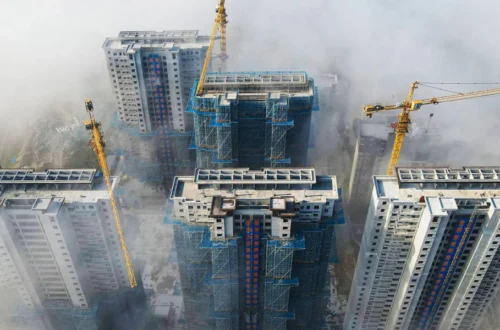
- Economic Realities: The structural malaise affecting the mainland Chinese economy remains a primary driver of external concern. Real estate sector adjustments, localized debt overhangs, and shifting domestic consumption patterns continue to require transparent diagnostic analysis—analysis that is frequently discouraged domestically.
- The Hong Kong Transformation: The erosion of Hong Kong’s autonomous identity has been quantitatively tracked by international financial indices and legal monitors, noting a steady decline in the city’s traditional role as an open conduit for unfiltered economic and political discourse between East and West.
- Summit Consensus: Over 60% of international delegates surveyed informally at the Bund Summit indicated an expectation of stabilizing bilateral trade guardrails over the next 24 to 36 months, provided that domestic political transitions in the United States avoid a resurgence of aggressive, uncoordinated tariff maneuvers.
Official Responses
While economic forums and academic circles grapple with the realities of engagement and exclusion, official stances from Beijing and Washington reflect a calculated cautiousness:
- Chinese State and Institutional Stance: Official bodies in Beijing have consistently maintained that international engagement is welcome, provided it respects national sovereignty and adheres to domestic legal and political frameworks. Institutions like the China Development Forum position themselves as premier platforms for global economic cooperation, emphasizing shared growth, technological innovation, and multilateralism. Direct commentary on the exclusion of individual critics remains sparse, framed typically through the lens of upholding domestic regulatory standards and maintaining constructive, forward-looking partnerships.
- Western Diplomatic and Academic Reactions: Western governments and independent think tanks have expressed growing concern over the shrinking space for independent, objective analysis inside mainland China and Hong Kong. Academic institutions and international corporations operating in the region have noted that the inability to conduct open, unvarnished economic evaluations increases systemic risk for foreign investors. At the same time, diplomatic channels continue to advocate for reciprocal access, transparency, and the restoration of robust track-two diplomacy to prevent misunderstandings between the two nuclear-armed economic superpowers.
Implications
The dual narratives emerging from Shanghai—the tentative diplomatic warming at the Bund Summit versus the hardening domestic limits on intellectual freedom—carry profound implications for the global order:
1. The Future of Track-Two Diplomacy
Track-two diplomacy (informal dialogue between academics, retired officials, and private sector experts) has historically served as a critical safety valve during periods of official government friction. When long-time observers and constructive critics are systematically excluded from institutional platforms like the CDF, the vital feedback loop between external markets and internal policymakers is severed. This creates an echo chamber effect, raising the risk of policy miscalculation on both sides of the Pacific.
2. Investment Climate and Economic Transparency
Global capital markets rely heavily on accurate, transparent data and unhindered analytical debate to price risk effectively. If mainland China and Hong Kong continue to penalize structural critiques—such as highlighting slowing productivity growth, demographic headwinds, or structural economic imbalances—foreign institutional investors will face heightened uncertainty. The transition from an open, debate-friendly investment climate to a strictly managed narrative environment complicates long-term capital allocation strategies.
3. Navigating the Post-Trump Global Architecture
As the international community looks toward a post-Trump era, the structural tensions between the US and China will not vanish overnight. While a less volatile rhetoric may characterize high-level statecraft, the technological, security, and ideological fault lines remain deeply entrenched. For middle powers and global markets, the primary challenge will be navigating a fractured global economy where economic interdependence persists alongside deepening strategic competition.
Ultimately, the events at the Bund Summit and the parallel narrowing of domestic debate present a paradox: while the architects of global finance desperately seek a less contentious chapter in US-China relations, true stability cannot be achieved without the foundational courage to confront uncomfortable truths through open, unhindered debate.