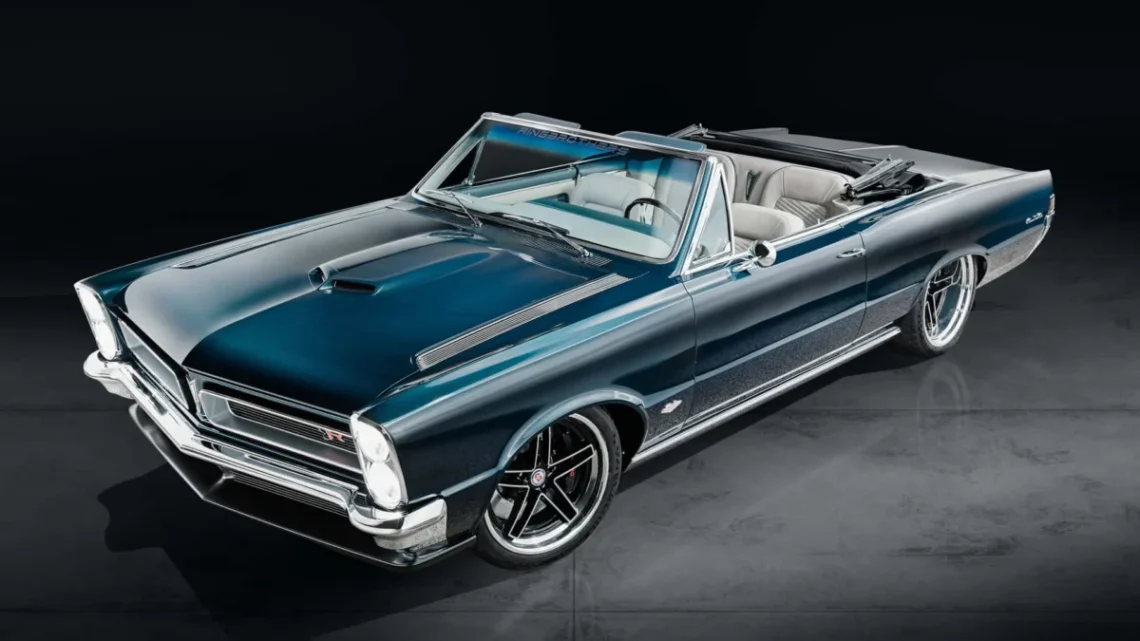
LAS VEGAS — The annual SEMA Show in Las Vegas has long served as the ultimate crucible for automotive creativity, where world-class fabricators, designers, and tuners bring their most ambitious visions to life. Among the sea of custom iron, carbon fiber, and high-horsepower exotics, few shops command as much reverence as the Ringbrothers. Renowned for turning classic American muscle cars rolling works of art with jaw-dropping attention to detail, Jim and Mike Ring have outdone themselves for the latest convention. Their latest creation, affectionately baptized “Billie,” is a heavily modified 1965 Pontiac GTO Convertible that bridges the gap between classic Detroit heritage and modern hyper-car engineering.
Starting life humbly as a Pontiac Tempest Convertible before undergoing a comprehensive, ground-up reinvention, “Billie” represents over 5,500 hours of meticulous craftsmanship. It is a masterclass in subtlety and proportion, proving that radical modifications do not have to scream to make a profound statement.
Main Facts: Beneath the Surface of "Billie"
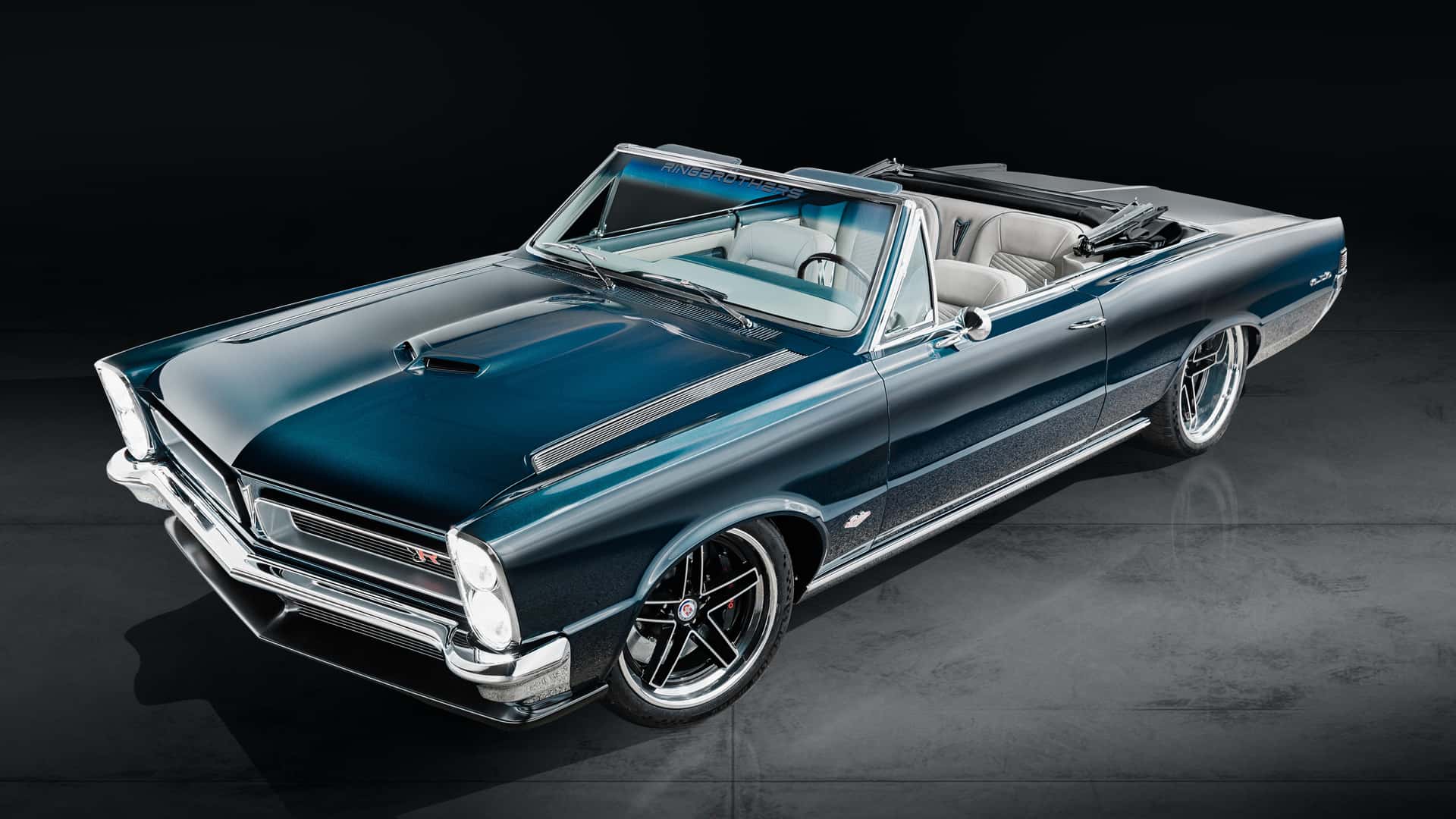
At first glance, the 1965 Pontiac GTO Convertible looks remarkably authentic, maintaining the iconic stance and aggressive silhouette that defined the Golden Age of American muscle. However, a closer inspection reveals that virtually every single panel has been touched, reshaped, or entirely re-engineered.
The most staggering dimension of the build is its width. The Ringbrothers widened the entire body of the GTO by a full five inches. To achieve this without throwing off the visual weight and classic proportions of the original car, the team performed extensive structural surgery. This included reshaping the front fenders, lengthening the rocker panels, and flaring the rear quarter panels.
Complementing the widened metal is an extensive application of exposed and painted carbon fiber. The lightweight composite material was used to construct the custom hood—complete with an enlarged, menacing scoop and functional cooling vents—alongside the front wheel tubs, lower front valance, and rear diffuser. Finishing off the exterior details are custom-machined bumpers, redesigned headlight surrounds, and a striking, one-piece aluminum taillight panel. The car is bathed in a bespoke hue called "Billie Goat Blue," contrasted by polished chrome accents and subtle black detailing.
Beneath its sculpted sheet metal lies modern supercar performance. The GTO is powered by a supercharged 6.2-liter LT4 V8 engine built by Wegner Motorsports. Famous for supplying ferocious power to General Motors performance flagships like the Cadillac CT5-V Blackwing, the engine pumps out an earth-shattering 650 horsepower and 650 pound-feet of torque. Power is channeled to the rear wheels via a lightning-quick Bowler Performance 10-speed automatic transmission.
Chronology of a Masterpiece: From Tempest to SEMA Star
Building a car of this caliber is not an overnight endeavor; it requires a disciplined, multi-stage evolution that spans months of intensive labor, engineering, and artistic refinement.
Phase 1: Conceptualization and Sourcing
The project began with the acquisition of a 1965 Pontiac Tempest Convertible. Because the Ringbrothers planned to radically alter the dimensions and integrate modern high-performance underpinnings, starting with a lower-tier Tempest platform rather than an original, numbers-matching GTO allows the team the creative freedom required for a no-holds-barred restomod.
Phase 2: Structural Fabrication and Widening
With the vision set, the car was completely stripped down to bare metal. The primary engineering hurdle was the five-inch body stretch. Rather than relying on simple fiberglass flares, the Ringbrothers opted to hand-fabricate the widened steel body panels. The team spent thousands of hours massaging the factory lines, reshaping the front fenders, and ensuring that every panel transition flowed organically into the next.
Phase 3: Carbon Integration and Aerodynamics
Once the baseline proportions were locked in, the fabrication team integrated modern composite materials. The custom hood, carbon fiber wheel tubs, and aerodynamic lower elements (including the rear diffuser) were test-fitted, shaved, and aligned to blend seamlessly with the surrounding steel bodywork.
Phase 4: Mechanical Integration and Chassis Tuning
With the body shell finalized, the high-performance running gear was installed. The Fast Track Stage III chassis was mated to the body, housing the Wegner Motorsports LT4 V8 and Bowler 10-speed automatic. Suspension components, including Fox RS SV coilovers and massive Brembo brakes, were meticulously integrated, followed by the custom Flowmaster exhaust system and HRE G-code wheels wrapped in sticky Michelin rubber.
Phase 5: Interior Craftsmanship and Final Detailing
The final stretch of the build focused on the cabin and cosmetic finishes. The dashboard was repositioned four inches forward and lowered by two inches to accommodate modern HVAC and electronic systems while maintaining a clean, driver-focused cockpit. Finally, multiple coats of custom "Billie Goat Blue" paint were applied, wet-sanded, and buffed to a mirror-like finish, culminating in its grand debut in Las Vegas.
Supporting Data & Specifications
To truly understand the scope of the Ringbrothers’ 1965 GTO, one must look at the hard specifications that elevate it from a traditional restoration into a world-class restomod:
- Vehicle Base: 1965 Pontiac Tempest Convertible (converted to GTO specification)
- Total Build Time: Over 5,500 hours
- Body Modification: Widened by 5 inches (custom steel front fenders, rear quarters, and lengthened rocker panels)
- Carbon Fiber Components: Hood with functional scoop and vents, front wheel tubs, lower front valance, and rear diffuser
- Paint: Custom "Billie Goat Blue" with polished chrome and black accents
- Engine: Wegner Motorsports Supercharged 6.2-liter LT4 V8
- Output: 650 horsepower / 650 lb-ft of torque
- Transmission: Bowler Performance 10-speed automatic
- Chassis: Fast Track Stage III chassis
- Suspension: Fox RS SV coilovers
- Brakes: Brembo six-piston calipers (front and rear)
- Wheels & Tires: Staggered 19- and 20-inch HRE G-code wheels wrapped in Michelin Pilot Sport Cup 2 tires
- Interior Features: Repositioned dashboard (moved 4 inches forward, 2 inches lower), custom aluminum trim, Dakota Digital gauges, Vintage Air climate control, Bluetooth-enabled factory radio, and a "Raised by Ringbrothers" dash plaque.
Official Responses and Builder Insights
The philosophy behind "Billie" centers on maintaining the soulful essence of a mid-1960s muscle car while injecting modern supercar reliability and handling. Jim Ring, co-founder of Ringbrothers, elaborated on the immense engineering challenges involved in reshaping the iconic American icon:
“The challenge was widening the body five inches without losing the proportions that make a ’65 GTO so recognizable,” Ring explained. “We spent countless hours massaging the factory lines, reshaping the fenders, and refining how every panel transitions into the next. There’s a massive amount of fabrication hidden beneath the subtle touches in the design. The goal was to make those changes feel completely natural and organic, as if Pontiac had built it this way.”
This dedication to OEM-plus aesthetics is what separates Ringbrothers builds from conventional modifications. Every line tells a story of purposeful redesign rather than flashy excess.
Implications for the Restomod Industry
The debut of "Billie" at the SEMA Show highlights several shifting trends within the high-end custom car market:
1. The Elevation of "OEM-Plus" Design
For years, restomods often relied on over-the-top body kits and aggressive styling cues that completely detached the finished product from its vintage roots. Builds like the Ringbrothers GTO demonstrate that contemporary collectors and enthusiasts increasingly favor understated elegance. By widening the body by five inches entirely in steel and carbon fiber without disrupting the original car’s visual harmony, Ringbrothers has set a new benchmark for subtle fabrication.
2. Integration of Modern Supercar Powertrains
The adoption of General Motors’ supercharged LT4 V8 engine paired with a modern 10-speed automatic transmission underscores a broader industry shift. Classic car owners no longer want finicky carburetors and sluggish three-speed gearboxes; they demand the turn-key reliability, ferocious acceleration, and everyday drivability found in modern factory performance cars.
3. The Endless Allure of the Classic Muscle Drop-Top
Convertibles present unique structural challenges for restomod builders due to the inherent loss of rigidity when the roof is removed. By utilizing an advanced aftermarket chassis (Fast Track Stage III) alongside modern suspension geometry (Fox coilovers and Brembo brakes), builders can deliver modern track-day handling to open-top classic cruisers without chassis flex compromising safety or ride quality.
As the crowds gather around the Ringbrothers display in Las Vegas, "Billie" stands not just as a tribute to Pontiac’s storied past, but as a bold statement on the future of automotive customization—proving that true craftsmanship never goes out of style.