WASHINGTON, DC — Four years after the United Nations Biodiversity Conference in Montreal birthed what was optimistically heralded as the “Paris Agreement for nature,” the global community has received its first sobering reality check. The inaugural report card on the implementation of the Kunming-Montreal Global Biodiversity Framework, released during the UN Biodiversity Conference (COP17) in Yerevan, Armenia, presents a picture of systemic failure.
While nearly 90% of countries have dutifully drafted national targets to protect 30% of land and sea areas, restore 30% of degraded ecosystems, and halt human-caused extinctions by 2030, fewer than half of these assessed targets are currently on track. The problem is not an absence of political will or a shortage of ambitious paperwork. Rather, the architecture of the global economic and financial system is fundamentally misaligned: it actively pays to destroy the natural world while penalizing those who work to preserve it.
Main Facts: The Anatomy of a Global Disconnect
The core findings of the State of Biodiversity Action report lay bare an uncomfortable truth: humanity is attempting to legislate ecological salvation while continuing to finance environmental suicide.
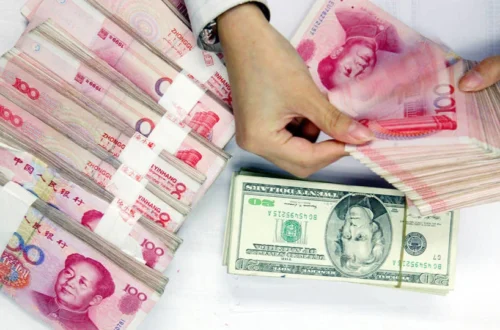
According to data compiled by the UN Environment Programme (UNEP), global financial flows heavily favor extraction and degradation over stewardship. In 2023 alone, a staggering $7.3 trillion—roughly equivalent to 7% of global GDP—was funneled directly into activities that harm nature through subsidies, investments, and loans. For every solitary dollar invested in the conservation and restoration of nature that year, global financial systems spent $30 accelerating its destruction.
The Kunming-Montreal framework explicitly outlined a plan to close the annual biodiversity finance gap—estimated at $700 billion—by dismantling $500 billion worth of nature-harming subsidies each year while mobilizing $200 billion in incremental finance. This includes $30 billion from external official development sources. The bulk of these required funds must go toward transforming how we manage farmland, rangelands, fisheries, and forests, with the remainder earmarked for direct ecosystem preservation and restoration.
Yet, resource-rich developing nations find themselves trapped in a vicious cycle. Countries like Indonesia, Brazil, Peru, Zambia, Ecuador, the Philippines, and Mozambique possess immense natural capital but suffer from severely restricted fiscal space. To service external national debts and generate essential foreign exchange, these governments are frequently forced to lean heavily into extractive industries—logging, mining, and sprawling plantation agriculture.
The resulting ecological degradation leaves them dangerously vulnerable to cascading climate shocks, including severe floods, protracted droughts, and devastating storms. When these disasters strike, credit-rating agencies routinely downgrade these developing economies for fiscal instability, completely ignoring the fact that these nations are bearing the costs of global ecological collapse while receiving next to no financial credit for acting as planetary carbon sinks.
Chronology: From Montreal to Yerevan and Beyond
To understand how global biodiversity policy arrived at this critical juncture, it is necessary to retrace the diplomatic milestones and commitments of the past decade:
- December 2022 (COP15, Montreal, Canada): After years of grueling negotiations, over 190 nations adopt the Kunming-Montreal Global Biodiversity Framework. Dubbed the "Paris Agreement for nature," it establishes the historic "30×30" target—protecting 30% of Earth’s lands and oceans by 2030—alongside commitments to reform harmful subsidies and bridge the multi-hundred-billion-dollar biodiversity finance gap.
- Throughout 2023–2025: Nations begin drafting National Biodiversity Strategies and Action Plans (NBSAPs). While nearly 90% of governments successfully submit targets aligned with the framework, implementation lags due to domestic fiscal constraints, entrenched industrial lobbies, and a lack of international public finance.
- October 2026 (COP17, Yerevan, Armenia): The UN releases the official State of Biodiversity Action report card. UN Secretary-General António Guterres labels the summit "our moment of accountability," highlighting that less than half of the framework’s targets are on track to be met. Discussions focus heavily on reforming the international financial architecture and sovereign debt ratings.
- November 2026 (COP31, Antalya, Turkey): Convening just weeks after Yerevan, the UN Climate Change Conference forces a synchronized reckoning between climate action and biodiversity loss, emphasizing that neither crisis can be solved in isolation.
- Post-2030 Horizon: Global policy discussions begin shaping the successor framework to the UN Sustainable Development Goals (SDGs), placing sustainable bioeconomies and nature-positive market incentives at the forefront of international development.
Supporting Data: The Scale of the Crisis and the Bioeconomy Alternative
The quantitative dimensions of the biodiversity crisis reveal both the depth of our current systemic errors and the immense economic upside of correcting them.
- $7.3 trillion (7% of global GDP): The amount funneled into nature-harming economic activities in 2023.
- 30-to-1 Ratio: For every $1 invested in nature conservation globally, $30 is spent on environmentally destructive practices.
- $700 billion: The annual biodiversity finance gap targeted for closure under the Kunming-Montreal framework ($500 billion from subsidy reform, $200 billion from new mobilization).
- 55% of Global GDP ($58 trillion): The portion of the global economy that depends directly on ecosystem services and functional nature.
- $4 trillion to $30 trillion: The estimated valuation jump of the regenerative global bioeconomy if properly unlocked and scaled by 2050.
- $110 billion to $280 billion: The annual illicit revenue generated by global environmental crime (illegal logging, wildlife trafficking, unregulated mining, and overfishing), heavily integrated with traditional money laundering networks.
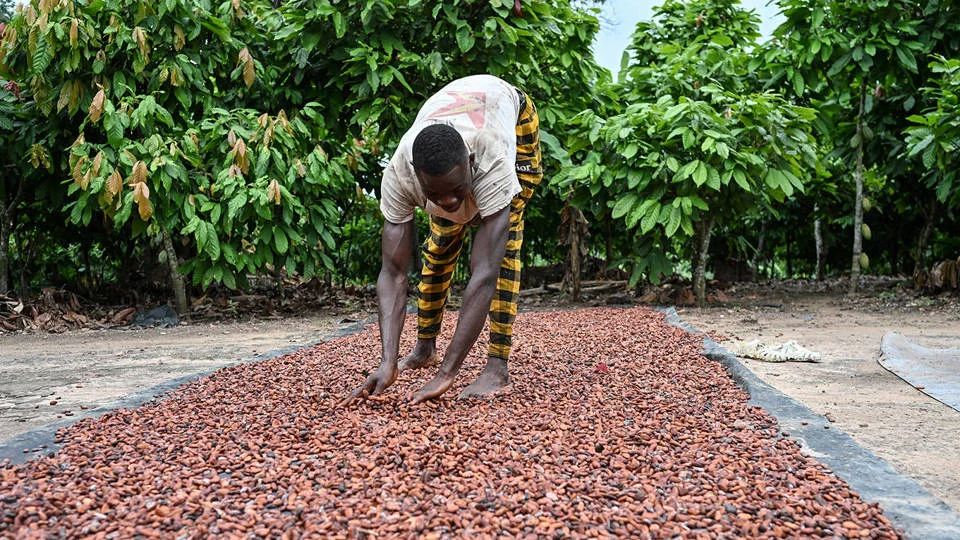
- 58% and 73-90%: The European Union imports roughly 58% of the world’s cocoa beans, predominantly from Côte d’Ivoire and Ghana, where 73% to 90% of smallholder farming households live in severe poverty, unable to afford sustainable replanting practices.
Official Responses and Stakeholder Perspectives
As policymakers and environmental economists dissect the findings from Yerevan, divergent viewpoints have emerged regarding how to bridge the gap between global ambition and local reality.
UN Secretary-General António Guterres pulled no punches during his address at COP17, declaring the summit “our moment of accountability.” Guterres emphasized that tinkering around the edges of traditional economic models will no longer suffice. "The Kunming-Montreal framework is faltering not because governments are indifferent to nature, but because global economic and financial systems reward nature’s destruction and penalize its protection," he noted.
Economists and researchers have increasingly echoed this systemic critique. As David Obura argues in the co-edited volume Nature, People, and Sustainable Development, there is a profound philosophical and economic mismatch between what human markets value and what planetary systems require.
"At best, standard prices capture nature’s usefulness," market analysts note. "To reflect nature’s relational or intrinsic worth requires reframing the problem as not just conservation—which looks like a costly burden of land tied up and economic growth forgone that rich countries foist on poor ones—but as an engine of wealth."
Conversely, corporate representatives and trade officials are grappling with tighter regulatory compliance standards. With the European Union set to strictly enforce its Deforestation Regulation on large operators, importing companies must verify that commodities like cocoa, coffee, and timber do not originate from deforested land. While human rights and environmental advocates praise these standards, agricultural unions in developing nations warn that without direct financial support from major multinational traders to help smallholders fund replanting and traceability, these regulations risk pricing marginalized farmers out of legitimate global markets entirely.
Implications: Reframing Nature as Growth, Security, and Survival
If the international community is to salvage the goals of the Kunming-Montreal framework before the 2030 deadline, a radical paradigm shift is required across multiple policy domains.
1. Moving Beyond the "Cost" Paradigm
Developing nations are routinely penalized by international credit-rating agencies for prioritizing ecological preservation over rapid, resource-extracting industrial growth. This dynamic must be dismantled. Sovereign debt frameworks must be redesigned to account for natural capital and the economic value of building resilience against climate and ecological shocks. Protecting forests, wetlands, and coral reefs should be rewarded with lowered borrowing costs, not credit downgrades.
2. Unleashing the Bioeconomy
Instead of viewing environmental protection as an economic dead-end, governments must champion the bioeconomy as a primary driver of sustainable growth. With over half of global GDP dependent on functioning ecosystems, transitioning toward regenerative agriculture, sustainable forestry, and circular biological resource management can scale the bioeconomy from its current $4 trillion valuation to $30 trillion by mid-century.
3. Securing Commodity Supply Chains at the Source
In regions like West Africa, where two-thirds of the global cocoa supply is produced by impoverished smallholders who inadvertently drive deforestation because they cannot afford sustainable farming inputs, the burden of compliance cannot fall solely on the poorest. Multimillion-dollar trading conglomerates and manufacturing giants must co-finance agricultural modernization, traceability infrastructure, and fair-wage guarantees. Compliance must unlock economic reward, not deepen poverty.
4. Treating Environmental Crime as a National Security Threat
With environmental crime generating up to $280 billion annually—rivaling the illicit narcotics trade and frequently laundering through the same financial networks—law enforcement agencies must evolve. Chasing individual, low-level poachers or illegal loggers is inefficient. Authorities must target structural chokepoints: industrial mills, processing refineries, shipping ports, multinational traders, and the financial institutions facilitating illicit capital flows. Concurrently, secure land rights and direct public financing must be delivered to Indigenous peoples and local communities, who consistently prove to be the world’s most effective and reliable ecological stewards.
Conclusion
The ultimate lesson of the State of Biodiversity Action report is unambiguous: simply adding more bureaucratic targets while treating the biosphere as a disposable externality of the global economy is a recipe for collective failure.
As negotiators gather for the UN Climate Change Conference (COP31) in Antalya and map out the post-2030 sustainable development agenda, the mandate is clear. To save nature, the world must fundamentally rewrite the financial rules of engagement—framing biodiversity not as an expensive charitable cost, but as the foundational investment upon which all human prosperity depends.