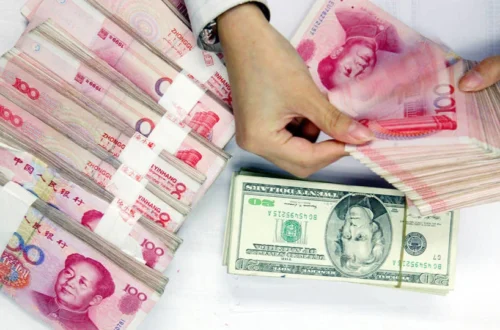
JERUSALEM — To the casual observer tracking foreign exchange boards and Tel Aviv stock market indices, Israel’s economy might appear remarkably resilient. A robust currency, strong technology sector valuations, and a high-frequency hum of domestic commerce often paint a picture of fiscal health. Yet, economists, financial analysts, and fiscal policy experts warn that these surface-level indicators mask a far more precarious reality.
Three years of continuous, multi-front military engagements have inflicted profound structural damage on the Israeli economy. As the country navigates the aftermath of inconclusive elections—setting the stage for weeks of arduous political coalition-building—the incoming government will inherit an economic ledger burdened by soaring defense expenditures, runaway government borrowing, contracting output, and a sharp decline in domestic and foreign investment.
While the markets have adapted to wartime conditions, the cumulative weight of long-term conflict points inexorably toward a prolonged structural recession.
Main Facts
The core economic narrative of Israel’s multi-year wartime economy is defined by a stark divergence between financial market resilience and the deterioration of the broader real economy.
- The Fiscal Deficit and Debt-to-GDP Ratio: Defense expenditures have skyrocketed, forcing the government to borrow heavily on both domestic and international capital markets. The national budget deficit has widened substantially, pushing the debt-to-GDP ratio to heights not seen in decades and prompting credit rating agencies to issue successive warnings or downgrades.
- The Productivity and Labor Crunch: Prolonged military reserve call-ups have removed hundreds of thousands of productive workers from the civilian labor force. This has created acute labor shortages across critical sectors, including high-tech, construction, agriculture, and services, driving up operational costs and stifling innovation.
- Capital Flight and Investment Retrenchment: Foreign direct investment (FDI) has slowed significantly compared to pre-war baselines. Risk aversion among international venture capitalists and institutional investors, combined with domestic political instability, has depressed gross fixed capital formation.
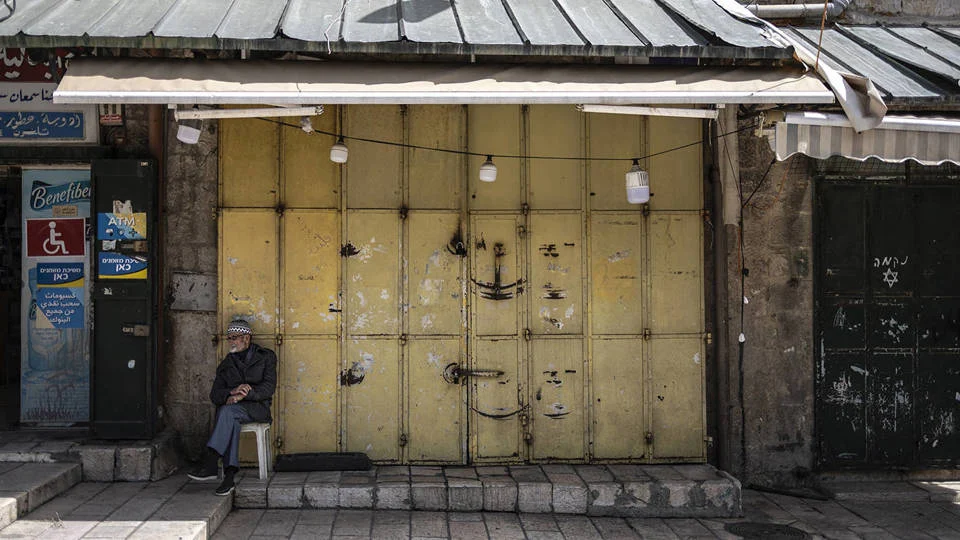
- Sectoral Asymmetry: While the defense-industrial complex and select export-oriented tech niches remain active, consumer-facing industries, tourism, real estate, and small-to-medium enterprises (SMEs) are experiencing severe liquidity crises and declining revenues.
Chronology of an Economic Strain
To understand how Israel arrived at this critical juncture, it is necessary to trace the economic milestones and policy shifts that have occurred since the outbreak of hostilities three years ago.
Phase 1: The Initial Shock (Late 2023 – Early 2024)
When the conflict erupted in October 2023, the immediate economic response was characterized by emergency mobilization. The government enacted emergency fiscal measures, freezing non-essential expenditures and reallocating state funds toward immediate defense needs and civilian relief. The shekel initially depreciated sharply before the Bank of Israel intervened with substantial foreign exchange sales to stabilize the currency. Reservoirs of labor were abruptly drained as hundreds of thousands of citizens were called to active duty, causing an instantaneous shock to civilian supply chains and service industries.
Phase 2: Fiscal Strain and Adaptation (Mid 2024 – 2025)
As the conflict evolved from an acute crisis into a protracted, multi-front war of attrition, the fiscal reality set in. The Ministry of Finance was forced to draft successive wartime budgets, cutting funding to social services, education, and infrastructure to finance the military machine. Inflationary pressures began to mount due to supply bottlenecks, logistical blockades, and rising global shipping costs. Despite these pressures, the Bank of Israel maintained a cautious monetary stance, keeping interest rates elevated to anchor inflation expectations while monitoring financial sector stability.
Phase 3: Structural Fatigue and Political Deadlock (Late 2025 – November 2026)
By late 2026, the cumulative effects of three years of sustained wartime spending manifested as chronic structural fatigue. Falling output and stagnant GDP growth pointed toward the onset of a prolonged recession. The political landscape fractured further, culminating in inconclusive election results in November 2026. The ensuing paralysis in coalition negotiations left the country without a stable legislative framework capable of executing deep fiscal reforms, forcing a reliance on temporary stopgap measures just as the national debt burden reached critical thresholds.
Supporting Data and Financial Metrics
A deeper examination of macroeconomic indicators reveals the depth of the challenge facing fiscal authorities:
- Defense Spending Multipliers: Defense spending as a percentage of GDP has reached historic peacetime highs, absorbing capital that would otherwise have gone toward productivity-enhancing public investments, such as transportation infrastructure, green energy transition, and education.
- Borrowing Costs: Sovereign bond yields have climbed, reflecting higher risk premiums demanded by global investors. Servicing the national debt now commands a significantly larger share of annual tax revenues, crowding out discretionary public spending.
- Construction and Infrastructure Stagnation: The suspension of Palestinian labor permits, combined with the security-driven slowdown in private development, has brought large swathes of the construction sector to a standstill, exacerbating housing shortages and driving up shelter costs.
- The High-Tech Paradox: While Israel’s high-tech sector continues to attract cybersecurity and defense-tech venture capital, early-stage startups in non-military verticals are struggling to secure runway funding, threatening the pipeline of future innovation that underpins the nation’s economic identity.
Official Responses and Policy Debates
Economic policymakers, central bankers, and political figures are locked in an intense debate over the correct path forward.
The Bank of Israel, led by its governor, has repeatedly urged fiscal restraint, warning successive governments that unchecked deficit spending risks entrenched inflation and a permanent loss of sovereign credibility. Central bank officials have emphasized that monetary policy alone cannot insulate the economy from the structural damage of protracted fiscal expansion.
The Ministry of Finance has found itself caught between irreconcilable demands: funding an open-ended military campaign while attempting to preserve the country’s investment-grade credit status. Technocrats within the ministry have drafted proposals for broad-based tax hikes and structural spending cuts, but these measures have faced fierce political resistance from lawmakers unwilling to impose austerity during wartime.
Meanwhile, political leaders across the spectrum have offered divergent prescriptions during the recent election campaigns. While right-wing and nationalist factions prioritize unconditional funding for security apparatuses regardless of fiscal deficits, centrist and leftist parties argue for immediate diplomatic resolutions to stem the economic bleeding, coupled with targeted support for small businesses and displaced families. However, with coalition talks projected to drag on for weeks, decisive executive action remains paralyzed.
Implications for Israel’s Economic Future
The divergence between market optics and economic reality carries profound long-term implications.
- Risk of Stagflation: The combination of constrained aggregate supply, high production costs, and persistent government spending creates fertile ground for stagflation—a scenario characterized by stagnant economic growth accompanied by stubborn inflation and high borrowing costs.
- Social and Generational Burden: The mounting national debt will inevitably be serviced by future generations of taxpayers. Without structural reforms to broaden the tax base—particularly by integrating under-represented populations into the formal, high-productivity labor force—the tax burden on middle-class Israelis will become unsustainable.
- Brain Drain and Human Capital Flight: Prolonged economic uncertainty, coupled with high living costs and societal polarization, risks accelerating emigration among skilled professionals, scientists, and high-tech entrepreneurs. The loss of premier human capital poses a more insidious threat to Israel’s innovation economy than short-term capital outflows.
- The Post-War Reconstruction Dividend: Conversely, economists note that a credible political settlement, accompanied by a winding down of hostilities, could unlock a powerful "peace dividend." The sudden release of labor from military reserve duty, combined with pent-up domestic demand and the normalization of regional trade corridors, could spark a sharp cyclical rebound.
For now, however, the immediate task awaiting Israel’s next governing coalition is sobering. Beyond the immediate security challenges, the incoming administration will have to confront an economic ledger that can no longer be sustained by market optimism alone. The illusion of invulnerability has worn thin; the hard work of fiscal reckoning lies directly ahead.