WASHINGTON, DC — In the wake of Russia’s full-scale invasion of Ukraine in 2022, the United States and its Western allies moved swiftly to sever Moscow from the global financial architecture. This unprecedented deployment of economic statecraft—freeze-framing central bank reserves and booting major Russian institutions off the SWIFT messaging network—sparked a fierce global debate. Many economists, geopolitical strategists, and foreign policymakers speculated that the aggressive weaponization of the US dollar would backfire, accelerating a historic pivot toward de-dollarization and forcing a fragmented global economy to seek alternative currencies.
That speculation intensified dramatically following military escalations involving Iran and the subsequent tightening of Washington’s financial sanctions on Tehran. Yet, beneath the grand geopolitical narratives of an impending multipolar currency order lies a complex, paradoxical reality.
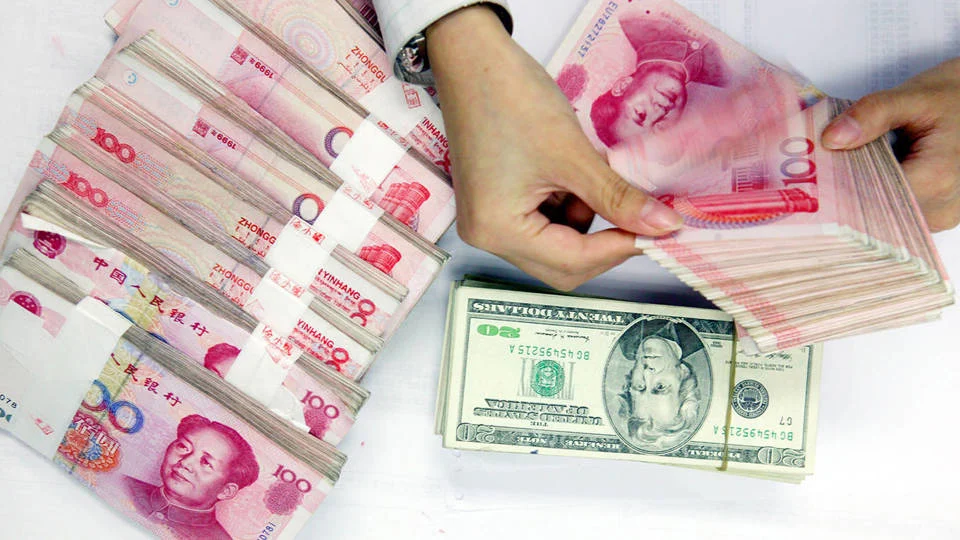
According to economic analysis by Ho-fung Hung, while China has successfully carved out a financial bypass allowing sanctioned states like Russia and Iran to sustain cross-border commerce, this lifeline comes at a steep and ironic cost. Rather than burying the greenback, Beijing’s rescue mechanism forces sanctioned nations to rely on onshore, non-convertible renminbi (RMB), which ultimately must be funneled through underground financial networks to secure US dollars—thereby tacitly reinforcing the very global dominance of the currency Beijing and its partners seek to challenge.
Main Facts
The modern geopolitical landscape is increasingly defined by economic fragmentation, where sweeping US and Western sanctions force isolated regimes into alternative trade orbits. China, as the world’s second-largest economy and a primary consumer of commodities from both Russia and Iran, has positioned itself as the ultimate financial facilitator for these sanctioned states.
However, the architecture of this financial bypass is heavily constrained by China’s strict capital controls:
- The Onshore RMB Trap: When China purchases Russian oil, Iranian gas, or other vital commodities, it predominantly settles these transactions in onshore, non-convertible renminbi (CNY).
- Limited Utility: Because the onshore renminbi is not fully convertible on international markets and remains tightly regulated by the People’s Bank of China (PBOC), Moscow and Tehran cannot freely deploy these funds in global trade, nor can they easily hold them as foreign exchange reserves without severe liquidity and convertibility risks.
- The Underground Conversion Loop: To transform this trapped Chinese currency into globally liquid assets—primarily US dollars or Euros needed for third-party procurement—Russia and Iran are compelled to utilize shadow banking channels, grey-market brokers, and underground financial networks.
- The Dollar’s Iron Grip: Ironically, the ultimate destination and benchmark for these shadow conversions remain anchored to the US dollar. By forcing sanctioned nations back into the greenback via roundabout channels, the structural dominance of the US dollar is reinforced rather than diminished.
Chronology of Events
To understand how the current financial paradox developed, it is essential to trace the escalation of Western sanctions and the corresponding evolution of Sino-Russian and Sino-Iranian monetary integration over the past decade.
2014–2021: Laying the Groundwork
- Post-Crimea Sanctions (2014): Following Russia’s annexation of Crimea, Moscow began actively seeking alternatives to Western payment rails, leading to the creation of the System for Transfer of Financial Messages (SPFS) and initial bilateral currency swap agreements with Beijing.
- The Maximum Pressure Campaign (2018): The United States unilaterally withdrew from the Joint Comprehensive Plan of Action (JCPOA) and reimposed severe sanctions on Iran. Tehran increasingly pivoted its oil exports toward independent Chinese buyers using small, localized banks and renminbi-denominated accounts to evade US regulators.
2022–2024: The Great Financial Schism
- February 2022: Russia launches its full-scale invasion of Ukraine. Western nations freeze approximately $300 billion in Russian central bank assets and expel major Russian lenders from SWIFT.
- Mid-2022 to 2023: Sino-Russian bilateral trade surges to historic highs. Moscow and Beijing agree to settle a vast majority of energy transactions in national currencies (rubles and renminbi), bypassing the US dollar in direct bilateral invoicing.
- Late 2023: Secondary sanctions threats from the US Treasury begin heavily targeting international commercial banks (including Chinese regional banks) processing transactions for Russian entities, prompting Chinese financial institutions to implement rigorous compliance filters or push transactions into opaque channels.
2025–2026: Escalation and the Underground Market Boom
- Early 2026: Military confrontations involving Iran trigger a fresh wave of aggressive US financial sanctions, tightening the noose around Tehran’s remaining formal access points to international trade finance.
- November 2026: Structural friction peaks. While trade volumes between China, Russia, and Iran remain robust, reports highlight the mounting friction of non-convertible renminbi settlements, forcing central banks and state enterprises in Moscow and Tehran to lean heavily on underground financial brokers to convert trade surpluses into hard currency.
Supporting Data and Economic Mechanics
A rigorous examination of macroeconomic data reveals the structural limits of Beijing’s renminbi-internationalization ambitions when pitted against the entrenched liquidity of the US dollar.
The Trade Imbalance and Currency Sinks
While bilateral trade between China and Russia surpassed $240 billion, and trade with Iran has steadily expanded, these relationships are profoundly asymmetric. China runs massive trade deficits with these energy exporters because it imports far more raw materials than it exports finished goods to them.
This creates a structural accumulation of renminbi balances in Moscow and Tehran:
- Accumulation: Russian and Iranian state-owned energy companies hold billions in onshore Chinese bank accounts.
- Friction: Because China maintains strict capital controls to prevent domestic capital flight, capital cannot flow freely in or out of the country. Foreign entities cannot easily take large sums of onshore RMB offshore (CNH) or convert them into other major reserve currencies through formal channels without drawing intense scrutiny from Chinese regulators and US Office of Foreign Assets Control (OFAC) monitors.
- The Shadow Premium: To bridge the gap, sanctioned states rely on complex networks of intermediaries, shell companies, and crypto-asset conduits. These underground networks charge steep transaction fees and exchange-rate spreads, effectively imposing a "sanctions tax" on Russian and Iranian revenues.
Global Reserve and Payment Statistics
Despite intense political rhetoric surrounding de-dollarization:
- The US dollar continues to account for roughly 58% of global foreign exchange reserves, dwarfing all competitors.
- The renminbi’s share of global international payments tracked by SWIFT has hovered primarily in the 3% to 4% range, far behind the dollar (which routinely commands over 45-50% of SWIFT volume) and the Euro.
- Onshore non-convertible renminbi used in bilateral trade settlement remains a localized bilateral tool rather than a globally accepted, liquid reserve asset.
Official Responses and Geopolitical Posture
Governments at the center of this monetary tug-of-war have responded with a mix of defiance, pragmatic adaptation, and heightened defensive postures.
Washington: Vigilance and Secondary Sanctions
The United States Department of the Treasury and the State Department have maintained that the durability of the US dollar is anchored in the depth, transparency, and rule of law underpinning American capital markets—attributes that authoritarian alternatives cannot replicate.
US officials have increasingly focused on secondary sanctions, warning financial institutions worldwide that facilitating transactions for sanctioned Russian and Iranian entities—even if conducted in local currencies like the renminbi—risks total exclusion from the US financial system. Washington views the reliance on underground networks as proof that sanctions are successfully raising the transaction costs of aggression, forcing rogue regimes into inefficient, high-friction financial workarounds.
Beijing: Cautious Facilitation
Beijing walks a delicate tightrope. Officially, Chinese leadership consistently criticizes the "weaponization" of the global financial system and advocates for multipolarity and increased use of local currencies in cross-border trade.
However, behind closed doors, Chinese regulators remain deeply cautious. The PBOC is fiercely protective of China’s capital account stability. Allowing full convertibility of the renminbi to accommodate sanctioned Russian and Iranian capital flows would expose China’s domestic financial system to massive speculative attacks, capital flight, and direct retaliatory sanctions from Western regulators that could paralyze major Chinese mega-banks. Consequently, Beijing is content to let bilateral trade grow through controlled channels while tacitly turning a blind eye to the grey-market brokers handling the messy remainder.
Moscow and Tehran: Pragmatism Over Ideology
For the Kremlin and the Iranian government, the pivot to the renminbi is not an ideological preference for Chinese monetary leadership, but an absolute existential necessity. Russian and Iranian central bank officials have repeatedly acknowledged the headaches associated with holding non-convertible RMB balances. Yet, in the absence of access to Western SWIFT rails and dollar-clearing houses, accepting trapped renminbi is preferable to complete economic isolation. They continue to pressure Beijing for greater financial integration, currency swap expansions, and digital currency pilots, even as structural realities force them to rely on underground money changers.
Implications for the Future of Global Finance
The friction surrounding China’s renminbi lifeline to Russia and Iran illuminates several critical takeaways for the future of the international monetary order:
- The Myth of Instant De-Dollarization: Global currency dominance is not merely a matter of political will or bilateral trade agreements. It is rooted in deep, liquid, open capital markets backed by institutional trust and rule of law. Without full convertibility and deep financial infrastructure, alternative currencies like the renminbi cannot displace the greenback.
- The Cost of Evasion: Sanctions imposed by the West do not necessarily halt all commerce, but they fundamentally distort it. By forcing sanctioned nations into high-cost, high-risk underground financial networks, the global economy becomes more fragmented, opaque, and prone to systemic risk.
- The Irony of US Hegemony: Ultimately, by providing an imperfect, restricted financial bypass, China unintentionally shields the global financial system from a total decoupling. Because sanctioned states must still convert their earnings through dollar-pegged or dollar-reliant shadow networks to buy goods from third-party nations (such as in the Global South, where the dollar remains king), the structural centrality of the US dollar is preserved.
As long as Beijing maintains strict capital controls to protect its domestic economy, the renminbi will remain a regional bilateral settlement tool rather than a true global reserve currency. Until a viable, fully convertible, and trusted alternative emerges, the global financial system remains bound—however grudgingly—to the greenback.