
NEW YORK — For the better part of a decade, leaders across the Global South have engaged in a high-stakes geopolitical effort. Seizing upon the momentum of the global green transition, nations rich in the metals and minerals required for renewable energy—such as copper, aluminum, lithium, and cobalt—vowed to break away from historical patterns of resource exploitation. From the boardrooms of the African Union to the policy halls of the Latin American and Caribbean Energy Organization and the Association of Southeast Asian Nations (ASEAN), a new vision emerged. It was a paradigm rooted in restorative justice, equity, and local value addition: the belief that the countries supplying the world with the building blocks of a decarbonized future should finally share equitably in the wealth generated by their soil.
Yet, just as a fragile international consensus regarding a "just green transition" began to take shape, the global artificial intelligence boom went into overdrive.
Today, the exponential expansion of AI infrastructure—most notably the vast, power-hungry data centers scaling up across the globe—has created a hyper-competitive race for the exact same critical minerals. UN Secretary-General António Guterres has issued stark warnings that the explosive energy demands of AI are pushing mineral consumption far beyond initial projections, introducing a volatile new layer of competing global demand.
As the world scrambles to feed the insatiable computational appetite of large language models and neural networks, experts warn that the headlong rush for AI-critical inputs risks unraveling years of painfully won progress toward responsible, sustainable mining. However, if navigated with deliberate policy interventions, multilateral transparency, and localized value chains, this unprecedented market shock could be repurposed to foster sustainable, long-term development in producer nations rather than deepening their historical subjugation.
Main Facts: The Collision of Two Transitions
The fundamental friction driving this crisis is simple: the technological revolution underpinning advanced artificial intelligence shares a common, physical baseline with the green energy transition. Both rely heavily on the extraction of non-renewable geological resources.
Where wind turbines, solar panels, and electric vehicle batteries once drove the primary narrative of critical mineral scarcity, advanced computing hardware has fundamentally altered the equation. GPUs, high-performance servers, massive cooling grids, and the sprawling data-center complexes required to house them demand astronomical quantities of copper for electrical wiring, aluminum for structural components, and lithium and cobalt for localized energy storage and backup systems.
The financial response from industrialized economies has been immediate and monumental. In the first half of 2026 alone, G7 member states unveiled a staggering 195 critical-mineral projects, backed by a combined €64 billion ($70 billion). Simultaneously, the World Bank formalized plans to scale up its financing for metals and minerals to $19 billion for the 2026–2030 period.
Yet, public and political discourse surrounding AI has exhibited a profound blind spot. While mainstream debates in the West frequently focus on localized ethical dilemmas—such as the massive water consumption of data centers in drought-prone regions or fears of AI-driven labor displacement creating a permanent socioeconomic underclass—they routinely overlook the front end of the technological value chain.
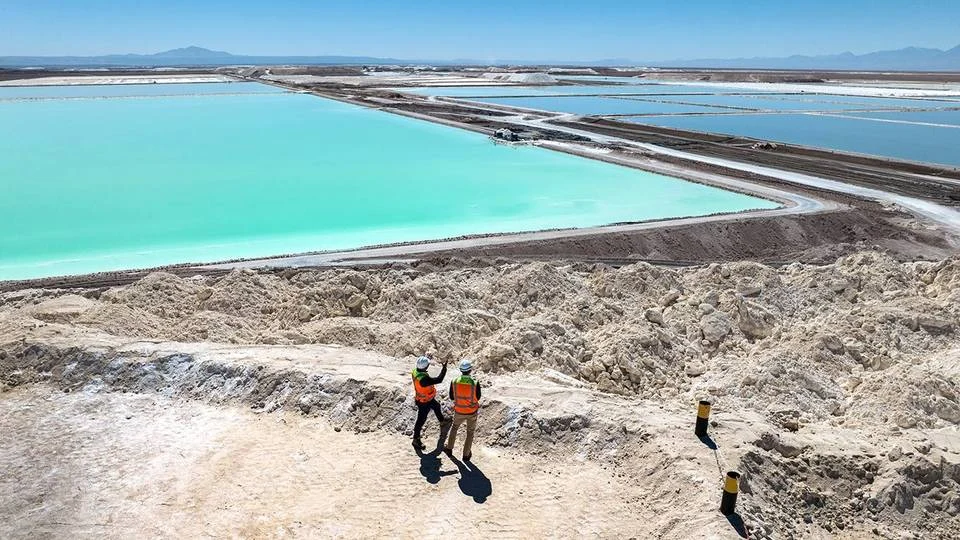
The human and environmental toll unfolding at the extraction sites is severe. In Chile’s arid mining corridors, copper and lithium extraction already swallows roughly two-thirds of the total regional water supply. In the Democratic Republic of the Congo, a spike in demand for coltan and other critical conflict minerals to feed the global electronics and AI hardware supply chains is fueling fresh cycles of armed conflict, human rights abuses, and rising civilian death tolls.
Chronology: From Green Hopes to the AI Mineral Crunch
To understand how the intersection of AI and mineral extraction became an acute international crisis, it is necessary to trace the rapid evolution of international policy frameworks over recent years:
- 2023–2024 (The Green Consensus): Global South coalitions, led by the African Group of Negotiators and various regional blocs, successfully place critical minerals on the international climate agenda. The narrative centers on shifting away from raw export models toward domestic refining and inclusive growth.
- Late 2024–2025 (The AI Inflection Point): Generative AI scales up globally. Technology firms and sovereign states accelerate data center construction, triggering an immediate bottleneck in copper, aluminum, and rare-earth element supply chains.
- December 2025 (The G20 Framework): Meeting under established frameworks, the G20 adopts the Critical Minerals Framework, aiming to stabilize supply chains while offering initial guidelines for wealth distribution to producer nations—though implementation lags behind market realities.
- Early 2026 (The G7 Surge): In the first six months of 2026, G7 leaders announce 195 new critical-mineral projects worth €64 billion, prioritizing national security and tech supply chain resilience over local environmental safeguards.
- October 2026 (Multilateral Commitments): The World Bank launches its Metals and Minerals Country Compacts, committing $19 billion through 2030 to bolster supply chains. Meanwhile, research from organizations like the Natural Resource Governance Institute reveals that only one in three African value-addition projects has secured necessary financing.
- Late 2026 (COP31 in Antalya): The UN Climate Change Conference (COP31) marks a pivotal turning point. Negotiators adopt a landmark decision on the Just Transition Work Programme, explicitly linking critical minerals to equitable energy transitions and recognizing the necessity of local value addition.
- November 2026 (Post-COP Mobilization): UN Special Rapporteur on Climate Change and Human Rights Elisa Morgera sounds the alarm, demanding absolute transparency regarding the end-use of extracted minerals—distinguishing whether a ton of copper ends up in a civilian battery, a military missile, or an AI data center.
- 2027 and Beyond (The Horizon): As Ethiopia prepares to host the upcoming COP, proposals emerge for a new G20-backed "minerals compact" during the United Kingdom’s G20 presidency, bridging the AI agenda, debt reform, and sustainable resource governance.
Supporting Data: The Economics of Extraction and Inequality
The quantitative reality of the critical mineral market illustrates a profound asymmetry between the value generated by high-tech consumer nations and the localized burden borne by producer states.
- $70 Billion Injection: The capital mobilized by G7 nations in early 2026 for 195 critical mineral projects highlights the muscular, state-backed industrial policy now governing supply chains.
- $19 Billion World Bank Allocation: Targeted capital deployment spanning 2026–2030 aimed at restructuring how developing economies interface with metal and mineral markets.
- 45% Value Uplift Potential: According to International Energy Agency (IEA) assessments, if Latin America and the Caribbean were empowered to locally refine their mineral extractions rather than exporting raw ores, the aggregate economic value of their output would jump by approximately 45%.
- The Funding Gap: Despite widespread political rhetoric surrounding "value addition," empirical data from the Natural Resource Governance Institute demonstrates that only one out of every three value-addition infrastructure projects in Africa has successfully secured the capital required to break ground.
- Water and Resource Depletion: In specialized mining zones across Chile, extraction activities for lithium and copper consume upwards of 66% of available local water supplies, directly threatening agricultural livelihoods and domestic water security.
Official Responses and Diplomatic Friction
International governance bodies are increasingly split between the frantic urgency of securing national technological supremacy and the moral imperative of protecting frontline communities.
At COP31 in Antalya, the formal adoption of the Just Transition Work Programme signaled a diplomatic breakthrough. For the first time, a major climate text explicitly recognized that critical mineral supply chains cannot be treated in isolation from human rights and local economic development.
UN leadership has been unequivocal. Secretary-General António Guterres has cautioned that unchecked AI expansion threatens to cannibalize the resource allowances required for the green transition. Echoing these concerns, UN Special Rapporteur Elisa Morgera argued that global accountability requires radical end-use transparency: governments and corporations must declare precisely whether a specific batch of extracted ore is destined for a civilian renewable energy grid, an automated weapons system, or an AI data center.
Looking ahead to the diplomatic calendar, Ethiopia—as the designated host of the upcoming climate summit—is positioned to champion a transformative just-transition mechanism. The African Group of Negotiators has formally proposed the creation of a comprehensive Global Minerals Compact in partnership with the G20.
This proposal offers a vital diplomatic bridge. Under the United Kingdom’s anticipated G20 presidency priorities—which center heavily on artificial intelligence integration and international debt relief—the UK is uniquely positioned to harmonize the competing demands of the digital revolution and the green transition, utilizing the mechanisms outlined in the 2025 G20 Critical Minerals Framework to redirect capital and economic opportunity back to the Global South.
Implications: Navigating the Crossroads of Exploitation and Equity
As mining operations scale up to meet the demands of the AI boom, the immediate trajectory of the industry threatens to repeat the darkest chapters of resource colonialism. Opportunistic mining conglomerates, backed by anxious governments eager not to lose the AI race, are actively lobbying to streamline permitting processes, dilute environmental impact assessments, and override local community consultations.
Such shortcuts, however, are profoundly counterproductive. Gutting environmental standards and trampling land rights almost invariably provokes fierce local resistance, leading to protracted legal battles, social unrest, and—in severe cases—the total suspension or abandonment of critical supply projects. As institutional investors and G7 declarations have repeatedly noted, robust socio-environmental safeguards are not bureaucratic hurdles; they are the bedrock of long-term supply chain stability.
To avert a destructive clash between artificial intelligence and planetary health, three structural shifts are imperative:
- Uncompromising Transparency: Over 200 mining agreements signed over the past year remain shrouded in opacity. Governments must mandate the public disclosure of all bilateral mineral trade deals and corporate extraction contracts, alongside stringent end-use tracking. Citizens and civil society must be equipped with the data necessary to hold corporations accountable.
- Bridging the Refining Financing Gap: Wealthy consumer nations and multilateral development banks must move beyond rhetorical support for "local value addition." By providing concessional finance, technical training, and infrastructure investments, international institutions must help developing nations build domestic refining capabilities, allowing them to capture the full economic value of their natural endowments.
- Centering Human Rights Safeguards: Frontline communities must be integrated into decision-making architectures from the inception of any mining project. By embedding binding human rights protections into international trade compacts—such as the proposed G20-African Group minerals compact—global leaders can ensure that the AI revolution does not extract its toll from the world’s most vulnerable populations.
The explosive emergence of artificial intelligence presents a profound test of global governance. By deliberately steering the new mineral boom away from exploitative extraction and toward inclusive, transparent, and equitable partnerships, the international community can ensure that the technological miracles of tomorrow do not come at the direct expense of the planet and its people today.