MEXICO CITY — For decades, the debate surrounding gun buyback programs has been bogged down by a narrow, albeit understandable, metric of success: Do they immediately and drastically lower homicide rates? Skeptics across the globe have long argued that voluntary surrender initiatives are little more than symbolic gestures—expensive public relations exercises that fail to deter hardened criminals or disrupt transnational illicit trafficking networks.
However, groundbreaking new research focusing on Mexico City’s pioneering gun-buyback initiative suggests that traditional evaluations have been missing the bigger picture. While homicides remain the most visible and tragic manifestation of gun violence, they represent only the tip of the iceberg. The new data indicates that such measures can meaningfully and measurably reduce nonlethal firearm injuries. These injuries, which occur with far greater frequency than fatal shootings, carry profound psychological trauma, permanent physical disabilities, and long-lasting socio-economic consequences for victims, families, and overburdened healthcare systems.
As Mexico scales up its disarmament strategies under the leadership of President Claudia Sheinbaum, the evaluation of these programs is shifting. Policymakers are beginning to view gun buybacks not as a silver-bullet solution to end cartel violence overnight, but as a vital, complementary public health intervention designed to remove lethal hazards from residential neighborhoods.
Main Facts: The Anatomy of Mexico’s Disarmament Strategy
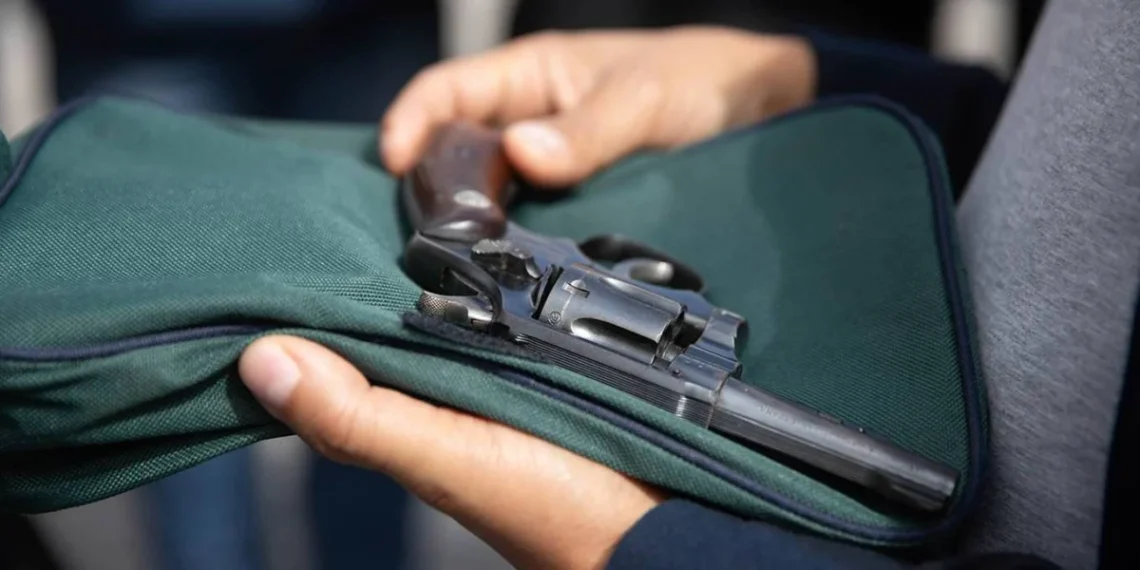
The core mechanism of Mexico’s gun-buyback program—historically known in the capital as Sí al Desarme, Sí a la Paz ("Yes to Disarmament, Yes to Peace")—is deceptively simple. The initiative allows citizens to voluntarily and anonymously surrender firearms, ammunition, and explosives at designated collection points, typically located outside prominent public spaces and religious institutions, in exchange for financial compensation. No background checks are performed, and no questions are asked regarding how the individual acquired the weapon, ensuring complete anonymity to encourage maximum participation.
The program was born out of a stark reality: despite strict federal gun laws in Mexico—where citizens can legally own firearms only under stringent conditions and through a single, heavily regulated store managed by the military in Mexico City—the illicit proliferation of firearms remains rampant. Driven largely by trafficking from the United States, illegal weapons permeate urban and rural communities alike, fueling domestic disputes, neighborhood altercations, and organized crime.
By shifting the focus from interdiction at the border to voluntary reduction at the household level, the buyback initiative targets the casual availability of firearms. Guns kept in home nightstands, closets, or glove compartments for "protection" frequently end up being used in impulsive acts of domestic violence, accidental discharges involving children, or escalated neighborhood conflicts. By offering a cash incentive to clear these weapons out of domestic environments, the program acts as a preventative sieve, catching tragedies before they occur.
Chronology: From Local Pilot to National Policy
To understand the current trajectory of Mexico’s disarmament policy, it is necessary to trace its institutional evolution over the past decade.
2019: The Genesis in Mexico City
In late 2018 and early 2019, newly elected Mexico City Mayor Claudia Sheinbaum faced an escalating crisis of urban insecurity. While high-impact crimes and cartel turf wars grabbed national headlines, everyday gun violence in residential neighborhoods continued to erode public trust. In response, Sheinbaum’s administration officially launched Sí al Desarme, Sí a la Paz in January 2019. The program established mobile and fixed collection centers across the city’s sixteen boroughs, partnering closely with the Catholic Church and local community organizations to foster trust and facilitate outreach.
2019–2024: Local Iterations and Scaling
Throughout Sheinbaum’s tenure as mayor, the program underwent continuous refinement. Payout scales were adjusted based on the caliber and destructive capacity of the surrendered weapons—with higher financial compensation offered for assault rifles and military-grade ordnance compared to old handguns or hunting rifles. Over these five years, tens of thousands of weapons were collected and immediately destroyed in public ceremonies supervised by the Mexican military, preventing the corrupt resale or leakage of seized firearms back into the illicit market.
January 2025: National Expansion
Building upon the perceived success of the capital city’s model, newly inaugurated Mexican President Claudia Sheinbaum took executive action in January 2025 to expand the gun-buyback initiative nationwide. Framed as a cornerstone of her broader federal security strategy—which emphasizes addressing the root social causes of violence rather than relying solely on militarized confrontation—the program was rolled out across multiple states, adapting local collection protocols to fit regional security dynamics.
September 2026: The Milestone
By September 2026, empirical tracking revealed the immense scale of the nationalized effort. Official tallies confirmed that more than 11,000 firearms, alongside an alarming 2,114 grenades and explosive devices, had been successfully surrendered and destroyed. This milestone prompted academic researchers, public health experts, and criminologists to take a closer look at the localized data from Mexico City to assess whether the sheer volume of collected hardware translated into tangible improvements in public safety.
Supporting Data: Unpacking the Nonlethal Impact
For years, critics of gun buybacks pointed to econometric studies from the United States and other nations demonstrating that voluntary programs rarely moved the needle on citywide homicide statistics. Homicides, researchers noted, are heavily influenced by organized crime syndicates, drug trafficking routes, and systemic socioeconomic factors that a local buyback cannot dismantle.
However, the new research focusing on Mexico City’s program takes a page out of the public health playbook, examining outcomes beyond mortality.
The Burden of Nonlethal Gun Injuries
According to public health data, for every individual killed by a firearm in urban settings, multiple others survive gunshot wounds. These nonlethal injuries frequently result in catastrophic outcomes:
- Permanent Physical Impairments: Paralysis, limb amputations, nerve damage, and chronic pain.
- Psychological Trauma: Post-Traumatic Stress Disorder (PTSD), severe anxiety, depression, and long-term mental health challenges for both victims and their families.
- Economic Strain: Astronomical emergency medical costs, long-term rehabilitation expenses, and lost wages that push working-class families deeper into poverty.
- Healthcare System Strain: The diversion of scarce resources in public hospitals to treat preventable surgical trauma.
What the Mexico City Data Reveals
By analyzing granular spatial and temporal data following the rollout of the 2019 buyback program in Mexico City, researchers observed statistically significant drops in emergency room admissions for nonlethal gunshot wounds in neighborhoods with active, high-participation collection sites.
When residents voluntarily surrendered firearms, the immediate pool of available weapons in domestic and communal disputes shrank. Without a firearm readily accessible during a heated argument between neighbors, domestic partners, or acquaintances, disputes were far less likely to escalate into shooting incidents that result in nonfatal injuries. Thus, while the buyback may not have instantaneously dismantled sophisticated cartel networks, it effectively insulated everyday citizens from the immediate hazards of casual gun ownership.
Official Responses: Perspectives from Government and Civil Society
The expansion of the national gun-buyback program has elicited a spectrum of responses from political leaders, security analysts, and civil society organizations.
The Federal Government’s Stance
President Claudia Sheinbaum and her security cabinet have championed the program as an essential pillar of a holistic human security framework. During press briefings, administration officials have emphasized that building peace in Mexico requires cultural transformation alongside law enforcement operations.
"We are not naive; we know a buyback program alone will not end violence," a senior official within the Secretariat of Security and Civilian Protection noted during the national rollout. "However, every single weapon handed over anonymously is a potential life saved, a domestic dispute prevented from turning tragic, and a dangerous explosive kept out of the hands of our youth. It is about constructing a culture of peace from the ground up."
Law Enforcement and Military Collaboration
The Mexican Secretariat of National Defense (SEDENA) plays a crucial logistical role in the initiative. Military engineers and personnel are tasked with receiving, cataloging, and immediately destroying the surrendered weaponry using industrial crushers. Military leadership has praised the program for its ability to clear dangerous, unmonitored munitions—particularly military-grade grenades—out of civilian areas, thereby reducing risks to both citizens and law enforcement officers responding to domestic calls.
Civil Society and Skepticism
Civil society organizations and security watchdogs have offered a measured response, welcoming the initiative while urging caution and transparency. Some NGOs specializing in violence reduction have pointed out that while the numbers—over 11,000 firearms and 2,000+ grenades—sound impressive at a glance, they represent a fraction of the millions of illegal weapons circulating throughout the country via cross-border trafficking.
Furthermore, critics argue that anonymous buybacks can occasionally be exploited by criminal elements looking to offload obsolete, broken, or low-value firearms in exchange for cash, which can then be reinvested into purchasing more modern, high-powered weaponry from illicit markets. To counter this, policy experts stress the importance of pairing buybacks with aggressive intelligence-led policing targeting major arms-trafficking corridors, particularly along the northern border with the United States.
Implications: The Future of Disarmament in Latin America
The lessons emerging from Mexico City’s evolving gun-buyback experiment carry profound implications not only for Mexico’s national security strategy, but for the broader landscape of public safety policy across Latin America—a region that continues to grapple with disproportionately high rates of firearm-related violence.
1. Reframing Success in Public Health Terms
The primary takeaway for criminologists is the necessity of moving beyond the "homicide-only" evaluation paradigm. If gun-buyback programs are judged solely on their ability to stop cartel wars, they will always be deemed failures. However, if they are evaluated as targeted public health interventions designed to curb nonlethal injuries, domestic violence escalation, and accidental shootings, they prove to be remarkably cost-effective. By preventing hundreds of nonfatal shootings, these programs save millions of dollars in emergency medical care and spare families immeasurable psychological suffering.
2. The Need for Comprehensive Arms Control Integration
Experts emphasize that voluntary buybacks cannot exist in a vacuum. To achieve long-term reductions in gun violence, Mexico’s federal strategy must concurrently address:
- Cross-Border Trafficking: Pressuring international partners, particularly the United States, to clamp down on illicit arms flows moving southward.
- Internal Enforcement: Strengthening intelligence capabilities to trace and intercept black-market distribution networks.
- Community Outreach: Sustaining long-term educational campaigns that de-escalate toxic masculine norms around gun ownership and promote peaceful conflict resolution.
3. Institutional Trust and Anonymity
The success of Mexico City’s model underscores the critical importance of absolute anonymity. In contexts where public trust in law enforcement and judicial institutions has historically been fragile, citizens are unlikely to surrender weapons if they fear legal repercussions, taxation audits, or exposure. Maintaining a strict "no questions asked" policy managed by civilian-led municipal teams alongside neutral arbiters is essential for driving participation rates upward.
Conclusion
As Mexico moves further into the implementation of its nationwide disarmament strategy through 2026 and beyond, the initiative spearheaded by President Claudia Sheinbaum stands as a fascinating case study in modern public safety policy.
By looking past the traditional, narrow metrics of homicide reduction and focusing on the tangible public health victories—specifically the prevention of nonlethal injuries and the removal of thousands of volatile weapons and grenades from residential communities—Mexico City’s pioneering approach offers a compelling path forward. While gun buybacks are certainly not a standalone cure for the complex architecture of modern violence, the new research proves they are far from pointless. When executed with community trust, absolute anonymity, and a clear public health focus, getting even a single gun off the living room table can change—and save—a life.