The Hundred Acre Wood may exist in the collective imagination as a whimsical realm of honey pots and philosophical bears, but its physical foundations were laid within the sturdy, lime-washed walls of a 16th-century farmhouse in East Sussex. Cotchford Farm, a Grade II-listed estate tucked into the verdant embrace of Ashdown Forest, is far more than a mere residence; it is a nexus of literary history and rock-and-roll mythology.
For the modern seeker of architectural history, the estate has recently returned to the spotlight. Available for lease through the property agency Hamptons, Cotchford Farm offers a rare opportunity to inhabit a space that served as the creative crucible for A.A. Milne and later, as a poignant final retreat for Rolling Stones founder Brian Jones.

The Literary Cradle: A.A. Milne’s Haven
When A.A. Milne purchased Cotchford Farm in 1924, he was seeking a sanctuary from the relentless pace of London life. The property, with its deep-set windows and centuries-old timber frame, provided the perfect backdrop for a father to observe his son, Christopher Robin, at play. It was here, within the quietude of the sitting room—which still retains its original character—that Milne penned the adventures of Winnie-the-Pooh.
The surrounding landscape was not merely a backdrop; it was a character in itself. The rolling hills, ancient trees, and hidden brooks of Ashdown Forest directly inspired the geography of the Hundred Acre Wood. As the Milnes roamed the estate, the topography of the property was translated into the map of Pooh’s world. The farmhouse, with its warmth and isolation, allowed Milne to distill the innocence of childhood into the pages of one of literature’s most beloved series.

A Second Life: The Rock-and-Roll Years
In 1968, the estate took a dramatic turn in its historical narrative. Brian Jones, the enigmatic founder and multi-instrumentalist of the Rolling Stones, sought refuge at Cotchford Farm. By the late 1960s, the pressures of global fame and the scrutiny of the British press had made urban life untenable for the troubled musician.
Jones’s tenure at the farm was brief but remains a subject of intense fascination for music historians. It was within these walls, specifically in the kitchen, that Jones reportedly received the news of his departure from the Rolling Stones—a moment that signaled the end of his tumultuous chapter with the world’s greatest rock band. Despite his internal struggles, Jones found solace in the property’s gardens and its swimming pool, which remain largely unchanged to this day. The estate serves as a frozen moment in time, marking the final year of a life that would ultimately end in tragedy in the summer of 1969.

Chronology of a Historic Estate
To understand the significance of Cotchford Farm, one must look at the timeline of its occupancy and evolution:
- 16th Century: Construction of the original farmhouse, featuring classic Sussex timber-framing and heavy oak beams.
- 1924: A.A. Milne acquires the property, beginning a period of intense creativity that produces the Winnie-the-Pooh canon.
- 1920s–1950s: The farm becomes synonymous with the Milne family, serving as a private refuge and a source of inspiration for classic children’s literature.
- 1968: Brian Jones purchases the estate, seeking an escape from the burgeoning chaos of the psychedelic era and the Rolling Stones’ internal conflicts.
- 1969: The passing of Brian Jones on the property, marking a somber milestone in the history of British rock music.
- Present Day: The farm remains a Grade II-listed monument to its dual legacy, meticulously preserved by successive owners and now available for high-end residential leasing.
Supporting Data: An Architectural Overview
The farmhouse itself is a masterclass in vernacular architecture. Spanning over 3,400 square feet across three distinct floors, the residence is a testament to the longevity of 16th-century craftsmanship.

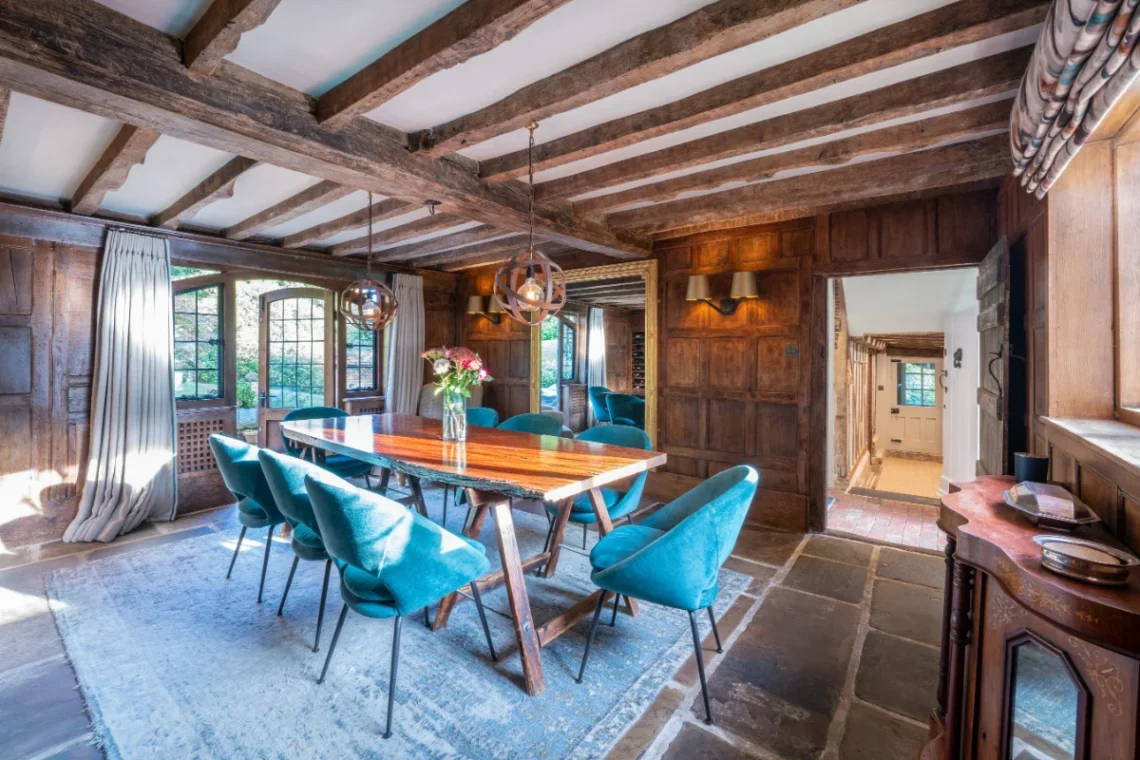
- Living Spaces: The home boasts six bedrooms and three main reception rooms. The oak-paneled dining room and the library offer an intimate glimpse into the lifestyle of its former literary occupant.
- Materials and Preservation: The interior features exposed timber beams, wide-plank oak flooring, and original brick fireplaces. These elements have been carefully maintained to ensure the integrity of the Grade II listing.
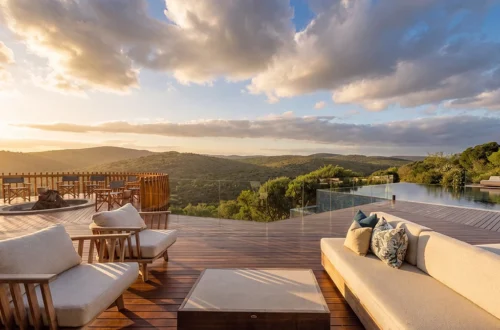
- The Grounds: The estate encompasses extensive acreage within the protected Ashdown Forest. Features include formal manicured gardens, woodland walks, a tennis court, and a heated outdoor swimming pool framed by wisteria—a landscape that remains as enchanting as it was during the 1920s.
Official Responses and Market Positioning
The decision to list the property for lease has generated significant interest from the international real estate community. According to Hamptons, the property is being marketed at £9,995 (approximately $13,470) per month.
Property experts emphasize that while the price is high, the value is derived from the provenance. "You are not just renting a six-bedroom house in East Sussex," notes one industry analyst. "You are renting a piece of British cultural identity. The crossover between the literary heritage of Milne and the musical legacy of Jones creates a market proposition that is almost impossible to replicate elsewhere in the United Kingdom."

Implications: The Preservation of Cultural Landmarks
The ongoing maintenance of Cotchford Farm raises broader questions about the responsibility of private owners in preserving sites of significant cultural importance. As a Grade II-listed building, the farmhouse is protected from radical structural changes, ensuring that the visual history of the 16th century—and the aesthetic atmosphere that fueled Milne’s imagination—remains intact.
However, the "celebrity home" status presents a unique challenge: balancing the demand for public interest with the necessity of private enjoyment. By offering the property for lease rather than selling it to a developer, the current ownership ensures the property remains a "living" home rather than a static museum. This approach allows the estate to continue evolving, keeping the spirit of the Hundred Acre Wood alive for a new generation of tenants.

For those who choose to call Cotchford Farm home, the experience is described as transformative. The proximity to the forest, the silence of the countryside, and the weight of the history within the walls offer a unique lifestyle that few other properties can provide. Whether one is drawn by the whimsy of a bear who loves honey or the haunting echoes of the 1960s, Cotchford Farm stands as a resilient witness to the stories that have shaped modern culture.
As the property enters this next chapter of its long life, it serves as a reminder that great places—much like great stories—are never truly finished. They are simply waiting for the next inhabitant to walk through the door, pull up a chair by the fireplace, and begin their own journey.