By Robert Muggah and Ilona Szabó de Carvalho
October 27, 2026
Introduction: A Resurgent Democracy at a Crossroads
SÃO PAULO — For months, the prevailing narrative surrounding Brazil’s 2026 general election centered on exhaustion, polarization, and democratic fatigue. Yet, the nation delivered a stunning political pivot that defied historical precedent and reinvigorated its constitutional institutions.
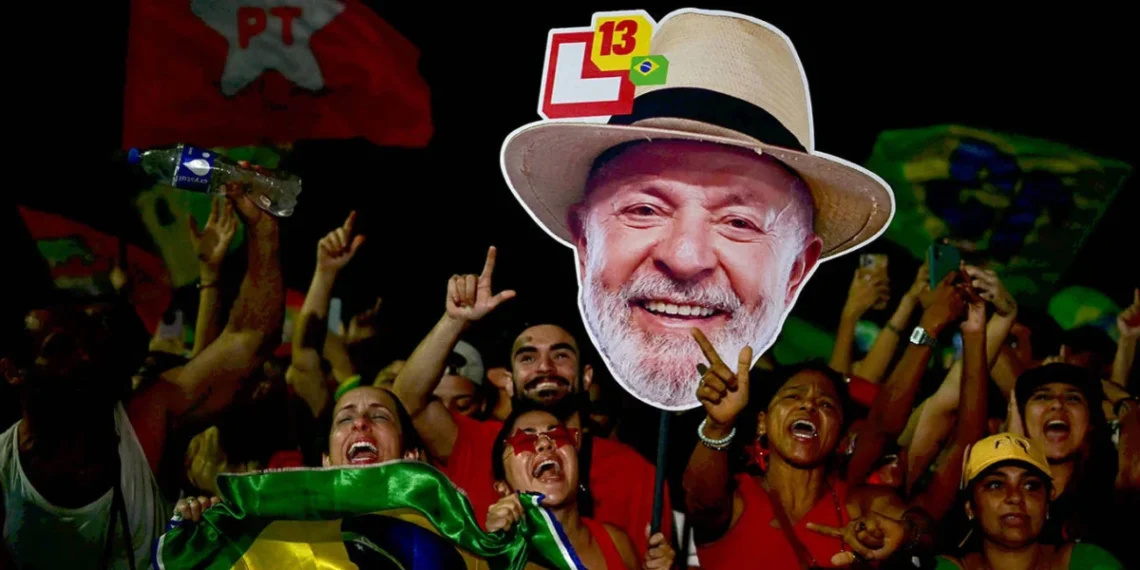
Until President Luiz Inácio Lula da Silva staged a remarkable, unprecedented comeback to win re-election, no Brazilian presidential candidate had ever successfully overturned a first-round deficit in a runoff election. Securing nearly 52% of the vote against challenger Flávio Bolsonaro’s 48%, Lula’s victory was more than a personal political triumph; it was a testament to the resilience of Brazil’s electorate. With over 128 million citizens turning out at the polls—representing an increase of nearly three million voters from the first round—Brazil reaffirmed its status as a cornerstone of Latin American democracy.
However, as the dust settles on one of the most contentious electoral cycles in the nation’s modern history, a sober reality remains. Brazil’s renewed democratic confidence must now be matched by deep institutional, economic, and structural reforms. Furthermore, to cement these gains and prevent future democratic erosion, the administration must demonstrate a genuine willingness to build broad coalitions extending far beyond the traditional left. In navigating this critical juncture, Brazil can draw valuable, cautionary lessons from recent democratic outcomes in countries like Hungary and Serbia.
Main Facts: The 2026 Presidential Showdown
The 2026 runoff was defined by high stakes, high mobilization, and razor-thin margins.
- The Historic Comeback: President Luiz Inácio Lula da Silva secured a historic second consecutive mandate (and his fourth overall term) by defeating Flávio Bolsonaro, the political heir to former President Jair Bolsonaro. Lula’s victory marks the first time in Brazil’s electoral history that a candidate trailing in the first round managed to close the gap and win the presidency in the runoff.
- The Final Tally: Official figures released by the Superior Electoral Court (TSE) confirmed that Lula captured approximately 52% of the valid votes, while Flávio Bolsonaro finished strong with 48%.
- Voter Turnout: The election shattered expectations regarding voter apathy. More than 128 million Brazilians cast their ballots in the second round, representing an surge of nearly three million additional voters compared to the initial October round. This robust participation underscores a deeply engaged citizenry determined to shape the nation’s future at the ballot box.
- The Geographic and Demographic Split: The electoral map underscored deep ideological divides that mirror global populist trends. While Lula maintained stronghold support in the Northeast and among working-class urban centers, the Bolsonaro camp dominated the agricultural powerhouse states of the Center-West, large portions of the South, and suburban middle-class enclaves.
Chronology: The Road to the Runoff
To fully understand the gravity of Lula’s 2026 victory, it is essential to trace the political trajectory that led to the October showdown.
Early 2025: Navigating Economic Headwinds
The early months of 2025 tested the administration’s resilience. Facing sluggish global growth, persistent inflation worries, and legislative friction in the National Congress (Congresso Nacional), the Lula government struggled to maintain momentum. Critics from both the center-right and the radical right capitalized on economic anxieties, framing the administration as out of touch with the everyday realities of middle-class Brazilians.
Late 2025: The Emergence of Flávio Bolsonaro
As political alignments solidified toward the end of 2025, the Bolsonaro wing of the conservative movement coalesced around Senator Flávio Bolsonaro. Positioning himself as a disciplined, pragmatic alternative to his father’s more abrasive political style, the younger Bolsonaro successfully unified disparate conservative factions, evangelical leaders, and agribusiness magnates under a unified banner of fiscal conservatism, traditional values, and strict law-and-order policies.
October 2026: The First Round and the Shock
The first round of voting in early October delivered a psychological shock to the incumbent administration. Contrary to internal polling expectations, Flávio Bolsonaro edged ahead in total votes, capitalizing on anti-incumbent sentiment and a disciplined ground game. For the first time, political analysts openly discussed the genuine possibility of a conservative restoration in Brasília.
Mid-to-Late October 2026: The Sprint to the Runoff
Recognizing the existential threat to his political legacy, Lula’s campaign underwent an immediate and aggressive overhaul. The strategy shifted from defending past achievements to framing the runoff as a definitive referendum on democratic norms, institutional stability, and social inclusion. Mobilizing civil society networks, securing strategic endorsements from center-left and moderate centrist figures, and sharpening economic messaging, the incumbent engineered a historic surge that culminated in his October 27 victory.
Supporting Data: Turnout, Polarization, and Legislative Realities
Analyzing the quantitative dimensions of the 2026 election reveals both the strength of Brazilian civic participation and the structural fragilities threatening the nation’s governance.
Electoral Participation Metrics
- Total Electorate: Over 156 million registered voters.
- Second-Round Turnout: 128.4 million votes cast (approx. 82.3% participation rate).
- Margin of Victory: Approximately 5.1 million votes separated Lula and Flávio Bolsonaro—a decisive margin in absolute terms, yet indicative of a nation split virtually down the middle.
The Congressional Stalemate
Winning the executive branch is only half the battle in Brazil’s fragmented multiparty system. The incoming administration inherits a Congress heavily populated by the Centrão—a loose affiliation of pragmatic, transactional parties that control significant leverage in both the Chamber of Deputies and the Federal Senate. Without legislative allies, advancing structural reforms will prove exceptionally difficult.
Furthermore, the conservative bloc retains substantial power at the state level, holding governorships in key economic engines such as São Paulo, Minas Gerais, and Rio de Janeiro. Consequently, cooperative federalism will be mandatory if the federal government hopes to implement national infrastructure, security, and environmental agendas.
Official Responses and International Reactions
The aftermath of the election triggered an immediate wave of statements from domestic institutions and global leaders, reflecting both relief and cautious anticipation.
Domestic Institutional Statements
- The Superior Electoral Court (TSE): In an official address following the close of polls, the president of the TSE praised the resilience of Brazil’s electronic voting system and commended the peaceful participation of millions of citizens. The TSE emphasized that the electoral process once again demonstrated absolute transparency, security, and institutional integrity.
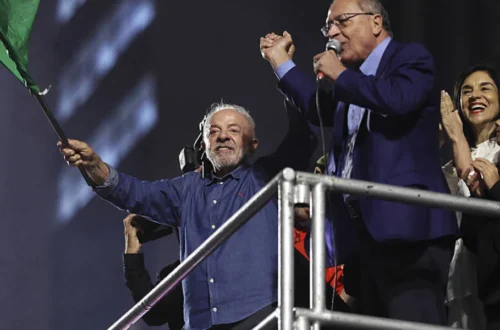
- The Presidential Palace: In his victory speech in São Paulo, President Lula struck a reconciliatory tone, declaring that "there are not two Brazils, but one single nation that demands unity, dialogue, and respect for the constitution." He pledged to govern for all citizens, explicitly acknowledging the concerns of those who voted for the opposition.
- The Opposition: Flávio Bolsonaro, speaking to supporters in Brasília following the concession, acknowledged the official results while signaling that the conservative movement would act as a vigilant, robust opposition in the legislature. "Our fight for lower taxes, individual liberties, and moral integrity does not end tonight," he stated.
International Perspectives
Global capitals responded swiftly to the confirmation of Brazil’s electoral outcome. Leaders from the European Union, the United States, and Latin American neighbors issued statements congratulating President Lula, emphasizing the importance of shared democratic values, regional cooperation, and joint commitments to global climate action. Financial markets reacted with cautious stability, pricing in the continuity of executive leadership while simultaneously signaling anxiety over future fiscal policy and public spending constraints.
Implications: Lessons from Abroad and the Path Forward
As President Lula prepares to inaugurate his new term, the central challenge will not merely be surviving political gridlock, but actively fortifying Brazilian democracy against internal decay. In this regard, the experiences of other fragile democracies offer vital lessons.
Lessons from Hungary and Serbia
Recent democratic outcomes in countries like Hungary and Serbia illustrate how democratic backsliding rarely happens overnight through violent coups. Instead, it occurs insidiously from within. Autocratically inclined leaders systematically hollow out checks and balances, capture independent media, weaponize judicial systems, and polarize societies to the point where democratic alternation becomes nearly impossible.
In Hungary, Viktor Orbán’s consolidation of power was facilitated by a fractured, inward-looking opposition incapable of forming broad-based coalitions. Similarly, in Serbia, democratic erosion has persisted due to deep political fragmentation and an inability to build consensus across ideological divides.
The Imperative for Coalition-Building in Brazil
For Brazil, the takeaway is clear: winning an election against a populist challenger is not enough to safeguard democracy. True institutional resilience requires structural reforms that transcend partisan politics.
- Reaching Beyond the Left: The Lula administration cannot rely solely on its traditional base. To pass complex fiscal, tax, and administrative reforms, the government must forge durable working relationships with moderate conservatives, technocrats, and regional leaders who may not share the left’s ideological vision but share a commitment to constitutional stability.
- Defending Democratic Institutions: Protecting the autonomy of the judiciary, reinforcing the integrity of electoral authorities, and safeguarding a free press must remain non-negotiable priorities. Institutional checks and balances are the ultimate bulwark against authoritarian impulses, regardless of political affiliation.
- Addressing Socio-Economic Discontents: Populism thrives on economic insecurity and social alienation. If the re-elected government fails to deliver tangible improvements in public safety, job creation, education, and inflation control, the populist appeal will only intensify in future electoral cycles.
Conclusion
Brazil’s 2026 election cycle has proven that the nation’s democratic fabric is far stronger and more resilient than many pessimists feared. Millions of citizens demonstrated their commitment to the constitutional order by showing up in record-breaking numbers to make their voices heard.
Yet, democratic confidence must now be matched by institutional maturity and political courage. By internalizing the lessons of democratic erosion seen elsewhere in the world—and by consciously building bridges across deep ideological divides—Brazil has a rare opportunity to transition from mere political survival to lasting institutional stability. The ballot box has spoken; the hard work of democratic stewardship now begins.