LONDON — China’s formidable trade surplus, which has now surged past the staggering threshold of $1 trillion per year, has ignited fierce debates across Western capitals. It has prompted urgent warnings from protectionist lawmakers, spurred new tariffs in Washington and Brussels, and driven a profound rethinking of globalization. These immediate macroeconomic tensions and trade-policy dilemmas were recently cataloged in a comprehensive Project Syndicate compendium, which underscored the systemic strain Beijing’s export-driven model places on the rest of the world.
Yet, focusing solely on the immediate fiscal friction, currency valuations, or retaliatory tariffs misses a far more profound, structural reality. According to prominent economic thinkers such as Adair Turner, the deeper implications of China’s manufacturing prowess extend well beyond current account balances. They point to an immutable economic transformation that will redefine global employment, reshape relative prices, and shatter long-held developmental illusions in the Global South.
Specifically, the myth that developing nations can follow the traditional East Asian export-led manufacturing path to mass employment is running headlong into a mathematical wall. China’s unrivaled industrial competitiveness means that, regardless of any industrial strategy adopted in developed economies or the Global South, manufacturing employment worldwide is destined to follow a downward trajectory.
1. Main Facts: The Anatomy of China’s Industrial Supremacy
To understand the scale of the structural shift described by economists, one must first examine the pillars of China’s current manufacturing dominance.
- The $1 Trillion Surplus: China’s annual trade surplus has crossed the historic $1 trillion mark. This massive imbalance is fueled by an industrial ecosystem that combines unmatched supply-chain depth, state-directed capital allocation, highly efficient logistics, and a massive domestic industrial base that continues to churn out goods—from legacy semiconductors and electric vehicles (EVs) to green energy technology and consumer electronics—at prices foreign competitors struggle to match.
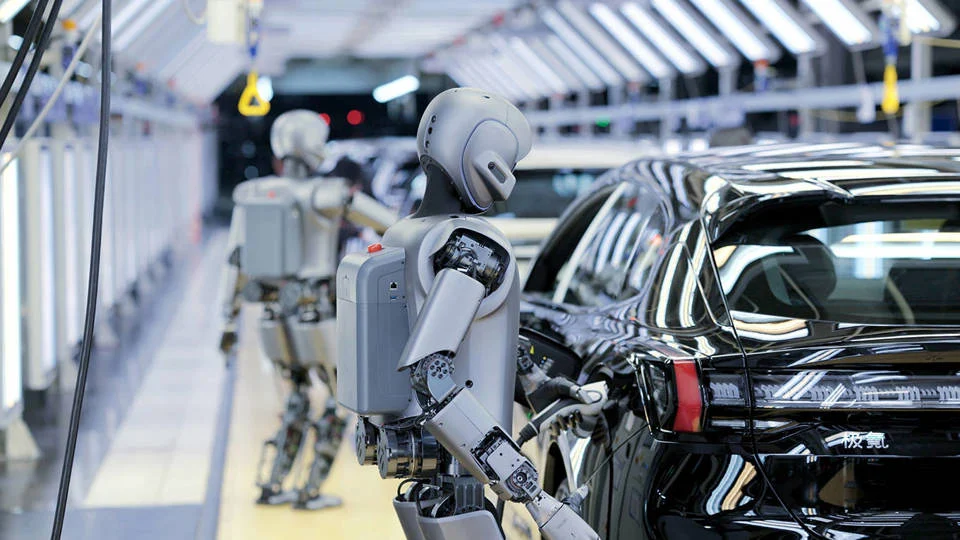
- The Productivity Paradox: While Western nations grapple with stagnant productivity growth in services, Chinese manufacturing has achieved extraordinary capital and labor productivity. By leveraging advanced automation, industrial robotics, and tightly integrated regional supply chains, Chinese factories produce more value with fewer relative inputs.
- The Developed World Reality: In advanced economies (the United States, Western Europe, Japan), manufacturing employment has been on a secular decline for decades. Despite recent legislative pushes—such as the U.S. CHIPS and Science Act and the European Union’s industrial policy initiatives—the absolute number of manufacturing jobs will continue to shrink over the long term. Automation and technological substitution ensure that even if industrial output rises in value, human labor requirements will contract.
- The Global South Delusion: The most critical assertion regarding China’s dominance is its impact on developing regions with booming working-age populations, particularly India and Sub-Saharan Africa. Decades ago, nations like South Korea, Taiwan, and China itself industrialized by absorbing millions of low-skill workers into export-oriented factories, lifting hundreds of millions out of poverty. Today, the expectation that manufacturing can absorb a significant fraction of India’s or Africa’s burgeoning workforce is described by analysts as a dangerous delusion. China has captured such a vast share of global manufacturing scale and efficiency that late-comer developing economies simply cannot compete for global export markets in the same way.
2. Chronology: The Evolution of Global Manufacturing and Trade Imbalances
The trajectory leading to today’s $1 trillion trade surplus and structural employment crisis developed over several distinct historical phases:
- Late 20th Century (The Rise of the "World’s Factory"): Following market reforms initiated by Deng Xiaoping, China gradually integrated into the global trading system. Its accession to the World Trade Organization (WTO) in 2001 accelerated this trend, turning China into the primary destination for outsourced Western manufacturing. During this era, manufacturing jobs bled from the developed world into China, creating rust belts in North America and Europe while generating rapid growth in coastal Chinese provinces.
- Post-2008 Financial Crisis (The Shift to Overcapacity): Following the global financial crisis, Beijing heavily stimulated its domestic economy, directing vast amounts of state-backed credit into real estate and heavy industry (steel, cement, aluminum). As the domestic real estate sector later cooled, excess industrial capacity was redirected outward. China doubled down on high-tech manufacturing, transitioning from low-cost textiles and toys to high-value goods like solar panels, lithium-ion batteries, and automobiles.
- The Pandemic and Supply Chain Shocks (2020–2022): The COVID-19 pandemic exposed the fragility of global supply chains reliant on a single geographic hub. While Western governments scrambled for medical equipment and consumer goods, China’s industrial apparatus rebounded faster than any other, paradoxically increasing its export market share during global lockdowns and widening its trade surpluses.
- 2023–2025 (The Era of Industrial Overcapacity and Tariffs): By the mid-2020s, China’s manufacturing output vastly outpaced domestic consumption. The resulting export surge triggered a wave of global protectionism. The United States imposed steep tariffs on Chinese EVs, steel, and advanced tech, while the European Union launched anti-subsidy investigations into Chinese electric vehicles, leading to provisional compensatory duties.
- 2026 and Beyond (The Structural Reckoning): As highlighted in current economic discourse, the debate has shifted from temporary trade friction to a permanent structural reality. Policymakers are being forced to accept that no amount of industrial policy, reshoring, or "friend-shoring" will reverse the long-term decline of manufacturing employment in developed nations, nor will it clear a path for traditional export-led industrialization in Africa and South Asia.
3. Supporting Data and Economic Metrics
The arguments regarding China’s surplus and its labor-market fallout are grounded in hard macroeconomic data:
- Export Volumes vs. Domestic Consumption: China currently accounts for roughly 30% of global manufacturing output—more than the U.S., Germany, Japan, and South Korea combined. However, domestic consumption accounts for a significantly lower share of its GDP compared to other major economies, resulting in structural overproduction that must find an outlet in international markets.
- Demographic Pressures: According to United Nations demographic projections, India surpassed China as the world’s most populous nation, and the African continent boasts the youngest and fastest-growing population globally. Hundreds of millions of young people are entering the job market over the next three decades.
- Capital-to-Labor Ratios: Historical industrialization models relied on labor-intensive assembly lines. Modern manufacturing, heavily influenced by artificial intelligence, machine learning, and advanced robotics, is intensely capital-intensive. A modern automated factory in Shenzhen or Guangzhou employs a fraction of the workers required to produce the same volume of goods twenty years ago, raising the bar for labor absorption across the board.
- Service Sector Realities: In advanced economies, manufacturing’s share of total employment has fallen from over 30% in the mid-20th century to under 10–12% today. Conversely, service sectors—ranging from healthcare and education to digital technology and professional services—now account for upward of 75% to 80% of total employment.
4. Official Responses and Global Policy Reactions
Governments, central banks, and international organizations are grappling with the ramifications of China’s industrial dominance through diverse and often conflicting policy responses:
Washington and Brussels: Protectionism and Industrial Policy
Western policymakers have shifted decisively toward defensive economic nationalism. In the United States, successive administrations have maintained and expanded tariffs on Chinese imports, utilizing legislation like the Inflation Reduction Act (IRA) to subsidize domestic clean-energy manufacturing. In Europe, the European Commission has adopted a more assertive stance against what it terms "unfair competition" and market distortion, utilizing trade defense instruments to protect domestic industries from cheap Chinese imports.
However, economists like Adair Turner caution that these policies are fundamentally defensive and politically motivated. While tariffs may protect specific legacy industries or cushion the political blow in key electoral districts, they cannot alter the underlying technological and cost realities that make Chinese manufacturing so formidable. Furthermore, attempts to reshore entire supply chains risk fueling inflationary pressures in developed economies.
Beijing: Double-Down on Advanced Manufacturing
Beijing has consistently rejected Western accusations of "overcapacity," arguing that its dominance is the result of technological innovation, economies of scale, and relentless entrepreneurial drive rather than unfair state subsidies. Chinese official statements emphasize that the nation is supplying the world with the green technology necessary to combat climate change affordably. Beijing continues to direct capital toward advanced manufacturing, automation, and semiconductor self-sufficiency, betting that its technological lead is too entrenched to be dislodged by foreign protectionism.
The Global South: Searching for Alternative Development Models
For developing nations in Sub-Saharan Africa and South Asia, the realization that the traditional manufacturing-led growth escalator may be broken has forced a strategic reassessment. International financial institutions, including the World Bank, are increasingly advising developing countries to explore alternative growth engines. Rather than relying on massive factory hubs to absorb low-skilled rural populations, nations are looking toward "servicification"—leveraging digital technologies, business process outsourcing, agriculture modernization, and localized green infrastructure to create sustainable employment.
5. Deeper Implications: The Future of Work and Global Relative Prices
As we look toward the latter half of the 2020s and beyond, the structural trends identified by economic analysts carry profound implications for the global order:
The End of the Manufacturing Growth Escalator
The most significant casualty of China’s dominance is the conventional economic development model. For decades, the path from agrarian poverty to middle-income status was clear: move surplus rural labor into low-wage urban factories, accumulate capital, upgrade technology, and transition to higher-value production.
Because China has effectively saturated global demand with high-quality, low-cost manufactured goods, late-comer developing nations find themselves squeezed out before they can even scale their industries. If manufacturing can no longer absorb millions of low-skill workers in India or Nigeria, these nations must invent entirely new pathways to economic development—a challenge for which standard economic theory offers few blueprints.
Deflationary Pressures and Relative Prices
China’s vast industrial overcapacity exerts a powerful deflationary force on global markets. While service sectors in the West experience persistent inflation driven by labor shortages and wage growth, manufactured goods remain relatively cheap. This dichotomy alters relative prices across the global economy. Consumers in developed nations benefit from affordable electronics, household appliances, and green-energy components, even as their domestic manufacturing sectors shrink.
However, this dynamic complicates central bank policies in the West. While central bankers struggle to anchor services inflation, cheap Chinese imports help suppress headline inflation figures, creating complex monetary policy trade-offs.
The Geopolitical Struggle for Technological Autonomy
As economic interdependence proves to be a source of strategic vulnerability rather than mutual stability, the global economy is fragmenting into competing blocs. Nations are no longer optimizing solely for cost efficiency; they are optimizing for security and resilience. The pursuit of "de-risking"—diversifying supply chains away from China—will permanently alter the geography of global trade, leading to higher baseline costs for goods over the long term as redundancies are built into global supply chains.
Redefining the "Post-Industrial" Economy
Ultimately, the structural reality articulated by Adair Turner forces developed and developing nations alike to accept a post-industrial labor market. For advanced economies, the political obsession with reviving 20th-century factory employment is a distraction from the real challenges: raising service-sector productivity, investing in human capital, reforming education systems to match the digital age, and managing the social safety nets required in an era of rapid technological displacement.
For the Global South, the challenge is even more daunting. Finding alternative avenues for mass employment in an era where automated Chinese industry dominates the global supply chain is perhaps the defining economic test of the twenty-first century. Until policymakers look past short-term trade disputes and confront these structural realities, the global economy will remain caught between outdated models of development and an unforgiving new industrial landscape.