Main Facts: The Return of a Lancaster Icon
Independent American watchmaking has always relied on a deep sense of place, heritage, and continuity. For the Mount Joy, Pennsylvania-based RGM Watch Co., the unveiling of the Model 501-EFB is much more than a routine product launch—it is a poignant homecoming. By officially reviving the historic E.F. Bowman name, RGM—led by master watchmaker Roland G. Murphy—has reconnected with a 19th-century regional horological giant that holds a deeply personal connection to the brand’s founder.
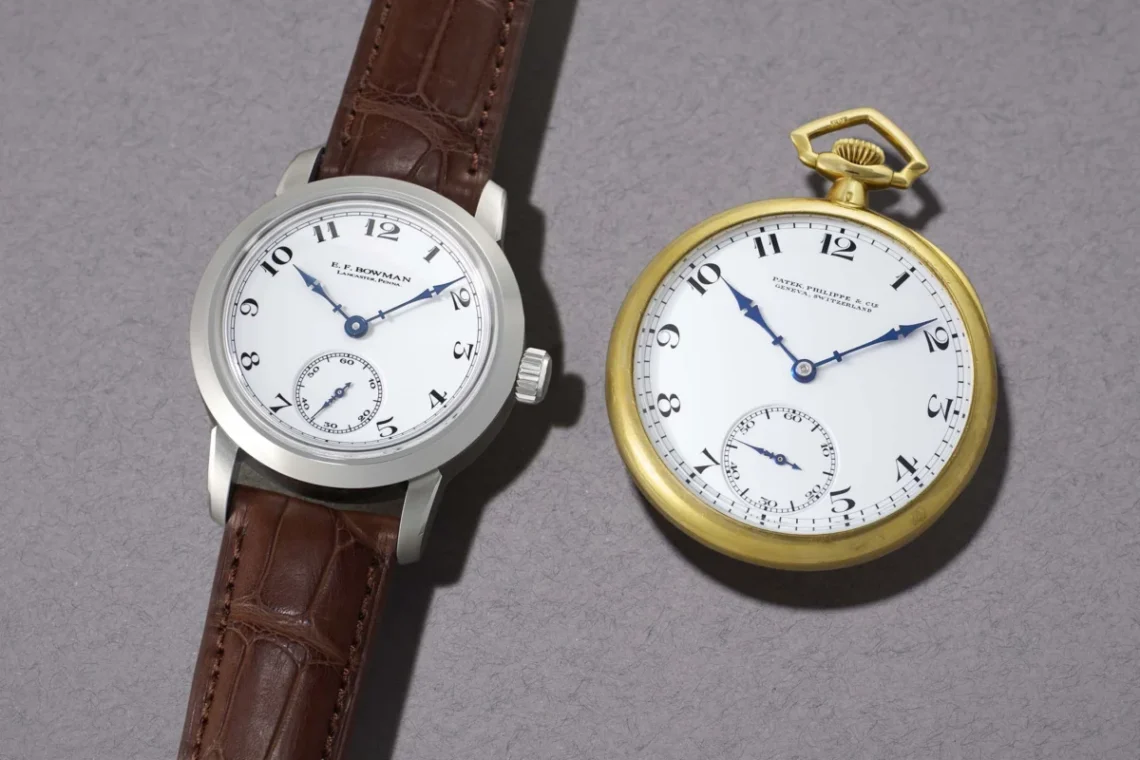
Scheduled to make its global debut on September 25, 2026, during the prestigious Lancaster Watch Weekend, the RGM Model 501-EFB is an exercise in neoclassical watchmaking. Built upon RGM’s established micro-rotor platform, the timepiece measures a wearable 39mm in diameter, 48mm from lug-to-lug, and 11.3mm in thickness, inclusive of its retro-inspired box-style sapphire crystal. Crafted from American-made 316L stainless steel, the case features a threaded bezel, traditional downward-curving lugs, and a flat sapphire exhibition caseback revealing an extensively finished micro-rotor movement.
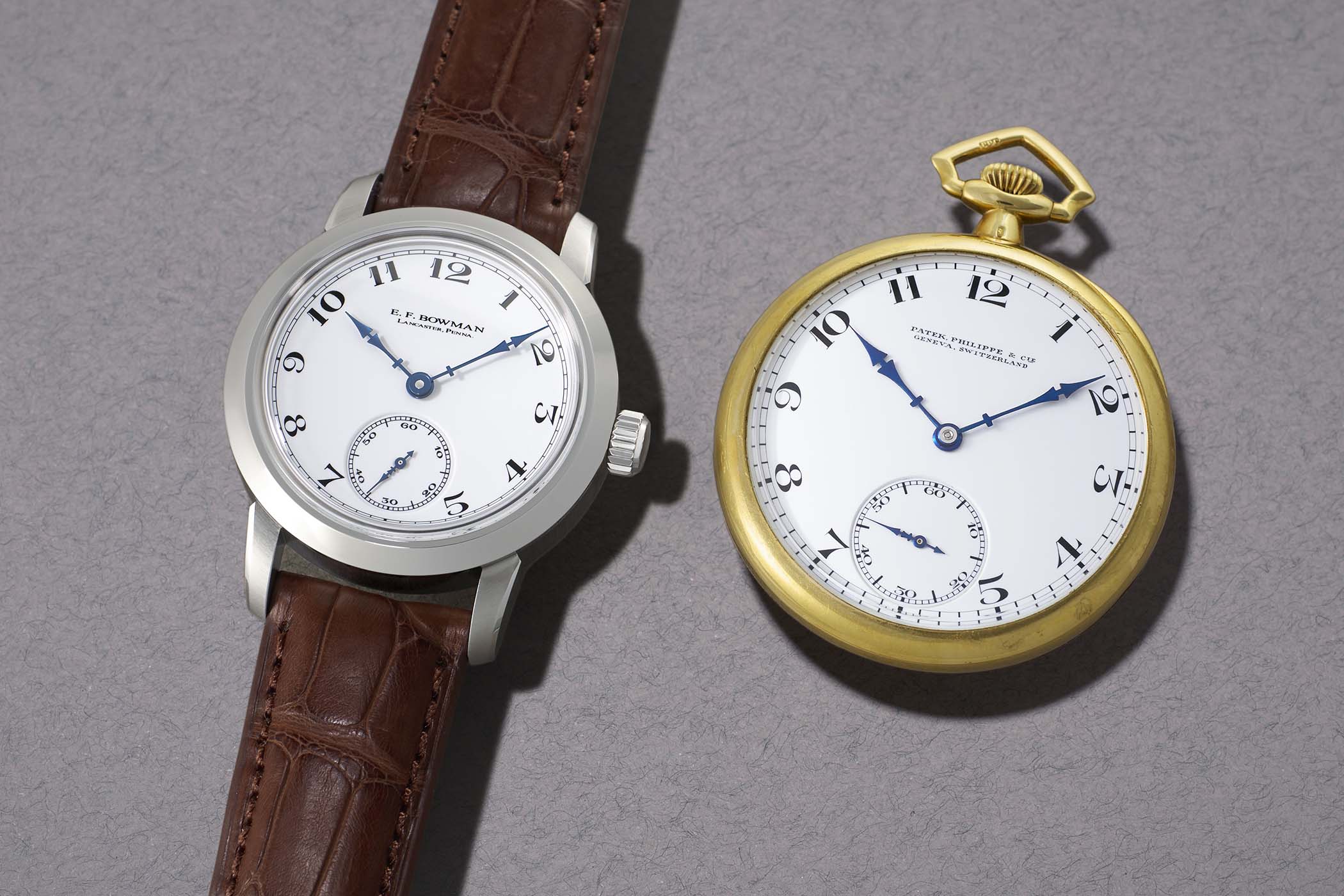
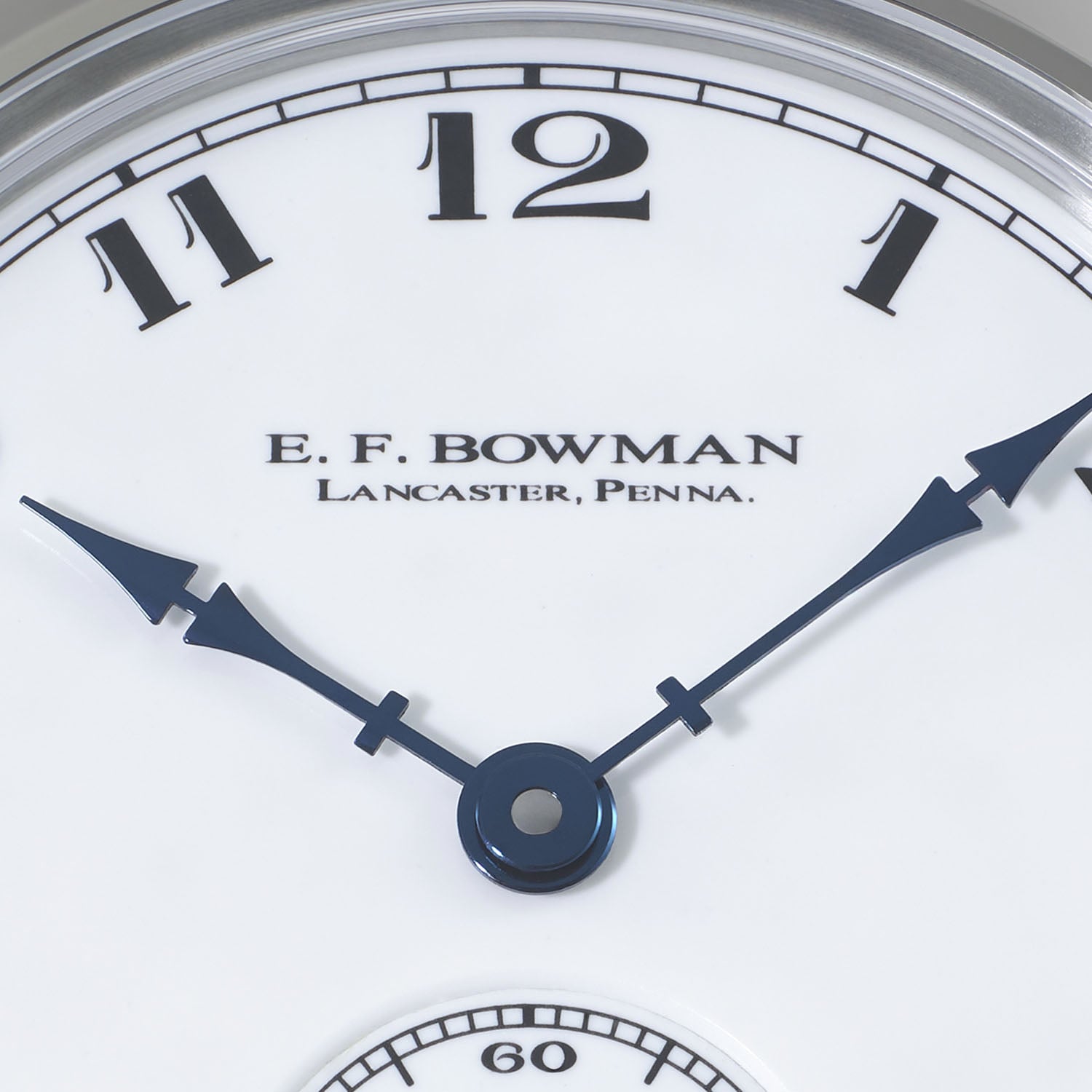
At its heart lies a pristine white Grand Feu-fired enamel dial, directly inspired by a rare 1920s Patek Philippe pocket watch originally commissioned for Ezra F. Bowman & Sons. Combined with heat-blued steel hands, a peripheral railroad-style minute track, and a recessed small seconds sub-dial at 6 o’clock, the Model 501-EFB translates a century-old pocket watch aesthetic into a contemporary, elegant dress watch. Powered by the Schwarz Etienne-sourced ASE 200 automatic movement—customized and finished by RGM with a solid-gold micro-rotor plaque—the watch offers an impressive 86-hour power reserve. Retailing for USD 16,950 in stainless steel, with precious metal options available upon special request, this release bridges the gap between Pennsylvania’s rich industrial past and its modern independent watchmaking renaissance.
Chronology: The Roots of Lancaster Watchmaking and the Bowman Dynasty
To fully appreciate the weight of the E.F. Bowman name, one must journey back to the rolling hills of Lancaster County, Pennsylvania, an incubator for American timekeeping innovation.
The Formative Years of Ezra F. Bowman (1847–1877)
Ezra F. Bowman was born in Lancaster County in 1847 into a family of Swiss descent. From an early age, he exhibited a profound fascination with mechanics and horology. In an era when aspiring watchmakers were typically bound to grueling, traditional seven-year apprenticeships, Bowman’s father chose a more efficient and intensive route. He arranged a focused two-year training period under the direct tutelage of a seasoned Swiss watchmaker. This unorthodox educational foundation not only shaped Bowman’s technical prowess but also profoundly influenced his later philosophies on how watchmaking ought to be taught.
Retail Expansion and Early Manufacturing (1877–1882)
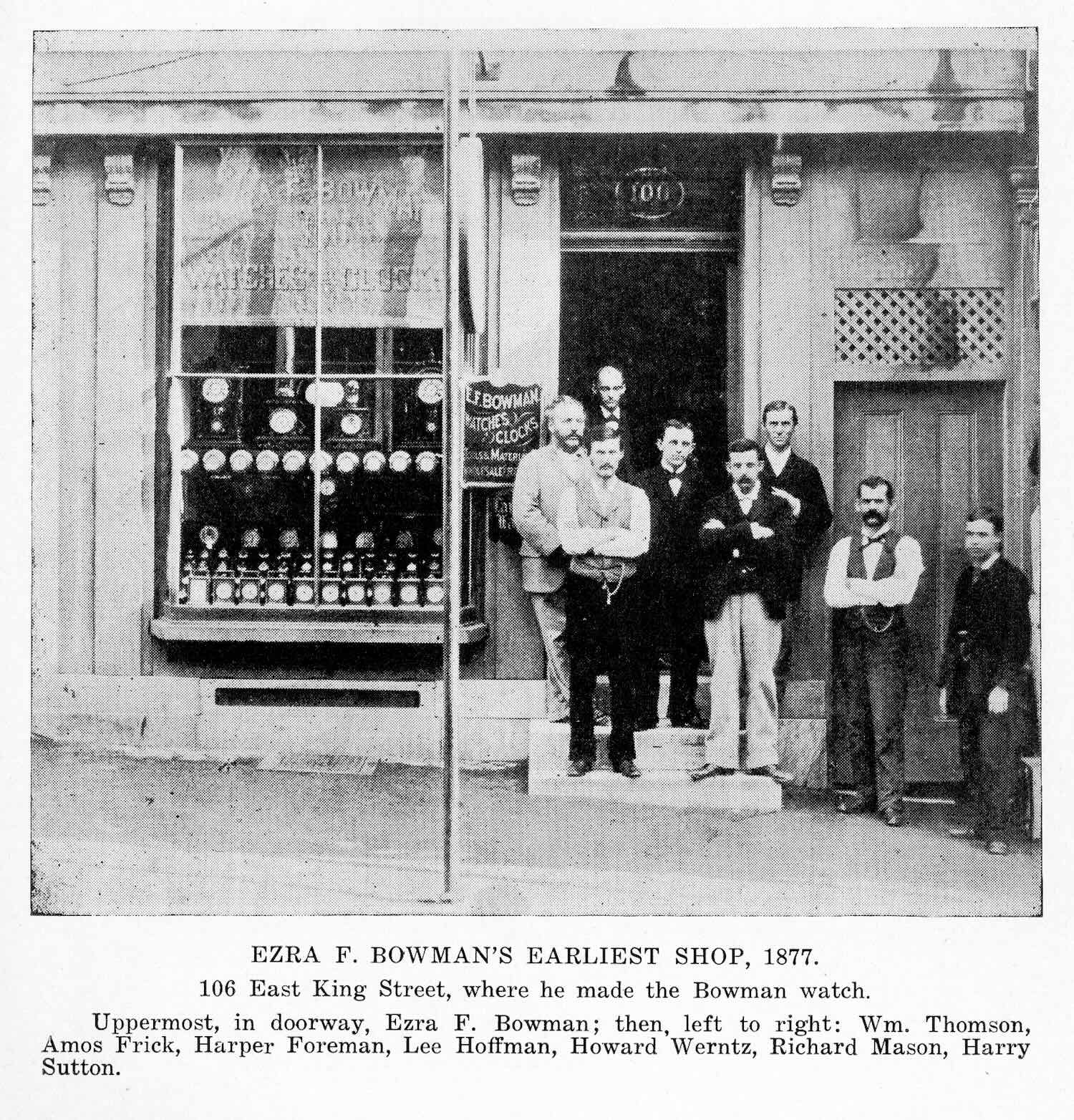
In 1877, Bowman established his retail jewellery and watch shop at 106 East King Street in the heart of Lancaster. What began as a modest retail storefront quickly snowballed into a major wholesale operation, supplying regional merchants with precision timepieces, specialized tools, and raw materials. As his sons entered the fold, the enterprise was rebranded as Ezra F. Bowman’s Sons, cementing a stellar regional reputation for expert jewellery and watch restoration.
Driven by a desire to push beyond retail and wholesale, Bowman ventured into manufacturing. In 1879, he founded the E.F. Bowman Watch Company. To realize his vision, he collaborated with W.H. Todd, a skilled watchmaker and movement designer who had previously worked with the Adams & Perry Watch Company and its successor, the Lancaster Watch Company.
The manufacturing venture was exceptionally boutique in scale. Historical records indicate that only around 50 pocket watches were produced between 1879 and 1882. These movements were largely handmade, with every component—barring the balance wheel—crafted entirely in-house. Recognizing that large-scale industrial manufacturing was better left to giants like the Hamilton Watch Company (which would later occupy a massive footprint in the same city), Bowman eventually wound down the manufacturing arm, selling off the heavy machinery. However, his true and lasting monument would not be found in mass-produced movements, but in education and mentorship.
The Bowman Technical School and Roland Murphy’s Connection
By the late 1870s, Bowman had begun imparting his knowledge to others informally, driven by the conviction that traditional long apprenticeships were overly protracted and inefficient. By 1887, his teaching efforts were formally structured, giving rise to the legendary Bowman Technical School.
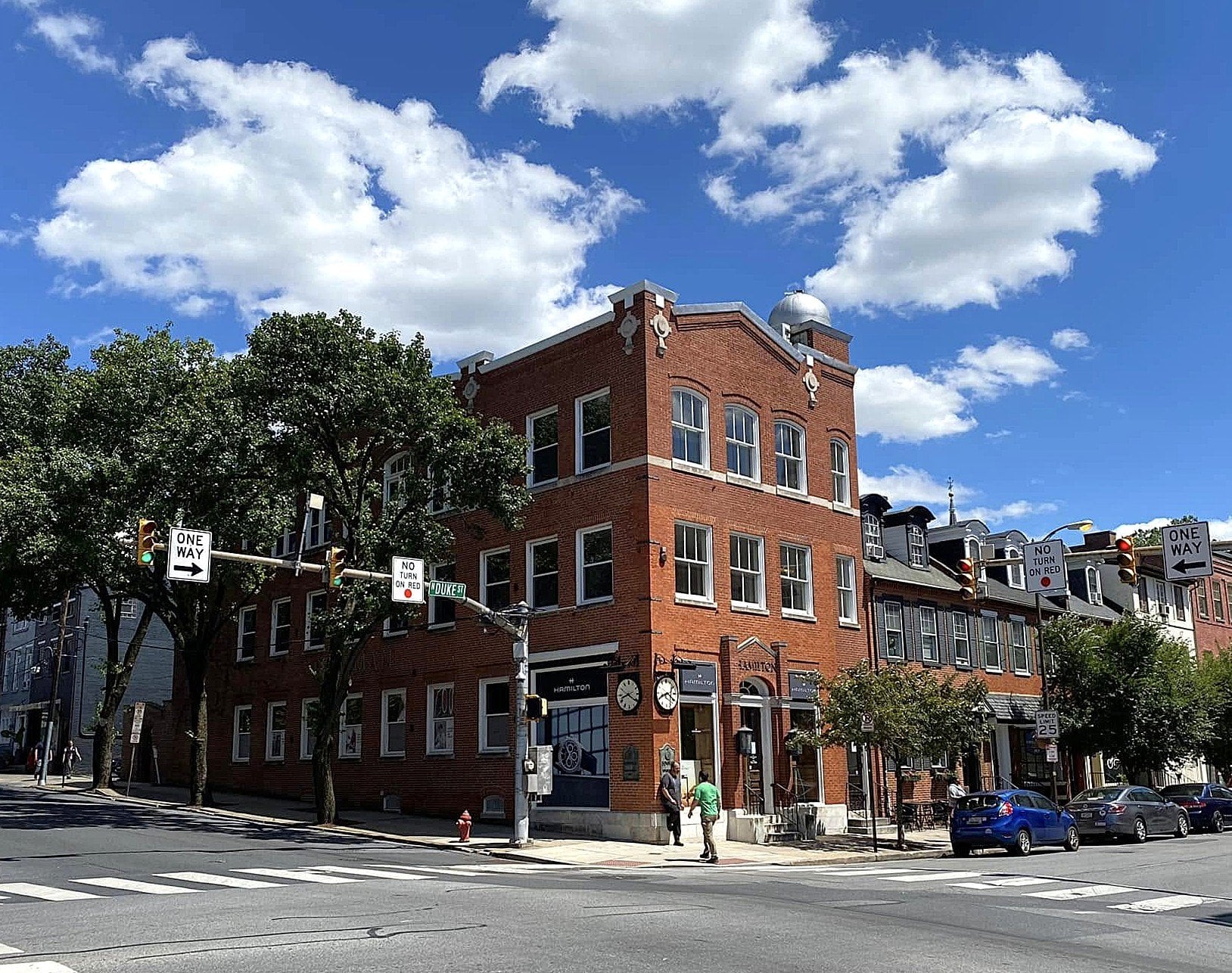
Focusing on a rigorous curriculum encompassing watchmaking, jewellery repair, and delicate hand engraving, the school blossomed into one of the most vital epicenters for horological education in the United States. In 1912, both the growing jewellery business and the technical school relocated to a permanent, purpose-built facility at the corner of North Duke and East Chestnut streets in Lancaster.
The legacy of this institution spanned generations: the jewellery store remained operational until 1992, while the technical school graduated its final class that exact same year.
This chronology converges neatly with modern independent watchmaking through Roland G. Murphy. In the early 1980s, a young Murphy walked the halls of the Bowman Technical School, absorbing the foundational skills that would eventually lead him to study at the Watchmakers of Switzerland Training and Educational Program (WOSTEP) and, ultimately, to found RGM Watch Co. in nearby Mount Joy, Pennsylvania, in 1992—the exact year the Bowman era drew its physical close.
Supporting Data: Specifications and Technical Architecture
The RGM Model 501-EFB is an intricate dialogue between American design heritage and high-end Swiss mechanical execution. Below is the comprehensive technical breakdown of the timepiece:
| Specification | Details |
|---|---|
| Model Name | RGM Model 501-EFB (E.F. Bowman) |
| Case Material | American-made 316L stainless steel (Gold or Platinum available on request) |
| Case Dimensions | Diameter: 39mm / Thickness: 11.3mm / Lug-to-Lug: 48mm / Lug Width: 20mm |
| Crystal | Box-style sapphire crystal (front); flat sapphire exhibition crystal (caseback) |
| Water Resistance | 50 meters (5 ATM) |
| Dial | Genuine white Grand Feu-fired enamel with traditional railroad-style minute tracks |
| Hands | Heat-blued steel hands for hours, minutes, and subsidiary seconds |
| Movement | Schwarz-Etienne ASE 200 automatic micro-rotor calibre |
| Movement Specs | Frequency: 21,600 vph (3Hz) / Jewels: 33 / Power Reserve: 86 hours |
| Movement Finishes | Rhodium finish, Côtes de Genève, perlage, paired with an RGM-made solid-gold "Ezra F. Bowman" rotor plaque |
| Strap | Premium black/brown alligator leather strap with pin buckle |
| Availability & Debut | Debuts September 25, 2026, at the Lancaster Watch Weekend |
| Retail Price | USD 16,950 (Stainless Steel) |
Official Responses and Industry Context
The resurrection of the E.F. Bowman marque has sent waves of excitement through the North American horological community. While corporate revivals of defunct historical names are common in the watch industry—often executed by multinational conglomerates with no ties to the original brands—RGM’s approach stands in stark contrast.
Industry analysts have praised the launch as an authentic act of historical stewardship. Because Roland G. Murphy is a proud alumnus of the Bowman Technical School, the revival is deeply personal. It does not reek of marketing opportunism; rather, it represents a spiritual continuation of Lancaster’s golden age of watchmaking by one of its modern torchbearers.
While official press statements from RGM emphasize the technical challenges of sourcing and producing a true Grand Feu enamel dial—a notoriously fragile craft where a single speck of dust or slight over-firing can ruin an entire batch—observers have also highlighted the choice of the Schwarz Etienne ASE 200 movement. By utilizing a high-end, independent Swiss micro-rotor calibre boasting an impressive 86-hour power reserve, RGM ensures that the interior mechanics match the old-world exterior elegance. Furthermore, the inclusion of a solid-gold rotor plaque bearing Ezra F. Bowman’s name serves as a subtle, kinetic tribute to a pioneer who shaped American watchmaking instruction for over a century.
Implications: Preserving American Horological Identity
The release of the RGM Model 501-EFB carries profound implications for the future of independent watchmaking in the United States.
For decades, the narrative of American horology was viewed largely in the past tense—a ghost story dominated by the ruins of the Waltham, Elgin, Illinois, and Hamilton watch companies. Mass manufacturing had long since fled domestic shores, leaving behind a vacuum where bespoke craftsmanship struggled to find an economic foothold.
By tying the Model 501-EFB directly to the legacy of Ezra F. Bowman, RGM is actively curating a living history. The watch serves three crucial functions:
- Educational Memorialization: It honors the Bowman Technical School, reminding contemporary collectors that generations of master watchmakers were trained right on the streets of Lancaster, Pennsylvania.
- Aesthetic Preservation: By adapting a 1920s Patek Philippe pocket watch originally made for Bowman’s firm into a 39mm wristwatch, RGM demonstrates that classic American-market aesthetics—characterized by pristine Grand Feu enamel and razor-sharp blued steel—remain timeless and highly desirable.
- The Validation of Independent Craft: At $16,950, the Model 501-EFB occupies an uncompromising luxury tier. It proves that collectors are increasingly willing to invest in independent American watchmaking that offers genuine provenance, hand-finished movements, and a tangible connection to the roots of horological education.
Ultimately, when the RGM Model 501-EFB makes its debut at the Lancaster Watch Weekend in September 2026, it will do so within sight of the very buildings where Ezra F. Bowman once taught his students. It is a triumphant closing of the circle—a testament to the fact that while the pocket watch era may have faded, the spirit of Lancaster watchmaking is alive, well, and ticking stronger than ever on the wrist.