The city of Merano, nestled in the heart of Italy’s South Tyrol, has long served as a living museum of architectural transitions. From its nineteenth-century origins as a premier European spa destination to its post-war modernist expansions, the city’s urban fabric is a delicate tapestry of history and progress. At the center of this evolution stands the Hotel Aurora, a project recently reimagined by the acclaimed firm feld72 Architekten ZT GmbH.
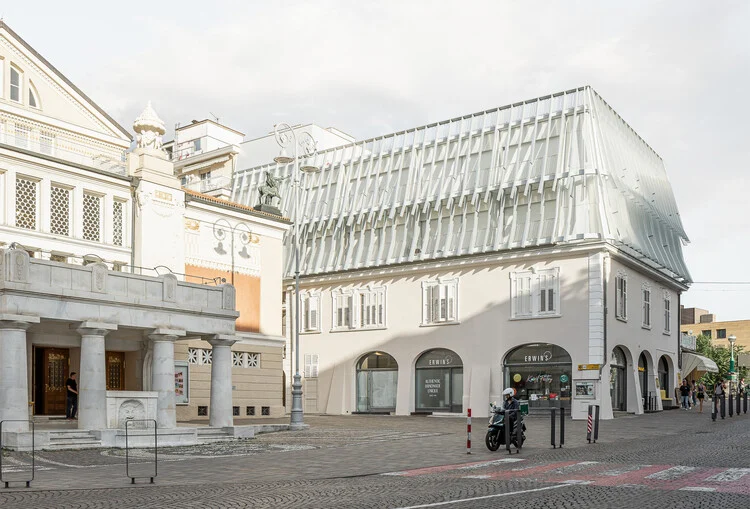
Positioned at a critical urban threshold, the Hotel Aurora is more than a hospitality venue; it is a sophisticated architectural mediator. By navigating the complexities of its site—wedged between the historic Passer Promenade, the municipal theatre, and a modernist landmark by Armando Ronca—the project establishes a new benchmark for how contemporary interventions can honor the past while defining a future-forward identity.
Main Facts: A Strategic Nexus of History and Modernity
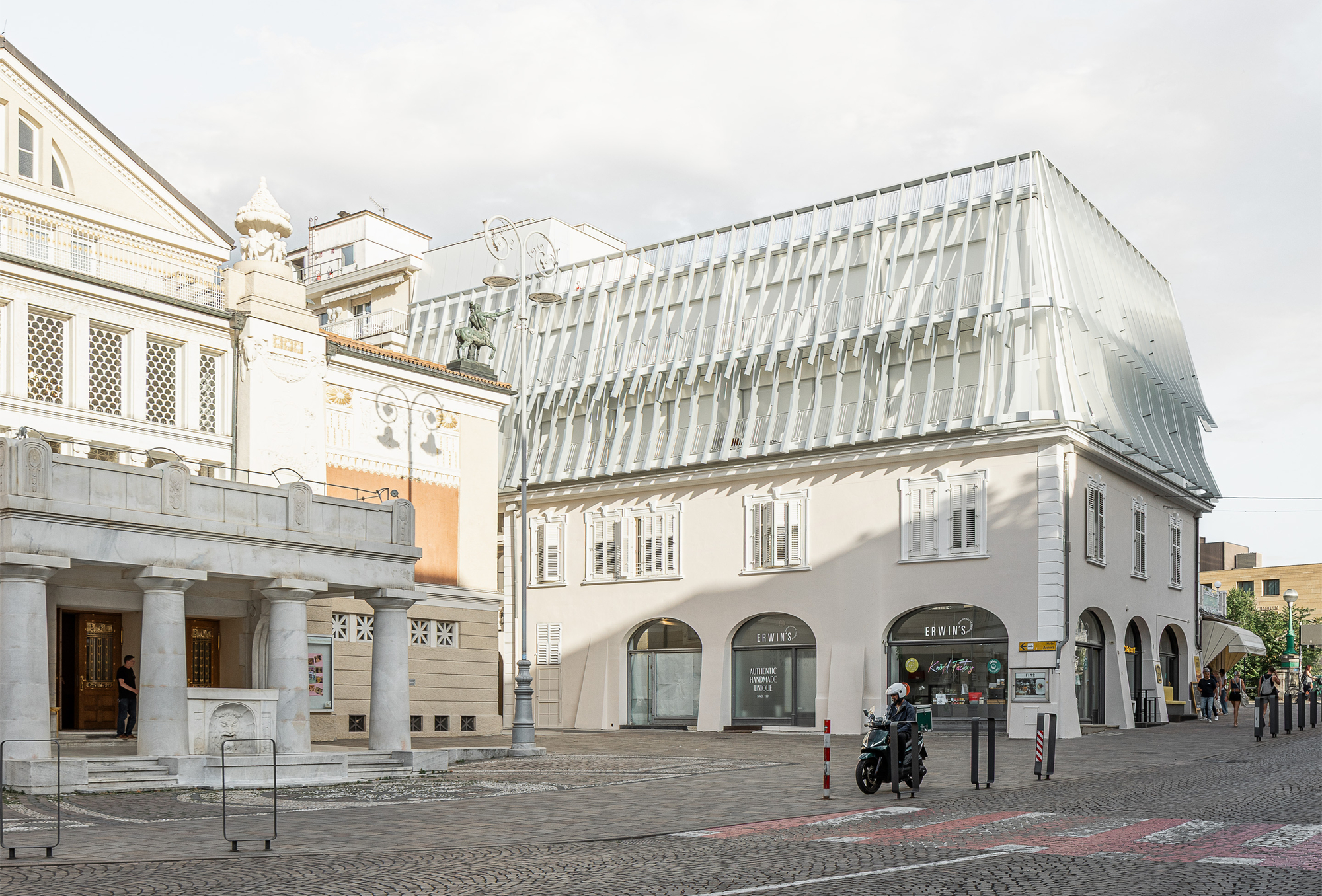
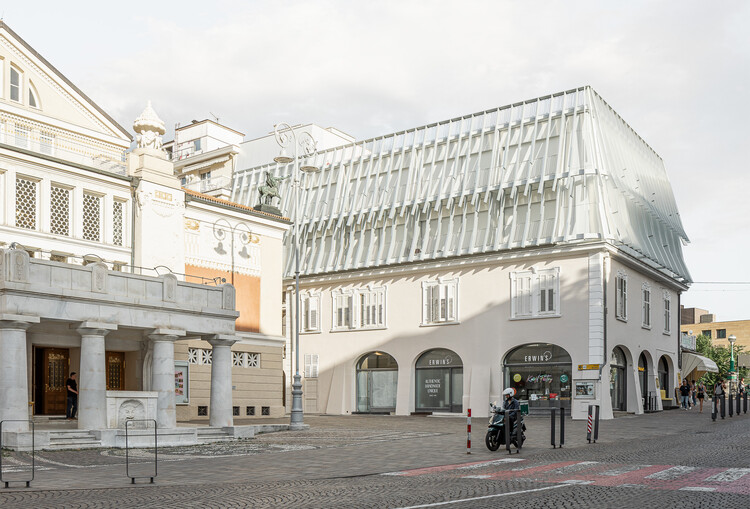
Hotel Aurora occupies one of the most prominent and sensitive locations in Merano. Its site is characterized by a dual identity: it marks the transition between the expansive, natural landscape of the Passer River and the dense, rhythmic urban center surrounding Piazza Teatro.
Project Overview
- Location: Merano (Meran), South Tyrol, Italy.
- Architect: feld72 Architekten ZT GmbH.
- Context: Situated along the Passer Promenade, adjacent to the City Theatre (Stadttheater) and a 1960s residential complex by Armando Ronca.
- Design Philosophy: Contextual mediation, typological continuity, and the harmonization of disparate architectural languages.
- Key Features: Rhythmic facade design, integration with the river landscape, and a sensitive dialogue with South Tyrolean modernism.
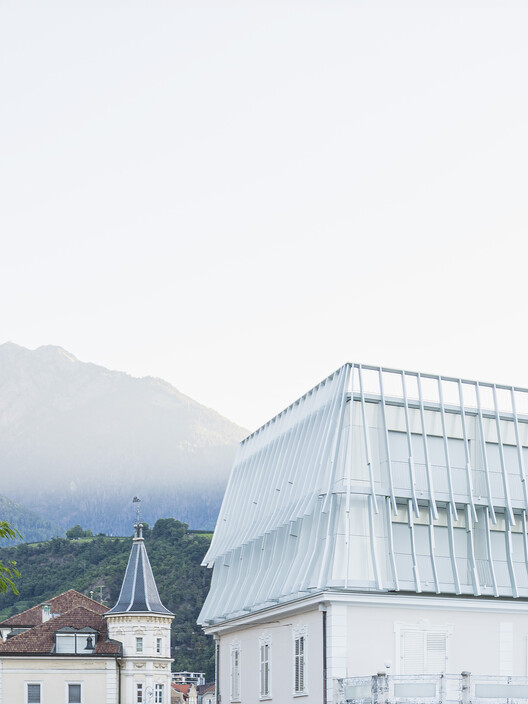
The design by feld72 does not seek to overshadow its neighbors. Instead, it acts as a "connective tissue." To the west lies the neoclassical elegance of the municipal theatre; to the east, the bold, structural logic of Armando Ronca’s 1960s residential building. The Hotel Aurora serves as the missing link, translating the scale and materiality of these varying eras into a cohesive contemporary form.
Chronology: From Imperial Spa to Modernist Hub
To understand the significance of the Hotel Aurora’s redesign, one must first look at the chronological layers of Merano’s development. The city’s identity is inextricably linked to the "hotel" as a building type.
The Nineteenth-Century Spa Era (1800s)
During the 1800s, Merano rose to international fame as a health resort, famously frequented by Empress Elisabeth of Austria (Sissi). This era gave birth to the Kurstadt (spa town) aesthetic—grand hotels, ornate villas, and the Passer Promenade. The promenade was designed as a social stage where visitors could "see and be seen," a concept that feld72 has integrated into the hotel’s outward-facing balconies and terraces.
The Modernist Shift (1960s)
Following the World Wars, Merano began to experiment with more radical forms. Armando Ronca, a pivotal figure in South Tyrolean modernism, introduced a new architectural vocabulary to the city. His residential building, which stands directly adjacent to Hotel Aurora, utilized concrete, geometric rigor, and a departure from traditional ornamentation. This created a tension in the city’s aesthetic that remained unresolved for decades.
The Contemporary Intervention (The Present)
When feld72 was commissioned to work on Hotel Aurora, the challenge was to respect both the Belle Époque charm of the promenade and the starker Modernism of Ronca. The project, completed in the mid-2020s, represents the latest chapter in this timeline. It marks a shift away from "mimicry" of the past toward a "reinterpretation" of local typologies.
Supporting Data: Architectural Composition and Materiality
The success of the Hotel Aurora lies in its technical execution and the rhythmic logic of its facade. The architects at feld72 focused on three primary data points: scale, rhythm, and the relationship between interior and exterior.
Facade Logic and Urban Rhythm
The facade serves as a visual bridge. Architects utilized a modular approach that echoes the repetitive window patterns of the historic promenade buildings while adopting the cleaner, more structural lines of the Ronca building. This "rhythmic mediation" allows the building to feel substantial and grounded without appearing heavy.
The "Threshold" Concept
Data from the site analysis showed that the hotel sits at a "pressure point" of urban flow. To address this, the ground floor was designed to be highly permeable. By opening the building toward the Passer River, the architects maximized the value of the promenade location. The balconies are not merely aesthetic additions; they are calculated "interstitial spaces" that extend the private living area of the guest rooms into the public atmosphere of the river walk.
Materiality and Craftsmanship
South Tyrol is renowned for its high standard of craftsmanship. The Hotel Aurora utilizes materials that speak to the region’s geological and architectural history. The use of high-quality plasters, metal accents, and stone reflects the "solidity" of Merano’s traditional architecture, while the precision of the detailing signals a modern, high-tech approach to construction.
Official Responses: The Architect’s Vision
In statements regarding the project, feld72 Architekten emphasized the importance of "continuity" over "disruption." According to the design team, the goal was to create a building that feels as though it has always belonged to the site, despite its modern aesthetic.
"Hotel Aurora is an exercise in mediation," the firm noted. "We were working in a city where every stone tells a story. Our task was to find a language that could speak to the 19th-century promenade and the 20th-century modernist movement simultaneously. We looked at the hotel not as an isolated object, but as a piece of urban infrastructure that completes a long-standing architectural conversation."
Experts in South Tyrolean architecture have praised the project for its "quiet confidence." By acknowledging the influence of Armando Ronca, feld72 has validated a period of architecture that was often overlooked in favor of more traditional "Alpine" styles. This approach has been hailed as a sophisticated way to manage urban heritage in a tourist-heavy environment.
Implications: The Future of Alpine Urbanism
The completion of the Hotel Aurora has broader implications for the city of Merano and the field of Alpine architecture at large. It serves as a case study for several emerging trends:
1. Reconciling Tourism with Urban Identity
In many European spa towns, the pressure of tourism often leads to "Disneyfication," where buildings are designed to look artificially old. Hotel Aurora rejects this trend. It demonstrates that a hotel can be a luxury destination while maintaining a rigorous, honest architectural standard that contributes to the city’s authentic evolution.
2. The Preservation of Post-War Modernism
By intentionally designing in dialogue with Armando Ronca’s work, feld72 has highlighted the value of 20th-century modernism. This suggests a future where historic preservation is not limited to the 19th century but encompasses the diverse layers of a city’s growth, including the often-misunderstood brutalist and modernist periods.
3. Sustainable Urban Density
The project shows how a dense urban site can be optimized without sacrificing the quality of the public realm. The way Hotel Aurora interacts with Piazza Teatro and the Passer River provides a blueprint for "compact city" development, where buildings perform multiple roles: providing accommodation, enhancing the streetscape, and respecting the natural landscape.
Conclusion: A New Landmark for Merano
The Hotel Aurora by feld72 Architekten ZT GmbH is a masterclass in contextual architecture. It succeeds by being neither a slave to history nor a radical departure from it. Instead, it is a thoughtful, rhythmic, and deeply considered response to a unique urban condition.
By bridging the gap between the Belle Époque promenades of the nineteenth century and the bold modernism of the 1960s, the hotel ensures that Merano remains a city of continuity. It stands as a testament to the idea that the best way to honor a city’s heritage is to add a new, high-quality layer to its history. For guests, it offers a window into the soul of Merano; for the city, it provides a sophisticated new face for one of its most storied corners.
As Merano continues to evolve, the Hotel Aurora will likely be remembered as the project that proved contemporary architecture could be the ultimate mediator—healing urban gaps and celebrating the diverse architectural languages that make the city unique.