Main Facts: Bringing Mobility to the Amazonian Jungle
In the heart of the Peruvian low jungle, the geography itself presents a paradox: the lifeblood of the region—its vast network of rivers—is both the primary highway and the ultimate barrier to development. Amazonian living is defined by high territorial mobility and the profound geographic dispersion of its communities. While river transport serves as the main umbilical cord connecting isolated riverside populations, the reality of navigating these vast waterways is hindered by exorbitant travel times and steep operational costs.
To confront these deep-seated inequalities, the organization CASA [Ciudades Auto Sostenibles Amazónicas] has spearheaded an innovative architectural and logistical solution: BALSA (Self-Sufficient Boat for Laboratories and Services in the Amazon).
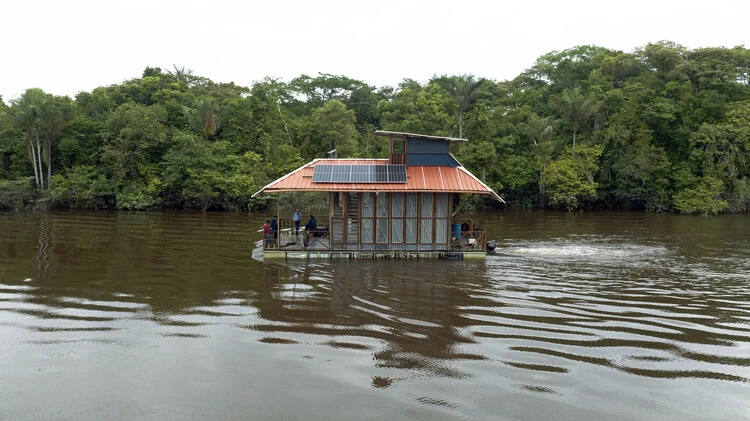
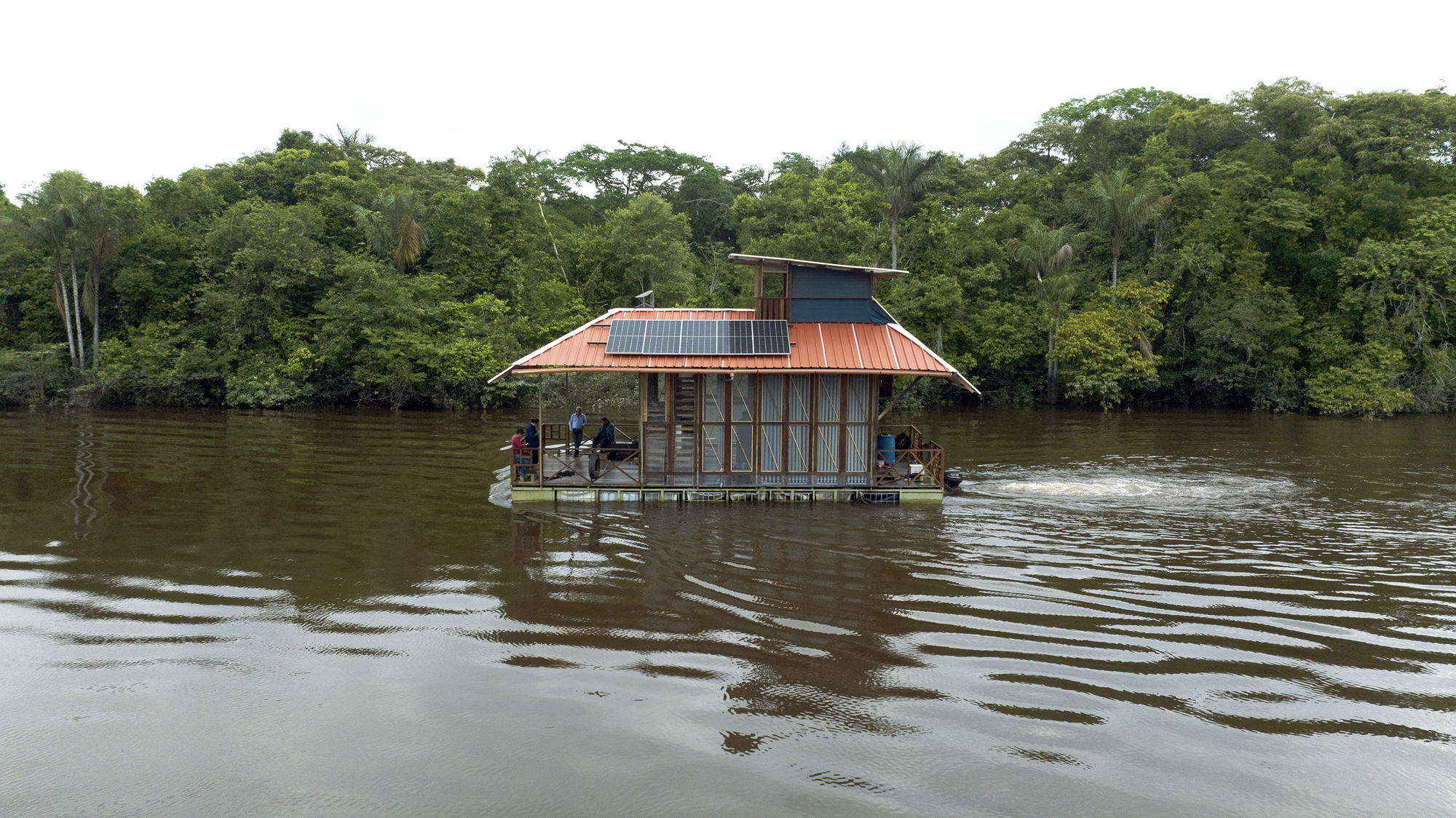
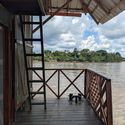
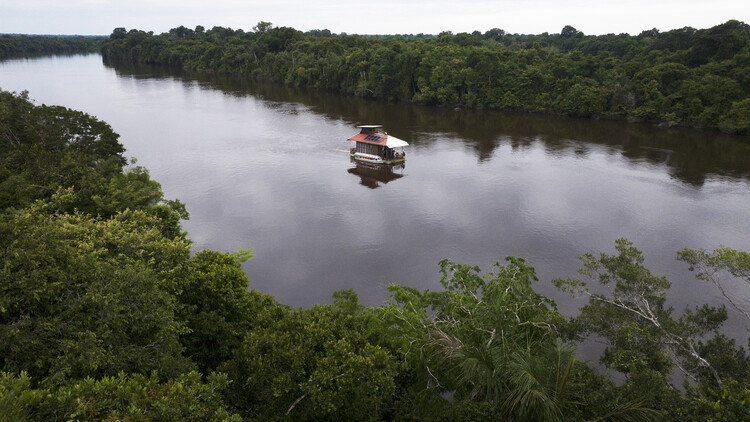
BALSA is a floating, self-sufficient vessel engineered to function as a mobile laboratory and multi-service center. Designed to traverse the intricate river systems of the Amazon basin, the project directly addresses a critical developmental bottleneck: the inability of the state to establish permanent, brick-and-mortar infrastructure in small, highly dispersed settlements. By transforming the infrastructure itself into a mobile entity, BALSA brings critical state services—including healthcare, laboratory testing, education, and legal identity registration—directly to the doorsteps of remote riverside communities.
Chronology of the BALSA Project: From Concept to Floating Reality
The realization of the BALSA initiative represents years of collaborative design, contextual research, and engineering tailored to the unique environmental constraints of the Amazon.
-
Phase 1: Problem Identification and Contextual Research (Pre-2024)
Architects and urban planners at CASA [Ciudades Auto Sostenibles Amazónicas] identified a glaring disparity in regional development indicators. Data consistently showed that the Peruvian Amazon suffered from some of the nation’s lowest accessibility metrics for healthcare, education, and institutional services. Traditional fixed-site interventions failed because small population clusters could not justify the permanent allocation of state resources. -
Phase 2: Conceptualization and Architectural Design (Early 2024)
The design team pivoted toward a nomadic, water-borne typology. Drawing on traditional local vernacular architecture adapted for river life (such as floating homes and raft platforms), the team engineered a vessel that could withstand tropical humidity, heavy rainfall, and intense solar radiation while remaining entirely self-sufficient in energy and water management.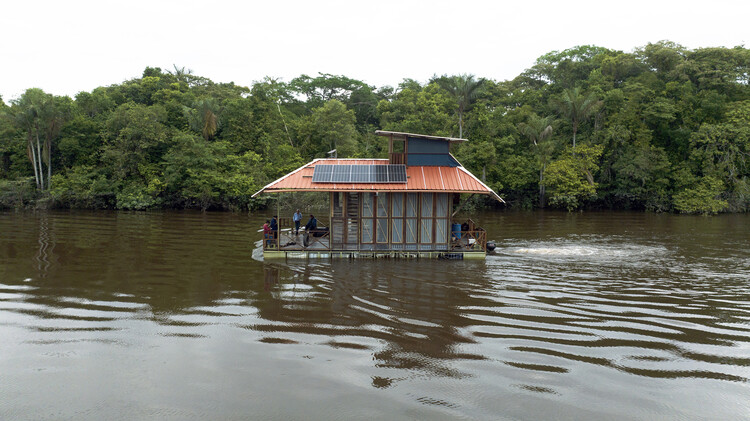
-
Phase 3: Construction and Material Testing (Mid-2024)
By mid-2024, physical realization of the prototype was underway. Emphasizing regional sustainability, the construction integrated locally sourced timber and materials suited for marine and riverine environments. Technical systems—including solar power arrays and onboard water filtration units—were integrated into the hull and superstructure. -
Phase 4: Launch and Initial Deployment (Late 2024 – 2025)
Following rigorous testing, BALSA was launched into the Amazonian waterways. Early deployments focused on remote communities along jungle tributaries, testing its operational capacity as a mobile laboratory and multi-service platform. Feedback from local populations and visiting specialists helped refine interior layouts and service delivery mechanisms. -
Phase 5: Evaluation and Future Scaling (2026 and Beyond)
Curated by architecture platforms and presented internationally, BALSA entered a phase of broader recognition and evaluation in late 2026. The project now serves as a blueprint for decentralized, water-borne public infrastructure across tropical river basins, offering a scalable model for other Amazonian nations facing similar geographical challenges.
Supporting Data: The Development Gap in the Amazon
To understand the necessity of a project like BALSA, one must examine the socio-economic and geographic landscape of the Peruvian Amazon through empirical data and structural constraints.
1. The Tyranny of Distance
- Transport Deficit: In the low jungle, roads are sparse to non-existent. River travel is measured not in miles, but in days or even weeks depending on the seasonal rise and fall of water levels.
- Cost Barriers: Fuel costs and motorized boat maintenance represent a massive financial burden for rural families, often forcing individuals to forgo medical treatment or administrative procedures entirely.
2. Infrastructure Inefficiencies
- The Scale Problem: Traditional government models rely on fixed infrastructure (schools, health posts, administrative offices). However, many Amazonian settlements consist of just a few dozen to a few hundred residents. Building, staffing, and maintaining permanent facilities for such small populations is fiscally inefficient and often leads to abandoned or understaffed outposts.
- Social Indicators: The Amazonian region consistently concentrates the lowest national indicators regarding:
- Access to Primary Healthcare: High rates of preventable tropical diseases coupled with a lack of diagnostic laboratories.
- Educational Resources: Limited access to specialized learning tools and digital connectivity.
- State Documentation: High rates of undocumented citizens who cannot travel to regional capitals to register births, obtain national identity documents, or access social programs.
3. Environmental and Energy Parameters of BALSA
- Self-Sufficiency Metrics: To operate independently for weeks at a time in deep jungle settings, BALSA integrates:
- Photovoltaic Energy Systems: Solar panels capable of powering refrigeration units (crucial for vaccines and laboratory samples), diagnostic equipment, and lighting without relying on diesel generators.
- Advanced Water Treatment: Onboard filtration systems that harvest and purify river water for sanitary use and drinking.
- Low-Impact Materials: Utilization of renewable wood and durable maritime construction techniques that minimize the vessel’s ecological footprint on pristine river ecosystems.
Official Responses and Perspectives from the Design Team
The philosophy behind BALSA extends far beyond naval architecture; it represents a fundamental re-imagining of how the state and civil society can interact with nomadic and geographically isolated populations.
In statements provided by CASA [Ciudades Auto Sostenibles Amazónicas], the architectural collective emphasizes that architecture in the Amazon must abandon static, imported paradigms.
"Amazonian living is characterized by fluidity, mobility, and a deep integration with the river systems," notes the design team. "If the population cannot easily reach the services because the jungle separates them, then the architecture must become dynamic. The building must travel to the people, rather than expecting the people to cross insurmountable geographic barriers."
Public health experts and regional officials have also weighed in on the operational model of floating laboratories. Traditionally, medical campaigns in the Amazon rely on temporary pop-up tents or borrowed spaces in local community centers, which lack sterile environments, secure storage for medicines, and reliable power for diagnostic machinery.
By housing a fully equipped laboratory inside a stable, climate-controlled, and energy-independent hull, BALSA bridges the gap between urban medical standards and remote jungle realities. Doctors and technicians can perform blood work, analyze water samples, administer vaccines under optimal thermal conditions, and conduct minor procedures with the same precision found in city hospitals.
Furthermore, civil servants stress the importance of the vessel’s multi-service capacity. By combining health services with legal identity registration desks, BALSA tackles the invisible population—those without birth certificates or national IDs—who are consequently barred from receiving government aid, voting, or enrolling in formal educational systems.
Implications: A New Paradigm for Tropical Infrastructure
The successful deployment of BALSA carries profound implications for the future of architecture, urban planning, and public administration across the Amazon basin and other tropical river regions globally.
1. Redefining Public Infrastructure
For decades, rural development policy has been anchored to the concept of the fixed settlement. BALSA challenges this orthodoxy by proving that mobility is a valid and often superior form of infrastructure. By pooling resources into a single, high-performance mobile unit, governments and NGOs can service dozens of communities sequentially, maximizing the return on investment for specialized equipment like laboratories and digital workstations.
2. Environmental Synergy
Building roads in the Amazon is notoriously destructive, driving deforestation, habitat fragmentation, and illegal resource extraction. Waterways, conversely, are pre-existing natural highways that require zero land clearance. By utilizing the river as its primary route and operating on renewable solar energy, BALSA demonstrates a low-impact model of development that respects the ecological fragility of the rainforest.
3. Scalability and Replicability
The architectural framework developed by CASA offers an open blueprint for other regions facing similar topographical challenges. The Amazon basin spans multiple countries—including Brazil, Colombia, Ecuador, and Bolivia—all of which grapple with riverine populations lacking adequate state services. BALSA serves as a tangible prototype that can be replicated, modified, and scaled to meet the specific cultural and logistical needs of different indigenous and riverside groups.
4. Cultural Resonance
Crucially, BALSA respects the traditional lifeways of Amazonian populations. Indigenous and riverside communities have navigated these rivers for generations in harmony with seasonal floods and droughts. A floating architecture does not disrupt the visual or physical landscape of the riverbank; it floats alongside the existing rhythm of river life, offering dignity, health, and institutional presence without imposing alien concrete structures upon the forest floor.
As the BALSA project continues its operational journey through the tributaries of the Peruvian jungle, it stands as a testament to the power of context-driven design. It proves that when architecture listens to the land—and the water—it can heal divides, empower the marginalized, and chart a sustainable course toward a more equitable future in the world’s most complex biome.