By Jeffrey Frankel
July 20, 2026
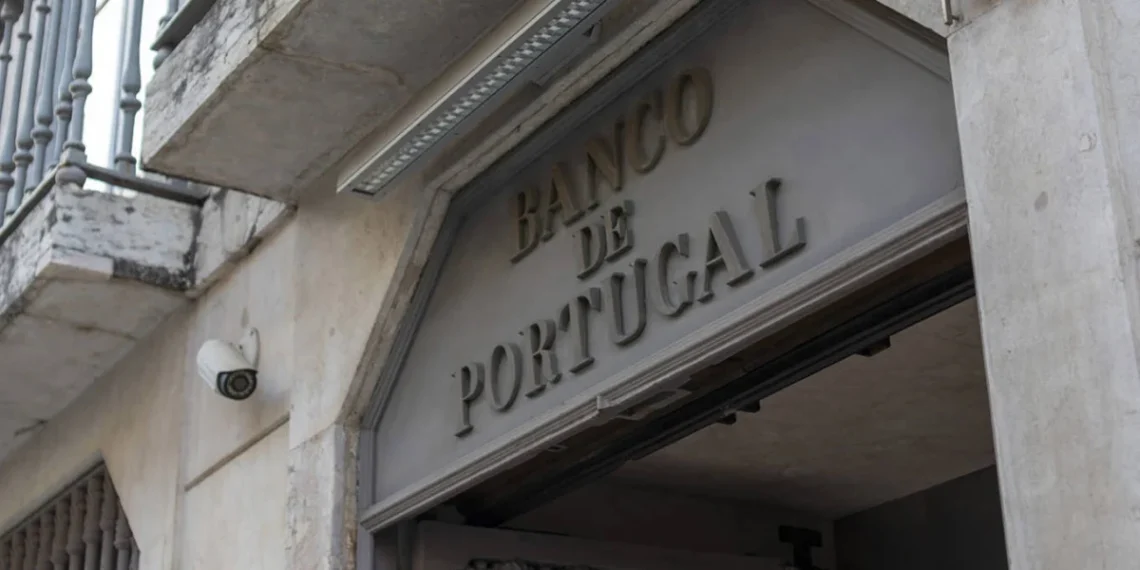
Fifty-two years have passed since the Carnation Revolution dismantled the Estado Novo—the longest-running authoritarian regime in Western Europe. Today, Portugal stands as a testament to the transformative power of democratic integration, functioning as a stable anchor within the European Union and the eurozone. Yet, as I look back at the summer of 1976, when I served as a young economist at the Banco de Portugal, the contrast between then and now is stark. Joining me in that endeavor were four other MIT graduate students, including a young Paul Krugman, who would go on to reshape the field of international economics.
Reflecting on our time in Lisbon, amidst the backdrop of current global instability, one cannot help but weigh the fragility of democratic progress against the encroaching shadow of isolationism. While Portugal’s trajectory from dictatorship to a top-tier, world-class safe haven is secure, the geopolitical climate—particularly the erosion of the rules-based international order under the influence of figures like Donald Trump—poses a systemic threat that neither Portugal nor the United States can afford to ignore.
The Historical Arc: From Dictatorship to Democracy
To understand the magnitude of Portugal’s achievement, one must appreciate the starting point. In the mid-1970s, the nation was reeling from the sudden end of the Salazar regime. The 1974 revolution was not merely a change in government; it was a total societal pivot.
The 1976 Summer: A Moment of Transition
In 1976, when my colleagues and I arrived in Lisbon, the atmosphere was electric with the uncertainty of newfound freedom. We were there to provide technical assistance, witnessing a nation grappling with decolonization, the sudden influx of refugees from former colonies, and a profound economic restructuring. The Banco de Portugal was at the epicenter of this metamorphosis, tasked with stabilizing a currency and a financial system that had been isolated for decades.
Chronology of Modernization
- 1974: The Carnation Revolution successfully overthrows the Estado Novo.
- 1976: The first constitutional government is formed; I arrive in Lisbon with Paul Krugman and our MIT cohort to assist in economic stabilization.
- 1986: Portugal officially joins the European Economic Community (EEC), signaling its commitment to market integration.
- 1999: Portugal adopts the euro, solidifying its place in the European monetary framework.
- 2024–2026: Portugal maintains its position as the seventh-safest country globally (according to the Global Peace Index), having navigated the economic headwinds of the post-pandemic era.
Supporting Data: The Economic and Social Dividend
Portugal’s evolution is not merely anecdotal; it is quantified by half a century of integration. By shedding the insular policies of the dictatorship, Portugal embraced the rule of law and the multilateral frameworks that define the modern Western experience.
Economic Resilience
Since joining the EU, Portugal has transitioned from an agrarian-based, semi-industrial economy to a service-oriented powerhouse. Foreign Direct Investment (FDI) has surged, and the integration of the Portuguese workforce into the European labor market has lowered historical barriers to prosperity. The stabilization of the escudo—and its eventual replacement by the euro—ended decades of inflationary instability.
The Safety Benchmark
According to the 2026 Global Peace Index, Portugal consistently ranks among the top ten safest nations in the world. This is not a coincidence; it is a direct result of institutional maturation. A nation that once suffered under secret police and political censorship is now characterized by high levels of social cohesion, a robust judicial system, and a commitment to democratic values that has survived multiple global economic crises.
Geopolitical Implications: The Shadow of Populism
While Portugal’s internal democratic structures are robust, no nation exists in a vacuum. The “rules-based global order” that facilitated Portugal’s rise is currently under siege. The current geopolitical narrative, marked by the systematic efforts of former US President Donald Trump to undermine multilateral alliances, creates a ripple effect that destabilizes the very institutions that protected Portugal’s transition.
The Cost of Isolationism
Trump’s doctrine—characterized by transactional diplomacy and the dismissal of collective security—threatens to dismantle the foundations of NATO and the WTO. For Portugal, which relies on the stability of the Atlantic community, a US withdrawal from its role as a global stabilizer is catastrophic.
- Erosion of Trust: When the US, as a primary architect of the post-WWII order, signals that it will no longer abide by international agreements, the cost of global trade rises.
- Security Vacuum: Portugal’s safety is contingent upon a stable international security apparatus. A retreat by the US invites regional aggression, putting the peace that Europe has enjoyed since 1945 at risk.
- Economic Contagion: A fragmentation of the global economy into rival blocs harms export-oriented economies like Portugal. The uncertainty generated by trade wars and nationalist rhetoric serves as a deterrent to the investment that Portugal has worked so hard to attract.
Official Responses and Strategic Outlook
European leaders, including Portuguese officials, have repeatedly signaled that while they are preparing for a world with less American engagement, they do not welcome it. The consensus in Brussels and Lisbon is clear: European strategic autonomy is no longer a luxury—it is a necessity.
The European Stance
The European Union has moved to strengthen its own defense spending and economic self-sufficiency. However, as noted in recent policy summits, Europe cannot fully replicate the security umbrella provided by the United States. The official Portuguese position remains steadfast in support of multilateralism, as it recognizes that the rules-based order is the only mechanism that prevents the "might makes right" paradigm of the pre-1974 era.
The View from the Academy
From the perspective of my former colleague Paul Krugman, the current geopolitical shift represents a regression to a more dangerous era. The protectionist rhetoric fueling the current American political climate ignores the lessons of the 20th century—lessons that Portugal learned through the brutal experience of dictatorship.
Conclusion: Lessons for the Future
As I look back at the young men we were in 1976—eager, idealistic, and convinced that the world was moving toward greater openness—I feel a duty to address the current generation. The progress Portugal has made in 52 years is not a permanent achievement; it is a delicate balance.
The systematic destruction of the rules-based global order may not immediately strip Portugal of its status as a safe and prosperous nation, but it weakens the structure that sustains that safety. For the United States, the retreat from international leadership is a self-inflicted wound. For the rest of the world, including Portugal, it is an unnecessary tragedy.
We have seen what happens when the light of democracy is extinguished, and we have seen the Herculean effort required to relight it. The lesson of the last half-century is that progress is possible, but it requires the constant, vigilant maintenance of the institutions that bind us together. As we look toward the latter half of the 2020s, the priority must be clear: we must defend the rules-based order, not because it is perfect, but because the alternative is a return to the darkness we fought so hard to leave behind.
The story of Portugal is the story of what can be accomplished when a nation turns its back on isolation and steps onto the global stage. It is a story we cannot afford to see unwritten.