In the rarefied air of high-end automotive engineering, there exists a unique breed of vehicle: the track-only hypercar. Built without the constraints of emissions regulations, safety mandates, or the practicalities of a daily commute, these machines are manifestations of pure, unadulterated speed. Among these, the Bugatti Bolide stands as a titan. Yet, for a select group of collectors, owning a multi-million-dollar masterpiece that can only be exercised on a handful of circuit days per year is simply not enough. Enter Lanzante Limited, the British engineering firm that has made a reputation for performing the automotive equivalent of alchemy.
At the 2026 Goodwood Festival of Speed, Lanzante unveiled its latest act of mechanical wizardry: a fully road-legal Bugatti Bolide. This project, which bridges the gap between elite track performance and public road usability, represents one of the most audacious engineering undertakings in modern automotive history.
The Genesis of the Bolide
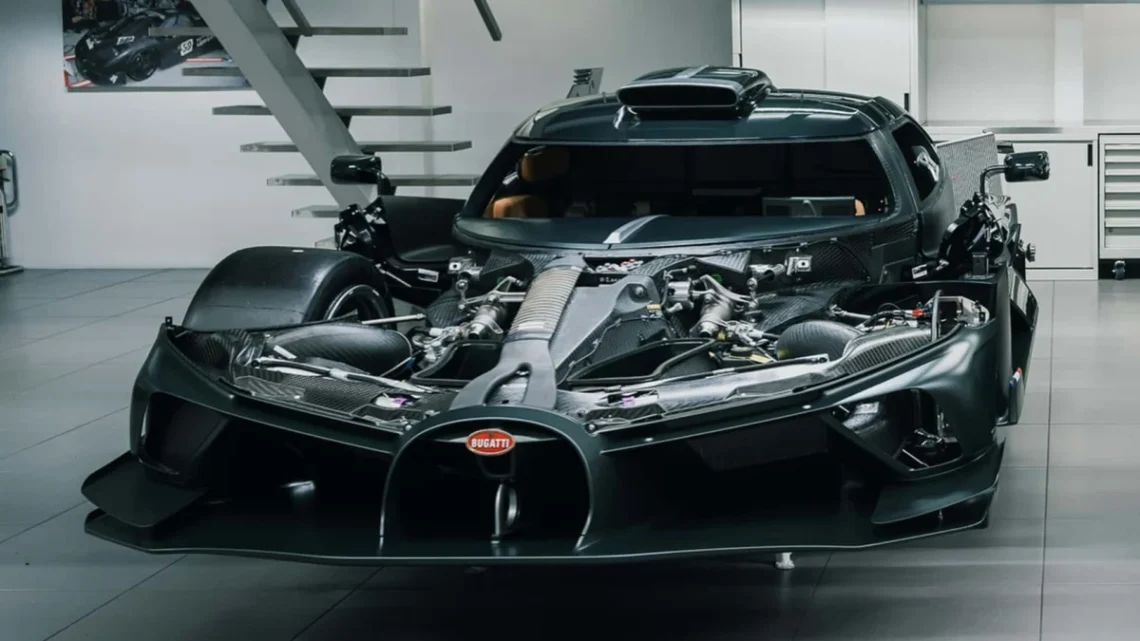
To understand the significance of the Lanzante conversion, one must first appreciate the base vehicle. Produced between 2024 and 2025, the Bugatti Bolide was designed as the ultimate expression of the W16 engine’s potential. Limited to a production run of only 40 units, the Bolide was stripped of the creature comforts and regulatory necessities of the Chiron, resulting in a machine that was lighter, faster, and more aggressive than anything Molsheim had ever produced for the public road.
From the factory, the Bolide was explicitly declared a track-only vehicle. It lacked the necessary lighting, safety certification, and ground clearance required to bear a license plate. For the vast majority of owners, the Bolide was destined to remain a "garage queen" or a specialized track-day toy.
Lanzante: The Masters of Transformation
Lanzante Limited, based in Petersfield, UK, has long been the gold standard for high-end automotive modifications. Historically famous for their work with McLaren—including the legendary F1 GTR and the P1 GTR—the firm specializes in taking vehicles that were never intended to see a public road and engineering them to meet the strict regulatory requirements of global road legality.
The Bolide project, undertaken in collaboration with PRW Advanced Cooling Technology, was arguably their most complex challenge to date. The goal was simple in theory but monumental in practice: transform a track-bred monster into a machine that could navigate speed bumps, handle stop-and-go traffic, and comply with international road safety laws, all while preserving the raw character of the original Bugatti.
The Engineering Challenge: A Chronology of Conversion
The conversion process was not merely a matter of bolting on a set of turn signals. It required a comprehensive re-engineering of the vehicle’s core subsystems.
Phase 1: Lighting and Visibility
The most glaring omission on the factory Bolide was the absence of a headlight system suitable for road use. Since track cars operate on circuits with dedicated illumination, the Bolide’s front end was essentially a design statement. Lanzante developed custom, high-intensity LED headlights that utilize an X-shaped configuration. These units were integrated seamlessly into the existing aggressive geometry of the Bolide’s front fascia, maintaining the aesthetic intent of Bugatti’s designers while meeting stringent E-mark road-legal lighting standards.
Phase 2: Suspension and Tires
The Bolide’s track-tuned suspension was designed for the smooth, predictable surfaces of a racetrack. Introducing this setup to the real world—riddled with potholes, speed bumps, and uneven camber—would have been a recipe for disaster. Lanzante recalibrated the dampers and adjusted the ride height to allow the vehicle to clear common road obstacles.
Furthermore, the original Michelin racing slicks were an immediate hurdle. Racing slicks offer incredible grip but are notoriously short-lived and hazardous in wet conditions. A single set costs roughly $8,000 and is rated for a mere 37 miles of hard driving. Lanzante swapped these for high-performance, road-legal tires that provide the necessary wet-weather capability and longevity required for street use, without sacrificing the immense grip required to keep the car on the tarmac.
Phase 3: Powertrain Preservation
Perhaps the most impressive aspect of the conversion is what remained untouched. The Bolide’s heart—the 8.0-liter quad-turbocharged W16 engine—is a piece of internal combustion history. Because this engine is closely related to the unit found in the road-legal Chiron, the team did not need to perform invasive surgery on the powertrain. Producing just under 1,600 horsepower, the engine provides a power-to-weight ratio that is arguably excessive for public roads. Weighing in at under 3,200 pounds in its track trim, the Bolide offers a terrifying, exhilarating experience that remains largely unchanged by the transition to legality.
Supporting Data: The Specs of a Road-Going Legend
- Engine: 8.0-liter quad-turbocharged W16
- Horsepower: ~1,600 hp
- Weight: Sub-3,200 lbs (pre-conversion)
- Production: 40 units (Total Bolide production); only two currently identified for this specific conversion.
- Modification Highlights: Bespoke X-shaped LED lighting, street-rated suspension geometry, road-legal high-performance tire compound, emissions and noise compliance adjustments.
Official Perspectives and Industry Implications
The automotive community has reacted with a mix of awe and skepticism. While the technical achievement is undeniable, critics have raised valid questions about the "drivability" of a car with 1,600 horsepower on public roads. Is a car designed to pull 2.5g in a corner actually enjoyable when limited by speed limits and traffic?
According to insiders at Lanzante, the intent is not to create a daily driver, but to provide owners with the ultimate freedom. The ability to drive a Bolide from one’s home to a track, or even to a high-end car show, without the need for a trailer, adds a layer of utility to a vehicle that was previously shackled to the paddock.
From a market perspective, the implication is clear: scarcity and provenance. With the original Bolide costing approximately $4.7 million, the Lanzante conversion significantly enhances the vehicle’s status as a "holy grail" collectible. By creating a road-legal variant, Lanzante has effectively moved these cars into a new asset class. As the last of the W16 engines drift into history, the market value of these modified machines is expected to climb, potentially shattering auction records when they eventually cross the block.
The Future of the Hypercar Experience
The Lanzante Bugatti Bolide serves as a testament to the modern era of bespoke engineering. It highlights a growing trend among ultra-high-net-worth enthusiasts: the desire to blur the lines between the track and the road.
While the two identified cars currently being converted are the only confirmed projects, the success of this endeavor suggests that we may see more "track-only" exotics receive similar treatment. Lanzante has proven that with enough ingenuity, the constraints of the factory are merely suggestions.
For the lucky few who will pilot these machines, the street will never feel the same. Navigating a drive-thru in a 1,600-horsepower, quad-turbocharged, track-bred Bugatti is a surreal proposition—a clash of extreme engineering and mundane reality that only a handful of individuals will ever experience. As we look toward an electrified future, the Lanzante Bolide stands as a defiant, roaring monument to the pinnacle of the internal combustion era, now set free to roam the open road.