Main Facts
Genesis, the luxury performance arm of Hyundai Motor Group, has spent the better part of the last year capturing the automotive world’s attention with the sleek, mid-engine Magma GT Concept. Designed to serve as the brand’s definitive halo car, the Magma GT combines striking aesthetic proportions with formidable performance credentials.
While Genesis has yet to officially confirm a definitive production timeline, executive commentary and ongoing real-world testing suggest that the concept is more than a mere design exercise. Underneath its sculpted exterior lies a twin-turbocharged V8 engine reportedly capable of producing up to 800 horsepower, placing it firmly in elite supercar territory.
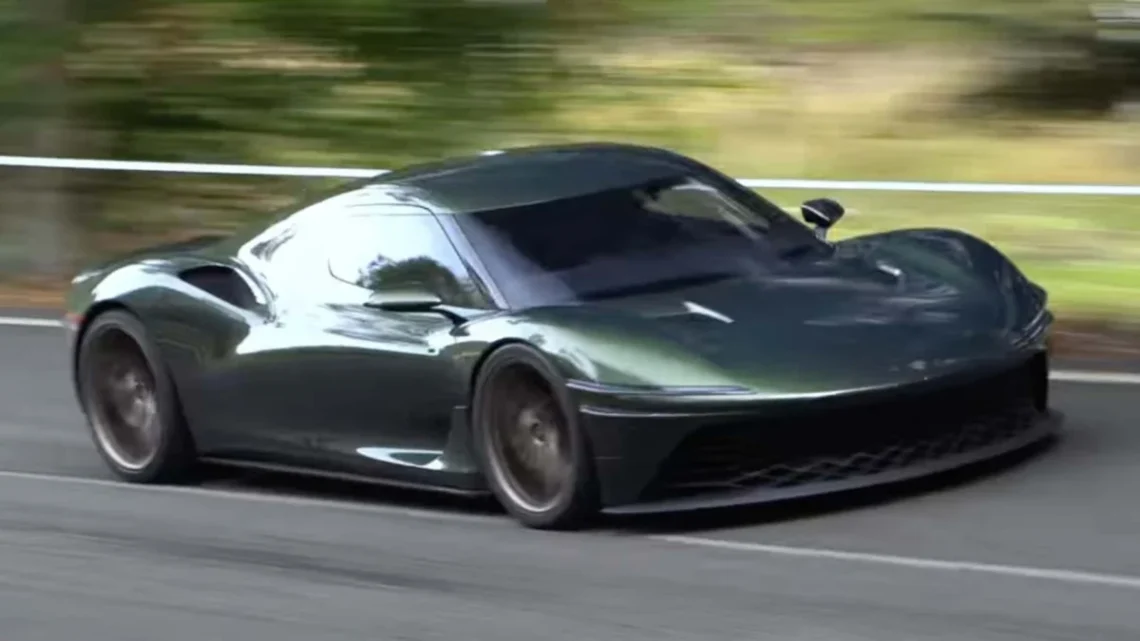
Recent sightings of the vehicle being dynamically tested at a hill climb event—complete with tail-happy acceleration on greasy asphalt—have further stoked enthusiast excitement. Paired with a luxurious, leather-draped interior that prioritizes classic analog craftsmanship over overwhelming digital displays, the Magma GT represents a bold, disruptive statement from a relatively young luxury brand looking to challenge established European and American heavyweights.
Chronology of Development
The journey of the Genesis Magma GT from a nebulous brand ambition to a rolling, roaring reality has progressed at a remarkably rapid pace.
1. The Initial Vision (Late 2024)
Genesis leadership first publicly expressed a desire to anchor its lineup with a true flagship halo car. As the brand’s Magma high-performance sub-brand began taking shape across various existing models, executives hinted that a bespoke sports car or supercar would be the ultimate expression of the brand’s performance ethos.
2. The Global Reveal (Early 2025)
The automotive landscape was caught off guard when Genesis formally pulled the wraps off the Magma GT Concept. Featuring a low-slung, aggressive mid-engine silhouette, aerodynamic curves, and an imposing stance, the concept immediately established itself as a design tour de force.
3. Stepping Inside the Cabin (June 2025)
Genesis offered a deeper look into the vehicle by unveiling its interior layout. Eschewing the modern industry trend of massive, multi-screen digital dashboards, the cabin was revealed to be heavily focused on traditional luxury. Draped in premium leather and featuring clean lines alongside an analog gauge cluster, the interior emphasized grand touring comfort over track-day austerity.
4. Expanding the Family with the GT3 Variant (Mid 2025)
Demonstrating that the architecture was engineered with modular capability in mind, Genesis expanded the lineage by introducing the Magma GT3 Concept. This track-focused variant showcased a significantly widened track, aggressive aerodynamic enhancements, and enlarged air intakes designed to maximize downforce and cooling under heavy racing loads.
5. Real-World Shakedowns (Late 2025 / Early 2026)
Moving out from under the sterile lights of international auto shows, the Magma GT Concept recently made waves on the internet via raw footage captured by automotive channels like NM2255 | Raw Car Sounds. The video captured the prototype tackling a hill climb event, providing the public with its first authentic taste of the vehicle’s acoustic profile and dynamic behavior under power.
Supporting Data and Technical Specifications
While Genesis continues to keep specific manufacturing blueprints tightly under wraps, enough details have emerged from official reveals, executive interviews, and industry leaks to paint a comprehensive picture of what the Magma GT brings to the table.
Powertrain and Performance
- Engine Architecture: Unspecified twin-turbocharged V8.
- Output: Up to 800 horsepower.
- Layout: Mid-engine, rear-wheel-drive configuration (mirroring traditional exotic supercar layouts).
- Acoustic Profile: Features a deep, authoritative burble that distinguishes it from the high-pitched wails of traditional European V8s and the near-silent acceleration of electric supercars.
Interior Philosophy
- Materials: Extensive use of high-grade, supple leather upholstery across the driver and passenger touchpoints.
- Technology Integration: Minimalist screen usage, intentionally moving away from distraction-heavy infotainment walls.
- Instrumentation: Classic analog gauge cluster emphasizing driver-to-machine connection and timeless elegance.
Aerodynamics and Variants
- Standard GT Concept: Smooth, elegant grand touring lines optimized for high-speed stability and striking visual presence.
- GT3 Concept Variant: Widened track, bespoke front and rear splitters, massive rear wing elements, and increased cooling channels engineered explicitly for severe circuit environments.
Official Responses and Executive Insights
The trajectory of the Magma GT has been heavily guided by statements from key figures within the Hyundai Motor Group and Genesis corporate structure.
When the GT3 variant was unveiled, Genesis representatives categorized the vehicle as an "independent study" intended to "inform future Genesis performance vehicles." This careful corporate phrasing allowed the brand to test public and media reaction without immediately committing to a costly low-volume production run.
However, subsequent commentary has been far more enthusiastic. In an exclusive interview with Motor1 Italy, Charles Fuster, the Brand Director for Genesis in Italy and France, addressed the long-term viability of the project directly. Fuster noted that the Magma GT "isn’t a temporary exercise," signaling to the industry that the design study holds structural and strategic weight for the brand’s future.
While Fuster stopped short of providing a precise launch date or production confirmation, he added a telling sentiment for eager enthusiasts: "We’d like to get there soon."
This alignment between executive ambition and continuous engineering refinement strongly suggests that the engineering teams at Genesis are actively engineering a production-feasible architecture behind closed doors.
Implications for the Automotive Industry
The potential realization of the Genesis Magma GT carries profound implications for both the brand itself and the broader performance car market.
1. Elevating Brand Prestige
For Genesis, launching a halo supercar represents the ultimate graduation. Having already established credibility in the luxury sedan and SUV segments with praise-worthy comfort, design, and build quality, adding an 800-horsepower twin-turbo V8 supercar to the stable cements its status among elite global luxury manufacturers. It provides a halo effect that elevates the desirability of every mainstream vehicle wearing the Genesis badge.
2. A Stand Against Pure Electrification
At a time when many luxury performance brands are rushing headlong into heavy, fully electric powertrains, the Magma GT’s choice of a twin-turbocharged V8 engine is a defiant nod to traditional enthusiasts. By offering a high-horsepower internal combustion engine wrapped in exotic packaging, Genesis is poised to capture buyers who crave mechanical soul, visceral sound, and traditional driver engagement.
3. Direct Competition for Established Exotics
Should the Magma GT make the leap from concept to production showroom floor largely intact, it will serve as a direct challenge to mid-engine sports cars and supercars from brands like Chevrolet (such as the C8 Corvette platform it has frequently been rumored to share architectural DNA with), Aston Martin, Porsche, and McLaren. By combining aggressive pricing strategies—a hallmark of Hyundai Motor Group’s market entry tactics—with uncompromising performance and luxury, Genesis could fundamentally disrupt the high-end sports car establishment.
As testing continues and public demand swells, the automotive world waits with bated breath for Genesis to finally drop the camouflage and confirm the production green light for its ultimate flagship.