Main Facts
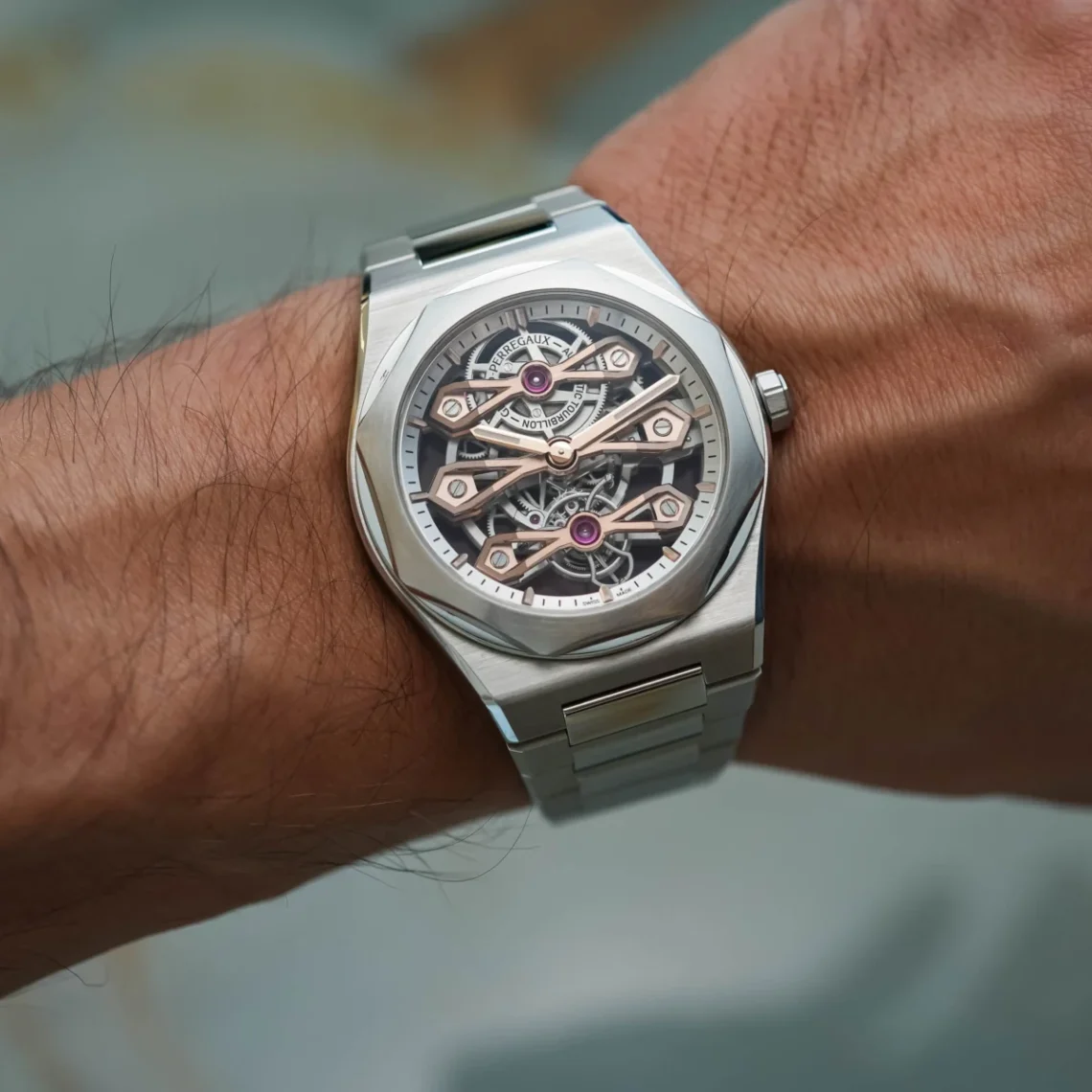
Girard-Perregaux has officially transitioned one of its most daring and historically resonant modern timepieces into the permanent collection. The Laureato Fifty Three Gold Bridges—which originally debuted as a limited-edition release during Dubai Watch Week to celebrate the 50th anniversary of the Laureato line—is returning with a sophisticated aesthetic update: striking rose gold accents.
Merging the high-end watchmaking tradition of Girard-Perregaux’s iconic 19th-century pocket watch architecture with the robust, integrated-bracelet geometry of the 1970s sports watch genre, this timepiece bridges two entirely different eras of horology.
At its core, the watch retains the mechanical DNA of its predecessor while introducing a warmer, more expressive dial layout. The multi-material case combines a stainless steel middle case and caseback with an 18-karat white gold octagonal bezel. Measuring a highly wearable 41mm in diameter and 10.85mm in thickness, the case balances sportiness with ultra-thin elegance. Water resistance has also been subtly upgraded from the limited edition’s 30 meters to a more practical 50 meters.
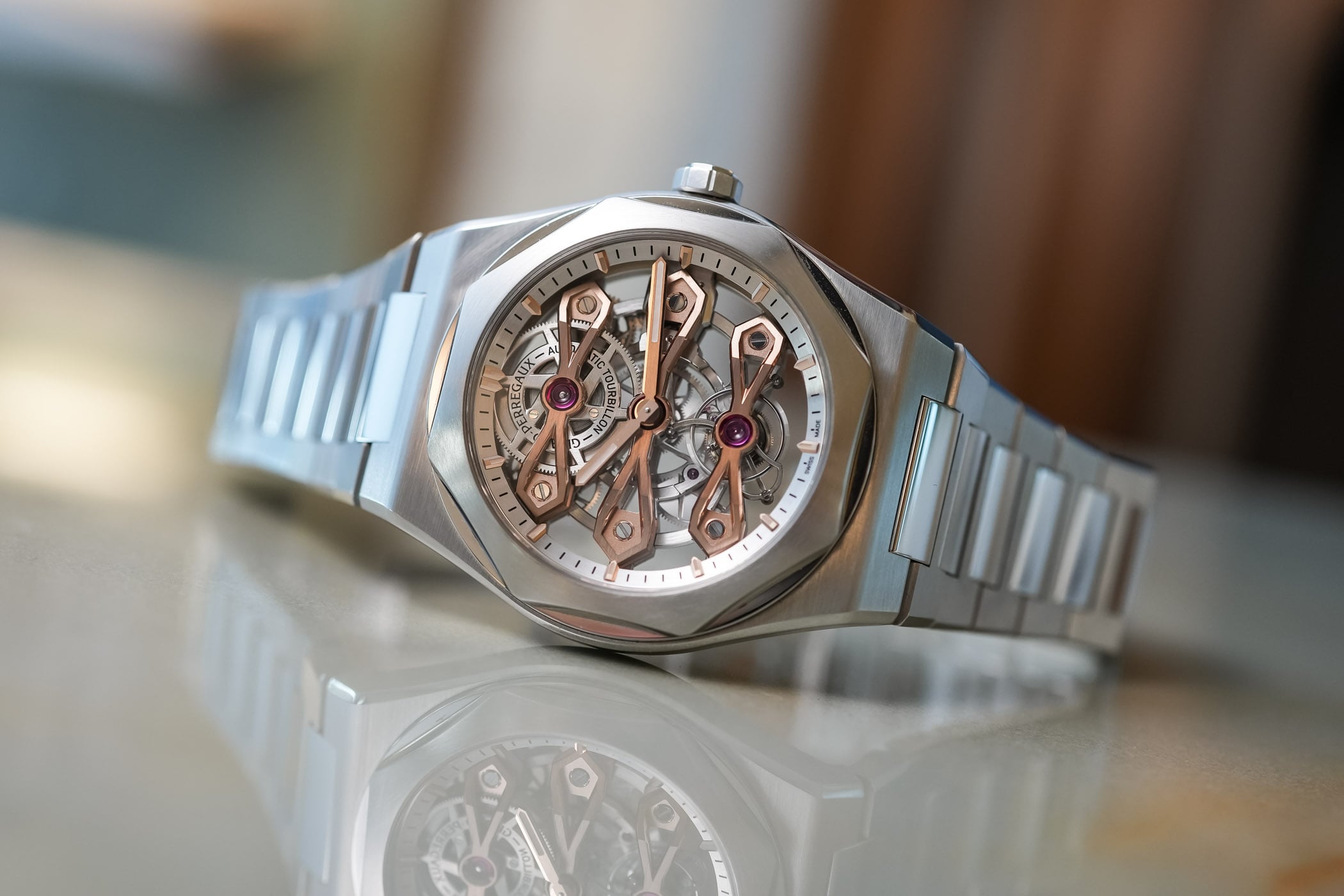
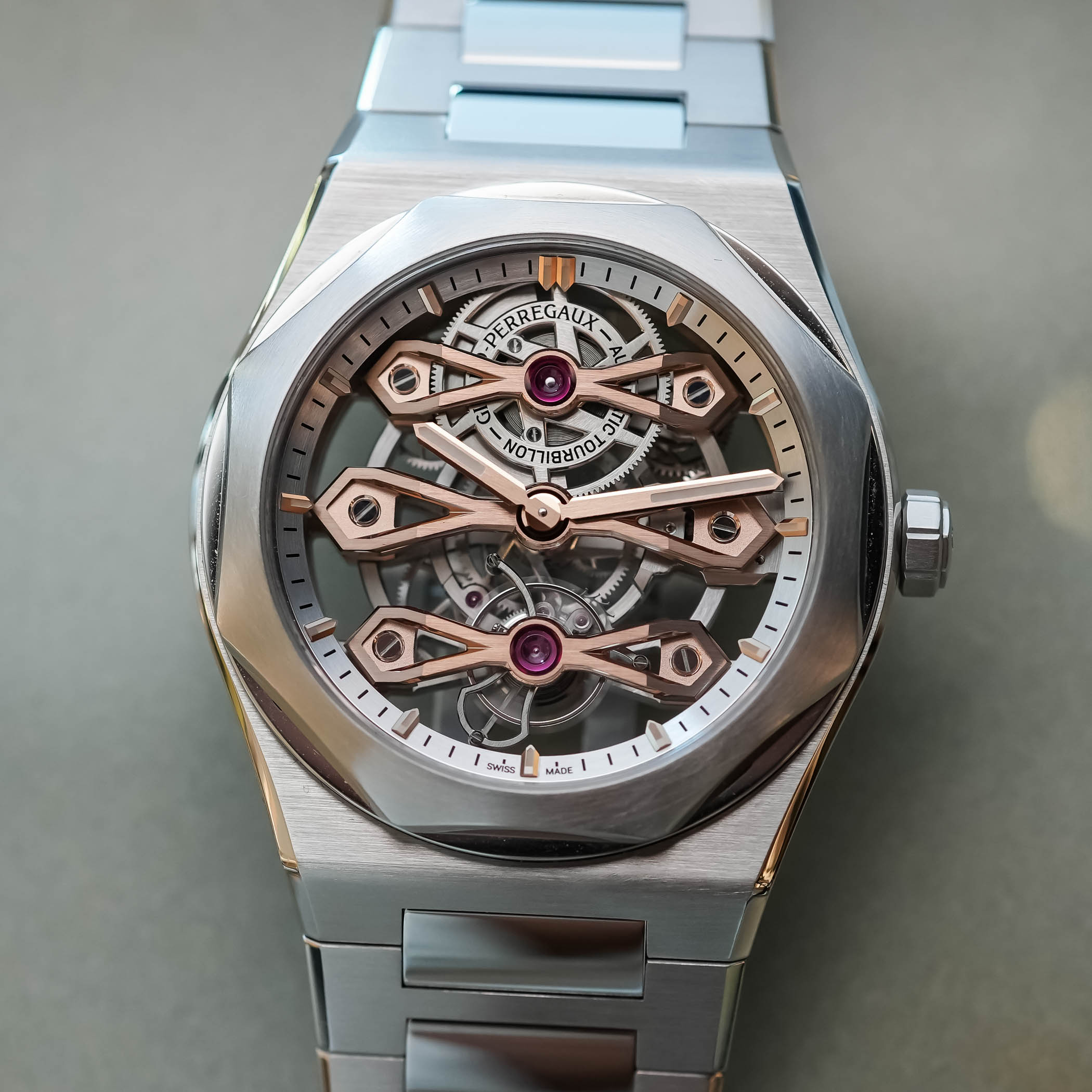
The dial is entirely openworked, showcasing the in-house Calibre GP9620. The most significant update for this permanent collection release is the shift from a monochromatic look to warm rose gold accents. The three signature "Neo Bridges," the sloped inner flange with applied hour markers, and the pencil-shaped hands are now rendered in rich 18k rose gold.
Fitted to an integrated stainless steel bracelet featuring a 4mm comfort-release micro-adjustment system, the Laureato Fifty Three Gold Bridges carries a retail price of EUR 178,000 / CHF 162,000 / USD 182,000 (Ref. 99112-58-3619-1CM).
Chronology: From 19th-Century Pockets to Modern Sports Luxury
To fully appreciate the weight of the Laureato Fifty Three Gold Bridges, one must trace a timeline spanning over a century and a half of watchmaking history.
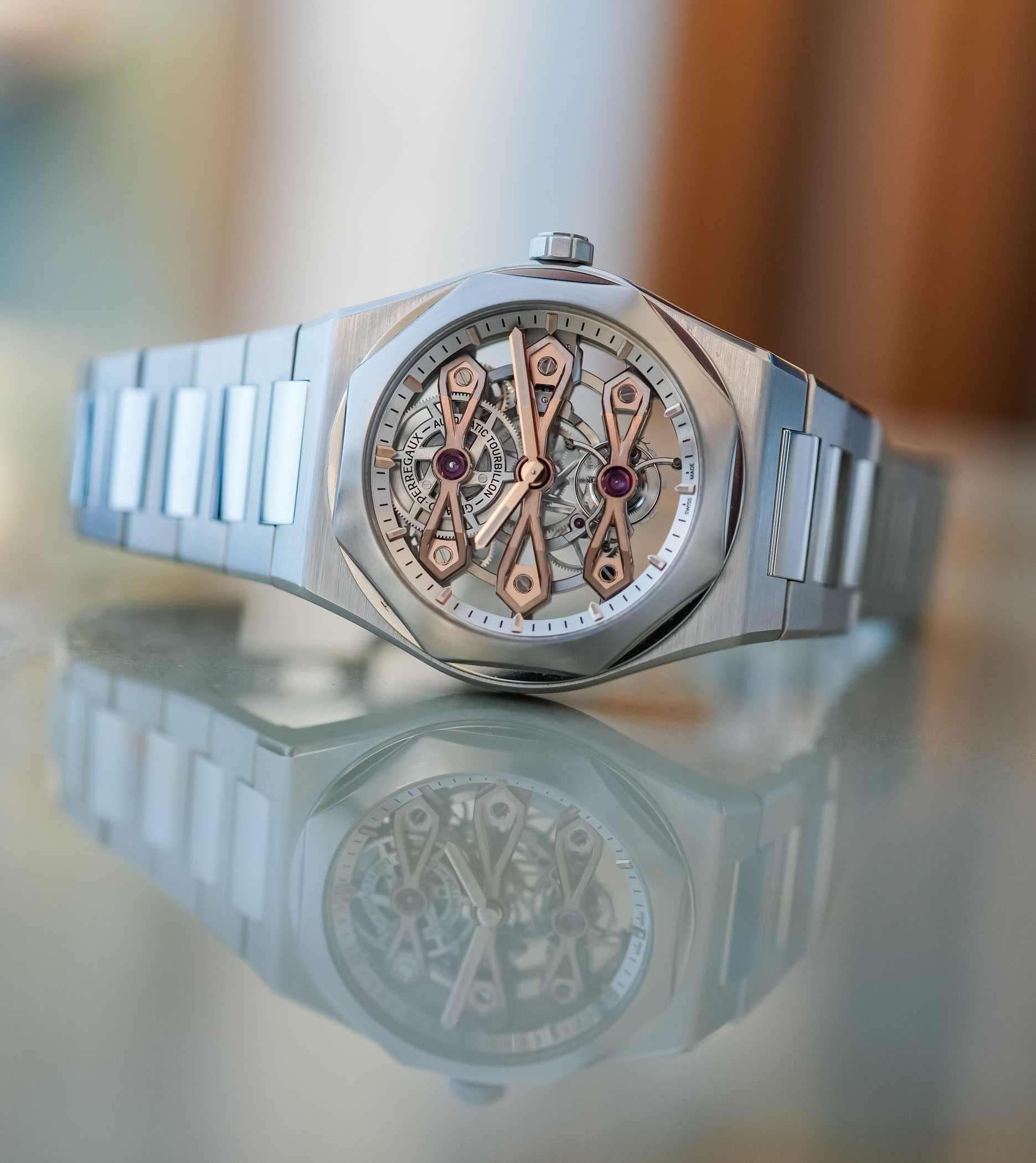
- 1867: Girard-Perregaux lays the groundwork for its most recognizable design code. Master watchmaker Constant Girard develops a pocket watch featuring three parallel, arrow-shaped bridges to secure the gear train, barrel, and escapement.
- 1889: The culmination of this design philosophy arrives at the Paris Universal Exhibition, where Girard-Perregaux unveils the legendary La Esmeralda tourbillon pocket watch, securing a gold medal and cementing the Three Gold Bridges as the brand’s ultimate aesthetic signature.
- 1972: Audemars Piguet introduces the Royal Oak, inventing the luxury integrated-bracelet sports watch genre.
- 1975: Sensing a seismic shift in consumer tastes, Girard-Perregaux releases the Laureato. Featuring an octagonal bezel atop a circular plinth and an integrated bracelet, it arrives just three years after the genre’s blueprint, making it one of the earliest true luxury sports watches in history.
- 2025: Girard-Perregaux marks the 50th anniversary of the Laureato collection. Alongside the classic time-and-date Laureato Fifty models, the brand stuns collectors at Dubai Watch Week by releasing a limited-edition hybrid: the Laureato Fifty Three Gold Bridges, merging the modern sports case with its historic movement architecture.
- 2026: Recognizing the overwhelming positive response from the market, Girard-Perregaux transitions the model into the permanent collection, enriching the design with warm rose gold accents and boosting its water resistance to 50 meters.
Supporting Data & Technical Specifications
The engineering behind the Laureato Fifty Three Gold Bridges is as complex as its visual presentation. The watch relies on the in-house Calibre GP9620-2856, a masterpiece of openworked architecture and hand-finishing.
Complete Technical Specifications: Girard-Perregaux Laureato Fifty Three Gold Bridges
- Case:
- Diameter: 41mm
- Thickness: 10.85mm
- Material: Stainless steel middle case and caseback with vertical brushing and polished lateral bevels; 18k white gold octagonal bezel on a circular plinth
- Crystal: Sapphire front and exhibition caseback
- Crown: Octagonal, screw-down
- Water Resistance: 50 meters (5 ATM)
- Dial & Hands:
- Architecture: Openworked skeletal layout with vertical symmetry
- Flange: Sloped, circular-brushed inner flange with applied rose gold hour markers and minute track
- Hands: Pencil-shaped hour and minute hands in rose gold-toned finish with Super-LumiNova inserts
- Highlights: Three solid 18k rose gold Neo Bridges spanning the movement
- Movement:
- Calibre: GP9620-2856 (In-house automatic)
- Winding: Platinum micro-rotor cleverly positioned underneath the barrel at 12 o’clock
- Components: 303 total components, including 33 jewels
- Escapement: One-minute tourbillon at 6 o’clock featuring a lyre-shaped titanium cage and a small seconds hand
- Frequency: 21,600 vibrations/hour (3 Hz)
- Power Reserve: Minimum 55 hours
- Finishing: Exceptional hand-craftsmanship boasting 418 hand-polished bevels and 362 sharp inner angles across the movement bridges and plate
- Bracelet:
- Material: Integrated stainless steel bracelet matching the case geometry
- Clasp: Triple-folding deployment clasp equipped with a 4mm comfort-release fine-adjustment system
- Reference Number:
- 99112-58-3619-1CM
- Availability:
- Permanent collection (non-limited)
- Retail Pricing:
- EUR 178,000 / CHF 162,000 / USD 182,000
Official Responses and Brand Philosophy
The decision to move a high-complication, bridge-centric sports watch out of limited-edition status and into the permanent catalog speaks volumes about Girard-Perregaux’s confidence in its design language.
In statements accompanying the rollout, brand representatives emphasize that the incorporation of the Three Gold Bridges into the Laureato case is not merely a gimmick, but a natural evolution of haute horlogerie meeting contemporary lifestyle needs. For decades, Girard-Perregaux’s bridge architecture was traditionally reserved for ultra-classical, round dress watches—most notably the Tourbillon with Three Gold Bridges collection. By housing this delicate, highly finished movement inside a sporty, multi-textured steel-and-gold case, the manufacturer demonstrates that traditional Swiss finishing can survive—and thrive—in rugged, everyday environments.
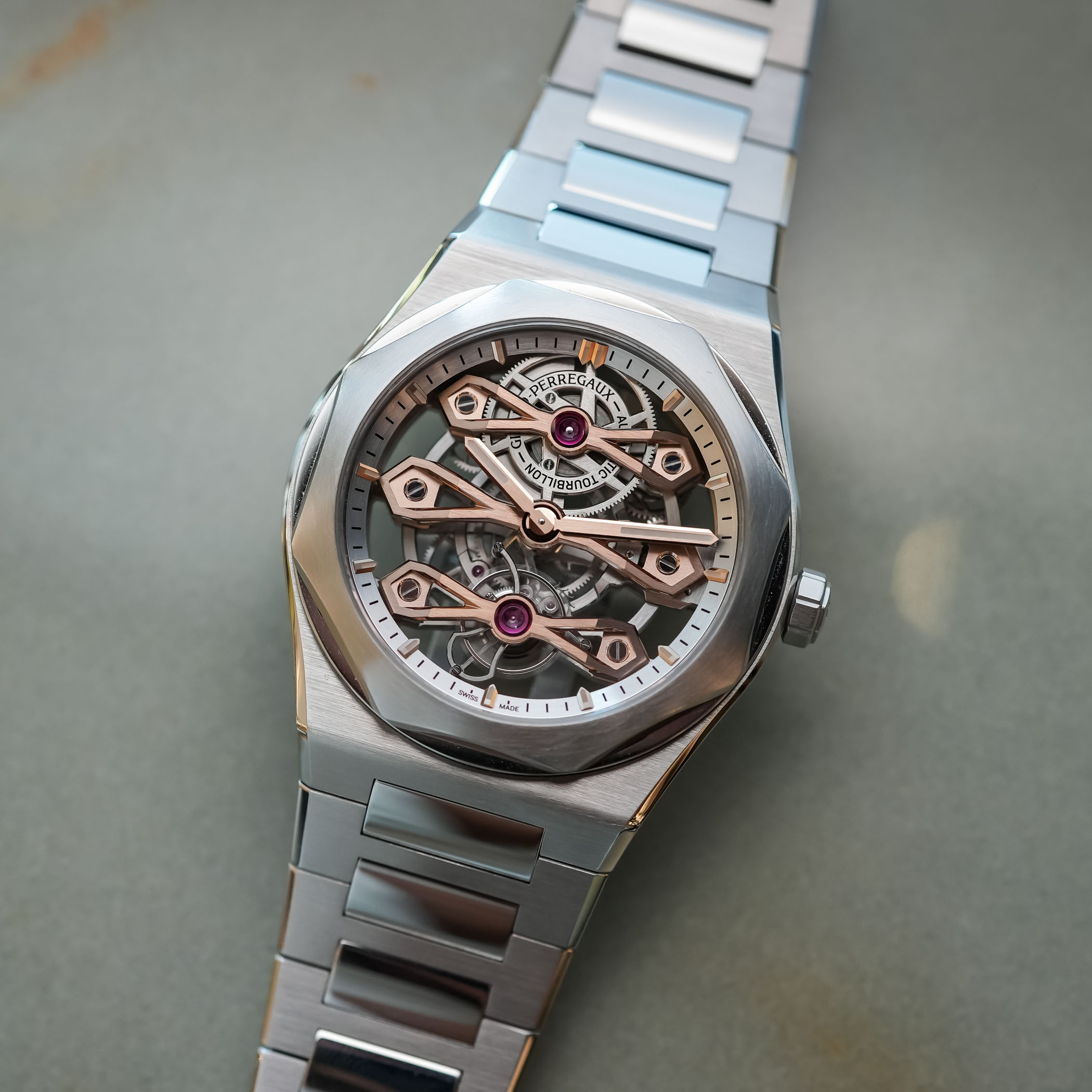
Furthermore, product developers noted that collector feedback from the 2025 limited run highlighted a desire for greater visual warmth. While the original debut favored a stark, cool, monochromatic aesthetic, the integration of solid rose gold bridges and matching markers gives the 2026 iteration a more dimensional, luxurious character on the wrist.
Implications for the Market and High-End Horology
The inclusion of the Laureato Fifty Three Gold Bridges in Girard-Perregaux’s permanent lineup carries several important implications for the luxury watch industry:
1. Blurring the Line Between Dress and Sport
For years, high complications like tourbillon escapements and hand-finished bridges were strictly partitioned into the "dress watch" category. By embedding a fully skeletonized, three-bridge tourbillon into a 41mm integrated steel sports watch, Girard-Perregaux challenges the notion that sports watches cannot be ultra-complicated, and conversely, that traditional complications must be delicate. With a robust 50-meter water resistance and a micro-adjustment comfort clasp, this is a tourbillon built to be worn, not merely stored in a safe.
2. Strengthening the Laureato’s Legacy
While the Audemars Piguet Royal Oak and Patek Philippe Nautilus often dominate conversations regarding luxury sports watches, the Laureato has steadily carved out a distinct identity. By tying its 50th-anniversary celebrations directly to its historic 19th-century pocket watch roots, Girard-Perregaux reinforces a heritage narrative that few competitors can match. Very few brands possess a historical design signature as potent as the Three Gold Bridges to pair with a 1970s sports icon.
3. Positioning in the Ultra-Luxury Segment
With a price tag sitting north of 180,000 USD, this timepiece firmly occupies the upper echelons of independent watchmaking. By making it a permanent collection piece rather than a fleeting limited run, Girard-Perregaux signals to serious collectors that radical, high-complication integrated sports watches are a core pillar of the brand’s future vision. It offers connoisseurs a tangible, highly finished alternative to the market’s more ubiquitous integrated-bracelet heavyweights, ensuring that traditional Swiss craftsmanship continues to evolve in modern directions.