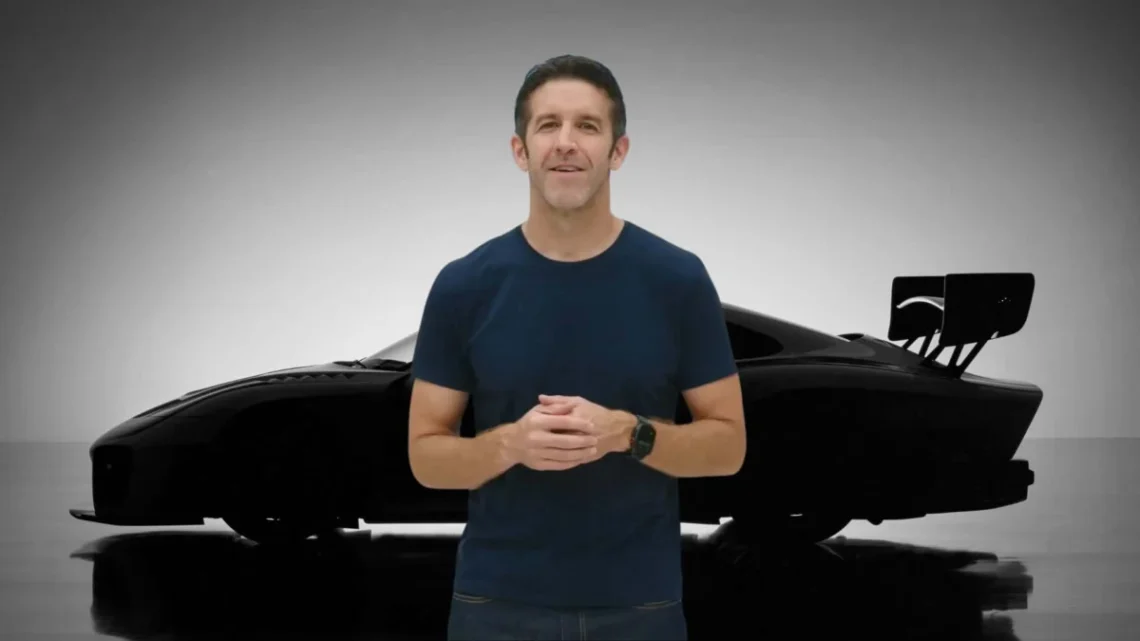
The classic stereotype of a Silicon Valley tech chief executive is a digital-age ascetic: a numbers-obsessed optimizer fueled by cold brew, data streams, and algorithmic thinking. Sports cars, high-octane internal combustion engines, and the visceral thrill of lateral G-forces rarely factor into the corporate profile. Yet, John Ternus, who stepped into the role of Apple CEO just weeks ago, didn’t read the conventional tech-executive script.
Beneath his polished corporate exterior lies a serious car enthusiast and motorsport devotee. While his peers might unwind by investing in clean-energy startups or chartering suborbital spaceflights, Ternus prefers to spend his downtime behind the wheel of some of the rarest, most uncompromising internal combustion machinery ever engineered. And his prized possession? A multi-million-dollar, ultra-exclusive track weapon that shatters every preconceived notion of what an Apple executive drives to the office.
Main Facts: The Ultimate Garage-Queen Antidote
Ternus reportedly houses one of the most exclusive modern supercars in existence: a road-legal Porsche 935, transformed by British specialist engineering firm Lanzante. Based heavily upon the ferocious Porsche 911 GT2 RS, this homage to the legendary 1970s “Moby Dick” endurance racer is an exercise in extreme performance.
Porsche manufactured only 77 units of the modern 935 worldwide, commanding an initial baseline price north of $800,000 before customization, taxes, and import fees. Beneath its extended, aerodynamically optimized carbon-fiber bodywork lies a twin-turbocharged 3.8-liter flat-six engine pumping out a monstrous 700 horsepower and 553 lb-ft of torque. Tipping the scales at a featherlight 3,042 pounds, the vehicle offers a power-to-weight ratio that humbles traditional hypercars.
More impressive than the car’s specification sheet, however, is how Ternus utilizes it. Rather than sealing the vehicle away in a climate-controlled vault as a static investment piece, the Apple CEO regularly exercises the machine at famous circuits like California’s WeatherTech Raceway Laguna Seca. Observers report that Ternus is no casual track-day tourist; he is capable of hustling the 700-horsepower carbon-fiber monster around the legendary circuit with lap times dipping below the 1:40 mark.
While professional racing drivers and dedicated factory pilots post faster times in purpose-built prototypes, sub-1:40 laps at Laguna Seca in a raw, widow-maker of a car demonstrate serious driving competence—especially for someone whose day job involves steering one of the most valuable technology conglomerates on Earth.
Chronology: From Hardware Engineering to Executive Leadership
To understand how John Ternus arrived at the helm of Apple while maintaining a reputation as a hardcore petrolhead, it is helpful to trace his trajectory through the corporate ranks and his parallel passion for motorsports.
- The Early Engineering Years: Long before taking over the executive suite, Ternus built his career deep within Apple’s hardware engineering teams. Joining the company in 2001, he steadily ascended, eventually becoming the Vice President of Hardware Engineering in 2013. During this tenure, he oversaw the engineering of groundbreaking products ranging from successive iPad generations to the transition of Mac computers to Apple Silicon.
- Deepening Automotive Passions: Parallel to his corporate rise, Ternus immersed himself in automotive culture. While Apple’s secretive "Project Titan" (its multi-billion-dollar effort to build an autonomous electric vehicle) ultimately wound down after a decade of development, Ternus’s personal automotive pursuits leaned unapologetically in the opposite direction: high-performance, analog, driver-focused internal combustion.
- The Porsche 935 Acquisition (2019–Present): Following the 2018 announcement and subsequent delivery window of the modern Porsche 935, Ternus secured an allocation for one of the 77 units. Over the ensuing years, he transitioned from a casual collector to a dedicated track-day regular, logging serious seat time on iconic California road courses.
- The CEO Transition (Early 2025): In a major leadership shift, Ternus was named Chief Executive Officer of Apple, succeeding Tim Cook. The promotion instantly placed one of the world’s most prominent corporate leaders into the global spotlight, subsequently unearthing his lesser-known reputation as a high-speed motorsport enthusiast.
Supporting Data: The Anatomy of a Tech Titan’s Track Weapon
To fully grasp the contrast between typical Silicon Valley transportation and Ternus’s garage, one must examine the engineering metrics of the Porsche 935 and its operational environment at Laguna Seca.
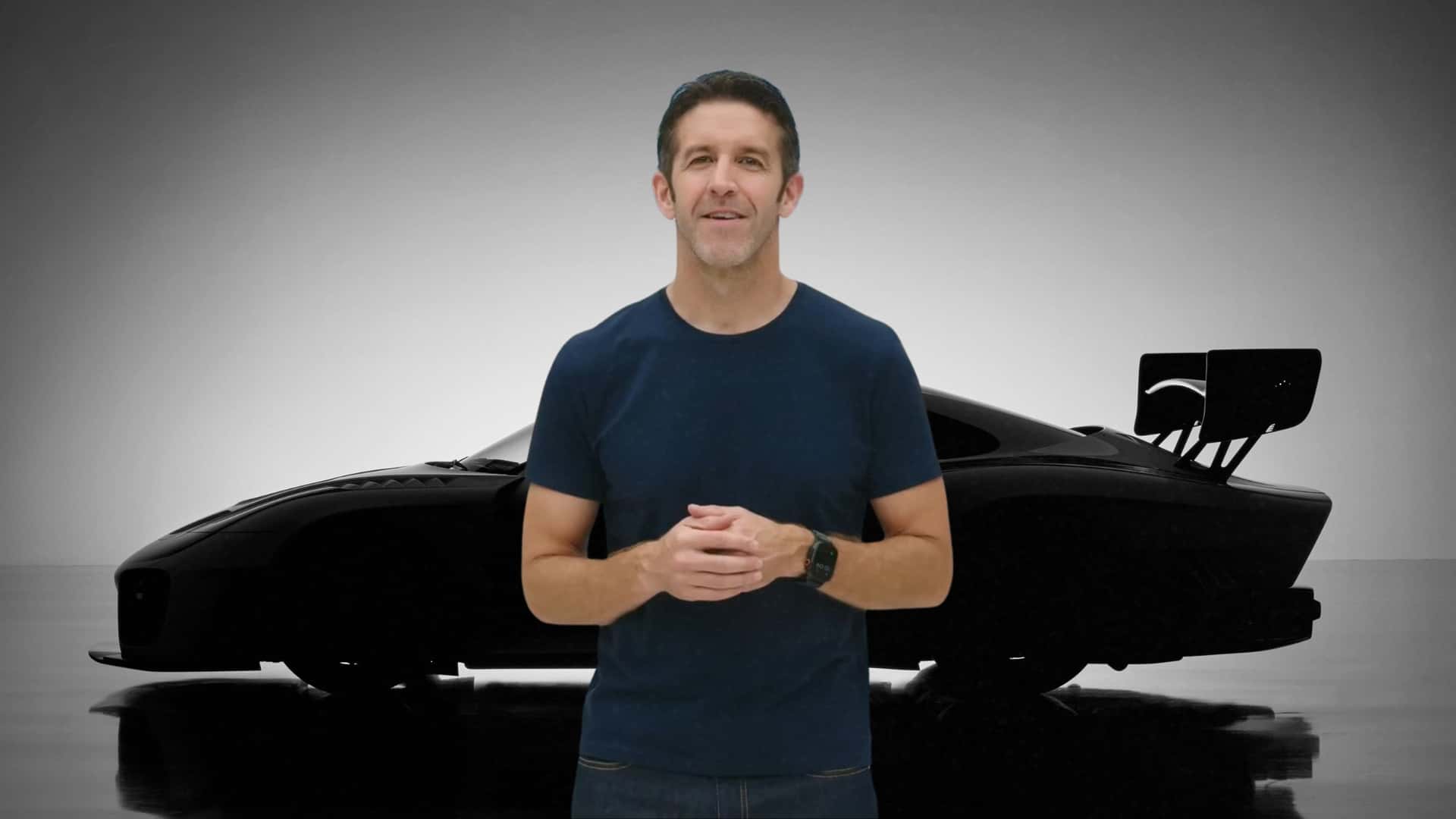
Porsche 935 (Lanzante Road-Conversion) Specifications:
- Engine: Twin-turbocharged 3.8-liter Boxer flat-six
- Horsepower: 700 hp
- Torque: 553 lb-ft (750 Nm)
- Transmission: 7-speed dual-clutch (PDK) with paddle shifters
- Weight: 3,042 lbs (1,380 kg)
- Body Construction: Full carbon-fiber composite panels (reminiscent of the iconic 1978 "Moby Dick" Le Mans racer)
- Production Volume: Exactly 77 units globally
- Base Launch Price: ~$818,000 USD (before bespoke options)
WeatherTech Raceway Laguna Seca Performance Context:
- Circuit Length: 2.238 miles (3.602 km) with 11 turns, highlighted by the infamous, blind-drop "Corkscrew."
- Ternus’s Reported Benchmark: Sub-1:40 lap times.
- Contextual Comparison: While elite GT3 race cars lap Laguna Seca in the low 1:20s, and hypercars like the Czinger 21C push absolute records near 1:25, a sub-1:40 lap in a road-legal track special by an amateur driver represents exceptional car control, bravery, and mechanical sympathy.
Beyond Sports Cars: The Formula 1 Connection
Ternus’s affinity for fast machinery does not stop at sports car track days. He is reportedly an avid follower of Formula 1, keeping a close eye on the pinnacle of motorsport engineering.
While Apple has historically maintained an arm’s-length relationship with racing sponsorships, the technology giant’s intersections with the automotive world have grown increasingly pronounced. From the ubiquity of Apple CarPlay in modern dashboards to strategic integrations with navigation, mapping, and vehicle infotainment, tech and traditional automotive engineering are colliding faster than ever before.
This begs an inevitable question: Could Apple eventually make the leap into Formula 1 sponsorship, or perhaps follow in the footsteps of tech rivals by cementing a deeper partnership within the paddock?
At present, industry analysts suggest an Apple-branded F1 liveried car remains unlikely in the immediate term. However, the presence of an unapologetic racing fan at the head of the corporate table alters the psychological calculus within Apple Park. A CEO who spends weekends balancing a 700-horsepower twin-turbo flat-six through Laguna Seca’s Corkscrew is undeniably more attuned to the passion of driving than a traditional corporate executive whose only interaction with cars is the back seat of an autonomous shuttle.
Official Responses and Industry Implications
The revelation of Ternus’s automotive obsession has sparked widespread fascination across both the tech sector and the global automotive community.
While Apple’s corporate communications office typically maintains strict silence regarding the personal lives, hobbies, and asset portfolios of its executive board, automotive insiders and independent journalists have welcomed the news. For decades, traditional automakers viewed Silicon Valley tech firms with suspicion—fearing that software companies viewed automobiles merely as "iPhones on wheels" devoid of soul, character, or driving dynamics.
Automotive cultural figures have seized upon Ternus’s public profile as a bridge between two divergent worlds.
- The Enthusiast Community: Car collectors and motorsport journalists have lauded the appointment, viewing Ternus as an ally within Big Tech who understands why internal combustion and tactile driving experiences still matter to millions of enthusiasts.
- The Technology Sector: Silicon Valley analysts note that while Apple continues to prioritize software ecosystem dominance—such as fighting to keep Apple CarPlay relevant against competing OEM infotainment interfaces from GM, Ford, and Rivian—having a CEO with a visceral appreciation for engineering excellence bodes well for hardware design continuity.
As John Ternus charts the next chapter for Apple, he proves that you can spearhead the future of consumer electronics and artificial intelligence while still keeping one foot firmly planted on the accelerator of an 800-horsepower track car. Whether or not the bitten-apple logo ever graces a motorsport grid, one thing is certain: the executive suite in Cupertino has never had a faster driver at the wheel.