

In a move that underscores the mounting friction between ambitious environmental, social, and governance (ESG) targets and the harsh realities of global supply chain logistics, retail giant Target has officially announced a recalibration of its climate strategy. The Minneapolis-based retailer, which operates more than 2,000 stores across the United States, confirmed this week that it is pushing back its net-zero emissions target by a full decade, moving the finish line from 2040 to 2050.
The adjustment is not isolated to long-term projections. Target has also extended the deadline for its critical Scope 3 emissions reduction goal—a 32.5 percent cut—by five years, now targeting 2035 instead of 2030. This decision reflects a broader, systemic struggle among multinational corporations to reconcile their sustainability promises with the logistical complexities of modern commerce.
The Weight of Scope 3: The Retailer’s Greatest Hurdle
To understand the magnitude of Target’s policy shift, one must look at the composition of its carbon footprint. Scope 3 emissions—which encompass the indirect impact of goods purchased, product transportation, and the eventual consumer use of sold items—account for a staggering 98.5 percent of Target’s total emissions profile.
Because Scope 3 emissions exist outside of a company’s direct control, they represent the "last mile" of corporate decarbonization. Reducing them requires systemic shifts in how goods are manufactured, packaged, and transported across thousands of third-party vendors. As Target noted in its latest sustainability report, meaningful progress in this area is no longer a matter of internal efficiency; it now requires a "broader transformation in energy systems, technology and infrastructure."
Target is far from alone in this realization. The corporate landscape is currently witnessing a trend of "climate goal realism." PepsiCo recently pushed its net-zero target from 2040 to 2050, citing similar structural barriers. Other titans of industry, including Coca-Cola, McDonald’s, and Starbucks, have either formally downgraded their Scope 3 reduction targets or have signaled to investors that they are facing significant headwinds that make their original 2030 commitments increasingly untenable.
A Chronology of Declining Momentum
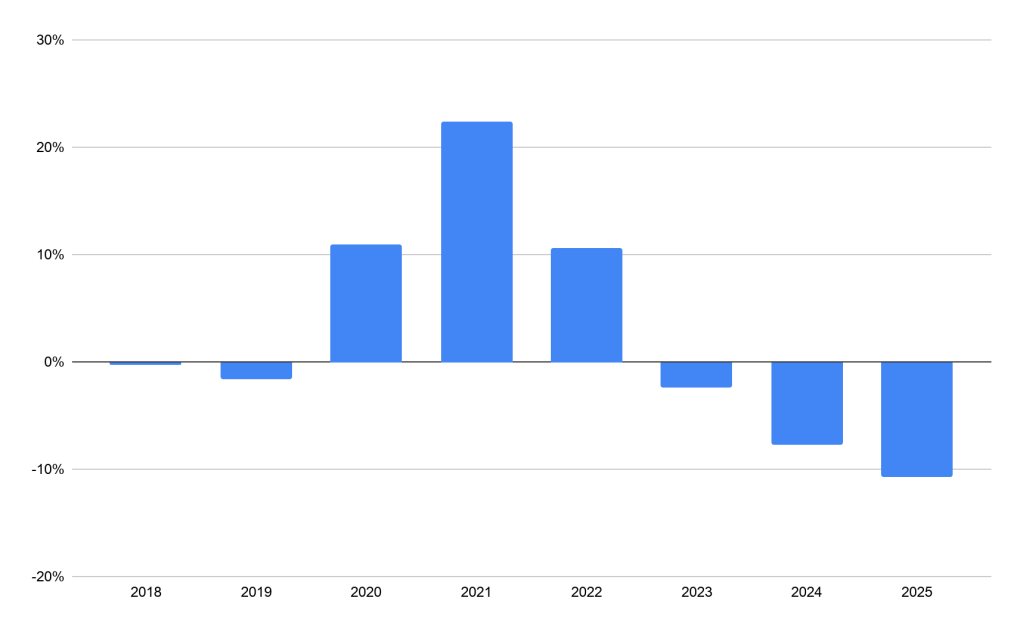
The pivot comes at a surprising juncture. Between 2022 and 2023, Target was widely viewed as a leader in sustainability, recording aggressive, consistent progress in lowering its Scope 3 footprint. During those two years, the company’s reduction efforts were firing on all cylinders, leaving it comfortably on track to meet its original 2030 targets.

However, the trajectory shifted in 2024 and 2025. Data from the company’s internal reporting indicates that the pace of reduction stalled. While the exact reasons for this deceleration are multifaceted—ranging from inflationary pressures to post-pandemic supply chain instability—the result is that the company’s current path no longer intersects with its original 2030 deadline.
The Trajectory of Change
- 2020–2021: Initial establishment of ambitious, science-based targets with a 2030 horizon.
- 2022–2023: Rapid deployment of sustainable logistics and vendor engagement, showing strong alignment with the 2030 goal.
- 2024–2025: A marked slowdown in emission reduction progress. External pressures, including global energy volatility and supply chain complexities, hampered momentum.
- 2026: Official announcement of the deadline extension to 2035 for Scope 3 and 2050 for net-zero.
Data Analysis: Where Progress Still Lives
Despite the cooling of momentum regarding Scope 3, Target’s sustainability report contained a notable bright spot. The company successfully achieved 100 percent renewable energy usage in 2025, reaching this milestone five years ahead of its original schedule.
This accomplishment is significant, as it demonstrates that Target remains capable of aggressive climate action when the levers of change are within its direct control. The jump from 76 percent renewable coverage in 2024 to full coverage in 2025 was achieved through a combination of on-site solar projects, strategic utility purchases, and the execution of two new, large-scale virtual power purchase agreements (VPPAs).
However, the results for waste reduction and packaging were more mixed. In line with the broader retail sector’s struggle, Target reported difficulty in meeting its circularity and packaging benchmarks. This mirrors the experience of competitors like Walmart, which recently reported failing to meet all of its 2025 packaging pledges, highlighting a universal challenge in the retail industry regarding plastic reduction and waste management.
Official Stance: Transparency or Retrenchment?
In a statement provided to Trellis, a Target spokesperson framed the decision as a shift from idealistic ambition to informed strategy. "We remain confident in our long-term climate ambition and have greater clarity today on what it will take to achieve it," the spokesperson said.
The company argues that the last five years of "operationalizing" sustainability have provided them with a much higher-resolution view of the market, technology, and policy landscape. By pushing back the dates, the company claims it is not abandoning its goals, but rather aligning them with a more realistic assessment of the global energy transition.
Critics, however, suggest that this "greater clarity" serves as a convenient cover for the reality that the low-hanging fruit of decarbonization has been picked. As companies move toward the more difficult, carbon-intensive parts of their supply chains, the cost and complexity of reduction rise exponentially.
Implications for the Future of ESG
The implications of Target’s announcement are far-reaching for the retail sector and the investment community. First, it signals that "climate fatigue" is becoming a factor in the C-suite. As companies navigate the second half of the decade, the pressure to meet 2030 goals—once thought to be safely in the future—has suddenly become an immediate financial and operational burden.
Second, the move highlights the limitations of voluntary corporate pledges. Without systemic, government-led infrastructure investment—the very "energy systems and technology" mentioned by Target—corporate efforts will continue to hit a ceiling. Retailers are ultimately beholden to the power grids and transport networks of the countries in which they operate; if those systems do not transition, the companies themselves cannot.
Finally, for investors, this trend represents a necessary "reset" of expectations. While the headlines regarding downgraded goals are inevitably negative, they may actually serve to improve the credibility of corporate reporting. By setting dates that are grounded in current, rather than aspirational, data, companies like Target are attempting to avoid the accusations of "greenwashing" that often follow missed, overly-optimistic targets.
As we look toward 2030 and beyond, the focus of the sustainability movement may shift away from aggressive, headline-grabbing dates and toward the granular, often invisible, work of infrastructure investment and supply chain restructuring. Target’s shift is likely just one of many that will define the next decade of corporate environmentalism, marking a transition from the era of promise to the era of pragmatic, long-term implementation.
Whether this shift leads to a more robust, durable form of decarbonization, or simply provides a roadmap for the slow-walking of climate responsibilities, remains the defining question for the industry at large. For now, the retail giant has chosen to favor the long view over the immediate, opting for a slower, potentially more sustainable march toward its climate destination.