
SAN FRANCISCO — In a striking testament to the relentless, often volatile public appetite for cutting-edge artificial intelligence, OpenAI has temporarily halted new sign-ups for its premier $200-per-month Pro subscription tier. The abrupt pause is a direct consequence of overwhelming infrastructure strain triggered by the recent launch of Astra, the company’s most advanced and powerful AI model to date.
The decision marks a rare bottleneck for the artificial intelligence giant, highlighting the massive computational overhead required to power next-generation machine learning systems at scale. While lower-cost tiers and developer interfaces remain open, the company has slammed the brakes on its highest-end consumer subscription to protect performance quality for existing users.
Main Facts
The core development centers on the unprecedented public and enterprise demand for Astra, which OpenAI introduced on September 3. Marketed as a generational leap forward in automated reasoning, advanced coding capabilities, and direct computer use, Astra quickly overwhelmed OpenAI’s server architecture.
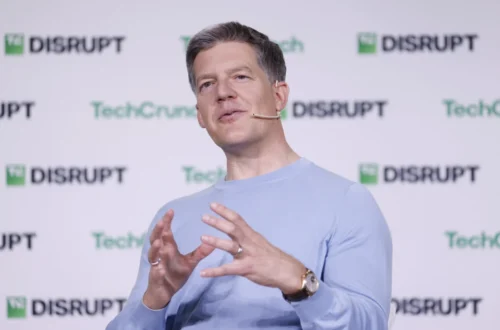
To manage the load, Thibault "Tibo" Sottiaux, OpenAI’s product leader overseeing core infrastructure like ChatGPT and Codex, announced via X (formerly Twitter) that new subscriptions for the $200-per-month Pro tier are disabled indefinitely.
- The Impacted Tier: The $200/month Pro plan, which demands the heaviest computational resources and highest inference limits, is entirely closed to new applicants.
- The Culprit: Astra, a model heralded by OpenAI executives as the threshold of the "AGI era," has spurred a gold rush of users eager to test its advanced capabilities.
- What Remains Open: OpenAI’s Application Programming Interface (API), alongside its lower-cost consumer tiers (Go and Plus), remain operational and open to new sign-ups.
- The Strategy: By pausing only the most resource-intensive tier, the company hopes to balance peak server capacity with the broadest possible public access.
Chronology of Events
The swift progression from a highly anticipated product launch to a mandatory infrastructure clampdown illustrates the hyper-speed at which the generative AI industry operates.
Late August 2026: The Prelude
Signs of surging platform usage emerged weeks prior to Astra’s official debut. OpenAI quietly adjusted and raised rate limits for Codex users on paid plans as recently as August, indicating steady, high-volume growth across its developer and professional ecosystems.
September 3, 2026: The Launch of Astra
OpenAI officially rolled out Astra across its ecosystem—integrating the model into Pro, Plus, Enterprise, and Business accounts. Billed as a quantum leap in AI reasoning and automation, leadership unreservedly positioned Astra as the dawn of Artificial General Intelligence (AGI), instantly sparking global viral attention and intense enterprise interest.
September 9, 2026: Early Warnings
As millions of users flooded the platform to test Astra’s computer-use and advanced coding features, cracks in the infrastructure began to show. Thibault Sottiaux took to social media to warn the public that demand was crossing into uncharted territory. He noted that while the company was pulling "all the levers possible," prioritizing service stability for existing subscribers could necessitate temporarily pausing new Pro sign-ups.
September 10, 2026: The Pro Freeze
Just 24 hours after issuing the warning, Sottiaux confirmed that the threshold had been reached. OpenAI officially disabled the registration pipeline for the $200 Pro tier, making it impossible for new users to buy into the top-tier experience until infrastructure scaling catches up with demand.
Supporting Data and Context
While OpenAI has kept precise figures close to the vest—refusing to disclose daily sign-up volumes or a definitive timeline for the Pro tier’s return—the surrounding economic and technical metrics paint a vivid picture of the current AI landscape.
- The Cost of High-End Inference: At $200 a month, the Pro plan is designed for power users, researchers, and software engineers who demand continuous access to frontier-class reasoning models. These models require massive parallel processing arrays, primarily driven by high-end GPUs that remain in notoriously tight global supply.
- The Infrastructure Crunch: Training a frontier model is only half the battle; inference—the computational power required to run the model every time a user prompts it—consumes staggering amounts of electricity, cooling, and hardware bandwidth. Astra’s multimodal capabilities, particularly its ability to directly interact with computer environments, multiply this computational tax manifold.
- Market Saturation: The competitive landscape in late 2026 leaves no room for lag. Competitors such as Anthropic, Google, and open-source communities are locked in an unyielding arms race. By launching Astra with bold claims of an "AGI era," OpenAI intentionally courted massive demand, inadvertently engineering a victim-of-its-own-success scenario.
Official Responses and Statements
OpenAI leadership has been transparent—if cautious—about the engineering crisis forcing their hand. The communication strategy has focused heavily on protecting the user experience of those who have already paid for the service.
In his official announcement on X, Sottiaux framed the pause as a calibrated, minimalist intervention designed to safeguard system stability without locking out the entire ecosystem:
"We wanted to take the smallest step that allows us to continue giving the broadest access possible," Sottiaux wrote.
Expounding on the unprecedented nature of the traffic spike, Sottiaux noted earlier in the week:
"Demand for Astra is really unprecedented. We’re pulling all the levers possible to sustain the demand, but I’ve not seen anything like it until now and we went through very steep growth before. Priority will always be to keep excellent service for existing users, but we might have to pause new Pro subscriptions for a bit if this continues."
To date, OpenAI has not provided a concrete ETA for when the Pro tier doors will reopen, leaving prospective high-tier subscribers waiting in limbo as data center engineering teams scramble to provision additional capacity.
Broader Industry Implications
The temporary shutdown of OpenAI’s $200 Pro tier is far more than a minor logistical hiccup for a tech startup; it serves as a macro-level indicator of the bottlenecks facing the entire artificial intelligence industry.
1. The Physical Limits of the Cloud
For all the software magic powering large language models, AI remains anchored to physical reality. The silicon shortage, data center power constraints, and cooling infrastructure limitations are very real walls that even the world’s most well-capitalized tech companies are crashing into. When a single model rollout can break a multi-billion-dollar infrastructure network, it signals that global compute supply chains are lagging dangerously behind algorithmic ambition.
2. Monetization and Tiered Scarcity
The $200 price point was once considered an extreme outlier for consumer software. Yet, the rapid adoption of the Pro tier proves that enterprise users and power hobbyists are willing to pay top dollar for genuine productivity gains—particularly those involving autonomous computer use and advanced coding. By pausing the tier, OpenAI has inadvertently created a sense of extreme exclusivity, turning its flagship subscription into a digital luxury good with a waiting list.
3. The Race Toward AGI and System Stability
As OpenAI and its rivals inch closer to AGI-level capabilities, the complexity of the models scales exponentially. The infrastructure required to support reasoning-heavy models like Astra is vastly more demanding than traditional chat interfaces. If frontier models require this level of dedicated server power just to handle public curiosity, the tech sector must aggressively accelerate its capital expenditures in energy grids and semiconductor manufacturing to prevent recurring gridlocks.
For now, developers and enthusiasts eager to experience Astra must settle for API access or lower-tier subscriptions, while OpenAI works behind the scenes to expand its digital plumbing and accommodate the relentless march of the AI revolution.