
By Global Affairs Desk
Published: September 10, 2026
Main Facts
As the world marks a quarter-century since the tragic events of September 11, 2001, historians, political scientists, and strategists are increasingly arriving at a sobering consensus: while the terrorist attacks themselves altered the physical and emotional landscape of the United States, it was America’s strategic, political, and military reaction that truly reshaped the world.
In the heady aftermath of the Cold War, the global order stood at a momentous crossroads. With the collapse of the Soviet Union, Western liberal democracies anticipated an era defined by international law, multilateral cooperation, open markets, and the peaceful expansion of democratic governance. Francis Fukuyama’s famous thesis of the "End of History" captured an optimistic mood where liberal democracy appeared triumphant and unchallenged.
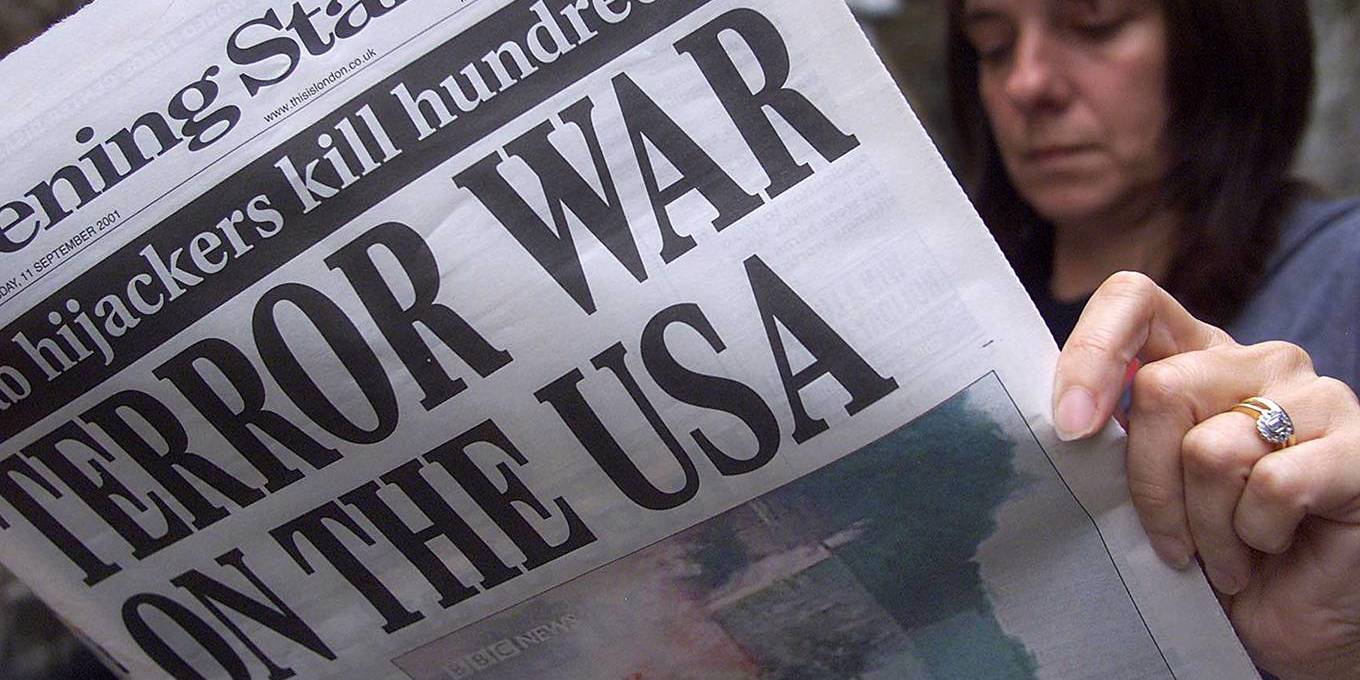
The attacks on the World Trade Center and the Pentagon shattered that illusion. Yet, the profound transformation of the international system over the subsequent 25 years was driven less by the asymmetrical strike of a non-state actor than by the systemic overreach of the world’s sole remaining superpower. By pivoting away from the foundational principles of international norms, institutional multilateralism, and domestic civil liberties, the United States embarked on a multi-decade crusade. This crusade not only failed to achieve its stated utopian goals in the Greater Middle East, but it also inadvertently catalyzed a multipolar world order characterized by democratic backsliding, the normalization of state surveillance, and a resurgence of great-power competition.
Chronology of a Transformation: The 25-Year Trajectory
To understand how the post-9/11 era dismantled the post-Cold War consensus, it is essential to trace the pivotal milestones that defined the United States’ domestic and foreign policy shifts:
- September 11, 2001: Nineteen hijackers associated with al-Qaeda commandeer four commercial airliners, crashing them into the Twin Towers of the World Trade Center, the Pentagon, and a field in Shanksville, Pennsylvania. The attacks result in 2,977 fatalities, triggering immediate national trauma and unprecedented unity.
- September 18, 2001: The United States Congress passes the Authorization for Use of Military Force (AUMF), granting the executive branch sweeping, unbounded powers to target individuals and nations connected to the 9/11 attacks—a legal framework that would underwrite decades of perpetual warfare.
- October 7, 2001: Operation Enduring Freedom begins with the U.S.-led invasion of Afghanistan, aimed at dismantling al-Qaeda and toppling the ruling Taliban regime.
- October 26, 2001: President George W. Bush signs the USA PATRIOT Act into law, significantly expanding the surveillance powers of domestic law enforcement and intelligence agencies, often at the direct expense of civil liberties.
- March 20, 2003: The United States and a "Coalition of the Willing" launch the invasion of Iraq under the false pretext of eliminating weapons of mass destruction (WMDs). This fractures traditional transatlantic alliances and fundamentally destabilizes the geopolitical equilibrium of the Middle East.
- 2004–2006: The Abu Ghraib prison abuse scandal breaks, and reports of the CIA’s extraordinary rendition and "enhanced interrogation techniques" emerge. These revelations severely erode America’s moral authority as a global champion of human rights.
- May 2, 2011: Al-Qaeda leader Osama bin Laden is killed by U.S. Navy SEALs in Abbottabad, Pakistan. While celebrated as symbolic closure, the event fails to end the broader "War on Terror" or stabilize the region.
- 2014–2016: The drawdown of traditional combat troops gives rise to the Islamic State (ISIS) and prompts protracted military interventions in Syria and Iraq, proving that the military footprint in the region was self-perpetuating.
- August 2021: The chaotic U.S. military withdrawal from Afghanistan concludes, bringing an ignominious end to America’s longest war and restoring the Taliban to power, calling into question the strategic efficacy of two decades of nation-building.
- 2026 (Present Day): Twenty-five years after the towers fell, the global landscape is defined by assertive revisionist powers (such as China and Russia), a domestic political environment deeply polarized by security paranoia, and a rules-based international order severely frayed by two decades of double standards.
Supporting Data and Metrics
The true magnitude of the post-9/11 era is starkly reflected in economic, human, and institutional data gathered over the last quarter-century:

- Financial Costs: According to estimates by Brown University’s Costs of War project, the post-9/11 wars in Afghanistan, Iraq, Pakistan, and Syria have cost U.S. taxpayers upwards of $8 trillion, driving national debt to unprecedented peacetime highs and drawing resources away from domestic infrastructure, education, and healthcare.
- Human Toll: Direct and indirect casualties from post-9/11 military operations are estimated to exceed 900,000 lives, including civilian deaths, allied security forces, and insurgents. Millions more were displaced, creating generational refugee crises across Europe and the Middle East.
- Domestic Surveillance: In the decade following the passage of the PATRIOT Act, government data collection accelerated exponentially. By the time Edward Snowden leaked classified NSA documents in 2013, the scale of domestic and international electronic surveillance had ballooned to encompass billions of communication metadata records daily, permanently altering the relationship between citizens and the state.
- Erosion of Trust: Polling data from the Pew Research Center and Gallup over the last 25 years reveals a precipitous drop in public trust in the U.S. federal government, dropping from roughly 50% trust in the immediate wake of 9/11 to historic lows hovering below 20% in the mid-2020s.
Official Responses and Strategic Shifts
The official posture of successive U.S. administrations—spanning both Republican and Democratic parties—has undergone a tortuous evolution in response to the realities born of 9/11.
In the immediate aftermath, the Bush administration framed the crisis not merely as a criminal act, but as a global "War on Terror." This introduced doctrines such as preventive war (the Bush Doctrine) and divided the world into a stark binary: "You are either with us, or you are with the terrorists." This rhetoric justified bypassing traditional diplomatic channels and international bodies like the United Nations Security Council.
As the quagmires in Iraq and Afghanistan deepened, subsequent administrations attempted course corrections. The Obama administration sought to pivot away from large-scale ground invasions, heavily favoring a strategy of targeted counterterrorism powered by unmanned drone strikes and Special Operations forces. However, this decentralized approach expanded the theater of war into countries like Yemen, Somalia, and Libya, often bypassing congressional oversight entirely.

By the early 2020s, the strategic consensus in Washington shifted decisively away from counterterrorism toward "Great Power Competition," primarily focusing on containing China’s rise and managing relations with a revanchist Russia. Yet, the institutional habits formed during the War on Terror—including executive overreach, unchecked intelligence authorities, and a reliance on economic sanctions as a primary tool of foreign policy—remained deeply embedded within the apparatus of the American state.
Implications for the Global Future
As we look back from 2026, the legacy of 9/11 extends far beyond the borders of the United States or the geography of the Middle East. The systemic choices made by Washington in the wake of the attacks fundamentally weakened the very global architecture the U.S. had built after World War II.
1. The Death of Moral Authority and the Rise of "Whataboutism"
When the United States justified preventive war, extrajudicial detentions at Guantanamo Bay, and enhanced interrogation, it sacrificed its claim to moral exceptionalism. Authoritarian regimes worldwide quickly weaponized these departures from the rule of law. Whenever Washington critiqued human rights abuses in Beijing, Moscow, or elsewhere, critics could readily point to Abu Ghraib, secret CIA prisons, or systemic domestic surveillance as evidence of Western hypocrisy.

2. The Normalization of the Security State
Domestically, 9/11 normalized a permanent state of exception. Measures initially billed as temporary emergency powers—ranging from enhanced airport security theater to mass electronic monitoring—became permanent fixtures of modern life. This pervasive security culture fostered political paranoia, eroded social trust, and provided fertile ground for populist demagogues who capitalized on manufactured fears of external and internal enemies.
3. The Catalysis of a Multipolar World
Perhaps the greatest irony of the post-9/11 era is that America’s distraction in the deserts of the Middle East allowed its primary geopolitical competitors to rise unhindered. While the U.S. expended blood and treasure on nation-building exercises that yielded little strategic return, China systematically modernized its military, built out its economic dominance through initiatives like the Belt and Road, and positioned itself as a pillar of global trade. Meanwhile, Russia rebuilt its military capacities, eventually launching aggressive territorial revisions in Eastern Europe, secure in the knowledge that Western powers were weary of protracted foreign entanglements.
Conclusion
Twenty-five years after the smoke cleared from the Manhattan skyline, the ultimate tragedy of September 11 is not only the lives lost on that fateful Tuesday, but the strategic miscalculations that followed. By allowing fear to dictate its policy, the United States abandoned the open, rules-based, and cooperative vision that marked the end of the Cold War. In doing so, it traded long-term strategic stability for short-term security theater—leaving behind a fractured world that is still struggling to find its footing.