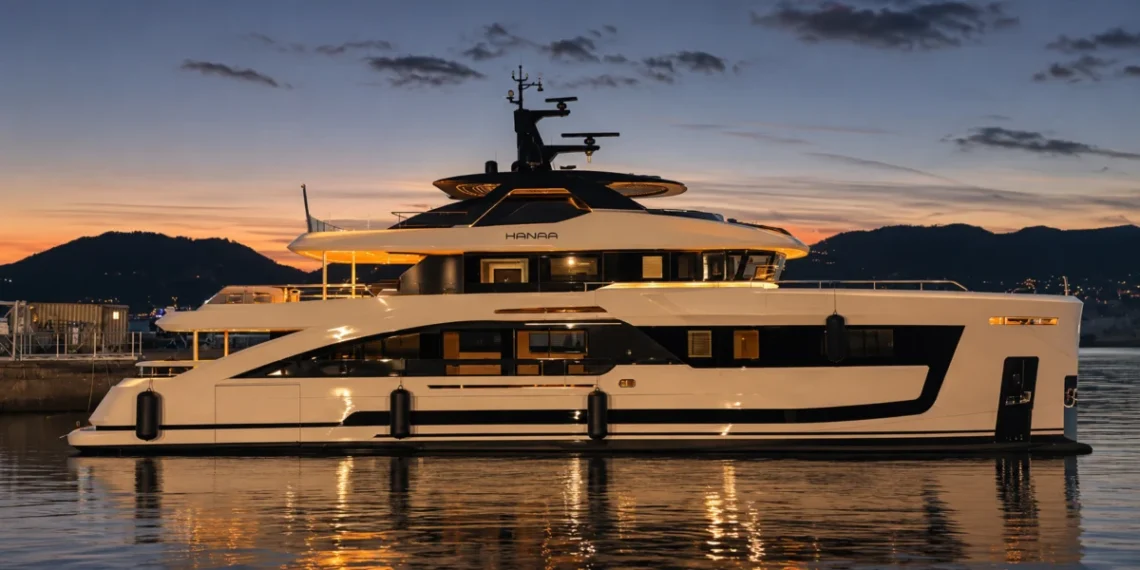
In the rarefied world of custom yacht building, designers and shipyards frequently talk about "maximizing space" and "rethinking layouts," yet few manage to truly disrupt the conventions of a well-established size category. Italian boutique shipyard Antonini Navi has chosen to challenge the status quo with its latest delivery: the Evo 31. Measuring 102 feet (31 meters) in length, this striking custom vessel boasts a robust steel hull and a lightweight aluminum superstructure. More importantly, it discards the traditional interior hierarchy expected of a yacht under 110 feet, introducing a spatial arrangement typically reserved for much larger superyachts.
Penned by the renowned studio Hydro Tec—which handled both the exterior styling and naval architecture—with sophisticated interior design by Hot Lab, the Evo 31 is a masterclass in functional innovation. By inverting the standard deck allocation, Antonini Navi has crafted a vessel tailored entirely to modern lifestyles, prioritizing expansive entertainment zones on the main deck and creating a private, sky-high sanctuary for the owner.
Main Facts: Engineering, Design, and Layout Innovations
The Antonini Navi Evo 31 is a four-deck custom motoryacht that packs an immense amount of utility, luxury, and engineering ingenuity into its 102-foot footprint. Constructed with a durable steel hull that ensures blue-water capability and an aluminum superstructure to keep the center of gravity low and optimize performance, the yacht bridges the gap between pocket superyacht and transoceanic explorer.
The Inverted Layout
The defining characteristic of the Evo 31 is its unconventional layout. On a traditional yacht of this scale, the main deck is almost invariably dominated by a full-beam owner’s suite forward and a formal interior dining and salon area aft. The Evo 31 turns this paradigm completely on its head.
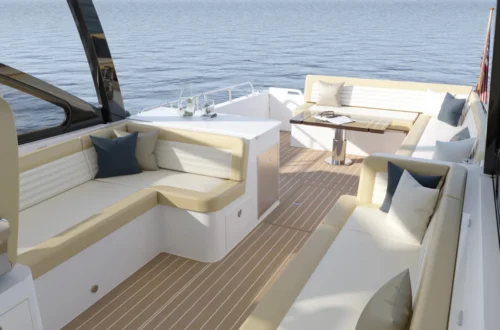
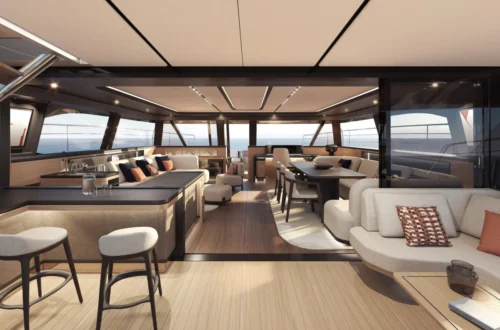
- The Main Deck (The Social Hub): Entirely dedicated to entertaining and social gathering, the main deck features a spacious central lounge seamlessly connected to the aft cockpit via sliding glass doors. Forward on this level lies a flexible multi-purpose space that opens onto a private terrace, creating a fluid indoor-outdoor living environment.
- The Upper Deck (The Owner’s Sanctuary): Relocating the owner’s quarters to the upper deck transforms the suite into a true penthouse experience. Accompanied by a private aft terrace complete with a lounge bar and a dedicated jacuzzi, the owner’s domain feels entirely secluded from the rest of the vessel.
- The Lower Deck (Guest Accommodations): Below deck, the Evo 31 comfortably accommodates family and friends across four well-appointed guest staterooms, ensuring privacy and tranquility away from the main social areas.
- The Sun Deck (Al Fresco Living): Spanning a remarkable 840 square feet, the sun deck provides an elevated vantage point equipped for open-air dining, a fully functioning barbecue setup, and sprawling sunning areas.
- Practical Support and Operations: Practicality has not been sacrificed for luxury. The vessel features dedicated, functional crew accommodations, a five-meter tender garage designed to house essential water toys securely, and an engine room engineered specifically for ease of access and maintenance.
Chronology: From Concept to Launch
The realization of the Evo 31 is the result of meticulous planning, engineering excellence, and collaborative shipyard execution. While the official launch marks the culmination of the project, understanding its timeline highlights the dedication required to bring a custom steel-and-aluminum vessel of this complexity to life.
Phase 1: Conceptualization and Naval Architecture (2023–2024)
The genesis of the Evo 31 began with Antonini Navi’s desire to expand its footprint in the custom and semi-custom custom yacht sector. Partnering with Hydro Tec, the yard sought to challenge the spatial limitations inherent in yachts around the 100-foot mark. Sergio Tommasi and the Hydro Tec team spent months refining the naval architecture. Because steel hulls are less common in sub-110-foot yachts—which usually favor all-composite or all-aluminum construction for speed and ease of manufacturing—the engineering team had to meticulously balance weight distribution, hydrodynamic efficiency, and structural integrity.
Concurrently, Hot Lab was brought on board to conceptualize an interior design language that would complement the unusual architecture. The brief called for a sophisticated, warm, and inviting aesthetic that would unify the inverted deck plan without making any space feel disconnected.
Phase 2: Hull Construction and Superstructure Fabrication (2024–2025)
Once the naval architecture and interior renderings were finalized, construction commenced at Antonini Navi’s Italian facilities. The laying of the steel keel and the subsequent fabrication of the steel hull marked a major milestone. Steel offers unmatched stability, noise-reduction qualities, and safety at sea, making it the ideal choice for an owner wanting a yacht that feels substantial and secure in varied sea states.
Following the completion of the hull, the lightweight aluminum superstructure was carefully hoisted and welded into place. This hybrid material approach—steel below the waterline, aluminum above—is a hallmark of larger superyacht construction, demonstrating Antonini Navi’s commitment to uncompromising build quality.
Phase 3: Outfitting, Interior Installation, and Sea Trials (2025–2026)
With the shell complete, the focus shifted to outfitting. Hot Lab’s interior components were custom-built and meticulously installed, incorporating high-end Italian stonework, bespoke millwork, and state-of-the-art entertainment and domotic systems.
As the yacht neared completion in late 2026, it underwent rigorous dockside testing followed by comprehensive sea trials off the Italian coast. Engineers tested the propulsion systems, maneuverability, stability at zero speed, and noise/vibration levels. The yacht successfully passed all performance benchmarks, proving that the steel-and-aluminum hybrid structure delivered the expected cruising comfort and efficiency. The official launch celebrated not just a new hull entering the water, but a new design philosophy realized in full scale.
Supporting Data & Specifications
To truly appreciate the engineering feat of the Antonini Navi Evo 31, one must examine the hard data and technical parameters that govern its design.
Technical Specifications Matrix
| Feature / Parameter | Specification |
|---|---|
| Builder | Antonini Navi (Italy) |
| Naval Architecture & Exterior Design | Hydro Tec |
| Interior Design | Hot Lab |
| Length Overall (LOA) | 102 feet (31 meters) |
| Hull Material | Steel |
| Superstructure Material | Aluminum |
| Number of Decks | 4 (Including Sun Deck) |
| Owner’s Location | Upper Deck |
| Guest Accommodations | 4 Staterooms (Lower Deck) |
| Sun Deck Area | 840 square feet |
| Tender Capacity | 5-meter tender garage |
Spatial Distribution Analysis
When compared to traditional 100-foot yachts, the Evo 31’s spatial distribution metrics highlight a fundamental shift in how volume is utilized. Typically, a yacht of this size allocates roughly 35% of its main deck to owner quarters, sacrificing prime social square footage. By pushing the owner’s suite to the upper deck, the Evo 31 frees up nearly 100% of the main deck’s interior footprint for social engagement.
Furthermore, the integration of an 840-square-foot sun deck is exceptionally generous for a 31-meter vessel. To put this in perspective, many yachts in the 120-to-130-foot range feature sun decks of comparable or even smaller sizes. This maximization of outdoor deck space aligns perfectly with contemporary yachting culture, where owners and charter guests spend the vast majority of their time basking in the open air, dining al fresco, and enjoying panoramic ocean views.
Official Responses and Industry Commentary
The unveiling of the Evo 31 has generated significant buzz within the international marine industry, drawing praise from naval architects, interior designers, and shipyard executives alike.
The Builder’s Perspective
Management at Antonini Navi emphasized that the Evo 31 was conceived as a direct response to evolving client demands. In a joint statement released during the launch, shipyard representatives noted:
"Today’s yacht owners are looking for experiences that break free from convention. They want spaces that facilitate connection, relaxation, and seamless interaction with the marine environment. With the Evo 31, we refused to be bound by the historical limitations of a 102-foot platform. By working alongside visionary partners like Hydro Tec and Hot Lab, we have delivered a custom steel yacht that behaves, feels, and lives like a vessel twice its size."
Design Studio Insights
Sergio Tommasi of Hydro Tec discussed the engineering challenges and aesthetic triumphs of the exterior and structural layout:
"Designing a steel-and-aluminum vessel at 31 meters requires meticulous calculation. Steel gives you the structural integrity and quiet cruising of a true explorer yacht, while aluminum keeps our weight aloft in check. Relocating the owner’s suite to the upper deck was an architectural choice that allowed us to create an unbroken social space on the main deck—something owners repeatedly ask for, but rarely receive in this size bracket."
Hot Lab, responsible for the interior atmosphere, highlighted the synergy between the unconventional layout and the interior styling:
"An inverted layout changes how you move through a yacht, and therefore it changes how we approach the interior architecture. Every transition from the main deck’s entertainment zones to the upper deck’s private owner’s retreat had to feel natural, luxurious, and cohesive. We utilized warm tones, tactile natural materials, and an abundance of natural light to ensure that whether you are hosting a cocktail party on the main deck or enjoying a quiet morning coffee on the private upper aft terrace, the experience is nothing short of extraordinary."
Implications: What the Evo 31 Means for the Future of Custom Yachting
The introduction of the Antonini Navi Evo 31 is more than just the debut of a single custom yacht; it serves as a harbinger of changing trends in the sub-110-foot superyacht sector. As shipyards and designers look for ways to offer "big yacht feel" on manageable, cost-effective platforms, the Evo 31 establishes a compelling new benchmark.
1. The Death of the Traditional Main-Deck Master?
For decades, the main-deck forward master stateroom has been considered the ultimate status symbol in yachting. However, as owners increasingly prioritize shared experiences, entertaining, and outdoor living over formal, closed-off private quarters, layouts are bound to evolve. The Evo 31 proves that moving the owner upstairs not only works technically, but vastly improves the social dynamics on board. We can expect other boutique shipyards to experiment with similar inverted layouts in future custom and semi-custom series.
2. The Resurgence of Steel in Smaller Custom Builds
While composite materials and full-aluminum builds have dominated the 100-foot category due to their speed of production and weight advantages, the Evo 31 champions the enduring appeal of steel. Steel hulls offer superior sound dampening, a smoother ride through choppy seas, and an undeniable sense of safety and gravitas. Antonini Navi’s successful execution of a steel-hulled 102-footer may encourage more owners to commission robust, pocket-sized explorer-style vessels rather than lightweight, high-speed planing yachts.
3. Redefining Multi-Generational and Charter Utility
Yachts in the 100-foot range are frequently utilized for family cruising or high-end charter operations. The Evo 31’s layout is uniquely suited for these applications. By isolating the owner on the upper deck with a private terrace and jacuzzi, the owner enjoys absolute privacy even when the main deck and lower deck guest cabins are fully occupied by guests or charterers. This clear separation of private and social spheres solves one of the most common complaints associated with multi-guest cruising on mid-sized yachts.
Conclusion
Antonini Navi has achieved a remarkable feat with the Evo 31. By refusing to accept the spatial limitations traditionally imposed on 102-foot yachts, the shipyard—in collaboration with Hydro Tec and Hot Lab—has delivered a vessel that defies expectations. Featuring a rugged steel-and-aluminum construction, an ingenious inverted four-deck layout, an expansive 840-square-foot sun deck, and a penthouse-style owner’s deck, the Evo 31 stands as a bold statement of Italian design ingenuity.
As it takes to the water, the Evo 31 does not merely represent a new addition to the global fleet; it points the way forward for the future of custom yacht design, proving that true luxury is not measured solely in feet, but in how brilliantly every square inch of space is imagined.