
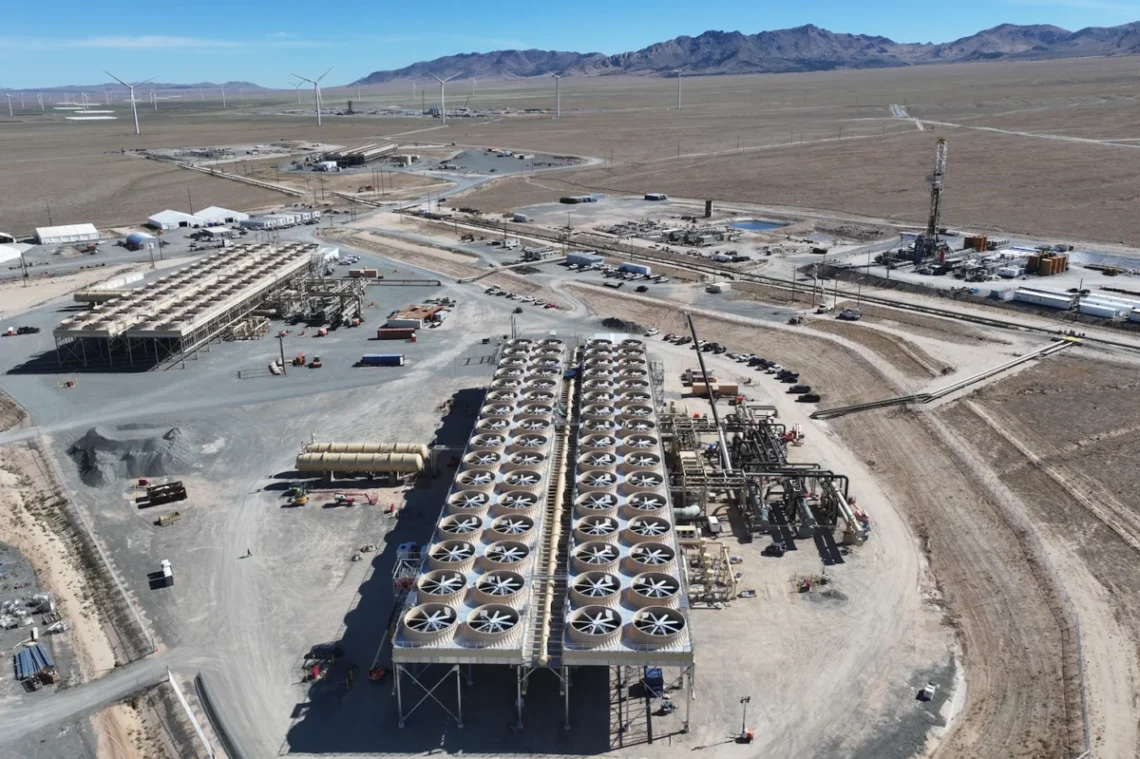
The American energy landscape is undergoing a profound transformation. Driven by an unprecedented surge in electricity demand—fueled by the rise of artificial intelligence, data center expansion, and the electrification of heavy industry—the push for clean, firm, 24/7 power has never been more urgent. Amidst this, the advanced geothermal industry has emerged as a frontrunner, offering a carbon-free alternative to fossil-fuel-based baseload power.
Yet, despite a backdrop of favorable geology across the American West and aggressive 2030 renewable energy targets, the sector is grappling with a stubborn economic hurdle: the price point. While wind and solar have plummeted in cost over the last decade, advanced geothermal remains locked in a premium tier, averaging approximately $100 per megawatt-hour (MWh). For corporations striving to decarbonize their Scope 2 emissions, this price represents a significant barrier to entry.
The Cost of Complexity: The Appraisal Risk Hurdle
The primary obstacle to geothermal’s price parity isn’t a lack of engineering prowess or an inability to scale. According to Mike O’Connor, director at the Mountain West Geothermal Consortium (MWGC), the industry is haunted by a unique vulnerability: "The binding constraint isn’t technology or even capital for scaling; it’s appraisal risk—the one risk no other generation industry carries. Geothermal developers must develop the fuel as well as the large power infrastructure at the same time."
In the wind and solar industries, a developer can measure wind speeds or solar irradiance with a high degree of certainty before breaking ground. In geothermal, the "fuel"—the high-temperature steam or water trapped deep beneath the Earth’s crust—is an invisible, high-stakes variable.
Appraisal risk refers to the immense cost of exploration drilling to locate viable geothermal reservoirs, often situated kilometers below the surface. According to data from the International Energy Agency (IEA), permitting, exploration, and test-well drilling account for 10% to 15% of a project’s total investment costs, translating to roughly $27 million to $41 million per project. Developers must commit these funds without a guarantee that the site will yield the necessary thermal output to make the project economically viable. This uncertainty forces developers to seek high-risk, high-reward capital, which inevitably trickles down to the final price of the power purchase agreement (PPA).
A Chronology of Progress and Policy
The evolution of the U.S. geothermal sector has been characterized by fits and starts, though the last few years have marked a significant acceleration in both public and private sector involvement.
- 1982–2012: The U.S. Department of Energy (DOE) operated a successful federal geothermal risk-sharing program. This initiative provided the early-stage support necessary to de-risk drilling, ultimately catalyzing the development of the majority of the conventional hydrothermal projects currently operating in the U.S.
- 2021: A landmark moment for the industry, as Google signed a pioneering deal with Fervo Energy. This move, made before the technology was fully proven at scale, signaled to the market that corporate titans were willing to act as "first movers" for advanced geothermal.
- May 2026: Nonprofits Clean Economy Project and C3 Solutions, in collaboration with Waypoint Strategy Group, introduced a proposal for a federal "Appraisal Risk Program." This framework aims to mirror the success of the DOE’s earlier efforts by establishing revolving funds to offset the cost of appraisal drilling.
- September 2026: The DOE’s Office of Geothermal announced $99 million in funding for 21 projects across eight states. This injection of capital is specifically targeted at bridging the gap between pilot and commercialization, with five projects dedicated to enhanced geothermal systems (EGS) and 16 focused on critical subsurface data collection.
- Late 2026: Following the DOE announcement, Google solidified its commitment to the sector by signing what is currently the largest enhanced geothermal PPA in history, procuring 396 megawatts of power from Fervo Energy. Simultaneously, Meta began formalizing its own path, securing deals with innovators like Sage Geosystems and XGS Energy.
Supporting Data: The Economics of Risk
The economic challenge facing geothermal is best illustrated by the frustration of corporate buyers. At the Trellis Impact 26 conference, one industry participant noted that while their first two renewable energy contracts (wind and solar-plus-storage) were expensive, subsequent contracts saw price drops of 25% to 50%. "If I wait four to five years, will geothermal prices decline the same way?" they asked.

The answer lies in the "learning curve" of the technology. In mature energy markets, prices decline as supply chains stabilize and technical risks are retired. In geothermal, the learning curve is currently hampered by the high cost of exploration. If the 10–15% of costs associated with initial drilling can be shared or de-risked via public-private partnerships, the cost of capital would drop significantly.
Public programs in Germany, Japan, and Turkey provide a blueprint for this. By sharing early drilling risk, these nations have managed to lower the barrier for private developers. The proposed U.S. programs—specifically those backed by the MWGC—aim to bring this model to Colorado, Utah, New Mexico, and Arizona. By creating a revolving fund for appraisal drilling, these states could effectively lower the "floor" for PPA pricing, making geothermal a viable competitor for major corporate buyers.
Official Responses and Strategic Shifts
Industry leaders are increasingly focusing on a collaborative model to solve the appraisal dilemma. O’Connor suggests that if a coalition of corporate buyers were to pool their resources into an appraisal fund—essentially funding a portfolio of 5 to 10 projects—the shared risk would dramatically improve the financing outlook for developers.
"Corporate buyers are already helping advanced geothermal move from pilot to commercial scale," O’Connor noted. The strategies employed by Google and Meta are particularly instructive. By utilizing utility tariffs where the corporate buyer covers the cost of the new resource rather than the general rate-paying public, these companies are effectively creating a "sandbox" for developers to prove their tech. This provides the offtake visibility that lenders require before they are willing to provide debt financing for large-scale construction.
Implications for the Future of Energy
The path forward for geothermal is no longer just about the drill bit; it is about the integration of policy, corporate strategy, and risk-sharing.
- The "Data Dividend": A core component of the proposed federal and state appraisal programs is the mandatory public sharing of subsurface data. By requiring developers to publish their findings, the industry as a whole benefits, turning individual failures into collective learning experiences. This will likely reduce the "dry hole" risk that currently plagues early-stage projects.
- Corporate Offtake as a Catalyst: As demonstrated by the recent deals from Google and Meta, corporate demand is the most potent lever for price reduction. By committing to long-term PPAs, these companies are not just buying power; they are buying the "learning" that will allow the next 100 megawatts to be cheaper than the first.
- The Grid Reliability Argument: While the $100/MWh price point remains high compared to solar or wind, geothermal offers a value proposition that intermittent renewables cannot: 24/7 reliability. As grids become increasingly reliant on variable energy sources, the "firm" nature of geothermal power will likely command a premium that justifies its higher initial cost.
In conclusion, while the geothermal industry currently finds itself in a period of high costs and high risk, the infrastructure for a transition is being built in real-time. Through a combination of targeted government policy, shared subsurface data, and aggressive corporate procurement, the industry is poised to move from a niche experimental technology to a fundamental pillar of the American decarbonized grid. The question for corporate buyers is no longer if geothermal will be cost-competitive, but how fast they can help the industry move down the learning curve.