By [Your Name/Editorial Staff]
Published: July 23, 2026
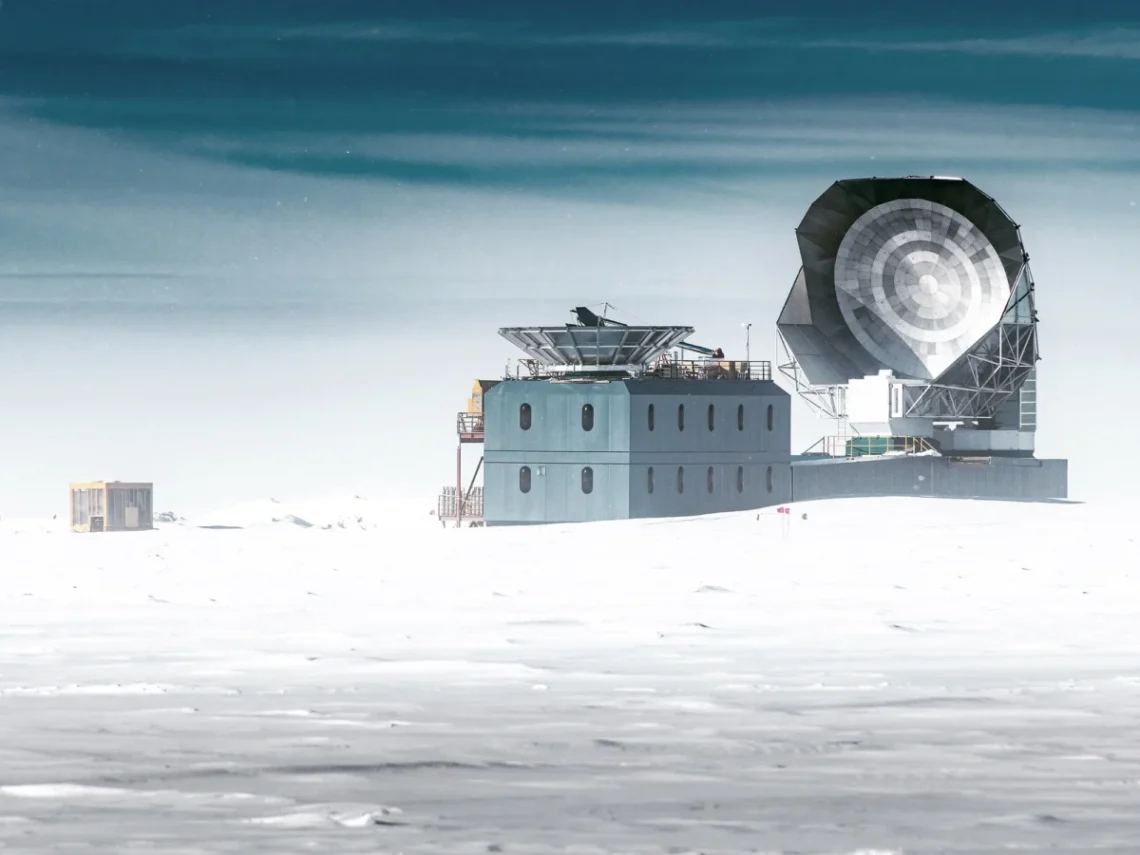
Antarctica remains the only continent on Earth without a sovereign government, a permanent indigenous population, or a traditional economy. On paper, it is a sanctuary for science and peace, governed by the 1959 Antarctic Treaty, which famously "froze" all territorial claims. Yet, a look at the icy horizon reveals a different story. Scattered across the white expanse are more than 70 active research stations operated by nearly 30 nations. These structures—ranging from futuristic, elevated pods to sprawling complexes featuring schools, chapels, and civil registries—represent more than just laboratories. They are the physical manifestations of national ambition, serving as "soft power" anchors in a territory where traditional ownership is legally prohibited.
As the global climate crisis intensifies and the 2048 review of the Madrid Protocol (which bans mining in Antarctica) looms on the horizon, the architecture of the "South" has become a sophisticated tool for territorial presence. In the harshest environment on the planet, building is an act of defiance, and the design of a station is often as much about national branding as it is about atmospheric research.
Main Facts: The Paradox of the "Global Commons"
The legal framework of Antarctica is defined by the Antarctic Treaty System (ATS). Signed during the height of the Cold War, the treaty designates the continent as a "natural reserve, devoted to peace and science." It prohibits military activity, nuclear testing, and mineral extraction. Crucially, Article IV of the treaty states that while it is in force, no new claim or enlargement of an existing claim to territorial sovereignty shall be asserted.
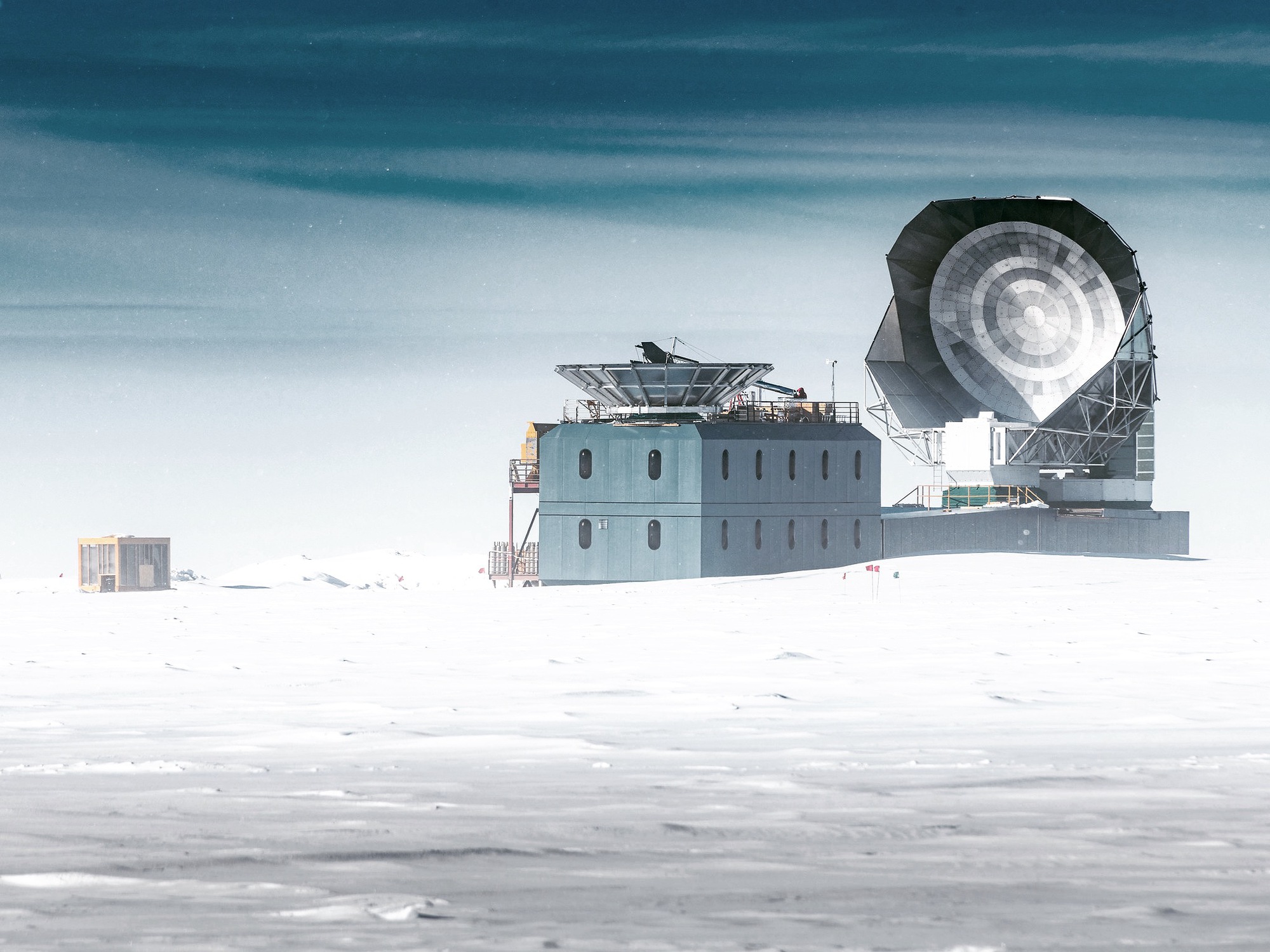
However, the reality on the ground is far more complex. Seven nations—Argentina, Australia, Chile, France, New Zealand, Norway, and the United Kingdom—maintain historical claims, some of which overlap. Others, such as the United States and Russia, reserve the right to make a claim in the future.
Architecture as "Effective Occupation"
In international law, the concept of uti possidetis or "effective occupation" often dictates sovereignty. If a nation can prove it has maintained a continuous, functional presence in a territory, its claim is strengthened. In Antarctica, architecture is the primary vehicle for this proof.
A research station is a massive financial and logistical commitment. Costs for construction often reach hundreds of millions of dollars, with annual maintenance and supply missions adding tens of millions more. While these stations facilitate vital climate and astronomical research, critics and geopolitical analysts point out that much of this data could be gathered via satellite or automated sensors. The decision to house humans in permanent, architecturally significant structures suggests a deeper motive: the establishment of a "territorial footprint" that will be difficult to ignore should the treaty ever be renegotiated.
The Civil Infrastructure of the Ice
Nowhere is the intent of architecture more visible than at Argentina’s Esperanza Base and Chile’s Villa Las Estrellas. Unlike the utilitarian dormitories of other nations, these bases are designed as small towns. They feature:
- Educational Facilities: Schools for the children of personnel.
- Religious Sites: Catholic chapels and orthodox churches.
- Civil Registries: Offices that record marriages and births.
- Postal Services: Functioning post offices that issue national stamps.
Since 1978, eleven children have been born at Esperanza Base. These births are not accidental; they are part of a concerted effort to create a "native" population, further legitimizing territorial claims through the presence of civilian life.
Chronology: From Survival Huts to Space-Age Hubs
The evolution of Antarctic architecture mirrors the shift from heroic exploration to permanent geopolitical positioning.
1898–1920: The Heroic Age
Early structures were born of necessity and survival. Carsten Borchgrevink’s hut at Cape Adare (1899) and Ernest Shackleton’s Nimrod Hut (1908) were prefabricated timber boxes insulated with felt and seaweed. These were temporary shelters, designed to be abandoned once the expedition ended.
1957–1958: The International Geophysical Year (IGY)
The IGY marked the transition to permanent habitation. This period saw the construction of the original Amundsen–Scott South Pole Station by the United States. These structures were often "Jamesway" huts—quonset-style tents that were eventually buried by snow, leading to the realization that building on the ice required a radical new approach.
1960s–1990s: The Era of Burial and Steel
Nations began experimenting with domes and underground tunnels to combat the relentless accumulation of snow. The iconic geodesic dome at the South Pole (completed in 1975) became a symbol of American presence, though it eventually had to be dismantled as the ice crushed it from the outside.
2000–Present: The Architectural Arms Race
The 21st century has ushered in an era of "high-design" stations. No longer content with industrial containers, nations are hiring world-class architects to create iconic structures.
- 2013: The UK opens Halley VI, a modular station on hydraulic legs that can "walk" to avoid being buried or carried out to sea by calving ice shelves.
- 2020: Brazil inaugurates the new Comandante Ferraz Antarctic Station, a sleek, black, aerodynamic complex designed by Estúdio 41 that looks more like an art museum than a laboratory.
- 2024: China completes Qinling Station, its fifth base, signaling its rapidly expanding influence in the Ross Sea region.
Supporting Data: The Logistics of Building at the End of the World
Building in Antarctica is arguably more difficult than building in low-earth orbit. The logistical data highlights the sheer scale of national investment required to maintain a territorial presence.
Extreme Environmental Constraints
Architecture must withstand:

- Temperatures: Dropping as low as -89.2°C (-128.6°F).
- Wind Speeds: Catabatic winds exceeding 320 km/h (200 mph).
- The "Moving Ground": Most stations are built on ice sheets that move several meters per year, necessitating structures that can be leveled or relocated.
The Construction Window
The "summer" season in Antarctica lasts only from November to February. Materials must be shipped via icebreakers and offloaded onto unstable sea ice. If a single ship is delayed by weather, an entire year of construction is lost. This makes the completion of a modern station like the Amundsen–Scott South Pole Station (a $150 million project) a monumental feat of engineering.
Energy and Sustainability
As the Madrid Protocol mandates environmental protection, architecture has shifted toward "Green Polarism." The Belgian Princess Elisabeth Antarctica station is the world’s first "zero-emission" station, relying entirely on solar and wind energy. However, even "green" buildings serve the same geopolitical purpose: they demonstrate a nation’s technological superiority and its "responsible" stewardship of the land.
Official Responses: The "Science First" Narrative
When questioned about the territorial implications of their stations, national polar programs consistently emphasize the primacy of science.
The National Science Foundation (NSF), which manages the U.S. Antarctic Program, maintains that its presence is strictly for research and to support the goals of the Antarctic Treaty. "Our architecture is driven by the requirements of the science we support—astrophysics, glaciology, and climate change," an NSF spokesperson noted during the inauguration of the elevated South Pole station.
Similarly, the Council of Managers of National Antarctic Programs (COMNAP) facilitates international cooperation, arguing that the density of stations in certain areas—like King George Island—is due to logistical accessibility rather than a "land grab."
However, independent observers like Dr. Anne-Marie Brady, a specialist in polar politics, suggest a more pragmatic reality. In her research, she notes that many countries use scientific research as a "currency" to buy a seat at the decision-making table. Under the treaty, only "Consultative Parties" (those that demonstrate significant research activity) have voting rights. Architecture is the physical evidence of that activity.
Implications: The Future of the Southern Frontier
The proliferation of high-tech architecture in Antarctica has profound implications for the future of the continent and global geopolitics.
1. The 2048 Milestone
The Madrid Protocol, which bans mining, can be opened for review in 2048. If the ban is lifted, the nations with the most robust, permanent, and strategically located infrastructure will be the best positioned to claim mineral rights. The current "architectural arms race" is, in many ways, a slow-motion preparation for this date.
2. Polar Urbanism
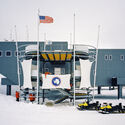
We are seeing the birth of "Polar Urbanism." As stations grow to accommodate hundreds of people and offer amenities like gyms, cinemas, and hydroponic gardens, the line between a "research outpost" and a "settlement" blurs. This creates a "fait accompli" on the ground: it is much harder to displace a functioning community with a 50-year history than a temporary camp.
3. The Symbolism of Design
The shift toward aesthetically pleasing architecture (like India’s Bharati station, made of 134 shipping containers wrapped in a sleek skin) serves a domestic purpose. These buildings appear in national newspapers and on stamps, fostering a sense of national pride and "ownership" among citizens back home, thousands of miles away from the ice.
Conclusion: More Than Just Shelter
In the frozen silence of the South, buildings speak. They speak of a nation’s wealth, its technological prowess, and its long-term intentions. While the Antarctic Treaty has successfully prevented conflict for over six decades, the built environment tells us that the continent is far from "ownerless." As long as nations continue to pour billions into steel and glass at the bottom of the world, architecture will remain the most powerful—and most permanent—form of territorial claim.
Antarctica may be "South of Everything," but for the nations building there, it is increasingly at the center of the global map.