In the rarefied world of luxury yachting, where prestige is often measured in sheer length, designer Cor D. Rover has spent his career championing a different metric: the human experience of space. Born on a Dutch inland barge and raised among the pastoral landscapes and industrial shipyards of the Netherlands, Rover possesses a unique dual perspective—one that marries the visceral, rhythmic connection to water with the rigorous discipline of naval architecture. His ongoing collaboration with Horizon Yachts has not only transformed the shipyard’s output but has arguably shifted the paradigm for what owners expect from a modern motoryacht.
The Genesis of a Design Philosophy
Cor D. Rover’s earliest memories are inextricably linked to the aquatic environment. "I was born on a barge, which my father captained on the inland waterways of the Netherlands," he reflects. "My first memories were the smell and the sound of the water, so that had a deep effect on my life."
This upbringing instilled in him a foundational understanding of buoyancy and flow. However, his professional development was defined by a rare versatility. "I always said I could weld metal plates and milk the cows equally well," he jokes. This dichotomy between the grit of the shipyard and the organic rhythm of the farm fostered a design approach that values both technical precision and spatial empathy.
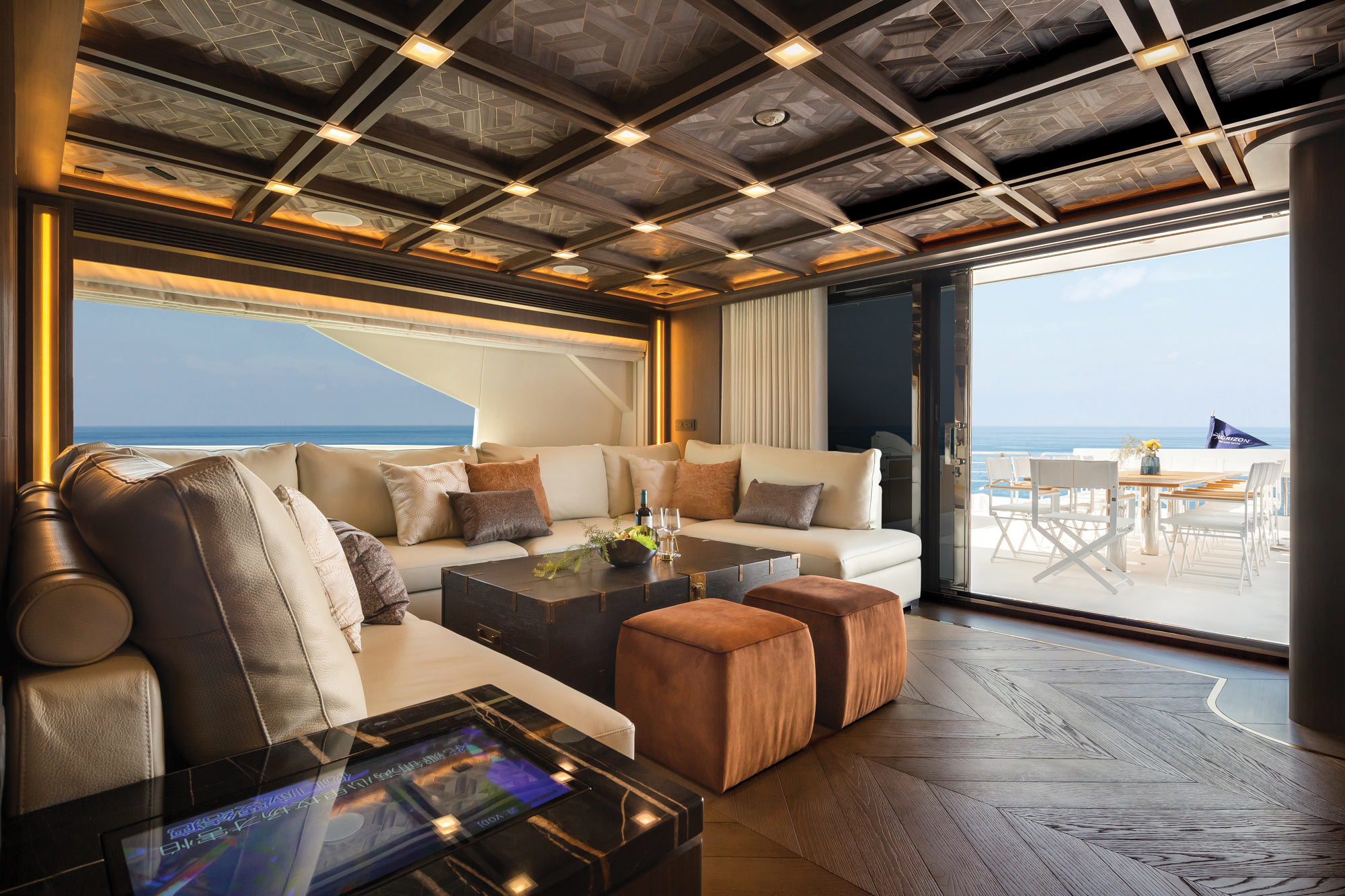
After pursuing mechanical engineering and transitioning into naval architecture, Rover’s focus initially remained on aesthetics and deck plans. Yet, as his career matured, his focus shifted toward the interior—the "living" of the boat. Today, from his studio in Rotterdam, he designs vessels that harmonize sound engineering with profound spatial awareness.
Chronology of a Partnership: From Rotterdam to the World
The partnership between Cor D. Rover and Taiwan-based Horizon Yachts did not begin with grand fanfare, but rather on a rainy Wednesday in Rotterdam. At the time, Horizon was already a formidable player in the global market, known for its build quality and reliability. However, Rover saw an opportunity to refine the brand’s identity by pushing the boundaries of interior volume.
The Foundation of the FD Series
Rover arrived at that initial meeting with a clear, disruptive vision: he wanted to maximize the interior volume of a 24-meter platform, specifically by incorporating an on-deck master stateroom. Horizon’s leadership, including president John Lu, immediately recognized that this was not merely a design tweak, but a strategic evolution.
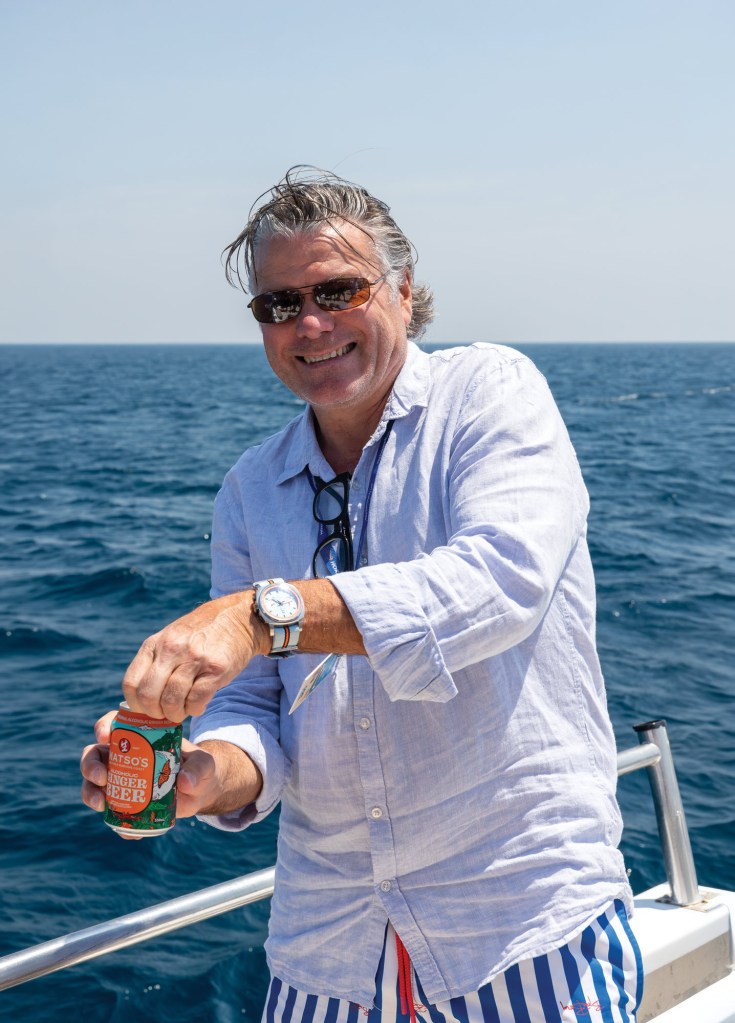
Lu, described by Rover as a visionary with a pragmatic grasp of construction, provided the perfect foil. The two men realized that while the concept was ambitious, it had to remain "buildable." This synergy between visionary design and shipyard capability laid the groundwork for what would become the Fast Displacement (FD) Series.
The Evolution of the Platform
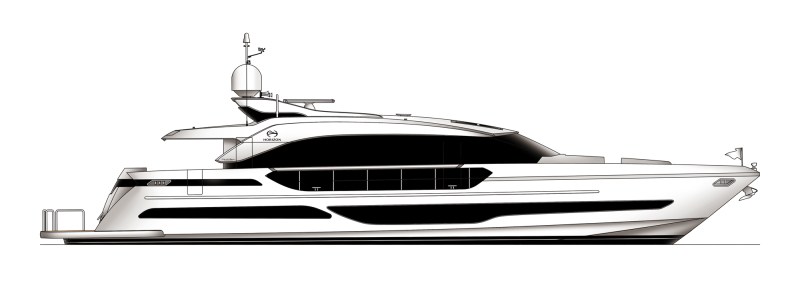
Since the launch of the first FD models in 2016, the series has undergone a rapid, iterative evolution. The initial concepts have expanded from the FD75 to the FD110 and beyond. Throughout this growth, the partnership has remained collaborative, with each model serving as a response to specific market demands or client requests. The FD Series is not a static product line; it is an organic, growing ecosystem of designs that reflects the changing needs of the global yachting community.
Supporting Data: The Physics of Space
The success of the FD Series rests on a simple, yet technically daunting premise: deliver more usable, "superyacht-scale" space within a manageable length. Achieving this required a fundamental rethinking of hull geometry and deck planning.
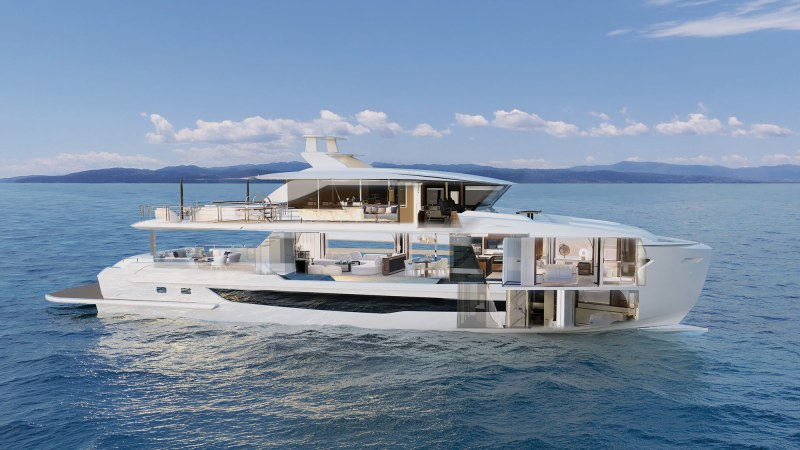
- The Hybrid Hull: By utilizing a hybrid hull form and a proprietary High-Performance Piercing Bow, the team managed to decouple interior volume from traditional performance penalties.
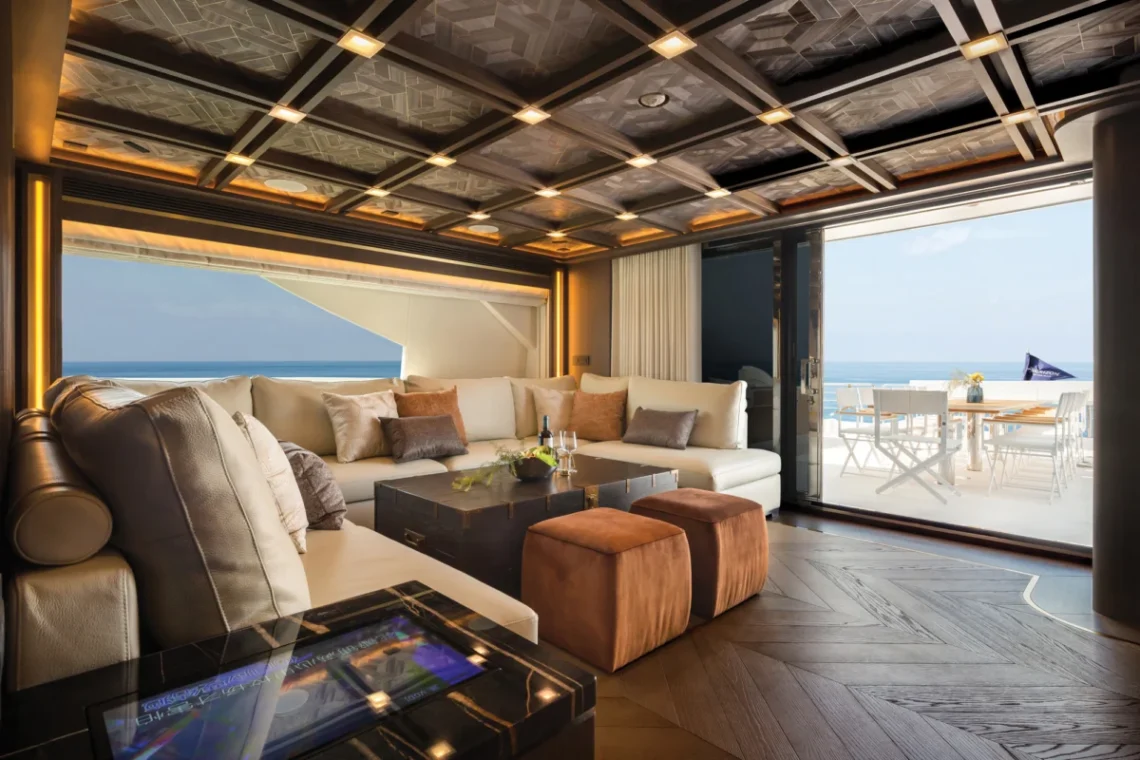
- Glazing Advancements: The integration of high-strength, structural glass has allowed for floor-to-ceiling windows, which serve as the primary catalyst for the "feeling" of increased size.
- Regional Adaptability: Data from market performance indicates that the design’s flexibility is its greatest asset. The US market demanded maximum volume and entertainment space, while the Australian market favored rugged, exploration-ready features. The FD platform’s ability to pivot—adding skylounges for Europeans or extended tender storage for explorers—has been critical to its market dominance.
Official Perspectives: The Human Element
For Cor D. Rover, technology is an instrument, not a panacea. He remains wary of the "computer-knows-best" mentality, particularly in an era dominated by AI-driven design software. "The hardest part of yacht design is when people think a computer can do it all," he asserts. "A computer program is a tool, not a decision-making entity."
This philosophy resonates throughout Horizon’s manufacturing facility. The shipyard prides itself on being a truly custom builder, where every vessel is a dialogue between the designer’s intent and the owner’s vision. John Lu and his team maintain that their role is to facilitate the owner’s lifestyle. Whether it involves complex, multi-deck layouts or the integration of sophisticated tender-handling systems, the goal is always to enhance the "experience" of the sea.
Rover emphasizes that the shift in owner demographics—specifically, a younger, more experience-oriented generation—has dictated this change. "They want the excitement of exploration, not necessarily ownership as a symbol of status," he notes. Consequently, the boats are designed to be "living environments" rather than floating showrooms.
Implications: The Future of Yacht Design
The collaboration between Rover and Horizon has profound implications for the future of the industry. As the yachting sector looks toward electrification and hybrid power, the lessons learned from the FD Series—particularly regarding the integration of complex systems into compact, efficient hulls—will be invaluable.
The Automotive Parallel
Rover draws direct parallels between the yachting industry and the automotive world. He envisions a future where hybrid power is standard, and where range and performance are managed through smart, adaptive systems. "When commercial trucking goes electric, boats will follow," he predicts. The challenge will not be the technology itself, but the seamless integration of that technology into the living space without compromising the owner’s comfort.
Redefining the Boundary
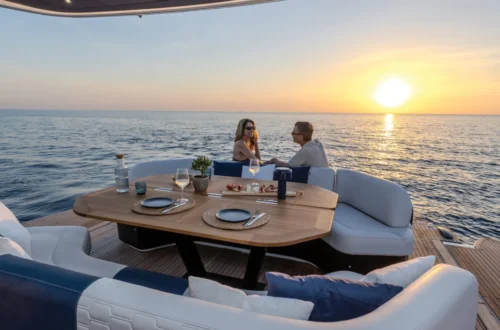
Perhaps the most significant implication of the FD Series is the blurring of the boundary between the vessel and its environment. Through the use of drop-down balconies, expanding beach clubs, and expansive glazing, the yacht is no longer a container from which to view the sea; it is a platform for interacting with it. This is not just a design trend; it is a fundamental shift in the ontology of the yacht.
Conclusion: A Flowing Legacy
Cor D. Rover’s journey from the inland waterways of the Netherlands to the pinnacle of modern yacht design is a testament to the power of a single, well-executed idea: volume as an experience. Through his partnership with Horizon Yachts, he has proved that the constraints of physics and regulation are not obstacles, but rather the very boundaries that define creative freedom.
The FD Series stands as a monument to this philosophy. It is a range of vessels that continues to grow, adapt, and challenge expectations, proving that in the world of yachting, the most meaningful innovation is that which brings us closer to the water. Like the currents of the Dutch canals that shaped his early perspective, the work of Cor D. Rover continues to flow, carving new channels in an industry that is only just beginning to realize the potential of the spaces we inhabit at sea.