
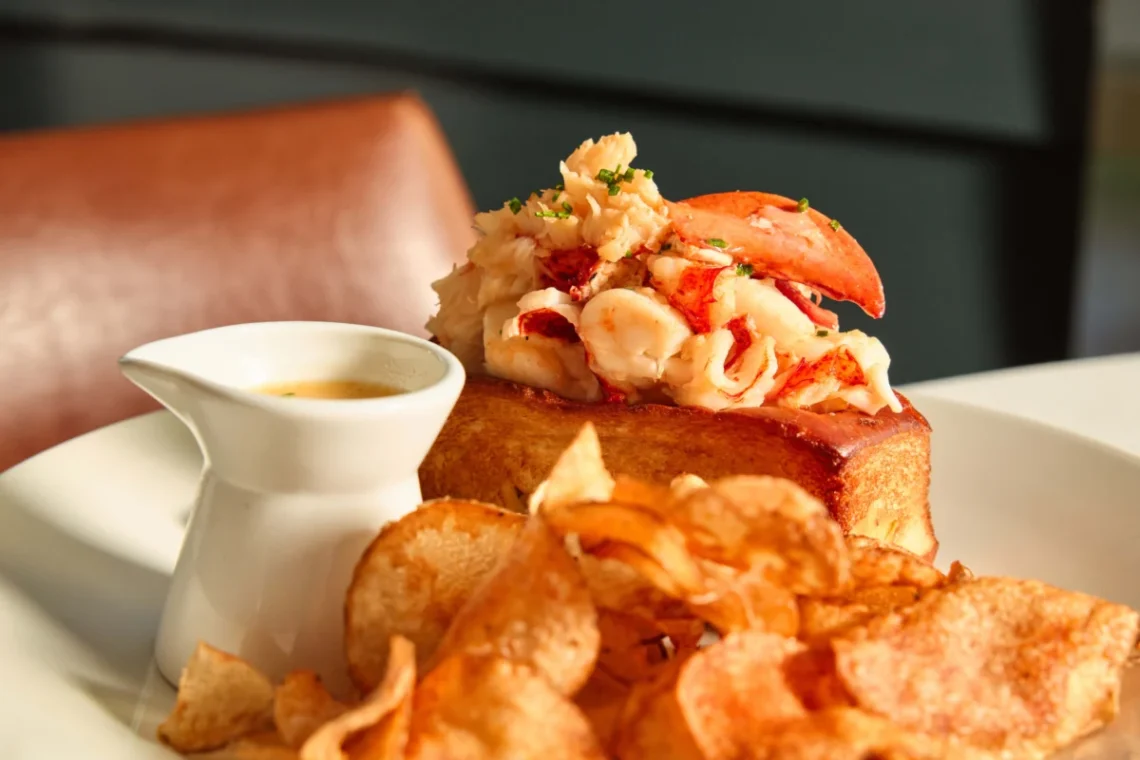
For those born and raised in New England, the lobster roll is less of a luxury item and more of a cultural cornerstone. It occupies the same psychological space that a street taco holds in Mexico City or a brisket plate does in Austin—a culinary shorthand for home. It is a dish so deeply embedded in the regional DNA that its true value is often only realized once one crosses state lines and encounters the item as an inflated "delicacy" on fine-dining menus elsewhere.
In Boston, however, the lobster roll persists in a dual reality. Yes, it has been elevated to the status of a high-end, chef-driven centerpiece at the city’s glitziest waterfront establishments. Yet, it remains an everyday staple at suburban fishmonger counters, neighborhood docks, and seaside shacks. Much like paying a premium for fuel on a California road trip or ordering a stiff martini at Manhattan’s Bemelman’s Bar, the lobster roll is a rite of passage. It is not merely a meal; it is a declaration of presence.
%20(1)c.jpg)
The Anatomy of a Classic: A Culinary Debate
To the uninitiated, a lobster roll is simply lobster on bread. To the purist, it is a battlefield of regional pride and technical precision. The central conflict lies in the preparation: Maine-style, which favors a chilled, mayo-dressed lobster salad, versus the Connecticut-style, which arrives warm, bathed in melted butter.
Beyond the temperature of the protein, the vessel itself is a point of contention. The traditionalist will argue that only a split-top bun—griddled until the sides achieve a deep, caramelized gold—is acceptable. Others champion the use of buttery brioche or even house-made rolls, arguing that the vessel should elevate, not merely contain, the star of the show.

The Boston Landscape: A Chronological Evolution of Flavor
The history of the lobster roll in Boston is a reflection of the city’s own transformation. Once a port defined by working-class fishermen and industrial grit, Boston has evolved into a hub of innovation and luxury. This shift is clearly mirrored in the city’s diverse roster of lobster roll purveyors, which range from century-old family businesses to contemporary, Michelin-adjacent kitchens.
The Standard-Bearers: Traditional Institutions
For those seeking the "platonic ideal" of the dish, James Hook & Co. remains the non-negotiable starting point. Operating on the Boston waterfront for over a century, this family-run enterprise is a testament to consistency. Shipping over 50,000 pounds of lobster daily, they possess a command over supply chain quality that few can match. Their shack, nestled among the glass-and-steel monoliths of the transformed Atlantic Avenue, serves as a grounded, authentic anchor in a rapidly modernizing district.

Similarly, The Sail Loft offers a classic experience that feels preserved in amber. Located near the Freedom Trail and Faneuil Hall, it represents the "old Boston" ethos: stiff drinks, waterfront views, and a perfectly executed, mayo-dressed roll. It eschews the trend-chasing of newer spots in favor of reliable, timeless quality.
The Modernists: Chef-Driven Interpretation
As the culinary scene in Boston has matured, chefs have begun to experiment with the traditional formula. Row 34, under the guidance of Chef Jeremy Sewall, approaches the lobster roll with a deep respect for provenance. By sourcing directly from his cousin, a boat captain in York Harbor, Maine, Sewall ensures a level of freshness that informs the dish’s integrity. Their "Ethel’s Creamy Lobster Roll"—named for his grandmother—is a masterclass in balance, utilizing crème fraîche, lemon, and a rosemary brioche bun that is griddled to order.

The Banks Seafood and Steak offers a similarly sophisticated take. Their use of a "lobster beurre monté"—a classic French technique where the meat is glazed in emulsified butter—elevates the warm roll to a level of richness that remains respectful of the tradition while providing a distinct, velvety mouthfeel.
Supporting Data: The Economic and Cultural Shift
In recent years, the market for lobster has seen significant volatility, leading to the "price explosion" noted by many diners. According to regional hospitality data, the cost of lobster meat has fluctuated based on catch yields and labor costs, pushing the price of a standard roll in downtown Boston frequently above the $35 mark.

Despite this, consumer demand remains inelastic. The lobster roll has become a primary driver of food tourism in the region. Establishments like Saltie Girl in the Back Bay have leaned into this, turning the lobster roll into a lifestyle accessory. Their off-menu fried lobster roll, accented with Korean chili flakes and sweet corn butter, represents the "new" Boston—a city that is increasingly comfortable blending its maritime heritage with global flavor profiles.
Official Perspectives: The "America’s Classics" Standard
The James Beard Foundation, a definitive arbiter of American culinary culture, has recognized the importance of these institutions by awarding the "America’s Classics" designation to spots like Sullivan’s Castle Island.

When we look at Sullivan’s, we see the "official" view of what a lobster roll should be: accessible, deeply ingrained in the local fabric, and devoid of unnecessary culinary theater. It is the roll you eat while sitting on the sea wall at the edge of the South Boston peninsula, overlooking Fort Independence. It is a social ritual as much as a meal, reinforcing the idea that the "best" lobster roll is often defined by the setting and the community surrounding it.
Implications for the Future
The lobster roll industry in Boston currently sits at a crossroads. As the Seaport district continues to develop, the "working waterfront" identity is slowly being replaced by a polished, corporate aesthetic. Yankee Lobster Co., with its 75-year history, stands as one of the few remaining links to the maritime labor of the past.
.jpeg)
For the traveler and the local alike, the implication is clear: the lobster roll is not a static object. It is a living, breathing component of Boston’s culture.
Key Takeaways for the Visitor:
- For the Purist: Head to James Hook & Co. or The Sail Loft for a textbook, high-quality experience.
- For the Culinary Adventurer: Explore the brown-butter variations at Eventide Fenway or the high-concept rolls at The Banks.
- For the Local Experience: Visit Sullivan’s Castle Island. It is not about the "drama" of the food; it is about the ritual of the city.
- The "Splurge" Factor: If you find yourself at The Barking Crab, consider the "One and Done"—a one-pound, $150 indulgence that serves as the ultimate benchmark for excess in the seafood world.
As Boston continues to grow, the lobster roll will undoubtedly continue to evolve. Whether it is served on a bao-style bun at a Fenway hot spot or out of a paper boat on a sunny day in Southie, the essence remains the same. It is a tribute to the cold Atlantic waters and the generations of people who have made their living pulling the treasures of the deep from beneath the surface. To eat one is to participate in a history that is as enduring as the city itself.