The Gateway to the Rock: An Introduction
The ferry Ala’suinu—a Mi’kmaw word meaning "Traveler"—is more than just a maritime vessel; it is a vital umbilical cord connecting the mainland of Canada to its most rugged, eccentric, and storied province. Rising ten decks high, the ferry cuts a massive silhouette against the North Atlantic, a steel leviathan tasked with bridging the 110-mile channel between the Marine Atlantic terminal in North Sydney, Cape Breton, and the windswept, granite-cradled port of Port-aux-Basques on the southwestern tip of Newfoundland.
For the intrepid traveler, this crossing represents the gateway to a land defined by glacial history, deep-rooted folklore, and a fierce, resilient independence. While many North Americans flock to the sun-drenched beaches of Florida, the journey to Newfoundland is a deliberate trek into a landscape that demands patience and rewards it with unparalleled authenticity.
Chronology: A Night on the Saint Lawrence
The transit to Newfoundland is not merely a voyage of distance, but one of transition. To understand the experience, one must follow the rhythm of the journey itself:
- The Waiting Game (Afternoon): Arrival in North Sydney is characterized by a stark, utilitarian atmosphere. The port is a landscape of scruffy bars, battered storefronts, and the quiet, industrial hum of logistics. For the traveler, this is a lesson in the unhurried nature of the North; there is no fast-tracking the tide.
- The Tim Hortons Interlude (17:00 – 21:00): With the ferry scheduled for an 11:15 PM departure, travelers often find themselves in the same ritualistic holding pattern as the locals—sipping coffee at a nearby Tim Hortons. It is a shared experience of "yawning idlers" waiting for the call of the sea.
- The Embarkation (21:00 – 23:00): Efficient, orderly, and precise, the loading process moves vehicles into the bowels of the Ala’suinu. There is no pretense of luxury here; it is a functional process for a functional vessel.
- The Crossing (23:15 – 07:15): The ferry departs into the darkness, a black-clouded sky overhead that turns the voyage into a surreal transit through the void. Passengers occupy reclining seats in a communal saloon. The atmosphere is thick with the scent of humanity—wet wool, tired travelers, and the shared fatigue of those returning home or heading to work.
- Arrival (07:15): As the ferry docks in Port-aux-Basques, the gray light of a Newfoundland morning reveals the town, signaling the start of an adventure into the northern reaches of the island.
Supporting Data: A Landscape Shaped by Extremes
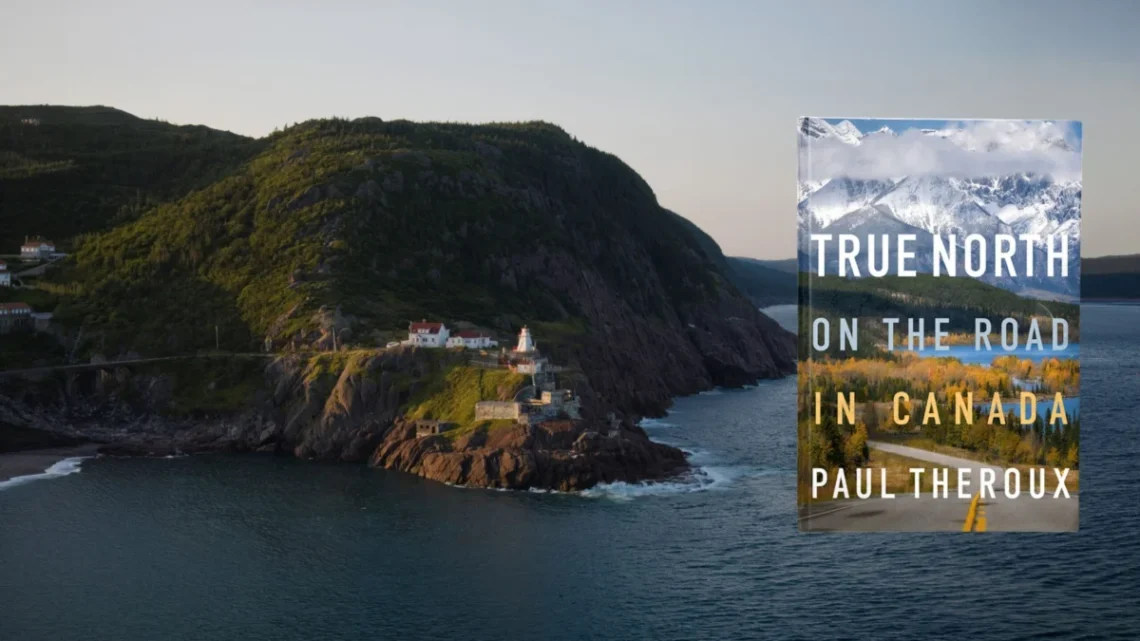
Newfoundland is not just an island; it is a geological and cultural anomaly. On any map, it appears as an asymmetrical, misshapen landmass, cloven by deep bays and inlets. These features are the result of ancient glaciers that scraped across the island’s granite face, leaving behind deep striations, grooves, and gouges.
The Ecological Isolation
The island’s isolation has fostered a unique biological profile that distinguishes it from the rest of the Canadian landmass:
- Fauna: Newfoundland lacks many of the common mainland mammals. Raccoons, skunks, and porcupines are non-existent. There are no native snakes, save for the harmless garter snake, and no deer populations.
- Introduced Species: Red squirrels, affectionately and derisively called "tree rats" by some locals, were not introduced to the island until the 1960s.
- Cultural Distinctness: As a former British colony that only joined Canada in 1949, the province retains a distinct historical consciousness. This manifests in local accents that shift from district to district and a culinary tradition built on the bounty of the land and sea.
Official Responses and Local Resilience
The town of Port-aux-Basques, while beautiful, carries the scars of recent history. In September 2022, the region was decimated by Hurricane Fiona, recorded as the most severe tropical storm ever to strike Canada.
The View from the Hotel Port aux Basques
Cathy Lomond, the owner and general manager of the Hotel Port aux Basques, offers a perspective on the town’s spirit that transcends the wreckage left by the storm. "We lost a hundred and thirty houses to Fiona," she notes, reflecting on the ruinous landscape of the town. Yet, the tone is not one of defeat, but of endurance.
"But we’re used to storms," Lomond says. "That was a bad one, but we got through it. Port aux Basques has community spirit; we know how to rebuild."
Lomond, a figure as spirited as the landscape she inhabits, is an active participant in the local culture. A passionate hunter who navigates the province’s lottery-based big game licensing system, she is an advocate for the local diet. During the interview, she provided a taste of slow-cooked moose—an experience that confirms the observation of Henry David Thoreau in The Maine Woods: the meat is akin to a tender, flavorful beef, sometimes reminiscent of veal.
Implications: Why the "Traveler" Matters
The journey to Newfoundland is, in many ways, an antidote to the modern obsession with seamless, frictionless travel. In an era where travel is often marketed as an escape into comfort, the Newfoundland experience is an immersion into reality.
The Absence of Friction
The author notes that while the ferry transit is "laborious" in the old-fashioned sense, it is refreshingly devoid of the menace, corruption, or uncertainty found in other global travel hubs. There is no need for bribery, no armed conflict, and no risky detours. It is, by all accounts, a "traveler’s dream."
The Cultural Divide
The divide between the mainland and Newfoundland is profound. While residents of Prince Edward Island often claim a "distinct culture," the Newfoundland experience is defined by a history of isolation that the maritime provinces on the mainland never quite faced. This isolation has preserved a way of life that is rapidly vanishing elsewhere.
The Future of the "Rock"
As Canada continues to modernize, the challenge for Newfoundland will be to balance its integration into the national economy with the preservation of its rugged, eccentric identity. The people who ride the Ala’suinu—nurses, fishermen, farmers, and students—are the custodians of this identity.
The traveler who steps off the ramp in Port-aux-Basques is not merely arriving at a destination; they are stepping into a narrative that has been written in granite, shaped by hurricanes, and sustained by a community that measures its success not by the ease of the journey, but by the strength of the arrival.
Conclusion: A Final Reflection
Newfoundland remains a place of ghosts, folktales, and an almost defiant friendliness. To visit is to acknowledge that there are still corners of the world where the landscape dictates the pace of life. Whether it is the taste of wild moose, the sight of striated granite under a dark, wind-whipped sky, or the rhythmic hoot of a ferry signaling its arrival, Newfoundland offers a reminder of what it means to be truly present in a place that has no interest in being anything other than itself.
Excerpted from the book TRUE NORTH by Paul Theroux. Copyright © 2026 by Paul Theroux. From Mariner Books, an imprint of HarperCollins Publishers. Reprinted by permission.