The Goodwood Festival of Speed is widely considered the "Holy Grail" of global motorsport events. It is a sensory overload of internal combustion roars, the high-pitched whine of electric motors, and the scent of race fuel and tire smoke. While it serves as a sprawling celebration of automotive history, the heart of the event remains the iconic 1.16-mile hill climb. Every year, a select group of drivers and machines gather at the base of the Goodwood House driveway, tasked with a singular, primal objective: to conquer the narrow, winding track faster than anyone else.
The 2026 iteration of the Festival of Speed has proven to be a watershed moment in the history of the sport. As the leaderboard solidified, it became clear that we are witnessing a permanent shift in the hierarchy of performance. The top-ten finishers were not merely showroom-spec cars; they were bespoke engineering marvels designed to extract every millisecond of potential from the asphalt.
The Chronology of a Record-Breaking Weekend
The weekend’s proceedings were a masterclass in high-stakes competition. From the early practice sessions to the final Sunday shootout, the atmosphere was thick with tension. As the cars staged in the paddock, the disparity between the classes became immediately apparent.
Rounding out the top ten was the Toyota-Judd Formula Supra, piloted by the drift-master-turned-hill-climber Ryan Tuerck. Tuerck delivered a blistering performance, crossing the finish line in just 49.02 seconds—a testament to both his car control and the sheer power of the Judd V10 heart beating within the chassis.
Moving up the ranks, the competition intensified. The legendary Dodge Viper GTS-R demonstrated that raw, naturally aspirated American muscle still has a place at the sharp end of the grid, edging out the Nissan 300ZX Turbo in a display of nostalgic dominance. Mid-pack, rally icon Travis Pastrana showcased his signature style in the Subaru Brataroo 9500 Turbo. The car, a purpose-built monster that represents the bleeding edge of Subaru’s performance engineering, danced through the corners with a level of agility that belied its complex powertrain.
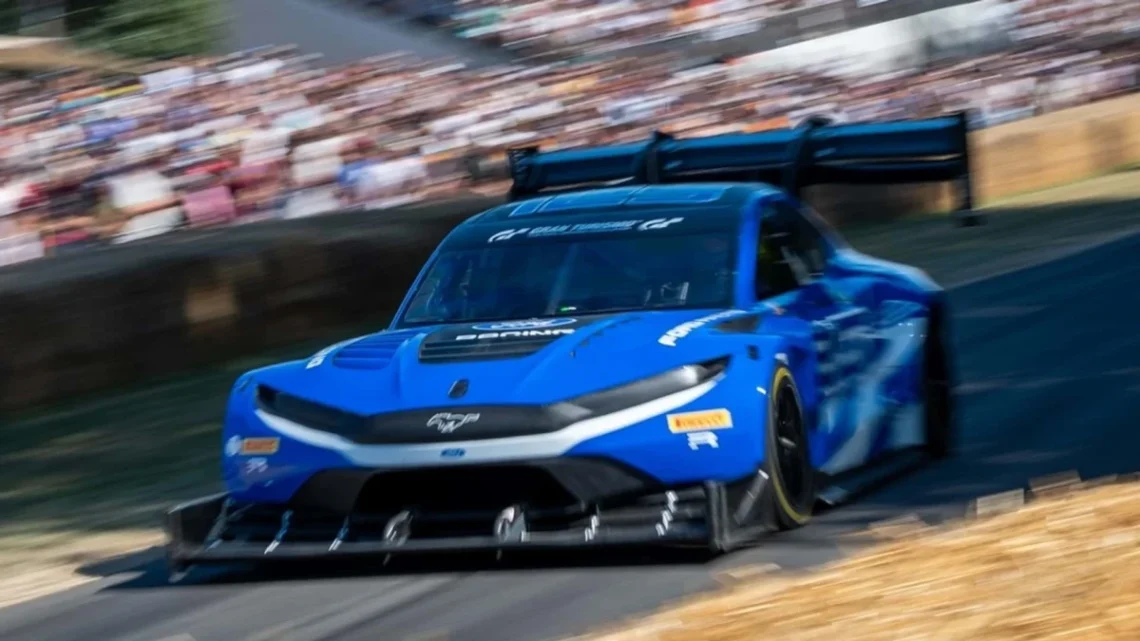
However, the real story of the weekend was the coronation of the electric era. The top two spots on the podium were occupied entirely by battery-electric vehicles (BEVs), signaling a paradigm shift that many enthusiasts have been bracing for. The Ford Super Mustang Mach-E, a highly modified beast that bears only a passing resemblance to its production counterpart, claimed the top spot. It was a masterclass in torque vectoring and aerodynamic efficiency, finishing roughly half a second faster than the fourth-generation Formula E car that secured second place.
Supporting Data: The Power of Electrons
To understand the magnitude of the 2026 results, one must look at the data. The Ford Super Mustang Mach-E was not just the fastest car on the hill; it was a clear demonstration of the gap between internal combustion and electric powertrains. The Mustang managed to beat the fastest combustion-powered entry by an staggering 4.33 seconds.
For context, the Ford SuperVan 4.2—which was the benchmark for electric performance just a few years ago—has been soundly relegated to the history books. While the SuperVan was a revolutionary piece of kit, the advancements in battery density and motor management seen in the 2026 crop of vehicles have rendered those previous records almost pedestrian.
Yet, even with this rapid advancement, the overall event record remains elusive. The McMurty Spéirling, a vehicle so aerodynamically sophisticated that it generates downforce equivalent to several times its own weight at a standstill, holds the crown with a staggering 39.08-second run. The Spéirling remains the benchmark, a "fan-car" style marvel that demonstrates exactly what is possible when engineers are given the freedom to prioritize grip above all else.
The Top 10 Fast Track Summary
- Ford Super Mustang Mach-E: The 2026 Champion.
- Formula E Gen-4: Proving the capability of open-wheel electric racing.
- Subaru Brataroo 9500 Turbo: Pushing the limits of modern rally-bred tech.
- Nissan 300ZX Turbo: A classic icon holding its own against the future.
- Dodge Viper GTS-R: A reminder of the visceral power of the V10.
- Toyota-Judd Formula Supra: The ultimate drift-platform evolution.
- (Remaining top 10 positions filled by a mix of specialized hill-climb prototypes and vintage grand prix machinery).
Official Responses and Industry Perspectives
The mood at Goodwood this year was reflective. Representatives from the major manufacturers were keen to emphasize that while electric power is winning the numbers game, the spirit of Goodwood remains rooted in passion rather than just speed.
"We aren’t here just to set a time," noted a lead engineer from the Ford performance division. "We are here to show the world that the electric future isn’t just ‘the right thing to do’ for the environment; it is the most exciting path forward for performance enthusiasts. The torque delivery, the instant response, the ability to tune every wheel independently—it creates a driving experience that is fundamentally different and, in many ways, more capable than what we’ve seen in the past."
Conversely, the vintage community maintained a strong presence. Even as the electric cars shattered records, the cheers for the classic cars—the Jaguar Type 01s and the Audi Nuvolari concepts—were arguably louder. The organizers of the festival have made a conscious effort to balance these worlds, ensuring that the event remains a bridge between the analog past and the digital future.
Implications for the Future of Motorsport
The 2026 Festival of Speed has provided a clear roadmap for the next decade of performance. Several key implications emerge from the weekend’s data:
- The Death of the "Slow Electric" Myth: For years, the automotive industry battled the perception that EVs were heavy, soulless, and uninspiring. The 2026 results at Goodwood have officially buried that narrative. The sheer speed of the Super Mustang Mach-E proves that an EV can be as aggressive, agile, and record-breaking as any purpose-built race car.
- The Rise of Software-Defined Performance: The winning cars were as much about code as they were about carbon fiber. Real-time adjustments to torque vectoring, traction control, and active aerodynamics are now the deciding factors in a hill climb. The driver is still crucial, but the "invisible" engineer behind the software is now a co-pilot.
- The Preservation of Legacy: As electric vehicles continue to dominate the top of the leaderboard, we will likely see the Goodwood Festival of Speed evolve into a bifurcated event. We will have the "Unlimited/Electric" class, where records are pushed into the sub-30-second range, and the "Classic/Internal Combustion" class, which will become a curated museum of mechanical engineering. Both are vital to the ecosystem of the sport.
- The Need for New Safety Standards: With cars now completing the hill climb in under 40 seconds, the physical limitations of the Goodwood track are being tested. The narrow track, the stone walls, and the hay bales—while iconic—pose significant safety risks as speeds continue to climb. We may see the introduction of more advanced telemetry requirements or even slight modifications to the track’s layout to accommodate the next generation of hyper-fast electric prototypes.
Conclusion: A New Chapter
The Goodwood Festival of Speed has always been about pushing the boundaries of what is possible. By welcoming the latest in electric propulsion while maintaining a deep reverence for the titans of the past, the event continues to be the ultimate litmus test for automotive technology.
As the dust settles on the 2026 event, the message is clear: the future is electric, but it is also fast, loud in its own unique way, and remarkably exciting. The Ford Super Mustang Mach-E has set a new high bar, but history at Goodwood tells us one thing with absolute certainty: someone, somewhere, is already planning a machine that will make the 2026 record look slow. And that is exactly why we continue to watch.
The hill climb isn’t just a race; it is a promise that as long as there is an incline to climb, humanity will find a way to do it faster, smarter, and with more passion than before. Whether you prefer the roar of a Judd V10 or the silent, devastating surge of an electric motor, the Festival of Speed remains the only place on earth where all these stories converge into a single, glorious moment of speed.