By Arvind Subramanian
July 13, 2026
For decades, the global economic narrative has been tethered to the pulse of Washington, D.C., and the boardrooms of Wall Street. Analysts, policymakers, and historians alike have traditionally viewed the United States as the gravitational center of the global economy—the primary architect of trade norms, the arbiter of financial stability, and the ultimate engine of consumption. However, this U.S.-centric lens has created a profound blind spot.
Looking back from the vantage point of 2026, it is becoming increasingly clear that the single most consequential economic force of the last half-century has not been the policies of the Federal Reserve or the tech revolutions of Silicon Valley. Instead, it has been the relentless, calculated, and transformative rise of Chinese mercantilism. While the sheer scale of China’s internal poverty alleviation is a feat unmatched in human history, its external impact—the reshaping of global industrial geography, trade balances, and international economic norms—has been vastly underappreciated by contemporary observers.
The Evolution of the Chinese Model: A Chronology
To understand the magnitude of this shift, one must trace the arc of China’s economic trajectory, which transformed from an isolated agrarian state into the world’s primary industrial forge.
1978–1992: The Opening and the Foundation
Deng Xiaoping’s "Reform and Opening-up" policy marked the genesis. By creating Special Economic Zones (SEZs) and inviting foreign capital, China began its integration into the global order. During this period, the world welcomed China as a developing partner, assuming that market liberalization would inevitably follow industrial integration.
1993–2001: The Export Machine
This era saw the systematic dismantling of state-owned enterprise inefficiencies and the aggressive pursuit of export-led growth. China’s currency management and internal subsidies began to form the bedrock of what would eventually be identified as modern mercantilism.
2001–2010: The WTO Catalyst
China’s accession to the World Trade Organization (WTO) in 2001 served as the ultimate accelerator. The global community largely viewed this as a "win-win," expecting China to adhere to the rules-based order. Instead, China leveraged its massive, low-cost labor force and state-backed industrial policies to vacuum up global manufacturing capacity, leading to the "China Shock" that decimated industrial bases in the U.S. and Europe.
2011–2020: The Pivot to Hegemony
As China ascended to become the world’s second-largest economy, its strategy shifted from simple manufacturing to the acquisition of critical technologies. The "Made in China 2025" initiative signaled that the state was no longer just competing on cost; it was aiming to dominate the industries of the future—semiconductors, artificial intelligence, and renewable energy.
2021–Present: The Mercantilist Maturity
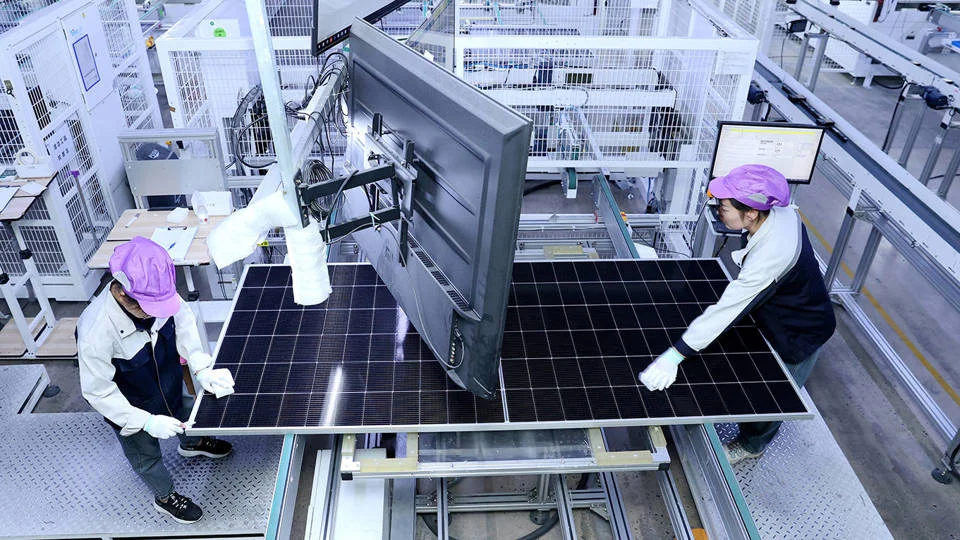
In the current era, China’s mercantilism has become overt. Faced with domestic property crises and aging demographics, Beijing has pivoted to "new productive forces"—overproducing goods like electric vehicles (EVs) and solar panels, which are then pushed into global markets at prices that defy traditional market competition.
Supporting Data: The Scale of Disruption
The empirical evidence supporting the claim of Chinese mercantilist dominance is overwhelming. The metrics of change are not merely statistical—they are structural.
- Manufacturing Share: China’s share of global manufacturing output surged from less than 5% in 1990 to over 30% in 2025. No other nation in history has commanded such a massive proportion of global industrial production since the height of the British Empire.
- The Trade Surplus Divergence: While most major economies seek balanced trade, China’s trade surplus has widened to historic levels. By 2025, China’s surplus in manufactured goods reached nearly $1 trillion annually, a figure that effectively acts as a global "demand drain."
- Subsidy Intensity: Research indicates that Chinese state subsidies for domestic champions are at least three to four times higher than the average support provided by OECD countries. These subsidies allow Chinese firms to maintain market share even when profitability is secondary to national strategic goals.
Official Responses and the Geopolitical Rebound
For years, the international community remained largely passive, paralyzed by the benefits of cheap consumer goods. However, the tide has turned.
The Washington Consensus vs. The Beijing Consensus
In Washington, the response has been a radical departure from the neoliberalism of the late 20th century. The Inflation Reduction Act (IRA) and the CHIPS and Science Act represent the U.S. government’s acknowledgment that the market alone cannot counter a state-directed mercantilist juggernaut. These policies represent a shift toward "industrial policy," an admission that the era of unfettered free trade has been suspended.
The Brussels Reaction
The European Union, once the most vocal defender of free trade, has also shifted. The recent imposition of countervailing duties on Chinese EVs is a watershed moment. Brussels has signaled that the European "single market" will no longer be an open playground for state-subsidized foreign competition.
Beijing’s Defense
Chinese officials consistently frame their actions as a response to Western "protectionism." In recent summits, representatives from the Ministry of Commerce have argued that China’s export success is a product of superior innovation and supply chain efficiency rather than government support. They contend that the Western crackdown is a desperate attempt to stifle the legitimate development of a rising power.
Implications: The Global Economic Future
The ramifications of this mercantilist era are deep and likely permanent. We are entering a period defined by three specific challenges:
1. The Death of Comparative Advantage
Traditional economic theory relies on the concept of comparative advantage—nations should produce what they are best at. Mercantilism negates this by forcing production through state intervention, regardless of natural efficiency. This leads to global overcapacity, deflationary pressures on industrial prices, and the erosion of productive capacity in non-subsidized nations.
2. The Fragmentation of Supply Chains
The drive for "de-risking" or "decoupling" is not merely a political whim; it is a defensive reaction to the reality of Chinese economic power. We are witnessing the balkanization of the global economy into distinct blocs—one anchored by China’s supply chain, and another seeking to recreate redundant, high-cost, but "secure" capacity elsewhere.
3. The Challenge to Global Institutions
The WTO, the crown jewel of the post-Cold War order, is effectively moribund. Its dispute settlement mechanisms were not designed to handle a hybrid economy that is simultaneously capitalist in its export behavior but socialist in its industrial structure. The future of global trade will likely be defined by regional agreements and bilateral power dynamics rather than universal multilateralism.
Conclusion: A Historical Perspective
Future historians will likely classify the last 50 years not by the digital revolution or the geopolitical shifts of the post-9/11 era, but by the rise of the Chinese developmental model. It was a period where the traditional rules of the game were rewritten by a singular, persistent actor.
The U.S.-centric view of economics was not entirely wrong, but it was incomplete. It failed to account for the reality that a massive, state-directed economy could grow to a scale where its internal policies dictated global prices, employment, and investment trends. As we look ahead to the next decade, the challenge for the world is not just to "compete" with China, but to reconcile the existence of a massive mercantilist power with the desire for a stable, rules-based, and prosperous global system.
The era of ignoring the "Chinese shock" is over. We are now living in the aftermath of a total economic transformation—one that has fundamentally altered the geography of wealth and the future of global prosperity. The silence from the analysts of the past is being replaced by the hard, cold reality of a new world order, where the state is once again the primary protagonist in the story of global commerce.