By Carl Bildt
July 17, 2026
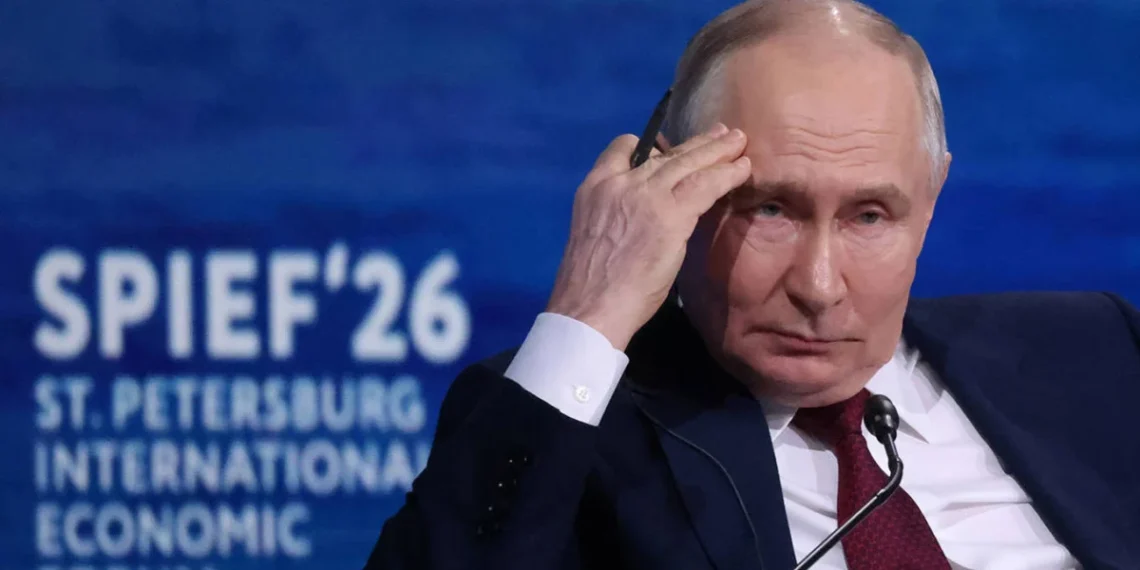
In the corridors of the Kremlin, the atmosphere is one of stifled anxiety masked by performative defiance. For Vladimir Putin, the war in Ukraine has transitioned from a projected three-day "special military operation" into a grinding, multi-year quagmire that has fundamentally altered the geopolitical landscape of the 21st century. As the conflict drags into the summer of 2026, the Russian President faces a binary choice: a pragmatic, albeit humiliating, pivot toward a negotiated ceasefire, or a desperate gamble on further escalation. All indicators suggest he is opting for the latter, a decision that threatens to trigger a cascade of instability with devastating consequences—most of all for the Russian state itself.
Main Facts: A War of Attrition at a Breaking Point
The current military reality in Eastern Ukraine is defined by a brutal, static war of attrition. Despite massive mobilization efforts and the conversion of the Russian economy into a total war footing, the frontline remains largely stagnant, marked by high casualty rates and minimal territorial gains.
However, the nature of the war has shifted. The theater of operations is no longer confined to the Donbas or the southern plains of Zaporizhzhia. Ukrainian forces, emboldened by evolving Western-supplied precision strike capabilities, have successfully extended the reach of the war deep into the Russian interior. From oil refineries in the Volga region to logistical hubs near the border, the sanctity of Russian territory—a central pillar of Putin’s domestic narrative—has been shattered.
The Kremlin is currently caught in a strategic paradox. To sustain the war effort, Putin must maintain the image of strength and inevitability. Yet, the economic strain of sanctions, the depletion of Soviet-era stockpiles, and the creeping fatigue of the Russian public have created a reality that contradicts the state media’s triumphant broadcasts.
Chronology: The Path to the Present Stalemate
The trajectory of this conflict can be understood through several critical inflection points that have led to the current impasse:
- February 2022: The initial invasion, characterized by a failed attempt to capture Kyiv and the subsequent pivot to the Donbas.
- Autumn 2022: The Ukrainian counter-offensives in Kharkiv and Kherson, which exposed the structural weaknesses of the Russian military.
- 2023–2024: The "Surovikin Line" and the era of trench warfare. The war became defined by minefields, artillery barrages, and the catastrophic loss of human life for marginal territorial shifts.
- Late 2025: The shift in Ukrainian doctrine toward "asymmetric response." Kyiv began utilizing long-range drones and tactical missiles to dismantle Russia’s energy infrastructure and military airfields inside Russian borders.
- Mid-2026: The current state of "active stalemate." Both sides possess the ability to prevent a decisive breakthrough by the other, but neither side currently possesses the political or military bandwidth to unilaterally dictate a conclusion.
Supporting Data: The Anatomy of a Declining War Effort
Data from independent observers and international intelligence agencies suggest that Russia’s capacity to sustain high-intensity operations is under severe pressure.
- Economic Degradation: Russia’s pivot to a war economy has generated temporary growth, but it is an "empty" growth. Inflation is skyrocketing, and the labor market is suffering from a "double-squeeze": a massive drain of young men into the military and a massive brain drain of the professional class fleeing the country.
- Technological Obsolescence: While Russia has successfully ramped up drone production, it relies heavily on substandard components from sanctioned supply chains. The quality of equipment deployed to the front has plummeted, forcing the reliance on aging, refurbished Soviet hardware.
- Casualty Metrics: Conservative estimates place Russian casualties—killed and wounded—in the hundreds of thousands. While the Kremlin has successfully concealed the full extent of these losses from the urban centers, the societal impact in Russia’s peripheral regions is creating a localized, simmering discontent.
- Energy Infrastructure: The sustained Ukrainian strikes on Russian refineries have reduced domestic fuel production capacity by approximately 15–20%. This has forced Moscow to import fuel from allies, an ironic reversal of its status as a global energy superpower.
Official Responses and Diplomatic Posturing
The diplomatic front remains equally polarized.
- The Kremlin’s Stance: Vladimir Putin continues to frame the conflict as an "existential struggle against the collective West." In his recent speeches, he has signaled that Russia is prepared for a "long war," explicitly rejecting any ceasefire that does not recognize the current "realities on the ground"—a euphemism for the permanent annexation of occupied Ukrainian territories.
- The Ukrainian Position: Kyiv, led by President Volodymyr Zelenskyy, has maintained a firm stance: no negotiations until Russian forces vacate all internationally recognized Ukrainian territory, including Crimea. This position is supported by the majority of Western allies, who view the conflict as a test case for the rules-based international order.
- The Western Coalition: The United States, the European Union, and NATO members remain committed to supplying military aid. However, internal political cycles in these countries—particularly as we look toward upcoming elections—have introduced a variable of uncertainty regarding the longevity of this support.
Implications: The Risks of Escalation
If Putin chooses to escalate—whether through the mobilization of additional hundreds of thousands of troops, the further weaponization of global food supplies, or the increasing use of hybrid warfare against European infrastructure—the consequences will be profound.
1. The Domestic Risk to the Kremlin
Historically, Russian autocrats who lose wars or bring them to an unsustainable impasse find their authority challenged. By doubling down, Putin is gambling that he can outlast the resolve of the West. If he is wrong, the domestic backlash will not come from the streets, but from the elite. The "siloviki"—the security services and military leadership—are acutely aware of the degradation of Russian power. A continued slide into failure could trigger an internal realignment that leaves Putin isolated.
2. The European Security Architecture
An escalation will likely force NATO to rethink its "defensive posture." We are already seeing an increase in military spending across the continent. If Russia expands its kinetic or cyber operations to target European logistical hubs or satellite networks, the conflict will inevitably transition into a broader, though likely indirect, war between Russia and the West.
3. The Global Economic Ripple Effect
The global south remains the primary victim of the Russian war machine. Further escalation will inevitably lead to more volatility in grain and energy markets. Developing nations, already reeling from the post-pandemic debt crisis, will face acute food insecurity, potentially triggering regional instability that further complicates the global geopolitical map.
Conclusion: The Rationality of Retreat
The irony of the current situation is that a ceasefire would not necessarily be a disaster for Vladimir Putin. He has successfully crafted a narrative of "defiance" that could allow him to declare a victory of sorts, framing a freeze in hostilities as a tactical pause to consolidate the "new reality."
However, dictators rarely operate with the luxury of clear-headed assessment. The bunker mentality—fed by sycophants and the fear of losing face—often blinds the leader to the reality of the precipice. Putin is currently standing at the edge of that precipice. If he chooses to move forward, he is not just risking the sovereignty of Ukraine or the stability of Europe; he is risking the very foundations of the Russian state he has spent twenty-five years consolidating.
History is rarely kind to leaders who mistake escalation for strength. As we look toward the remainder of 2026, the question is no longer whether Russia can "win," but whether it can avoid an internal collapse brought on by the hubris of its leadership. For the sake of global stability, one can only hope that, even at this late hour, the Russian leadership finds the clarity to recognize that the only path to survival is the one that leads back to the negotiating table.