After nearly a month of high-stakes drama, heart-stopping extra-time thrillers, and a series of upsets that have redefined the modern football landscape, the 2026 FIFA World Cup has reached its zenith. On Sunday, July 19, the eyes of the world will turn to the New York metropolitan area as Spain and Argentina prepare to clash in the final match of the tournament. While the epicenter of this historic event sits just across the Hudson River at MetLife Stadium in New Jersey, New York City has firmly established itself as the unofficial "second home" for the global football community.
For those without a golden ticket to the stadium, the logistical challenges of match day—compounded by sky-high resale prices and the inevitable congestion around transit hubs—mean that the true spirit of the final will manifest within the five boroughs. In New York, watching the match from a local bar or public square isn’t a consolation prize; it is a cultural experience.
The Main Facts: A Tale of Two Finalists
The 2026 final marks a clash of titans. Spain, the masters of tactical precision, face off against the reigning titans of South American football, Argentina. This pairing represents the pinnacle of the sport, bringing together two fan bases whose passion is unparalleled.
The match kicks off on Sunday, July 19, in the afternoon. For the millions of residents and tourists currently flooding New York City, the timing is perfect. With the match falling on a weekend, the city is bracing for what is expected to be its most significant public gathering since the start of the tournament. City officials and local businesses are preparing for an atmosphere that promises to be as electric as the stadium itself, with crowds expected to spill out onto the sidewalks from Brooklyn to the Bronx.

A Chronology of the 2026 Tournament
The path to this final has been long and arduous.
- Late June: The tournament kicked off with a record-breaking group stage, featuring high-scoring matches and surprise victories for underdog nations that captured the global imagination.
- Early July: The knockout rounds intensified, with several matches extending into penalty shootouts, testing the nerves of players and fans alike.
- Mid-July: The quarter-finals and semi-finals saw the emergence of the current finalists. Spain showcased their disciplined possession-based style, while Argentina relied on individual brilliance and a formidable defensive unit to reach the final hurdle.
- July 19: The grand finale. The city has spent the preceding weeks transforming into a football-centric hub, with "Fan Fests" and pop-up screenings appearing in every major plaza.
Supporting Data: Why New York is the Perfect Host
New York City’s unique urban layout provides an unparalleled advantage for a tournament of this magnitude. Unlike cities where spectators are limited to a single fan zone, New York offers a decentralized experience.
Data from local hospitality associations suggests that hundreds of thousands of international visitors have descended upon the city, specifically seeking out the authentic "football culture" that the five boroughs provide. The city’s diverse demographic makeup means that virtually every neighborhood acts as a home-away-from-home for international fans.
Whether it is the Argentine-steakhouses of Queens or the Spanish tapas bars of Manhattan, the city’s culinary scene has doubled as a cultural hub for the tournament. With over 500 bars and restaurants reporting record-breaking foot traffic during the knockout stages, the economic impact of the final is projected to reach levels unseen in previous non-Olympic sporting events.

Official Responses and Public Safety
City officials, including the Mayor’s Office and the NYPD, have been coordinating with FIFA to ensure that the influx of fans is managed safely. While the primary security focus remains on the MetLife perimeter, New York City has designated "Fan Zones" to alleviate pressure on local infrastructure.
"We want everyone to enjoy the beautiful game," a spokesperson for the city’s event management team stated. "We encourage fans to utilize public transportation and to arrive early at designated viewing locations, as we anticipate many venues will reach capacity long before kickoff."
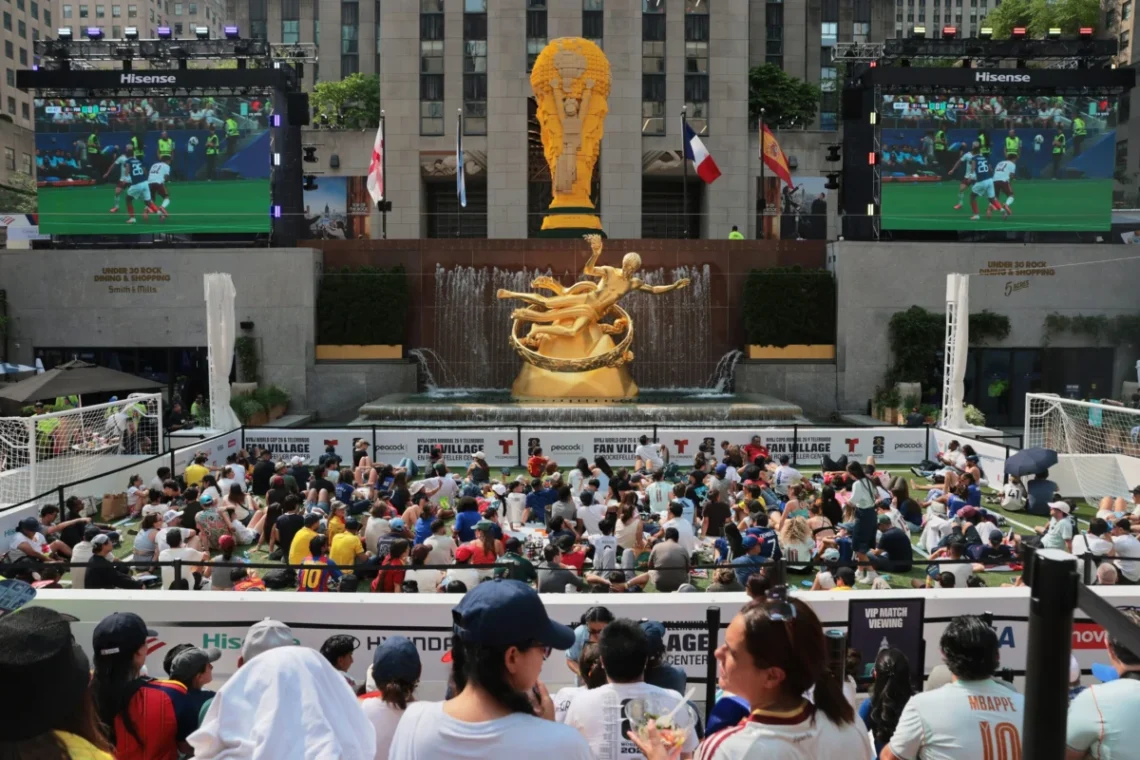
The two official FIFA-sanctioned events—the Fan Village at Rockefeller Center and the Adidas Home of Soccer in Brooklyn Bridge Park—are the centerpieces of this strategy. These venues have been equipped with massive high-definition screens and advanced sound systems to ensure that those who cannot make it to New Jersey still feel the pulse of the match.
The Cultural Implication: The "Bar-as-Stadium" Phenomenon
Perhaps the most significant implication of the 2026 final is the solidification of New York City as a top-tier international soccer destination. For decades, the city has been a hub for various global cultures, but this tournament has proven that New York can host and sustain a global sporting event of this scale through its local establishments.

The "bar-as-stadium" phenomenon—where strangers become lifelong friends during the 90 minutes of regulation time—has become a defining feature of the NYC fan experience. When the ball hits the net on Sunday, the resulting roar will not just be heard in a single stadium, but will echo across the streets of the East Village, Astoria, and DUMBO.
The Best Spots for Argentina Fans
For those bleeding blue and white, the following locations remain the gold standard:
- Boca Juniors (Elmhurst, Queens): A hallowed ground for Argentine football culture in NYC. It is an authentic experience defined by jerseys, flags, and the fervent chants of die-hard supporters.
- Buenos Aires (East Village, Manhattan): An institution that treats every match with the gravity of a religion. Expect a loud, knowledgeable crowd and classic Argentine cuisine.
- Palermo Argentinian Bistro (Gramercy, Manhattan): A more refined setting, perfect for groups who want a mix of high-quality Malbec and a high-energy atmosphere.
The Best Spots for Spain Fans
For those backing La Roja, these venues offer a taste of Iberian passion:
- Mercado Little Spain (Hudson Yards, Manhattan): A massive, airy space that allows for a communal viewing experience. It feels like an open-air market, providing a distinct contrast to the traditional sports bar vibe.
- El Born (Greenpoint, Brooklyn): A neighborhood favorite that transforms into a Spanish stronghold on match days.
- Smithfield Hall (Chelsea, Manhattan): The spiritual home of the city’s Penya FC Barcelona supporters. The atmosphere here is professional, passionate, and deeply rooted in club history.
The Neutral’s Guide: Where to Go Regardless of Allegiance
If you simply want to enjoy the spectacle, the following locations are equipped to handle the crowds:

- Brooklyn Backyard Bar (Greenpoint): Offers a festival-like atmosphere. With its large outdoor space and multiple projectors, it is arguably the best venue for fair-weather spectators.
- Berry Park (Williamsburg): A rooftop destination that offers a panoramic view of the city skyline alongside the action on the screens.
- Bohemian Hall & Beer Garden (Astoria): A historic venue with a capacity of over 1,300. It is one of the few places in the city that can accommodate a massive crowd while maintaining a comfortable, open-air environment.
- The Intrepid Museum (Pier 86): A unique, iconic setting that offers a cinematic backdrop to the match, perfect for those wanting to combine a tourist experience with the excitement of the final.
Final Thoughts: The Unseen Magic
As the clock ticks down to July 19, the advice for every fan remains consistent: Be early, be patient, and be prepared to move.
The 2026 World Cup has been a journey of discovery for many in New York. We have learned that soccer is not just a game; it is the heartbeat of the city’s diverse neighborhoods. Whether you find yourself in a crowded bar in Queens or standing on the deck of a museum pier in Manhattan, the experience of watching the final in New York City is one that will be remembered for decades. Forget the traffic at the Lincoln Tunnel and the scramble for seats at MetLife. The best seat in the house is wherever the room erupts when the ball finally hits the back of the net.