
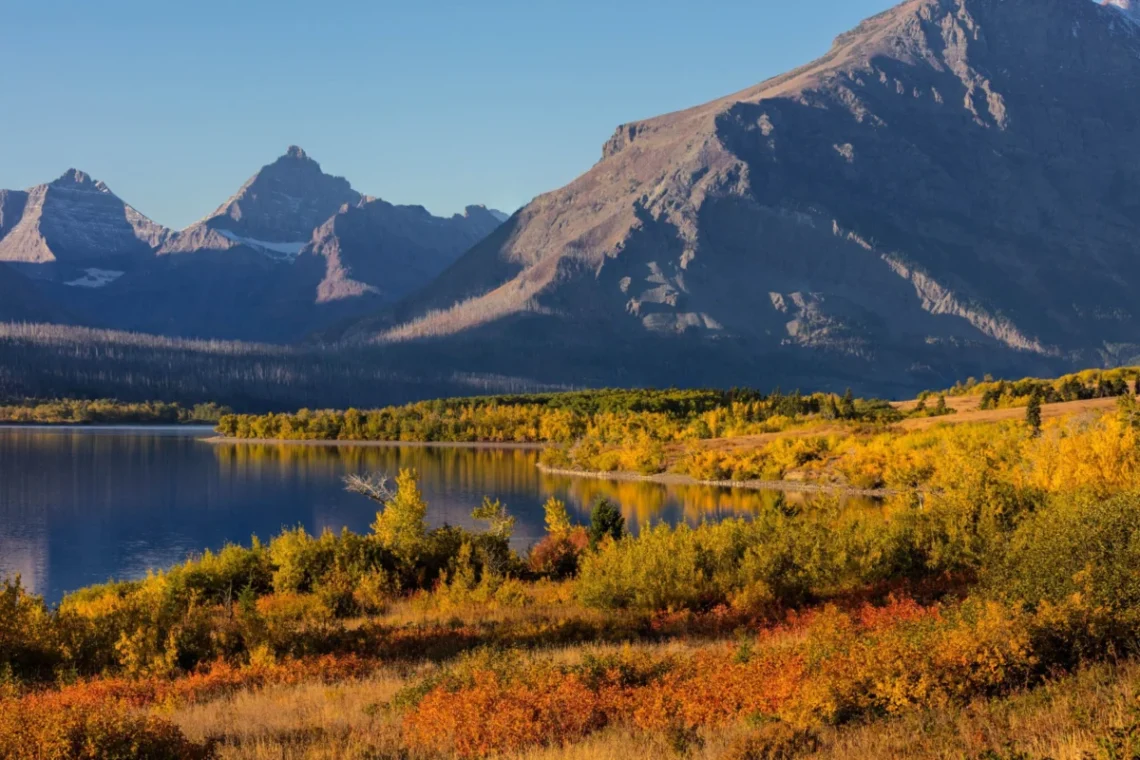
Having traversed the vast, rugged landscapes of the American National Park system for years, I have arrived at a singular, inescapable conclusion: some vistas are not merely enhanced by the change of seasons—they are entirely redefined by them. While the peak summer months offer accessibility, it is the arrival of autumn that strips away the heat, the humidity, and the overwhelming throngs of tourists, leaving behind a landscape that feels both ancient and freshly awakened.
As September bleeds into October, the topography of the United States undergoes a dramatic metamorphosis. Sweeping valleys transition into liquid gold, forests ignite in a riot of crimson and burnt orange, and high-country trails welcome a crisp, exhilarating drop in mercury that invites the intrepid hiker to push just a few miles further. The light itself changes; the sun hangs lower in the sky, casting long, dramatic shadows across granite faces and turning sunsets into ethereal displays of violet and amber. For the seasoned traveler, this is the definitive window for immersive exploration.

The Seasonal Shift: A New Perspective on Familiar Terrain
The transition from summer to fall is not merely an aesthetic shift; it is a fundamental change in the rhythm of the wilderness. Wildlife activity, often dormant or hidden during the sweltering afternoons of July, shifts as animals prepare for the coming winter. Elks begin their rutting season, bears forage with increased intensity, and migratory birds traverse the flyways in vast, rhythmic pulses.
For the visitor, this means the experience is fundamentally altered. The "shoulder season" offers a rare commodity in the modern travel landscape: silence. The frantic energy of the summer vacation cycle gives way to a contemplative, hushed environment where the crackle of a campfire or the rustle of turning leaves becomes the dominant soundtrack.

A Chronology of the Autumnal Ascent
To understand why September and October represent the "golden hour" of park travel, one must look at the progression of the season across the continent.
Early September: The Alpine Awakening
As the summer monsoon season recedes in the high Rockies, the first signs of autumn appear in the sub-alpine zones. This is the period when the high-elevation meadows begin to brown, and the first frost hits the summits. It is the ideal time for those looking to conquer high-altitude peaks without the threat of afternoon thunderstorms that plague mid-summer trekkers.

Late September to Early October: The Great Deciduous Flare
This is the crescendo of the autumn cycle. Across the Northeast—specifically within the coastal forests of Acadia—and the Midwestern corridors, the deciduous trees reach peak saturation. It is a fleeting, high-intensity window. During these few weeks, the juxtaposition of deep green pines against the fiery maples and birches creates a visual depth that photographers and naturalists prize above all other times of the year.
Late October: The Quiet Descent
As the month draws to a close, the focus shifts to the lower elevations and the southern parks. While the northern reaches may see the first dusting of snow, the deserts of the Southwest and the lower valleys of the Sierra Nevada experience a "second spring." The temperatures settle into a perfect range for endurance activities—cycling, rock climbing, and long-distance backpacking—which would be dangerous or impossible during the triple-digit heat of the summer.

Supporting Data: The Logistics of "Shoulder Season" Travel
Despite the popular misconception that autumn equates to "off-season" ease, the reality is far more complex. Data from the National Park Service (NPS) suggests that visitation numbers have seen a significant "seasonal spread" over the last decade. As more travelers look to avoid the summer heat and overcrowding, the shoulder season has become increasingly competitive.
- Lodging Occupancy: Historic data indicates that while July remains the peak, October occupancy rates in flagship parks like Zion, Yosemite, and Acadia have risen by nearly 18% since 2019.
- Permit Demand: The implementation of timed-entry reservation systems in parks like Arches and Glacier has effectively moved the "bottleneck" from the summer months into the fall. Visitors who assume they can walk into a park in October without a plan are frequently turned away at the gate.
- Weather Variability: Autumn is the season of extremes. In mountainous regions, visitors must prepare for the "four seasons in one day" phenomenon. High-altitude trails that are clear at 9:00 AM can become treacherous with sudden snow squalls by 2:00 PM.
Official Guidance and Best Practices
The National Park Service and various conservation groups emphasize that autumn requires a higher level of preparedness than summer travel. In a recent press briefing, NPS representatives noted that search and rescue (SAR) incidents often spike in October, not due to the difficulty of the terrain, but due to the lack of appropriate gear for rapidly dropping temperatures.

Essential Checklist for the Autumn Traveler:
- The Layering Protocol: The temperature delta between a sunny afternoon and a post-sunset evening can be as much as 40 degrees Fahrenheit. Packing synthetic base layers, insulating mid-layers, and a reliable shell is non-negotiable.
- Reservation Verification: Before departing, visit nps.gov to verify if the specific park requires a vehicle reservation. These are often released in monthly blocks and disappear within minutes of becoming available.
- Wildlife Awareness: Autumn is a period of heightened animal aggression due to mating cycles and pre-hibernation feeding. Maintaining a respectful distance is not just a suggestion; it is a safety mandate.
Implications for the Future of Conservation
The rising popularity of fall travel poses both benefits and challenges for the National Park Service. On one hand, the dispersion of visitors across a wider calendar window reduces the crushing ecological pressure on trails and facilities during the July peak. It allows for a more sustainable tourism model that can support local gateway economies for longer periods throughout the year.
However, the "year-round" demand creates a significant maintenance challenge. Park staff—many of whom are seasonal employees—are often rotated out by late October, leaving skeleton crews to manage the same volume of visitors with fewer resources. This highlights the importance of the "Leave No Trace" principle. As we move into the quiet beauty of the autumn months, the responsibility of the visitor to act as a steward of the land becomes even more acute.

Conclusion: The Call of the Wild
Whether you are leaf-peeping beneath the jagged, snow-dusted peaks of the Tetons, navigating the coastal granite of Acadia, or watching the aspen groves turn to liquid gold across the spine of the Rockies, the autumn national park experience is a profound reminder of the earth’s circular nature.
It is a time for reflection, for rigorous physical challenge, and for the quiet appreciation of the natural world. But it requires the traveler to be a partner in the experience—to plan, to respect, and to adapt. As the days shorten and the light turns golden, the parks are waiting. Just remember: the best views are earned, the best experiences are planned, and the most memorable moments are those spent in the crisp, cool silence of an autumn afternoon.

Jessica Chapel is a veteran travel journalist and contributor to the national park circuit. Her work focuses on the intersection of public land access and environmental stewardship.