Originally published as part of The Oeno Files, Robb Report’s weekly insider newsletter dedicated to the world of fine wine.
The friction point for modern luxury industries rarely explodes on the cobblestone streets of historic European capitals or inside hushed, oak-lined tasting rooms anymore. Instead, the battlegrounds have shifted to the hyper-digitized town squares of social media—where algorithms amplify outrage, hot takes substitute for nuanced critique, and a single dismissive post can send shockwaves through centuries-old trade traditions.
The latest lightning rod for this digital culture war is the Michelin Guide. Known globally for over a century as the ultimate arbiter of fine dining through its coveted star system, the French tire manufacturer-turned-gastronomic authority has spent the last decade in an aggressive, border-blurring expansion phase. After successfully colonizing new dining frontiers from South Korea to South Carolina, Michelin pushed beyond the plate in 2024 by introducing the “Michelin Keys” to grade hotels using its familiar three-point scale.
Now, the red guide has turned its attention to the vine. Michelin has officially rolled out a winery rating system, deploying a tiered system of grapes to designate excellence: one grape for a very good producer, two for an excellent producer, and three for the pinnacle tier—an exceptional producer.
Yet, unlike the relatively smooth rollout of its hotel keys, Michelin’s foray into viticulture has triggered a firestorm. While casual consumers may scroll past the new badges with mild curiosity, the global wine trade, prominent winemakers, and industry critics are openly locking horns over the methodology, the omissions, and the sheer audacity of evaluating millennia-old agricultural traditions through a foreign lens.
Main Facts: The Michelin Grape System Comes to Bordeaux
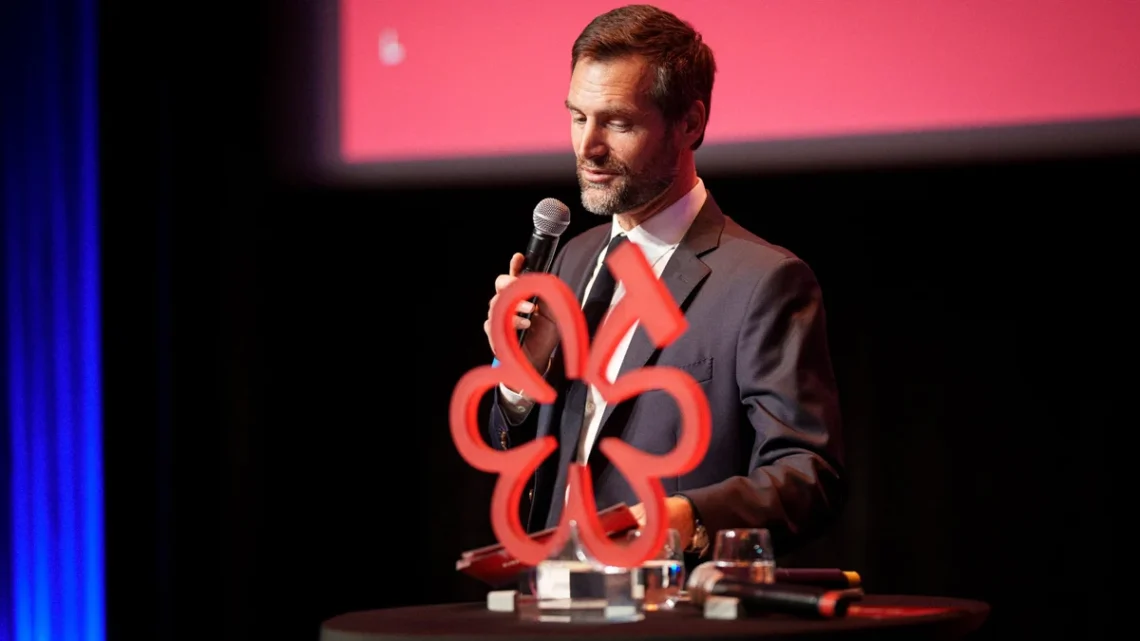
The controversy reached a boiling point following the guide’s aggressive push into France’s most storied wine regions. After a preliminary incursion into Burgundy this past July, Michelin turned its sights squarely on Bordeaux on September 7, hosting a high-profile unveiling ceremony at the iconic Cité du Vin.
Out of more than 7,000 active wine-producing châteaus operating across the region, Michelin’s inspectors chose to recognize just 84 estates. The breakdown of the inaugural Bordeaux grape selection reveals a highly selective, if baffling, hierarchy:
- Zero Grapes: 21 châteaus were acknowledged but left un-badged.
- One Grape ("Very Good Producer"): 38 châteaus.
- Two Grapes ("Excellent Producer"): 16 châteaus.
- Three Grapes ("Exceptional Producer"): 9 châteaus.
According to official statements released on the Michelin Guide website, the selection deliberately “covers the majority of the region’s most iconic appellations.” By default, this geographic filtering eliminated the vast majority of estates producing solid, everyday bottles in less-celebrated or peripheral classifications, such as standard Bordeaux AOC, Bordeaux Supérieur, Cru Bourgeois Supérieur, and Entre-Deux-Mers.
Instead, the spotlight was strictly trained on Left Bank royalty—communes like Saint-Estèphe, Pauillac, Saint-Julien, Margaux, and Pessac-Léognan—alongside Right Bank heavyweights Pomerol and Saint-Émilion, and the legendary sweet-wine strongholds of Sauternes and Barsac.
While legendary first-growths and icons like Château d’Yquem, Château Cheval Blanc, and Petrus secured the coveted three-grape maximum, the real story lay in the shocking downgrades and glaring omissions doled out to historical giants.

Chronology of an Expansion: From Tires to Terroir
To understand why the wine world is currently up in arms, it is essential to trace Michelin’s recent corporate evolution. For generations, the company’s anonymized inspectors operated under a strict, singular mandate: evaluating the hospitality, ambiance, and culinary execution of restaurants.
That mandate began to shift rapidly in the 2010s. Facing a changing global tourism market and a corporate strategy focused on leveraging its powerful brand equity, Michelin abandoned its insular European focus. Inspectors swarmed secondary and tertiary international markets, transforming the red book from a French road companion into a worldwide digital travel platform.
- The 2010s–2020s: Global expansion of the restaurant guide reaches diverse culinary hubs across Asia, the Americas, and Europe.
- 2024: Michelin introduces the "Michelin Key" initiative to rate hotels worldwide, expanding its evaluation framework beyond dining tables.
- July 2025/2026: The guide launches its nascent "grape" rating system with an initial exploratory foray into Burgundy.
- September 7, 2026: Michelin officially unveils its Bordeaux winery selections at the Cité du Vin, sparking immediate blowback across international trade networks and social media platforms.
This rapid diversification has left many traditionalists wondering if the corporate mothership is stretching its core competencies too thin. Can an organization historically built on assessing cooked proteins and saucier techniques truly pivot to evaluating soil microbiology, clonal selections, and decades-long viticultural aging curves?
Supporting Data: Discrepancies and Digital Outrage
While international trade veterans like Robin Kelley O’Connor—a global wine educator based in New York City—noted a curious silence on the ground during daily importer and distributor tastings ("I have not heard one comment," she observes of her day-to-day professional interactions), the digital landscape tells an entirely different story.
On social media platforms including Facebook, Instagram, Threads, and X, wine professionals did not hold back. Adam Lee, owner and winemaker at California’s Clarice Wine Company and a wine columnist for the North Bay Business Journal, minced no words in a widely circulated post, concluding a fiery critique by declaring the system "laughable and should be mocked and denigrated."
The root of the anger stems from head-scratching anomalies in the rankings:
- The Snubs: Historic powerhouses like Château Margaux, Château Angélus, and Château Haut-Brion were relegated to a two-grape ranking—a classification that felt, to many purists, like a profound diplomatic insult.
- The Under-Rankings: Estates like Château Cos d’Estournel and Château Lynch-Bages walked away with a single grape.
- The Omissions: Most egregiously, industry insiders pointed out the total absence of top-tier micro-productions. "What about one grape for Château Le Pin on the Right Bank?" asks O’Connor. "Le Pin is approximately $4,100 upon release at retail and is one of the most sought-after wines in the world, constantly rated 97 to 100 points. What amateur did they have rating the wines?"
Jeff Leve, publisher and editor of The Wine Cellar Insider, polled his extensive network of followers and industry insiders following the Bordeaux release. He reported that the feedback was overwhelmingly negative.
Leve levied a structural critique against Michelin’s entire premise: the decision to rate the estate as a corporate entity rather than individual vintages or cuvées.
"Every wine comes from a specific place or terroir that cannot be reproduced in another location," Leve notes. "That, the climatic condition of the year, choices in the vineyard and in the cellar will never be the same from vintage to vintage. Wines change every year. While it’s interesting to some wine consumers to learn about a property, it’s not exactly relevant to what’s in the bottle and the glass."
Official Responses: Methodology Under the Microscope
To its credit, Michelin attempted to establish a rigorous scientific and qualitative framework for its winery evaluations. According to the guide, its inspectors—drawn from professional wine ranks, including former sommeliers, certified critics, and winemakers—assessed estates using five strict criteria:

- Quality of agronomy
- Technical mastery
- Identity
- Balance
- Consistency
Unlike their restaurant counterparts, who operate as anonymous, undercover diners, Michelin’s wine inspectors were forced to make formal appointments at each estate. They were tasked with evaluating multiple vintages, walking the vineyards, and inspecting winemaking facilities.
Yet this very methodology has become a prime target for critics. Adam Lee challenged the logistical reality of Michelin’s claims, pointing directly to Château Margaux’s two-grape score.
"Are we meant to believe that Michelin’s inspectors have examined that acreage extensively and repeatedly, across different seasons and vintages, with enough expertise to assess soil vitality and vineyard balance?" Lee asks. He underscores that understanding the complex micro-terroirs, drainage variations, and block-by-block differences across Bordeaux’s massive châteaus requires immense time, exclusive access, and hyper-specialized regional knowledge—none of which Michelin has transparently detailed.
Despite the heavy criticism, some corners of the wine trade have welcomed the disruption. While many major châteaus declined to comment for publication—citing the delicate, high-stakes nature of their relationships with the guide, or opting to "let the recognition speak for itself"—others proudly brandished their new credentials.
Saint-Émilion’s Château Troplong Mondot, a classified Premier Grand Cru Classé B, proudly issued a press release celebrating its two-grape designation. In an era marked by slumping global wine consumption, shrinking market share, and severe economic headwinds for producers, any mainstream cultural spotlight is viewed by some as an undeniable lifeline.
Implications: A New Robert Parker Moment, or a Misguided Stunt?
As the dust settles over the Bordeaux release, industry analysts are divided on the long-term implications of Michelin’s winery crusade. Will the guide permanently alter how consumers purchase fine wine, or will it fade away as an ill-conceived corporate expansion into unfamiliar territory?
Guillaume Jourdan, managing director of VitaBella, a Paris-based luxury and wine brand strategy consultancy, believes the anxiety surrounding the guide mirrors past seismic shifts in the industry. He draws a direct parallel to the mid-1980s, when legendary American critic Robert Parker Jr. disrupted global markets and effectively turned Bordeaux’s rigid 1855 classification upside down with his bold, palate-driven point scales.
"It’s a great opportunity, in a time as challenging as the one we’re currently facing in the wine world, to have a name as prestigious as Michelin take an interest in wine," Jourdan argues. "It was the same thing in the mid-1980s when Parker turned the 1855 classification upside down. And we saw how that turned out."
Ultimately, a single Michelin grape may carry nowhere near the market-moving gravity of a coveted 100-point Robert Parker score in The Wine Advocate. However, if this high-profile endorsement successfully directs mainstream consumer curiosity toward Bordeaux’s historic vineyards and prompts everyday buyers to restock their cellars, all the fiery online squabbling and editorial hand-wringing may amount to little more than localized noise.
For now, Michelin has firmly planted its flag in the vineyard. Whether the wine world chooses to accept the guide as a visionary new authority or dismiss it as an interloping outsider remains to be seen—but one thing is certain: the conversation around what makes a bottle truly exceptional has never been noisier.