
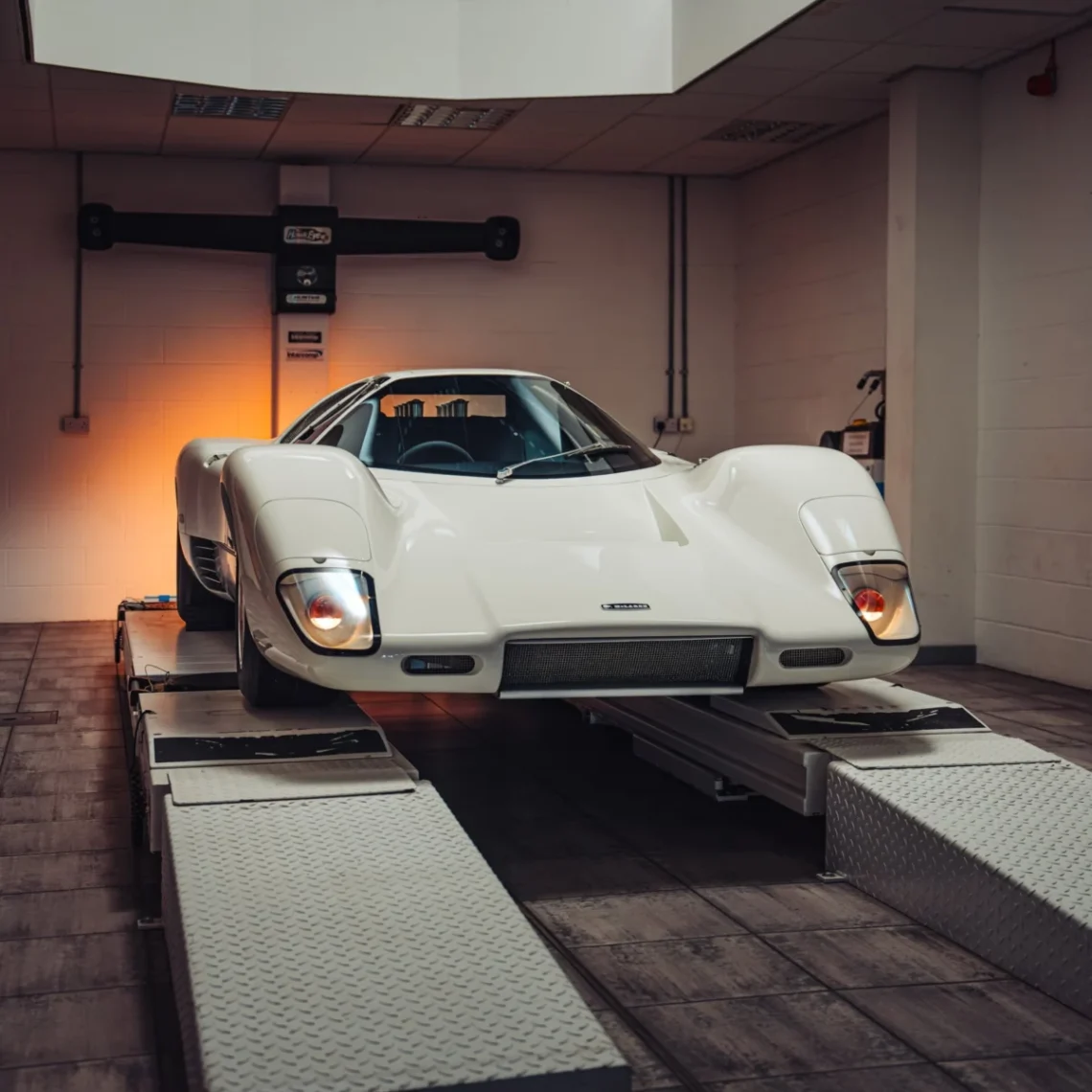
When enthusiasts speak of the McLaren road car legacy, the conversation invariably begins with the 1992 McLaren F1. It is a masterpiece of engineering, the benchmark against which all modern supercars are measured. However, the true genesis of the McLaren road-going spirit lies buried in the late 1960s, in the form of a project that was both ahead of its time and cruelly interrupted by fate: the McLaren M6 GT.
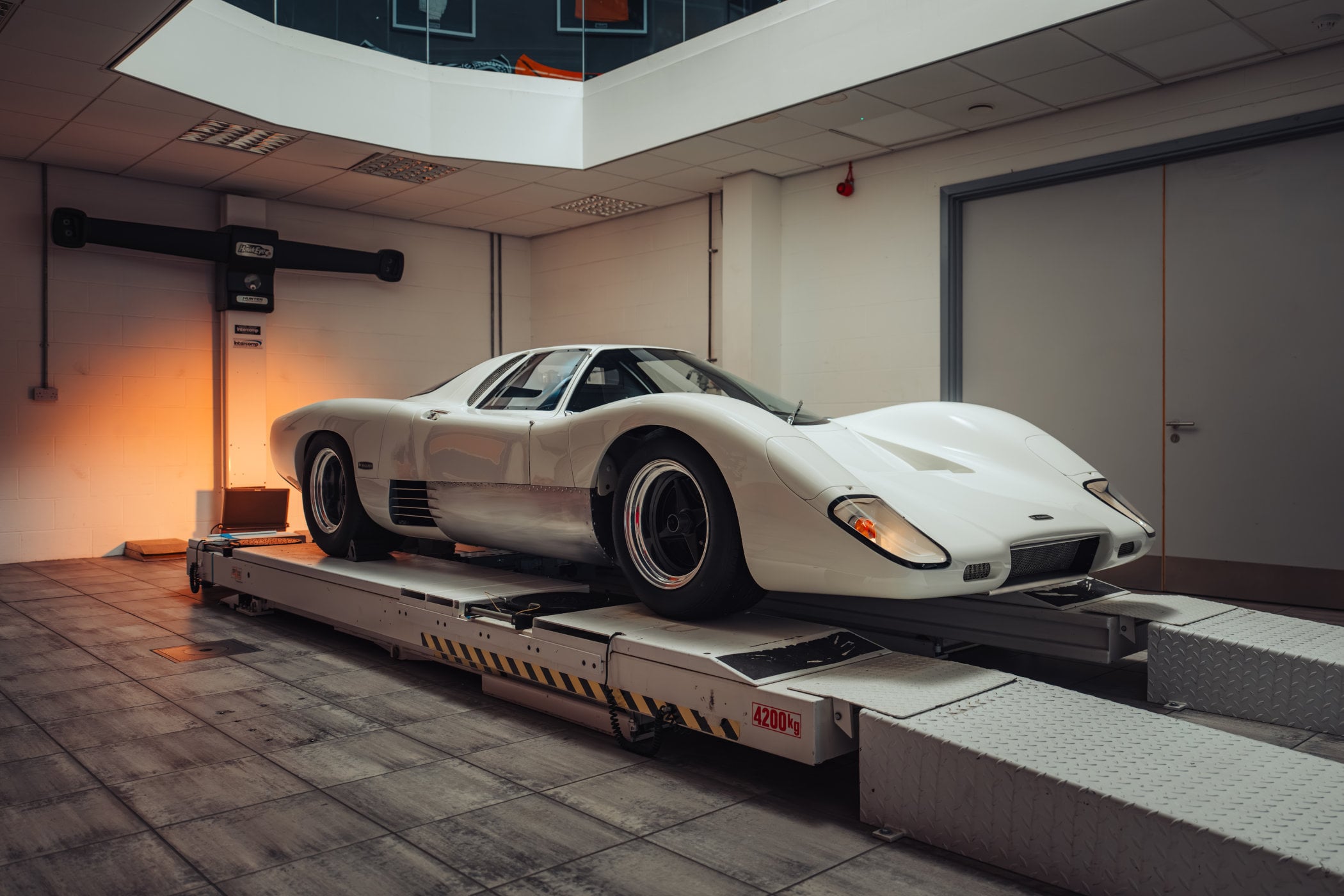
More than half a century after the project was effectively shelved, McLaren Special Operations (MSO) has completed a breathtaking, comprehensive restoration of one of the original prototypes. This is not merely a repair job; it is an act of historical preservation, honoring the singular vision of the company’s founder, Bruce McLaren.
The Architect of an Empire
To understand the M6 GT, one must understand the man behind it. Bruce McLaren was not just a driver; he was a polymath of the motorsport world. Born in New Zealand, his mechanical aptitude was evident from childhood, where he spent his formative years restoring a 1929 Austin 7 Ulster alongside his father. His transition to the European racing circuit in 1958, under the mentorship of legends like Jack Brabham, marked the beginning of a storied career.
Bruce McLaren occupies a rarefied space in automotive history. He is one of only three individuals—alongside Jack Brabham and Dan Gurney—to have designed, constructed, and won a Formula 1 Grand Prix in a car bearing his own name. His transition from the Cooper team to founding Bruce McLaren Motor Racing in 1963 was the catalyst for a dynasty. By 1966, the M2B brought his cars to the F1 grid, and while success took time, the foundation for a dominant manufacturer was set. Tragically, Bruce would never witness the full extent of his company’s evolution; he lost his life in a testing accident involving an M8D Can-Am car on June 2, 1970.
The Can-Am Era: A Crucible of Speed
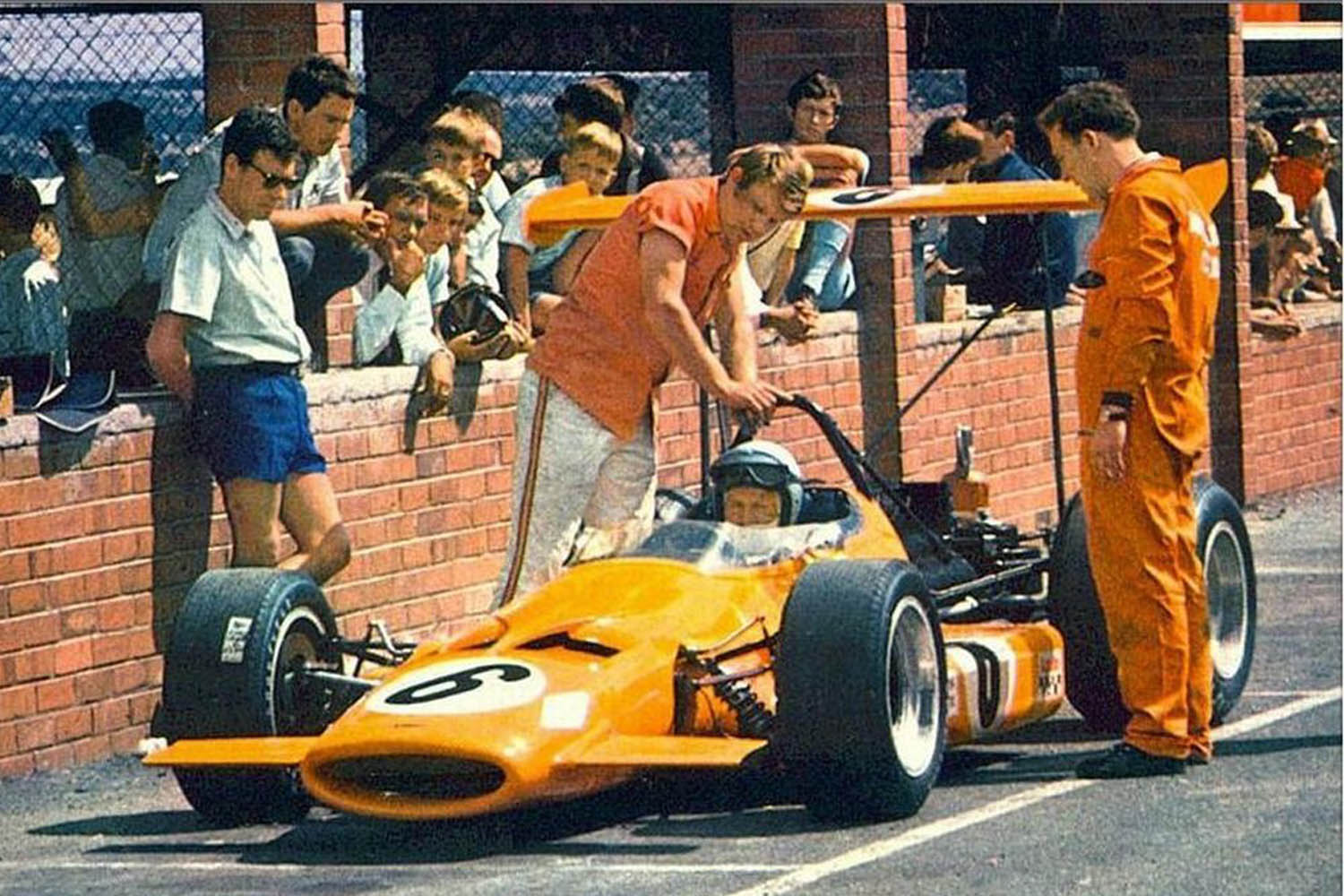
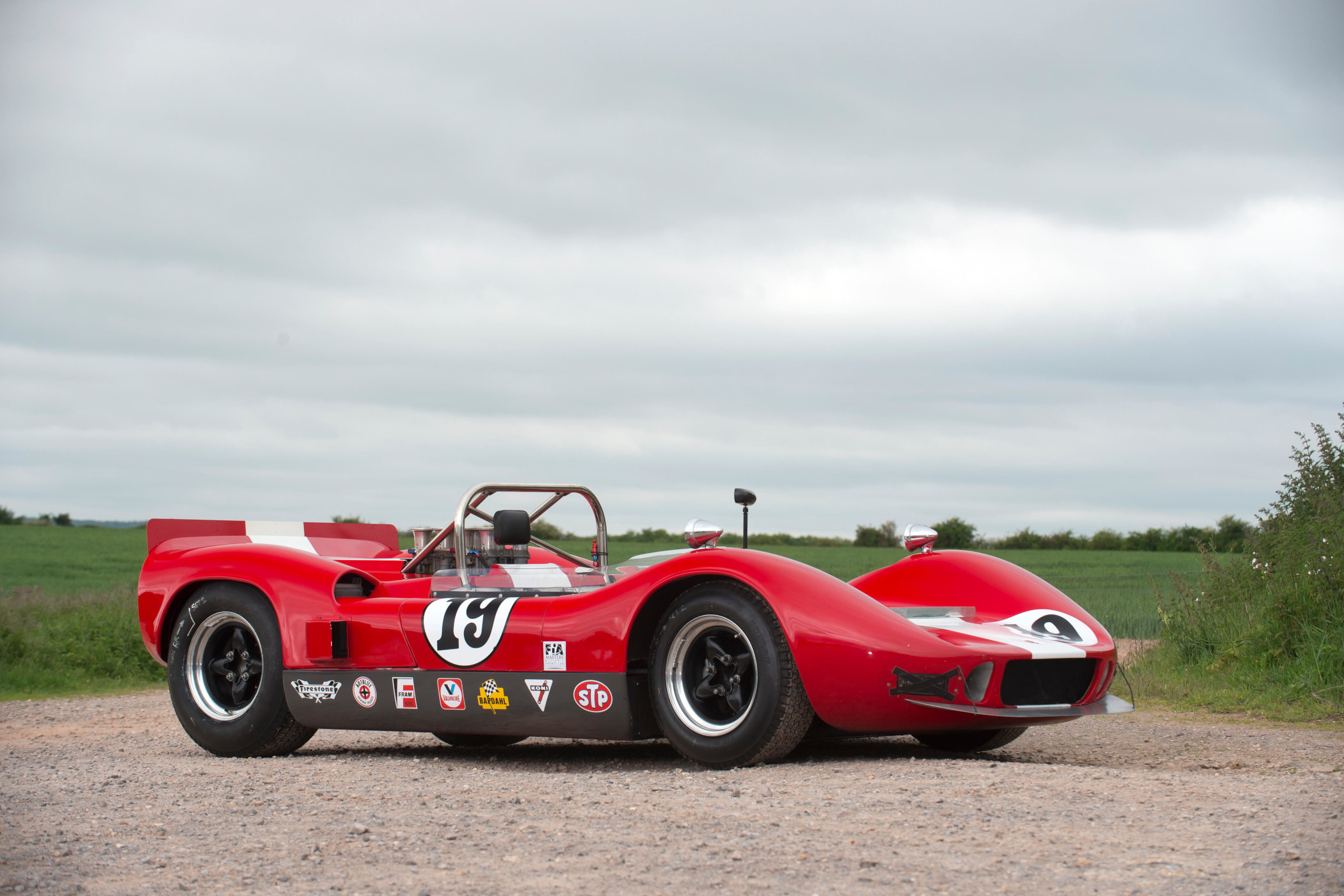
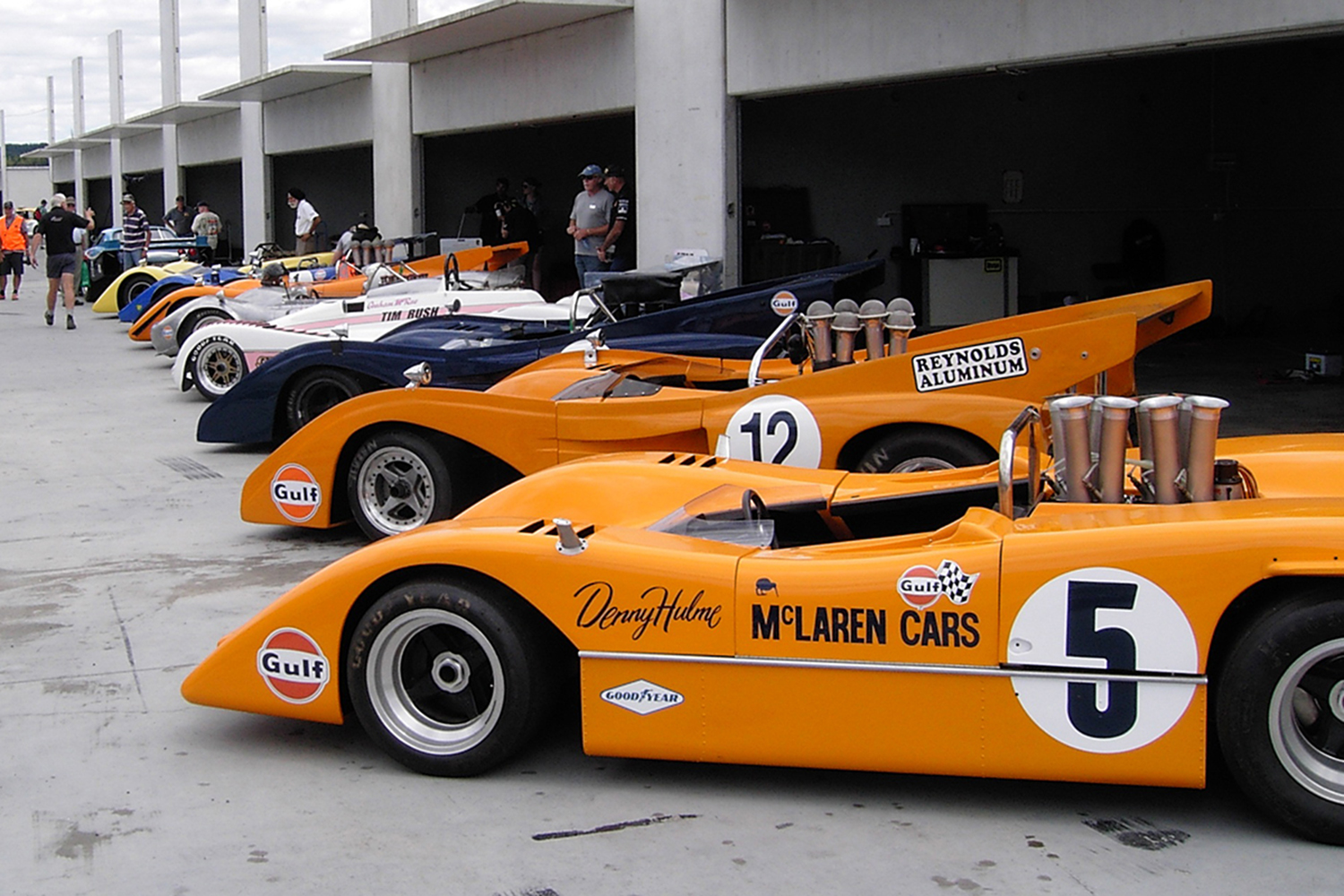
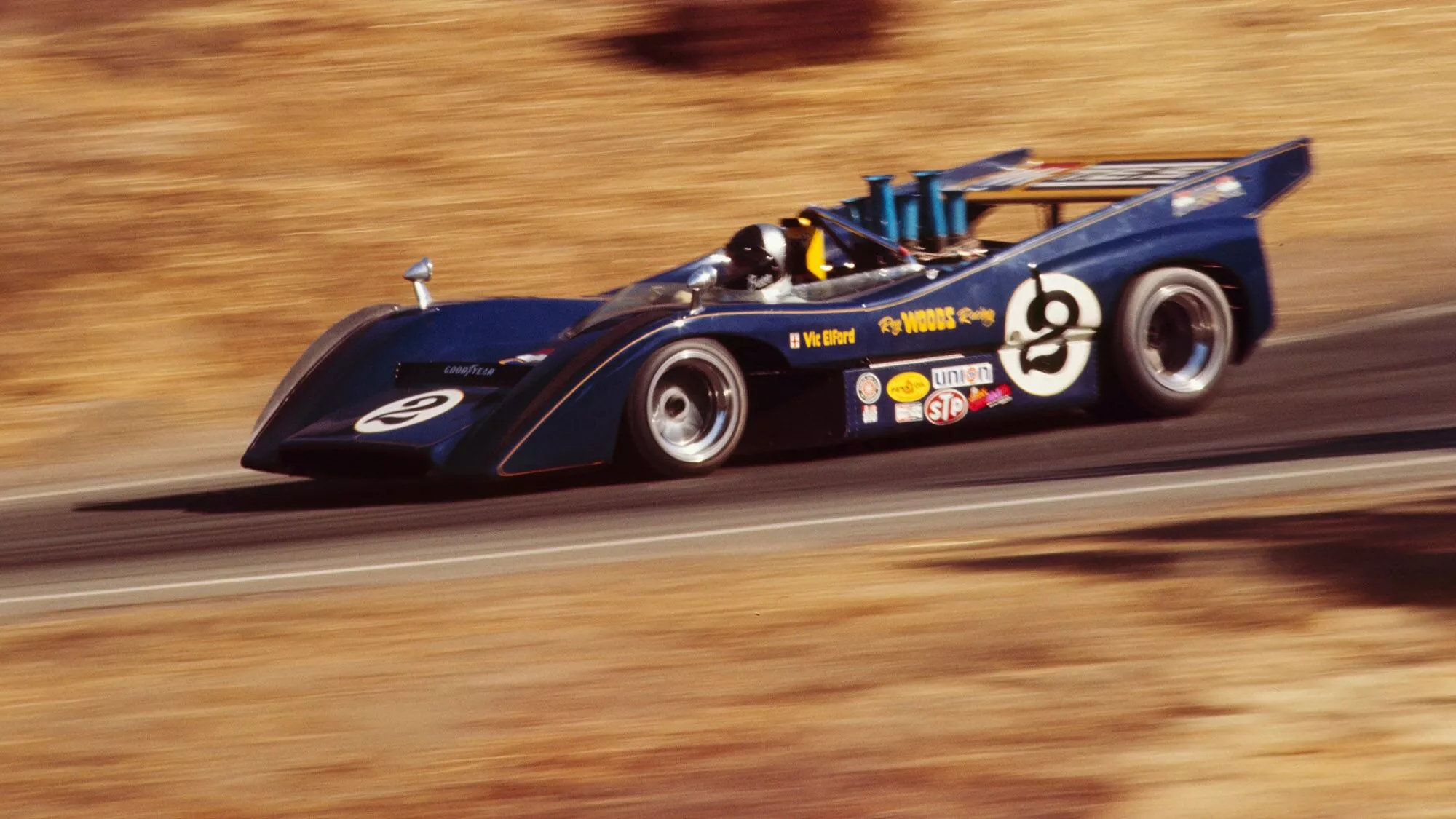
The M6 GT was born from the white-hot intensity of the Canadian-American Challenge Cup (Can-Am). This series was, by modern standards, a "lawless" arena of motorsport, featuring Group 7 sports prototypes with few restrictions on aerodynamics or engine output. It was here that McLaren truly stamped its authority, winning five consecutive titles and 43 races between 1966 and 1973.
The success of the M1B and the subsequent M6A was absolute. Bruce McLaren realized that his race-winning technology—lightweight chassis, massive Chevrolet V8 power, and cutting-edge aerodynamics—had the potential to redefine the high-performance road car. The M6 GT was conceived as a way to capitalize on this dominance, with an initial goal of producing 25 units to homologate the design for international endurance racing, including the 24 Hours of Le Mans.

Chronology of the M6 GT Project
- 1967: Success in the Can-Am series provides the technical foundation for the M6 GT concept.
- 1968: Development of the M6 GT begins in earnest. The project aims to convert the M6A race car into a road-legal grand tourer.
- 1969: Three prototypes are completed. One serves as Bruce McLaren’s personal transport, a testament to his belief in the project.
- 1970: Following the sudden death of Bruce McLaren, the M6 GT project is officially suspended as the company shifts focus back to pure racing efforts.
- 2026: McLaren Special Operations (MSO) unveils a fully restored M6 GT at the Goodwood Festival of Speed, bringing the lost dream to life for a new generation.
Technical Prowess: The Anatomy of a Pioneer
The M6 GT was a radical departure from the luxury grand tourers of its era. By stripping away the weight of conventional grand tourers, McLaren created something primal. The car was built around a chassis derived directly from the M6A race car, utilizing a mid-mounted 5.7-litre Chevrolet V8.
Despite being "detuned" for road use, the engine produced a formidable 370 horsepower. When paired with a kerb weight of just 800 kilograms, the performance figures were, and remain, staggering. The M6 GT could reach 100 km/h in just over four seconds and hit 160 km/h (100 mph) in eight seconds flat. With a projected top speed of 290 km/h, it would have easily been the fastest production car in the world had it reached the assembly line.
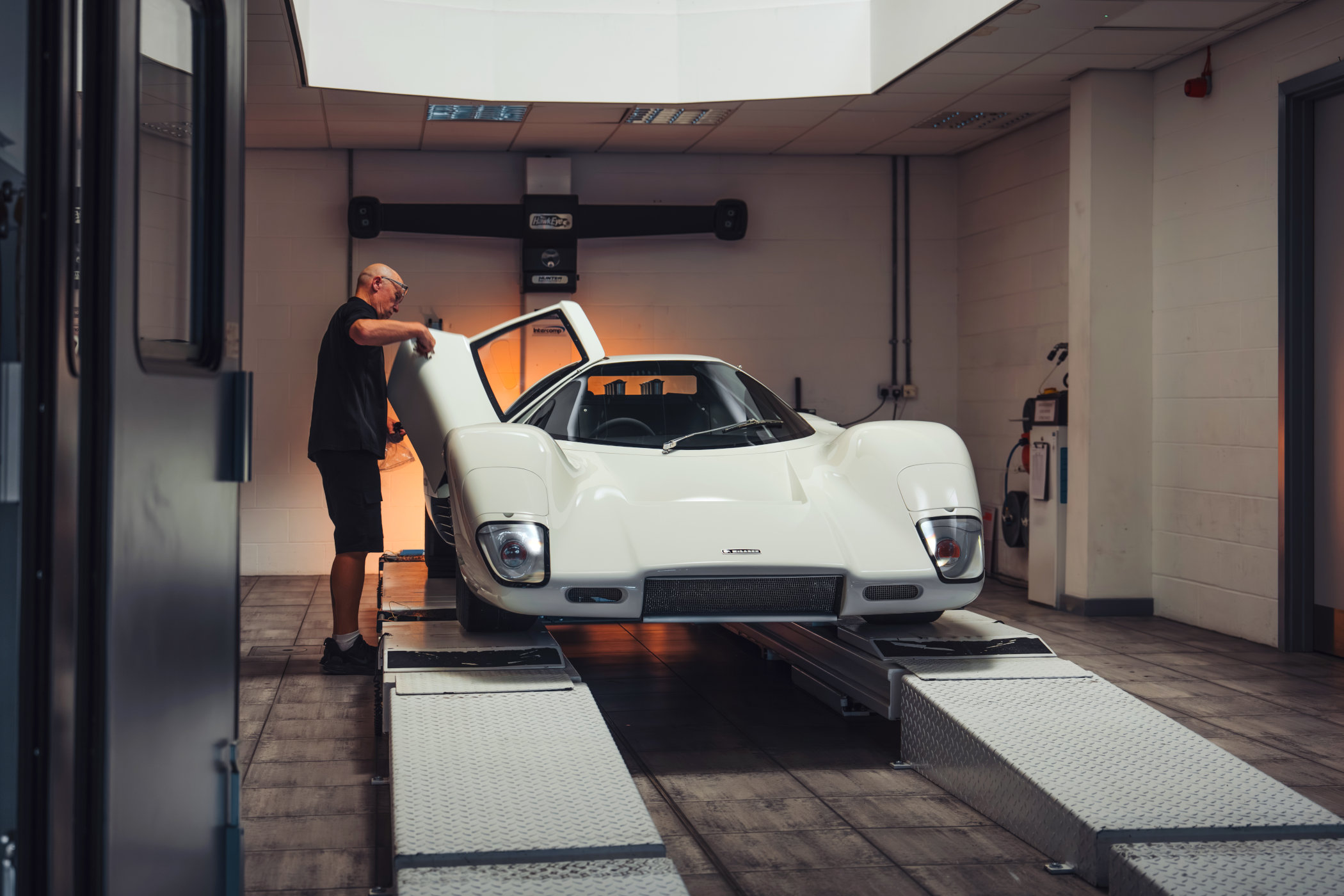
The design featured a low-slung, aerodynamically efficient body with a wrap-around windshield and the now-iconic butterfly doors—a feature that would become a signature of the F1 decades later. The restoration by MSO involved utilizing the original moulds and blueprints, ensuring that the M6 GT presented at Goodwood is as authentic as the one Bruce drove himself.
Official Perspective: The MSO Restoration
The decision by MSO to restore the M6 GT was driven by a desire to pay homage to the brand’s roots. "This project is the culmination of our dedication to preserving the McLaren DNA," a spokesperson for MSO noted during the unveiling. "By meticulously recreating the M6 GT using the original blueprints and chassis components, we aren’t just restoring a car; we are finishing a chapter that Bruce McLaren himself started."
The team went to exhaustive lengths to source and manufacture parts that mirrored the original specifications, ensuring that the "Colnbrook white" paint—a nod to the location of the first-ever McLaren workshop—was applied with period-correct techniques. For the engineers at MSO, the process was a "what if" scenario come to life. It allowed them to interact with the raw, unfiltered engineering philosophy that defined the early days of the company.
Implications: A Legacy Reclaimed
The restoration of the M6 GT carries significant weight for the brand’s identity. In the decades between the M6 GT’s suspension and the launch of the F1, the world viewed McLaren as a racing entity. The F1 changed that, and the modern range of supercars solidified it. However, the M6 GT serves as the "missing link" that proves the road-car vision was there from the very beginning.
This project reinforces the idea that McLaren’s current success is not an accidental evolution but the realization of a clear, long-term ambition. It bridges the gap between the raw, brutalist speed of the 1960s Can-Am machines and the refined, high-tech performance of the modern McLaren lineup.
The Goodwood Reveal and Beyond
The debut at the Goodwood Festival of Speed was a poignant moment for the automotive community. Seeing the M6 GT move, hearing the roar of the Chevrolet V8, and witnessing the silhouette that bridged the gap between the M6A and the F1 provided a sense of closure to a long-standing "what if."
For the modern collector, the M6 GT represents the ultimate "tribute" piece. It serves as a reminder that the spirit of innovation is the most valuable asset any manufacturer can possess. By looking back, McLaren has reminded the world that their commitment to performance is not just a commercial endeavor, but a multi-generational pursuit of the ultimate driving experience.
As we look toward the future of electrification and autonomous driving, the M6 GT stands as a defiant, beautiful anchor to the past—a reminder of a time when one man’s vision of a road-legal race car was enough to spark an automotive revolution. Bruce McLaren may not have lived to see his company become a global titan of the industry, but in the polished, pristine form of the restored M6 GT, his dream has finally, unequivocally, arrived.