BALTIMORE and BOGOTÁ — For generations, political scientists, economists, and historians looked at the rise and fall of nations through the prism of institutions, ideology, and democratic mandates. Today, that conventional framework is rapidly losing its explanatory power.
According to data compiled by global policy analysts, approximately 64 heads of state or government currently fit the definition of an oligarch—a ruler who leverages immense private wealth and monopolized industrial or technological power to capture state apparatuses. Combined, the nations under their direct leadership account for roughly 60% of global Gross Domestic Product (GDP).
The pressing question for the 21st century is no longer whether oligarchs will rule the world, but rather what kind of world they are building in their own image.
1. Main Facts: The Anatomy of Modern Oligarchy
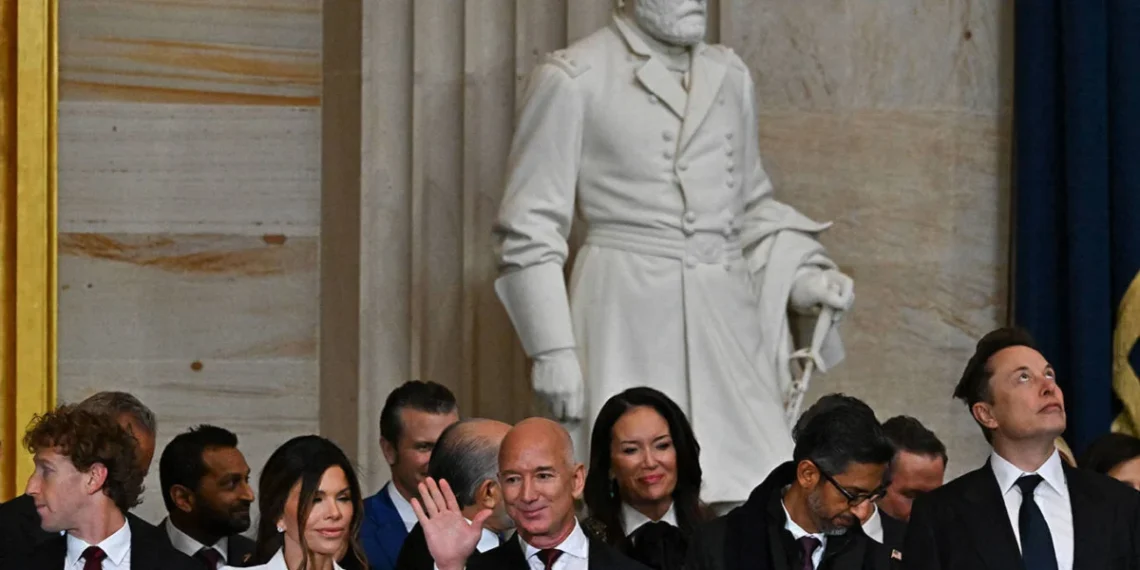
For the average citizen, the term “oligarch” typically evokes narrow, localized stereotypes: the post-Soviet robber barons who carved up the state assets of a collapsing Soviet Union in the 1990s, or the modern American technology moguls who secure front-row seats at high-stakes political inaugurations, wielding algorithms and venture capital as instruments of immense societal persuasion.
However, these regional manifestations are merely symptoms of a deeper, systemic reality. Oligarchic governance has evolved from an anomaly of developing economies into a core structural feature of the emerging global order.
At its core, modern oligarchy relies on the fusion of state power with private capital accumulation. Unlike traditional monarchs who claimed divine right, or totalitarian dictators who ruled exclusively through military coercion, modern oligarchs operate in the twilight between formal democracy and autocratic capture. They use the trappings of elections, legal frameworks, and market capitalism to legitimize rule that is fundamentally concentrated, non-transparent, and self-serving.
As geopolitical influence shifts away from multilateral institutions and toward hyper-concentrated private empires, national borders are increasingly treated as corporate portfolios. The result is a system where global trade, climate policy, and technological regulation are increasingly negotiated not just by diplomats, but by the ultra-wealthy elite who underwrite political survival.
2. Chronology: How the Global Oligarchic Order Evolved
To understand how 64 oligarchs came to steer 60% of the global economy, it is necessary to trace the historical inflection points that systematically eroded traditional checks and balances over the past four decades:
- 1989–1991 (The Post-Soviet Shock): The dissolution of the Soviet Union serves as the modern archetype of rapid privatization. State-owned industries—ranging from oil and gas to metallurgy—were transferred into the hands of a small cadre of politically connected insiders, creating the world’s first modern template for the state-backed billionaire.
- 1995–2008 (The Financialization of Western Democracies): Financial deregulation across North America and Western Europe unleashed unprecedented flows of private capital. Wall Street and European financial centers became magnets for global wealth seeking safe harbor and political influence, blurring the lines between campaign financing and state capture.
- 2008–2010 (The Great Financial Crisis Bailouts): Following the global financial collapse, governments rushed to rescue “too-big-to-fail” institutions. The subsequent monetary policies, such as quantitative easing, dramatically inflated asset prices, transferring massive wealth upward and cementing the structural dependence of states on financial elites.
- 2010–2020 (The Rise of the Tech Monopolies): As the global economy shifted toward data and digital infrastructure, a new breed of oligarch emerged in Silicon Valley, Shenzhen, and beyond. These digital barons achieved market shares and valuation scales that rivaled the GDPs of sovereign states, allowing them to dictate terms to regulators.
- 2020–Present (The Pandemic and Supply Chain Consolidation): The economic shocks of the COVID-19 pandemic and subsequent global supply chain disruptions accelerated wealth consolidation. Smaller enterprises faltered, while mega-corporations and state-aligned conglomerates absorbed market share, paving the way for the current era where 64 oligarchic leaders command super-majority economic leverage worldwide.
3. Supporting Data: The Metrics of Concentration
The scale of modern oligarchic dominance is laid bare when examining global macroeconomic indicators:
- GDP Control: Nations ruled directly by oligarchic heads of state or government represent approximately 60% of total global GDP. This includes major emerging economies, energy superpowers, and influential regional actors.
- Wealth Inequality: According to international wealth monitors, the top 1% of the global population now controls nearly half of all household wealth, while the bottom 50% holds less than 2%.
- Political Financing: In major democratic and hybrid regimes alike, campaign expenditures have reached historic highs, with a tiny fraction of ultra-wealthy donors accounting for the vast majority of political funding, effectively establishing a ceiling on viable populist or reformist movements.
- Regulatory Capture: Over the past decade, lobbying expenditures in major regulatory capitals—including Washington, Brussels, and Tokyo—have grown exponentially, yielding legislative frameworks that systematically favor capital-intensive industries over labor rights and environmental protections.
4. Official Responses: The Clash Between Rhetoric and Reality
The rise of a global oligarchic class has triggered starkly contrasting responses from international bodies, national governments, and civil society organizations:
International Organizations
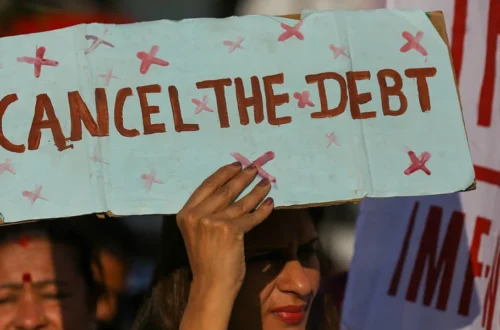
Bodies such as the International Monetary Fund (IMF) and the World Bank have increasingly warned about the corrosive effects of "market concentration" and "state capture." In policy papers, international economists have argued that extreme wealth concentration stifles innovation, discourages foreign direct investment, and fuels public cynicism toward democratic institutions. However, critics note that these institutions often implement structural adjustment programs that inadvertently exacerbate the vulnerabilities exploited by oligarchs.
National Governments
Publicly, leaders in both established democracies and developing nations routinely champion anti-corruption platforms and pledge to curb the influence of "special interests." In the United States and the European Union, lawmakers have proposed tougher antitrust legislation, corporate transparency acts, and windfall taxes on corporations experiencing pandemic- and crisis-driven super-profits.
Yet, implementation remains deeply inconsistent. Legislative measures are frequently watered down during the drafting process due to intense lobbying, leaving enforcement mechanisms weak and easy to bypass through offshore tax havens and complex corporate shells.
Civil Society and Grassroots Movements
Labor unions, anti-corruption watchdogs, and transnational human rights organizations have taken a more confrontational stance. Groups like Transparency International and various digital rights coalitions argue that standard regulatory compliance is no longer enough. They call for radical transparency in political donations, the abolition of anonymous shell companies, and the democratization of corporate governance structures to give workers and communities a direct voice in economic decision-making.
5. Implications: What Kind of World Are They Building?
As the architecture of global power solidifies around oligarchic control, the long-term implications for humanity are profound, far-reaching, and systemic.
The Erosion of Sovereignty
When national leaders derive their power not from the active, informed consent of the governed, but from their ability to manage networks of patronage and capital, the fundamental social contract is broken. Governments cease to act as impartial arbiters of the public good and instead function as holding companies for elite interests. National sovereignty becomes subordinate to the liquidity demands of global capital markets.
The Threat to Democratic Legitimacy
Democracy requires a baseline of economic equality to function effectively; when wealth is hyper-concentrated, political equality becomes an illusion. As citizens recognize that elections frequently yield outcomes favorable to the donor class regardless of party lines, public trust in democratic institutions plummets. This disillusionment creates fertile ground for populist demagogues, civil unrest, and authoritarian backlash.
Technological and Environmental Stagnation
Oligarchies are inherently risk-averse regarding disruptive innovations that threaten their incumbent monopolies. While modern oligarchs heavily fund technologies that enhance surveillance, automation, and capital extraction, investments in long-term public goods—such as climate change mitigation, public health infrastructure, and education—frequently take a back seat unless they offer immediate, high-yield investment returns. Consequently, the world built by oligarchs is one uniquely optimized for efficiency and profit extraction, yet acutely vulnerable to systemic shock.
Conclusion
The realization that 64 oligarchs preside over 60% of the world’s economic output serves as a stark wake-up call. The trajectory of the 21st century will not be determined by abstract ideological struggles between left and right, but by whether global society can successfully reclaim public institutions from the grip of private monopolies. If the current trend continues unchecked, the future will belong to a neo-feudal global order where borders are administrative zones, citizens are consumers, and power belongs exclusively to those who hold the keys to the global ledger.