By Luis Carlos Reyes
July 20, 2026
In the corridors of power in Bogotá, a quiet but profound crisis of legitimacy is unfolding. Colombia, a nation long defined by its struggle to reconcile deep-seated social inequality with the rigid structures of an entrenched political establishment, finds itself at a defining inflection point. Following the results of last month’s presidential election, the country has been thrust into a period of profound uncertainty, characterized by a widening chasm between the popular demand for a robust, egalitarian welfare state and a political apparatus that appears increasingly captured by the very interests it purports to regulate.
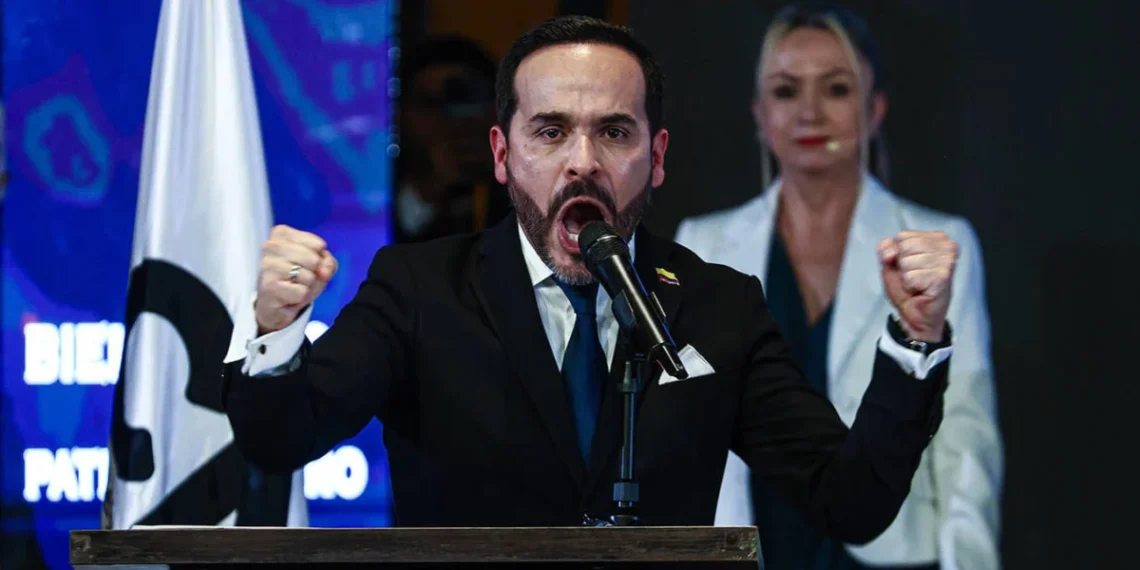
The recent victory of Abelardo de la Espriella, a high-profile criminal defense lawyer, over the human-rights advocate and senator Iván Cepeda, serves as a sobering indictment of the current political trajectory. As the nation prepares for a change in administration, the fundamental question remains: Can a government effectively deliver social progress when its foundations are inextricably linked to the influences that have historically hindered it?
The Election Result: A Shift in Political Gravity
The electoral outcome of June 2026 represents a seismic shift in Colombian politics. Iván Cepeda, a figure synonymous with the struggle for historical memory and the fight against paramilitary influence, was widely seen as the standard-bearer for a progressive agenda focused on wealth redistribution, healthcare reform, and the dismantling of clientelist networks.
In contrast, Abelardo de la Espriella campaigned on a platform that prioritized legal pragmatism, economic stability, and the maintenance of the status quo. His victory has sparked widespread debate, not only due to the ideological reversal it represents but because of the stark contrast between the two candidates’ life experiences.
Cepeda’s political identity is deeply rooted in the tragedy of his father’s assassination in 1994—a killing orchestrated by paramilitary groups with the verified complicity of state actors. For many, his candidacy was a promise to address the systemic corruption that allowed such violence to flourish. De la Espriella, conversely, has built a formidable reputation and a significant fortune representing a clientele that includes paramilitary leaders, high-ranking officials accused of graft, and figures involved in international money laundering schemes. The electorate’s choice to favor the latter over the former suggests a electorate either exhausted by ideological combat or deeply skeptical of the state’s capacity to reform from within.
Chronology of a Disillusioned Electorate
The path to this moment was not sudden. To understand the current tension, one must look back at the trajectory of the last decade:
- 2016–2019: The Post-Agreement Fatigue. The promise of the peace accords with the FARC began to erode as rural violence surged and the economic dividend of peace failed to materialize for the working class.
- 2020–2021: The Pandemic Crisis. COVID-19 exposed the fragility of the Colombian welfare state, leading to massive social protests (El Paro Nacional) that demanded radical changes to health and education funding.
- 2022–2024: The Rise of Populist Rhetoric. As traditional parties failed to capitalize on the momentum of the social movements, the vacuum was filled by figures who framed "law and order" as a prerequisite for economic survival, overshadowing calls for social reform.
- June 2026: The Electoral Turning Point. The presidential runoff saw the lowest voter turnout in a decade, reflecting a public that feels increasingly alienated from both the radical left and the established right.
Supporting Data: The Cost of Inequality and Corruption
The tension in Colombia is not merely ideological; it is statistical. Colombia remains one of the most unequal countries in the OECD, a fact that serves as the primary driver of public frustration.
The Inequality Gap
According to data from the DANE (National Administrative Department of Statistics), the Gini coefficient remains stubbornly high. While poverty rates showed a marginal decline in 2025, the "working poor" demographic—those who are employed but lack access to social security or adequate benefits—has expanded. The demand for a welfare state is essentially a demand for the expansion of the "social contract" that currently only protects the urban elite and the politically connected.
The Economic Cost of Malign Influence
Corruption acts as a regressive tax on the Colombian economy. Independent studies from transparency watchdog organizations estimate that approximately 4% of the national GDP is lost annually to graft. When state contracts are steered toward "favored" firms—often those with ties to legal consultants like the president-elect—it creates a barrier to entry for legitimate businesses and drains resources that could otherwise fund public infrastructure and social welfare programs.
Official Responses and Political Implications
The transition of power, slated for August, has been met with a mixture of cautious optimism from financial markets and vocal apprehension from civil society organizations.
The Incoming Administration’s Stance
Representatives for the de la Espriella transition team have emphasized a "technocratic approach" to governance. In recent briefings, spokespersons have argued that the incoming administration’s priority is to "restore investor confidence" and simplify the legal framework for foreign direct investment. When pressed on the concerns regarding the incoming president’s past clientele, the transition team has maintained that "the role of a lawyer is to defend the right to due process, not to endorse the actions of the client."
The Opposition’s View
Iván Cepeda and his allies in the Senate have vowed to lead a "vigilant opposition." In a public statement, Cepeda warned that "the law cannot be used as a shield for those who have systematically undermined the democratic integrity of our nation. We will be the guardians of the public interest, ensuring that the new administration does not trade the welfare of our citizens for the interests of their former associates."
Implications: A Nation at a Crossroads
The tension between the demand for a welfare state and the reality of a political system captured by private interest is the defining challenge of the next four years.
1. The Risk of Institutional Erosion
If the incoming administration uses its mandate to weaken oversight bodies—such as the Prosecutor General’s Office or the Inspector General’s Office—to protect its political allies, Colombia risks a period of institutional decay similar to that seen in other Latin American nations. The rule of law must be impartial; if it is perceived as a commodity, the public’s trust in democracy will continue to crater.
2. The Potential for Social Unrest
The public demand for reform has not disappeared; it has merely been sidelined by an electoral result that failed to produce a consensus. If the incoming administration fails to deliver tangible improvements in healthcare, education, and poverty reduction, the social movements of 2021 are likely to re-emerge with greater intensity. The incoming government lacks the "honeymoon period" that previous administrations enjoyed.
3. The Future of the Welfare State
The dream of a strong welfare state in Colombia requires more than just tax reform; it requires a structural overhaul of how the state interacts with the private sector. Breaking free from "malign influences" means ending the practice of state capture, where private interests dictate public policy. Whether an administration born from the legal circles of the elite can—or will—dismantle these structures remains the central, unanswered question of the 2026 cycle.
Conclusion
As Colombia enters this new chapter, the sentiment among the populace is one of profound skepticism. The election was a test of whether the country would choose the path of structural transformation or the path of business-as-usual. By choosing the latter, Colombia has signaled that the path to reform will be long, difficult, and fraught with conflict. The incoming administration may hold the keys to the presidential palace, but the true power—the power to demand accountability, to insist on justice, and to drive the national agenda—remains with a citizenry that is increasingly aware of the mechanisms of their own exclusion.
The coming months will be a litmus test for the resilience of Colombia’s democracy. Whether the state moves toward a more inclusive welfare model or continues to serve as an instrument for private accumulation will depend on the vigilance of its institutions and the persistence of its people. For now, the nation waits, watching to see if the rhetoric of change will survive the reality of the governing coalition.