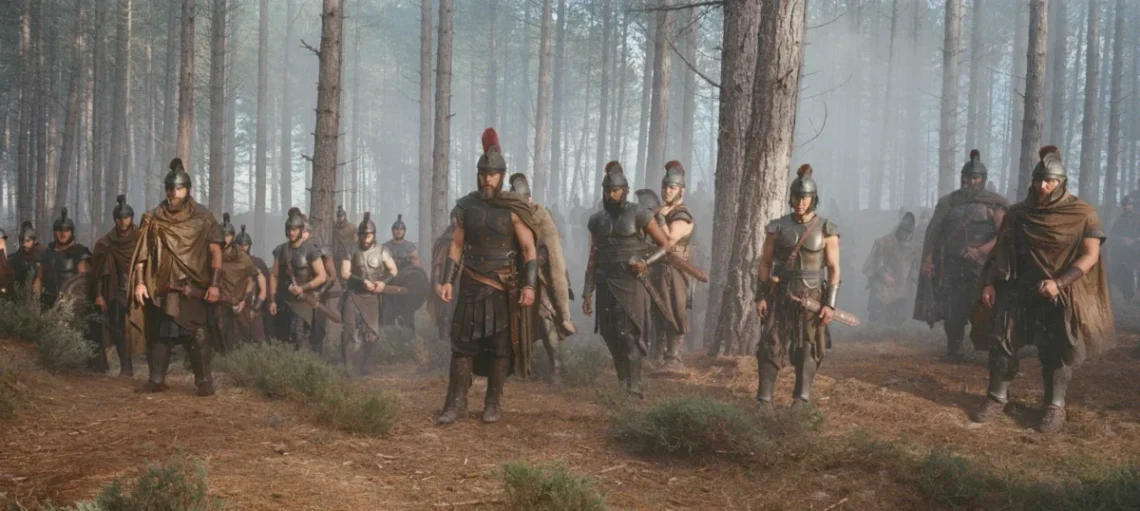
Homer’s The Odyssey has served as the foundational blueprint for the "travel nightmare" genre for nearly three millennia. It is a tale defined by the relentless struggle against the elements: ships disintegrating against jagged rocks, crew members succumbing to the ravages of hunger and mutiny, and a protagonist defined by his inability to find a direct path home. While the original text suggests a journey one would be wise to avoid, director Christopher Nolan’s latest cinematic adaptation offers a visceral, breathtaking alternative that invites audiences to experience these mythical locales firsthand—without the threat of sirens or cyclopean rage.
In collaboration with production designer Ruth De Jong, Nolan has crafted a visual odyssey that spans continents, blending historical authenticity with geographical sleight-of-hand. By eschewing the predictable "sun-bleached" aesthetic often associated with the Mediterranean, the production team has curated a rugged, atmospheric, and deeply textured world. From the black sands of Iceland to the ancient fortifications of Morocco, the film’s geography is as much a character as Matt Damon’s Odysseus or Anne Hathaway’s Penelope.
The Production Philosophy: Beyond the Mediterranean Postcard
The mandate for the production design was clear from the outset: capture the soul of the epic without succumbing to the cliché of a perpetually sunny Greek holiday. De Jong, speaking with Traveler, noted that while the narrative required the bookends of the Mediterranean, the middle chapters demanded a broader, more daring color palette.
"We wanted to start in the Mediterranean, and we wanted to end in the Mediterranean," De Jong explains. "But Chris and I were not interested in an entire sun-bleached sort of vibe. We wanted to reflect the volatility of Odysseus’s journey."
The scouting process was exhaustive. De Jong traveled as far as the Australian coast and the dense woodlands of Japan before settling on a suite of locations that provided the necessary logistical cohesion while maintaining an otherworldly quality. The resulting film is a masterpiece of location-scouting, utilizing real-world environments to ground a story rooted in the supernatural.

Chronology of a Global Set
The production’s itinerary reads like a modern-day voyage, though one executed with significantly more planning than the original hero’s ten-year trek.
1. The Greek Foundations: The Peloponnese and Beyond
A month was spent on the ground in Greece, capturing the ancestral home of Odysseus. The production leaned heavily into the region’s dramatic topography to sell the stakes of the myth. Nestor’s Cave in the Peloponnese served as the site for the harrowing encounter with the Cyclops, Polyphemus—a location that, in its natural state, carries the weight of history.
For Telemachus’s quest for news of his father, the production utilized an olive grove in Messinia, lending the scene an air of classical antiquity. Furthermore, the homecoming of Agamemnon (Benny Safdie) was brought to life through the imposing architecture of Methoni Castle and the monolithic Acrocorinth, near Athens. De Jong emphasizes the importance of the environment in these sequences: "Chris wanted to make sure it was clear how windy our entire shoot was. We wanted that visceral feeling of the elements constantly pushing against these men."
2. Italy: The Ithaca of the Imagination
While Sicily was the initial focus for the home of Odysseus, the production found the main island too densely populated for the required isolation. Instead, they turned to the island of Favignana. The 15th-century Castle of Santa Caterina provided the perfect "epic landscape" for Ithaca.
The location came with its own set of trials. To reach the castle, the cast and crew—including Nolan and producer Emma Thomas—hiked thirty minutes up a steep incline every single day. While the production utilized helicopters for heavy construction materials, the human element remained a constant, manual ascent. "Everyone got into it and loved that daily challenge," De Jong says, noting that the off-season timing allowed for the quiet, desolate aesthetic required for a kingdom in waiting.

3. Iceland: The Black Sands of Hades
Nolan’s vision for the underworld was perhaps the most singular element of the entire production. "He said, ‘Ruth, I already know in my mind’s eye I want Hades to be Iceland,’" De Jong recalls.
Choosing to film in the middle of summer, the team captured the eerie, perpetual daylight of the region to signify the timelessness of the afterlife. By avoiding the popular tourist hubs like Diamond Beach, they secured the desolate, volcanic landscape near the Hjörleifshöfði mountain. In a remarkable bit of production design, the team even managed to source a breed of cattle in Iceland that shared the specific, ancestral characteristics of ancient Greek livestock, adding a layer of subtle historical continuity to the surreal setting.
4. Morocco: The Burning of Troy
The fall of Troy was filmed against the backdrop of Ait Benhadu, a village in the Moroccan Atlas Mountains. To ensure the destruction of the city felt both massive and tactile, De Jong constructed two and a half acres of practical sets adjacent to the existing village.
"We got permission to do the fire and the burning," she notes. "They were like, ‘No problem, you can burn your sets down, just not our village.’" The result is one of the most haunting sequences in the film, where the heat of the Moroccan sun blends with the practical effects of a city being razed. The departure of Odysseus’s fleet was similarly captured on the Atlantic coast in Essaouira, grounding the journey’s beginning in the harsh, salty winds of the Moroccan shoreline.
5. Scotland: The Verdant Lair of Circe
Perhaps the most surprising location choice was the Scottish Highlands, which stood in for the mystical domain of the witch Circe. While the geography bears no resemblance to the Mediterranean, the "craggy, verdant cliffside" near Cullen offered the exact emotional resonance required. It provided a sense of isolation that felt truly disconnected from the rest of the world, perfectly framing the serpentine path the men took to their doom.

Supporting Data: The Logistics of Scale
The production was defined by a commitment to "practicality over pixels." This meant:
- Construction: Over two acres of sets were built specifically to be destroyed in Morocco.
- Logistics: The use of helicopters was essential for transporting construction materials to the remote Santa Caterina castle in Italy.
- Environment: The production prioritized "off-season" shooting to ensure that the locations felt vacant and timeless, free from the interference of modern tourism.
- Authenticity: The sourcing of specialized cattle breeds in Iceland highlights the meticulous attention to detail applied even to minor background elements.
Official Responses and Creative Direction
Christopher Nolan’s insistence on "the mind’s eye" guided the entire process. According to the production team, the director’s primary goal was to ensure that every location served the internal emotional state of the characters. By using the natural wind, the verticality of the terrain, and the harshness of the weather, the film avoids the "tourist gaze."
Ruth De Jong’s role was to harmonize these disparate locations into a singular, cohesive world. Her philosophy—that a location doesn’t have to be historically correct as long as it is emotionally consistent—is what gives the film its unique, grounding power.
Implications for Future Filmmaking
The production of The Odyssey sets a new benchmark for location-based filmmaking in an era increasingly dominated by virtual production and CGI-heavy environments. By choosing to physically transport the cast to the crags of Scotland, the black beaches of Iceland, and the mountains of Morocco, Nolan has created a tangible reality that translates through the screen.
For the travel industry, the film serves as a massive advertisement for these specific regions, though perhaps one that underscores the difficulty of the terrain. While audiences may not be able to replicate the experience of an ancient hero, the ability to visit these sites—the wind-swept hills of the Peloponnese, the quiet castle of Favignana, or the volcanic sands of Iceland—is now an accessible, if challenging, pilgrimage.

Nolan’s adaptation reminds us that the "travel nightmare" of Odysseus is, in fact, one of the greatest adventures ever told. By anchoring his vision in the real world, he ensures that the legacy of Homer’s epic will continue to inspire both the imagination and the wanderlust of audiences for generations to come.