Published on July 17, 2026
For connoisseurs of fine spirits, the last decade has been a rollercoaster of supply shocks, price surges, and the tragic disappearance of iconic age-statement bottles. As Japanese whisky ascended to its status as a global gold standard, the industry buckled under the weight of its own success. Today, however, the tide is turning. In a move that signals the maturation and stabilization of the Japanese whisky market, Nikka—a titan of the industry—has officially announced the return of its storied Miyagikyo Single Malt 10 Years Old.
This release represents more than just a new product on the shelf; it is a symbolic reclamation of heritage, a testament to the patient art of distillation, and a clear signal that the "whisky famine" that defined the mid-2010s is finally subsiding.
Main Facts: The Return of a Legend
The reintroduction of the Miyagikyo 10-Year-Old is a landmark moment for the Sendai-based distillery. Established in 1969 by Masataka Taketsuru, the father of Japanese whisky, the Miyagikyo distillery is celebrated for its lush, elegant, and fruit-forward profile. Unlike its sister distillery, Yoichi, which leans into peat and rugged salinity, Miyagikyo is defined by a gentle, apple-like crispness and a silky mouthfeel.
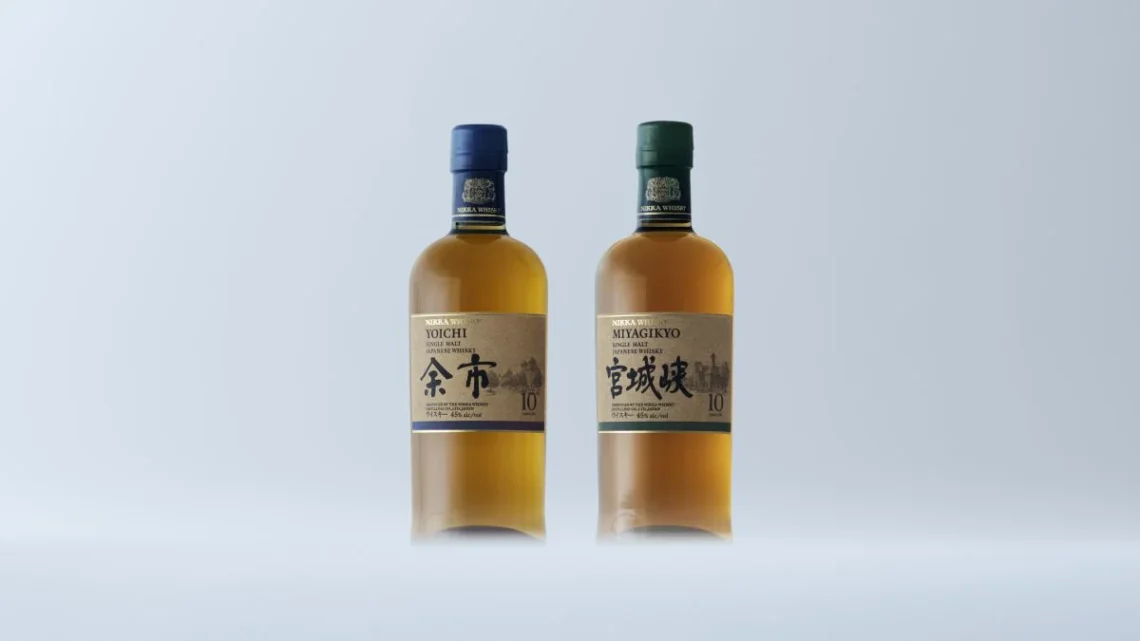
The new 10-year-old expression is bottled at 90 proof (45% ABV). According to Nikka, the spirit has been matured in a meticulous selection of sherry casks and new American oak barrels, allowing for a complex interplay between the distillery’s signature orchard-fruit profile and the deep, spicy, and woody notes imparted by the wood over a full decade of rest.
The release is strictly limited, with only 1,572 bottles of 700ml capacity entering the national market. Priced at $175, the bottle features a sophisticated aesthetic overhaul, utilizing traditional Japanese washi paper for the labels and a striking shift from the historical rose-colored branding to a deep, verdant green—a tribute to the pristine, forested landscape that surrounds the distillery.
A Chronology of the Japanese Whisky Crisis and Recovery
To understand the gravity of this release, one must look back at the tumultuous journey of the Japanese whisky category.
2014–2016: The Great Scarcity
A decade ago, the world "discovered" Japanese whisky. Awards from prestigious international competitions led to a surge in demand that far outstripped the supply of aged stocks. As collectors cleared shelves, major producers like Suntory and Nikka were forced to make difficult decisions. They pulled age-statement bottles—such as the Hibiki 12 and the Hakushu 12—from the market, replacing them with Non-Age Statement (NAS) blends to stretch their dwindling inventory.
2017–2021: The NAS Era
During this period, the market was dominated by NAS expressions. While quality remained high, the narrative shifted from "the vintage of the spirit" to "the art of the blend." Prices for the few remaining age-statement bottles on the secondary market skyrocketed, with rare expressions like the Yamazaki 50-Year-Old fetching astronomical figures at auction, becoming essentially unattainable for the average enthusiast.
2022–Present: The Stabilization
By 2022, the industry began to see the fruits of long-term planning. Nikka initiated a "return to form" with the relaunch of the Yoichi Single Malt 10 Years Old. This signaled that stocks had finally reached a level of maturity that allowed for consistent age-statement releases. The 2026 launch of the Miyagikyo 10-Year-Old serves as the latest milestone in this ongoing normalization of the market.
Supporting Data: Why Age Matters
Why does the return of an "age statement" carry so much weight? In the world of whisky, an age statement is an assurance of the minimum time spent in the cask. It provides transparency and a baseline for flavor profile development.
While NAS whiskies can be exceptional, age statements represent a commitment to the consumer. For Nikka, the ability to release a 10-year-old expression implies that the company has successfully managed its inventory over the last decade. It indicates that the "inventory gap"—a common problem for distilleries that didn’t anticipate the massive demand spikes of the 2010s—is finally closing.

Furthermore, the secondary market data indicates a cooling trend. While ultra-aged, legacy bottles continue to command record prices at specialized auctions, the broader market for "standard" premium Japanese whiskies has become more accessible. By introducing a $175 limited release, Nikka is aiming to balance exclusivity with accessibility, rewarding loyal fans while maintaining the prestige of the Miyagikyo brand.
Official Perspectives: The Philosophy of the Distillery
Emiko Kaji, the global PR leader for Nikka Whisky education, provided deep insight into the brand’s intent during the announcement. "With the 10-year-old expression, we wanted to reveal a new dimension of Miyagikyo’s signature character," Kaji noted.
The statement highlights a bridge between two eras. "The result reflects both a decade of maturation and our vision for Miyagikyo’s future—honoring the distillery’s heritage while showcasing the confidence and craftsmanship of a new generation."
This focus on "new generation" craftsmanship suggests that Nikka is not merely looking backward to the formulas of the past, but is actively integrating modern maturation techniques. The use of sherry casks in conjunction with new American oak is a deliberate choice to elevate the distillery’s profile, offering a more nuanced and layered experience than the standard bottlings of the past.
Implications for the Future
The return of the Miyagikyo 10-Year-Old carries several significant implications for the future of the spirits industry:
1. Consumer Confidence
The return of age statements is a major win for consumer trust. It validates the transparency that the Japan Spirits & Liqueurs Makers Association has been striving to formalize through new labeling regulations. As the market matures, consumers are increasingly prioritizing authenticity, and this release aligns perfectly with that demand.
2. Supply Chain Health
The fact that Nikka is bringing back age statements across its two flagship distilleries (Yoichi and Miyagikyo) suggests that the supply chain is robust. We can reasonably expect that if this trend continues, other legacy expressions might return in the coming years. While we may not see the return of 20- or 30-year-old staples immediately, the "10-year" benchmark is a vital sign of a healthy, producing distillery.
3. The Secondary Market Outlook
While the $175 retail price is fair for a premium, limited-edition single malt, the secondary market will inevitably test the true value of these bottles. If the 1,572 bottles are immediately flipped for three or four times the retail price, it could discourage the casual enthusiast. However, if the availability of these bottles remains consistent over future releases, the speculative bubble surrounding standard age-statement Japanese whiskies is likely to continue its slow, steady deflation.
4. A New Standard of Presentation
The transition to washi paper labels and the color shift to green represents a branding evolution. It signals that Japanese whisky is no longer just a luxury import; it is a storied, artisanal product that deeply respects its environment. This "green" branding, reflective of the Miyagikyo distillery’s location in the mountains of the Miyagi Prefecture, emphasizes the terroir of Japanese whisky—a concept that the industry is leaning into heavily as it differentiates itself from Scotch and American bourbon.
Conclusion: A Toast to Patience
The return of the Miyagikyo 10-Year-Old is a triumph of patience. In an industry where one’s product takes a decade or more to realize its potential, the ability to bring back a classic expression is the ultimate proof of long-term vision. As we look ahead, the industry remains in a state of cautious optimism. While the "whisky boom" of the 2010s was a turbulent period for fans, it forced the distilleries to refine their processes, improve their marketing, and—most importantly—ensure that the spirit in the glass remains as world-class as the reputation that precedes it.
Whether this release leads to a full-scale return of historical age statements remains to be seen. For now, the 1,572 lucky collectors who acquire a bottle will be holding more than just a 10-year-old single malt; they will be holding a piece of history—a marker of a distillery that has survived the storm and emerged with its character, and its quality, intact.
We will continue to monitor the market and report on any further news regarding the return of these legendary expressions as it breaks.