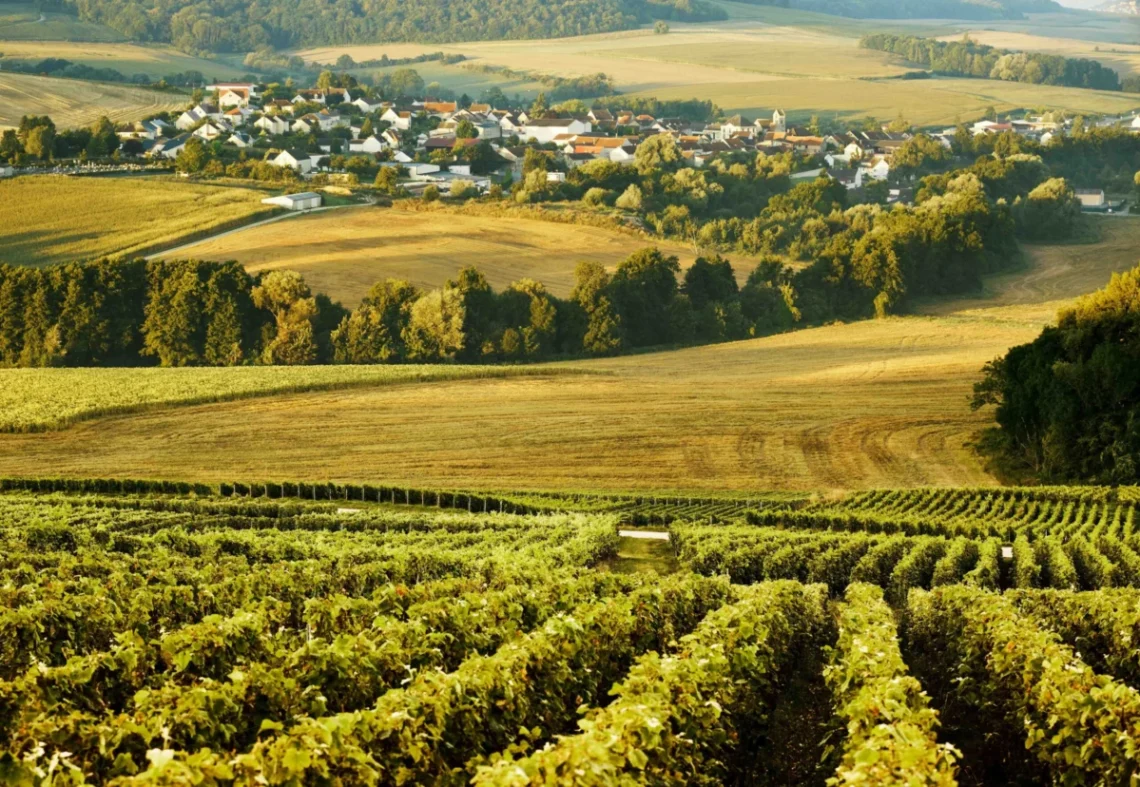
When you marry a sommelier, your honeymoon is rarely a vacation in the traditional, idle sense. Instead, it becomes a masterclass in sensory deconstruction. My husband, Dan, has a palate that acts as a vast, meticulously cataloged library of flavor. To him, a 2021 Bérèche & Fils Rive Gauche is not just a drink; it is a text to be read, analyzed, and discussed. During our post-nuptial trip from Paris to the rolling, verdant slopes of the Champagne region, I quickly learned that our honeymoon would be defined not by the luxury of rest, but by the rigor of the vine.
The Science of the Cellar: Harvest and History
Our journey into the heart of France’s most storied viticultural region began with a visit to Bérèche et Fils. Unlike the massive, corporate-run champagne houses that dominate the global market, this is a family-owned grower—a producer that cultivates its own grapes, maintaining an intimate connection between the soil and the final pour.
The timing of our arrival was serendipitous. The harvest had concluded just two weeks prior, leaving the cellars saturated with the heady, primal perfume of fermenting grapes—a mix of raw fruit and the yeasty, bready scent of uncooked dough. In the dimly lit depths of the cellar, the atmosphere was alive. When our guide lifted the stopper on a barrel, we didn’t just smell the wine; we heard the chaotic, rhythmic bubbling of ongoing fermentation. It was a visceral reminder of the carbon dioxide byproduct, a dangerous, invisible force that required us to blow gently on the barrel’s bung hole before daring to take a cautious, fleeting sniff.
Following the tour came the tasting: five distinct Champagnes arranged in a row. For Dan, this was a moment of professional engagement. For me, it was a moment of mounting insecurity. As a writer, I felt a strange pressure to articulate the nuances of the glass, yet I found myself struggling. I could tell the wine was exquisite, perhaps the best I had ever tasted, but the vocabulary of "notes" and "finishes" felt elusive.

A Divergence of Palates: From Street Food to Fine Dining
Dan and I met while working in the chaotic, high-pressure environment of a New York City restaurant. Our courtship was forged in the heat of the West Village, cemented by late-night shifts and shared plates of steak tartare. In the hospitality industry, sensory attention is a job requirement. You are constantly evaluating, describing, and justifying the food you serve.
However, our sensory registers have always been tuned to different frequencies. Dan, having spent years behind a bar, describes beverages through a lens of nostalgia and hyper-specific imagery. A cocktail might remind him of "Froot Loops left in milk," or a wine might evoke "cherries left in the sun." His descriptions are poetic, conjuring vivid, edible snapshots.
My own palate, by contrast, was forged in the crucible of intensity. I grew up with a father who viewed dining as a cultural expedition. I was more comfortable praising the aggressive buzz of Szechuan peppercorns or the sharp, acidic tang of adobo vinegar than I was dissecting the subtle, flinty minerality of a Chablis. If a palate is a personal record of one’s life, mine was built on flavors pushed to the edge, not on the delicate, ephemeral intricacies of terroir.
Chronology of the Expedition
Our trip was a deliberate, if occasionally grueling, tour of the region’s heritage. We visited Champagne Bollinger, a house established in 1829, where we stood on the very hill—La Côte aux Enfants—where its grapes are grown. The lore of the site is legendary: the incline was so steep that it was deemed too exhausting for adults, so the local children were tasked with the harvest.

Standing there, watching our host pop a bottle in the rain, the irony was not lost on us. We sipped on the result of centuries of labor while someone mentioned "hazelnut" and "tart strawberry." I searched my tongue for these flavors, feeling a fleeting hint of creaminess, but I was mostly transfixed by the cinematic, sweeping beauty of the landscape.
Our subsequent visits, including to the historic Champagne Delamotte (founded in 1760) and its sister house, Salon, felt like a journey through time. We were shown old menus from the legendary Parisian restaurant Maxim’s and led deep into stone caverns where the wine aged in barrels sourced from Burgundy—some of which were a century old. They even employ a full-time cooper to maintain these relics. Yet, by the third day, the "barrel fatigue" set in. I was exhausted by the constant demand to find fruit in the glass. I wanted to enjoy the sparkle, not analyze it.
The Implications of Memory and Taste
The breakthrough didn’t happen in a vineyard. It happened on our final day in Paris, at a small, unassuming Taiwanese coffee shop called Laïzé.
The barista offered us two distinct blends: one floral, one fermented. Feeling the lingering, perhaps Stockholm-syndrome-induced, influence of our champagne tours, I chose the fermented option. As I sipped the coffee, I was hit with a sudden, sharp, and deeply personal memory: stinky tofu. It was a flavor profile I associated with my childhood and my father’s heritage—a pungent, fermented, complex sensation that instantly transported me back to a specific time and place.

When I handed the cup to Dan, he couldn’t replicate the experience. He had eaten stinky tofu, but the flavor didn’t unlock the same specific memory for him. He said something profound: "It means that there’s something on your palate that I don’t have. It reminded you of something that I don’t know the same way."
Conclusion: The Language of the Self
This experience fundamentally changed how I view the act of tasting. I had spent the entire trip feeling like an imposter, trying to force myself to see "cherries" or "hazelnuts" when my brain was looking for something else entirely. I realized then that a palate isn’t just about sensory receptors; it is about the intersection of the senses and our personal history.
When Dan asked, "What does it remind you of?" he wasn’t asking for a technical evaluation of the wine’s chemical composition. He was asking for a bridge to my own memory.
As I reflect on our honeymoon now, Champagne doesn’t remind me of a specific vintage or a particular fermentation technique. It reminds me of the basement chill of ancient wine caves, the electric tickle of bubbles on the tongue, and the rain-soaked hills of France. It reminds me of the beginning of our life together—a time when we learned that while we may experience the world through different lenses, we are both constantly building the library of our shared future, one sip at a time.