By Aviation Correspondent | Published June 9, 2026
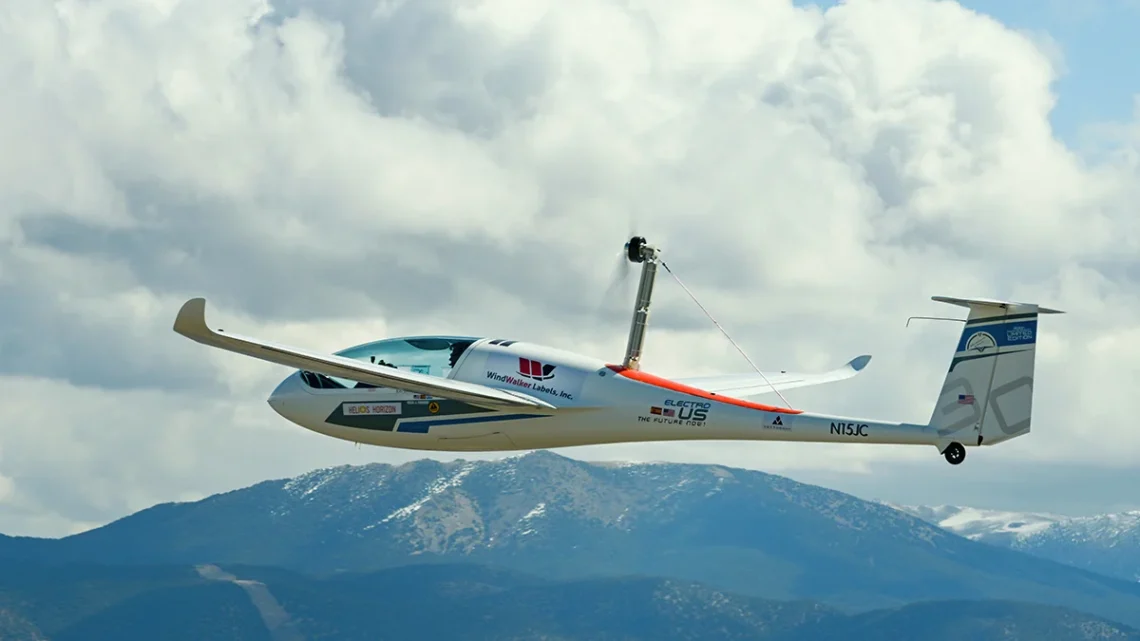
In a landmark achievement that promises to reshape the trajectory of sustainable flight, the Florida-based nonprofit Helios Horizon has successfully completed the world’s first piloted flight of an electric aircraft powered exclusively by solid-state batteries. The historic sortie, conducted on June 5 at the Zephyrhills Municipal Airport in central Florida, represents a pivotal leap forward in energy density and safety, signaling that the "electric age" of aviation may be arriving faster than industry analysts previously dared to predict.
The Core Achievement: Breaking the Lithium-Ion Barrier
For the past decade, the dream of commercial electric aviation has been grounded by the limitations of traditional lithium-ion technology. While effective for small drones and short-range urban air mobility (UAM) concepts, current battery energy densities have struggled to provide the necessary range for meaningful regional travel.
Helios Horizon, led by founder and chief test pilot Miguel Iturmendi, has effectively dismantled this barrier. The team utilized a modified Pipistrel Taurus motor glider—a platform chosen for its aerodynamic efficiency—to serve as the testbed for their proprietary solid-state power plant.

The transition from conventional lithium-ion cells, which were rated at 260 Wh/kg, to the new solid-state configuration has yielded a dramatic jump in performance. The aircraft’s new power source boasts an energy density of 410 Wh/kg. To put this in perspective, these batteries occupy significantly less physical space than the power packs found in today’s most advanced electric vehicles, yet they deliver a staggering 60 to 80 percent increase in total energy capacity.
Chronology of a Breakthrough
The path to the June 5 test flight was one of meticulous engineering and incremental validation.
- Early 2025: Helios Horizon begins the structural modification of the Pipistrel Taurus platform, focusing on weight distribution and thermal management systems to accommodate the unique requirements of solid-state architecture.
- Late 2025: Bench testing confirms the stability of the solid-state cells under extreme discharge cycles, mirroring the stresses of takeoff and high-altitude cruise.
- May 2026: Final ground-based stress tests confirm the aircraft’s center of gravity and electrical integration are within safety tolerances.
- June 5, 2026: Founder and chief test pilot Miguel Iturmendi conducts the maiden piloted flight at Zephyrhills Municipal Airport. The flight program consisted of a series of short-duration tests designed to evaluate handling characteristics, motor responsiveness, and real-time battery thermal performance.
- June 9, 2026: Official announcement of the successful mission, marking the first time a piloted aircraft has taken to the skies utilizing this specific battery chemistry.
Engineering Excellence: The Power of Solid-State
The primary advantage of solid-state technology lies in its internal architecture. Traditional lithium-ion batteries rely on a liquid electrolyte, which is inherently flammable and sensitive to heat. Solid-state cells, by contrast, replace this volatile medium with a solid, stable material.
Enhanced Safety and Stability
The stability of the Helios Horizon’s power plant is its greatest asset. Because the solid material is far less susceptible to "thermal runaway"—the primary cause of battery fires—the aircraft achieves a new tier of safety. Furthermore, the solid-state cells are physically more robust, offering greater resistance to punctures and structural damage.

Revolutionary Charging and Regeneration
Beyond raw power, the operational efficiency of the system is noteworthy. The batteries are designed to charge from nearly empty to 80 percent capacity in under 15 minutes, a metric that finally makes the "turnaround time" of an electric aircraft comparable to that of a conventional jet-fueled plane.
Perhaps most innovative is the aircraft’s ability to recharge mid-flight. Beyond the integration of high-efficiency solar panels on the wing surfaces, the aircraft utilizes a regenerative braking concept for flight: when the motor is not needed for thrust during descent, the propeller acts as a wind turbine, capturing kinetic energy and feeding it back into the battery array.
Official Perspectives
In an official statement following the flight, Miguel Iturmendi emphasized the broader implications of the mission.
"For the first time, we have a battery technology that yields the range and charging times necessary to make commercial electric aviation viable, while providing the safety the flying public will demand," Iturmendi remarked.

He further elaborated on the concept of "regenerative flying." By utilizing the aircraft’s natural glide ratio and the wind-milling effect of the propeller, the team has found a way to significantly extend the range of the vessel. "It is not just about the density of the battery, but how we manage the energy across the entire flight profile," he added.
Supporting Data and Future Projections
While the specific top speed and exact maximum range remain proprietary, the performance of the Helios Horizon during the June 5 tests exceeded expectations. The weight and balance, often the "make-or-break" factor in battery-swapped retrofits, were found to be optimal, allowing for hours of sustained, stable operation.
The team is already looking toward the horizon. Iturmendi projects that the energy density of their current cells will increase by an additional 40 percent within the next two years. This trajectory would effectively turn the aircraft from a demonstrator into a long-endurance platform.
Aiming for the Stratosphere
Helios Horizon is not content with simply proving the technology at low altitudes. The team has previously set a record for their vessel class, reaching an altitude of 24,000 feet. Their next objective is to push beyond 40,000 feet—an altitude that exceeds the standard cruise ceiling of most modern commercial passenger airliners. The team plans to initiate these high-altitude, stratospheric tests later this year, confident that the solid-state batteries will maintain their integrity in the thin, frigid air of the upper atmosphere.

Implications for the Global Aviation Industry
The success of the Helios Horizon represents a "Sputnik moment" for green aviation. If these results can be scaled, the implications are profound:
- Decarbonization of Regional Travel: Regional flights, which are often the most carbon-intensive on a per-passenger-mile basis due to short takeoff and landing cycles, are the primary candidates for this technology.
- Infrastructure Simplification: Unlike hydrogen or high-voltage fast-charging stations that require massive infrastructure overhauls, the Helios Horizon batteries are designed to be compatible with standard AC electrical sources, allowing for rapid deployment at existing regional airports.
- Shifting the Narrative: For years, critics of electric flight have pointed to the "energy density wall." By clearing this hurdle, Helios Horizon has forced legacy aerospace manufacturers to reconsider their development timelines.
Conclusion
While the Helios Horizon remains, for now, a concept demonstrator, it has effectively proven that the "impossible" is now a matter of iterative development. By successfully marrying solid-state battery technology with aeronautical efficiency, the team has provided a blueprint for a future where the skies are quieter, cleaner, and more accessible. As the aerospace industry watches closely, one thing is clear: the age of solid-state flight has begun, and the limitations of yesterday are already being left in the wake of this historic flight.